What Is a MOTO Transaction? Mail and Phone Order Payments
What is a MOTO transaction? Learn how mail and phone order payments are priced, who carries fraud liability, and how to verify callers safely.

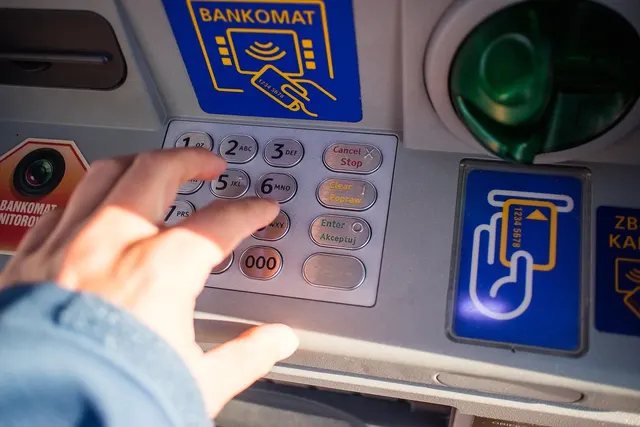
Photo: Pixabay
On this page 7 sections
- What Is a MOTO Transaction, and What Falls Outside It
- How MOTO Payments Are Flagged and Priced
- Phone Order Fraud Liability Sits With the Merchant
- Verify Callers With AVS, CVV and a Callback
- Phone Order Credit Card Rules for Keeping Card Data Out of Notes
- Example: A Jeweler Weighs a High-Ticket Phone Order
- Set up a MOTO Merchant Account That Matches Your Sales Mix
Key takeaways
- Keyed phone orders usually cost more per sale. The larger cost is that fraud losses on them generally stay with the merchant.
- Routing phone orders through an e-commerce or card-present path to get a lower rate mislabels the sale and breaks network rules.
- A payment link the customer completes on their own device turns a phone order into an e-commerce sale, where 3-D Secure may be available.
- Set your dollar threshold and verification rules for first-time callers before the call comes in, not during it.
A MOTO transaction is a card payment taken by mail order or telephone order. The customer reads a card number over the phone or writes it on a paper form, and someone on your staff keys it into a terminal or virtual terminal. Because neither the card nor the cardholder is in front of you, Visa and Mastercard treat it as a card-not-present sale. That usually means a higher interchange cost. More importantly, the merchant generally absorbs the loss when the card turns out to be stolen.
Plenty of businesses take MOTO payments every week. A jeweler closes a sale with a longtime client over the phone, or a furniture store collects the balance on a sectional before the delivery truck leaves. Phone orders are also where a lot of avoidable fraud and PCI trouble begins. It usually starts with a shortcut, like a card number jotted on a sticky note or a rush order shipped to an address nobody checked.
What Is a MOTO Transaction, and What Falls Outside It
The phrase mail order telephone order comes from the catalog era. Networks still use the category because issuers want to know how card data reached the merchant. In practice it covers phone orders keyed into a virtual terminal or a terminal's manual-entry screen, along with orders that arrive on mailed or faxed forms. In each case a staff member enters card details on the customer's behalf.
Some payments look keyed but belong to a different category. When a customer types their own card into your website checkout, that is an e-commerce sale, with its own indicator and access to 3-D Secure. Recurring charges on a card stored with the customer's permission carry credential-on-file flags. A card that is physically present but won't read is a card-present fallback, and your processor handles it under different rules from a phone order.
Labeling matters because each type sends different data to the issuer and qualifies for different pricing and fraud tools. When the label is right, every later step in the process works better.
How MOTO Payments Are Flagged and Priced
Every authorization request includes fields that tell the issuer how the card data was captured. A phone or mail sale carries a mail/telephone order indicator. An online checkout carries an e-commerce indicator instead, and a chip read sends chip data. Most virtual terminals for keyed phone orders set the MOTO flag automatically. Some countertop terminals ask the clerk to pick an entry type during manual entry, so check how yours is configured.
Pricing comes in two layers, and each comes from a different place.
Network pricing is the base. Visa and Mastercard publish interchange tables (interchange is the fee the card issuer earns on each sale) with separate categories for card-present and card-not-present transactions. Keyed phone orders land in card-not-present categories. These generally cost more than a chip or tap sale on the same card because issuers see more fraud on them. On many programs, sending address verification data with a keyed sale also affects which category the sale qualifies for. Rates vary by card type and by the size and category of your business, so ask your processor for a line-by-line breakdown or check the networks' current published tables.
Your processor's markup sits on top. That is one company's pricing, not a network rule. Interchange-plus statements show the card-not-present difference directly. Tiered pricing often drops keyed sales into a "mid-qualified" or "non-qualified" bucket that costs more than the underlying interchange change would explain. If phone orders make up a real share of your volume, ask which bucket they land in.
Never lower the price by mislabeling the sale. Running phone orders through an e-commerce or card-present path to get a better rate misrepresents the transaction to the issuer. That breaks network rules, and processors close accounts over it. Legitimate savings come from sending complete transaction data and from compliant cost programs such as dual pricing, where your processor and state law allow it.
Phone Order Fraud Liability Sits With the Merchant
Chip-read sales come with a safety net. Under network liability rules, a merchant using a chip reader is generally protected from counterfeit-card losses. MOTO sales have no equivalent, because nothing is inserted or tapped and no PIN is entered. 3-D Secure can shift fraud liability to the issuer on authenticated online sales, but it runs on the cardholder's own device during an online checkout. It doesn't apply to an order your staff keys from a phone call.
When the real cardholder later tells their bank they didn't make the purchase, the dispute usually goes against you. AVS and CVV matches improve approvals and screen out bad orders, but on their own they rarely win a fraud chargeback. A signed card authorization form shows that someone agreed to the charge. If that someone wasn't the cardholder, the form proves very little. Your defense depends on how the dispute is coded, which is covered in how to read chargeback reason codes.
Delayed delivery adds a second exposure. A charter booked weeks before departure, or a custom sofa that takes months to build, leaves a gap between charge and fulfillment. During that gap the customer can dispute for non-delivery or cancellation. Processors price that risk with reserves, as explained in why travel merchants face reserves for delayed delivery. If you take deposits by phone, protecting card deposits on custom orders covers the paperwork that helps.
Verify Callers With AVS, CVV and a Callback
A short written procedure that every staff member follows beats a gut feeling from your best salesperson. Here is a workable version:
- Run AVS and CVV on every keyed sale. Decide in advance what a street mismatch or a ZIP-only match means for an order above your threshold, so nobody improvises on a busy afternoon.
- Call back on a number you found yourself. Pull it from your customer records or the business's public listing, not from the caller. A fraudster can answer their own phone.
- Slow down when ship-to and bill-to don't match. Freight forwarders deserve extra scrutiny. So does a caller who offers a second card the moment the first one declines.
- Move the customer to a self-entry checkout when you can. A payment link or hosted invoice lets the customer enter their own card. That makes it an e-commerce sale, where 3-D Secure authentication may be available through your gateway.
- Offer another channel for large tickets. In-store pickup with a chip or tap, or a bank transfer, removes most of the stolen-card risk.
- Log what you did. Keep the AVS and CVV results with the invoice and the signed delivery confirmation, and note when you made the callback. That file is your evidence if a dispute arrives.
Red flags specific to phone orders are covered in how to vet keyed card transactions.
Phone Order Credit Card Rules for Keeping Card Data Out of Notes
PCI DSS is the card industry's data security standard, maintained by the PCI Security Standards Council. You agree to follow it through your merchant agreement, which makes it a contractual and network obligation rather than federal law. State data-breach laws apply separately if card data leaks. For phone and mail orders, most failures come down to where the numbers end up.
- Key the card straight into the terminal or virtual terminal while the customer is on the line. Paper, notepad apps, email and CRM notes fields are all places a card number should never land.
- Discard the card security code after authorization. PCI DSS classes it as sensitive authentication data, which may not be stored at all.
- Process mailed or faxed forms promptly, then shred them or black out the card number before anything gets filed or scanned.
- Pause call recording while the customer reads card digits, or use a tool that masks them. A recording with card numbers in it pulls the whole phone system into PCI scope.
- Store cards for repeat customers only as gateway tokens, and only with the customer's permission. A spreadsheet of numbers kept "for next time" is a breach waiting to happen.
Your processor assigns the PCI self-assessment questionnaire that fits your setup. This section is general information, not compliance advice, so confirm current requirements with your processor or a qualified security assessor.
Example: A Jeweler Weighs a High-Ticket Phone Order
Here is the kind of call that tests a policy. The scenario is illustrative and is not drawn from a real customer.
An independent jeweler gets a call from a first-time customer in another state. The caller wants an engagement ring worth several thousand dollars shipped overnight to an address that isn't the card's billing address. AVS comes back with a ZIP match but a street mismatch. CVV matches.
Owners often look at processing cost first. Keying the sale instead of tapping it in store might add a fraction of a percentage point, which on this ticket works out to tens of dollars. Now compare the downside. If the card is stolen, the jeweler loses the ring and the sale price, plus the shipping and any chargeback fee. Next to that, the processing difference barely registers. The decision is about fraud exposure.
So the owner sets a dollar threshold for first-time phone customers ahead of time and applies the same rules above it on every call. For this order, the caller gets two paths. One is shipping to the billing address that fully passed AVS, with a signature required on delivery. The other is paying through a link where the customer can authenticate with 3-D Secure, or by bank transfer if they prefer. Either way, the package stays in the safe until a callback on an independently found number confirms the order.
Real buyers usually accept one of those options. Fraudsters tend to go quiet. The same reasoning fits jewelry and diamond merchants generally, and it carries over to jet and charter operators taking deposits and furniture stores collecting balances by phone. For orders that start online, see verifying a high-value order before shipping.
Set up a MOTO Merchant Account That Matches Your Sales Mix
Underwriting asks what share of your sales will be keyed from phone or mail orders compared with in-person and online sales. Answer it accurately. A MOTO merchant account approved for mostly in-store sales can trigger a review or funding holds if keyed volume suddenly jumps, so tell your processor before your mix changes, not after. The merchant underwriting checklist lists what to have ready, and how to raise processing limits explains how volume caps work.
MannyPay supports keyed and card-not-present acceptance through virtual terminals and gateways such as Authorize.net and NMI, alongside countertop and smart terminals. It offers merchant accounts for both low- and high-risk businesses.
This week, open last month's statement and find out how your keyed sales were categorized and priced. While you're at it, check how your terminal flags manual entries, then put your phone order procedure and dollar threshold in writing. If the statement raises questions, request a free quote and a MannyPay specialist will respond within one business day.
This article is for general educational purposes and is not legal, tax or financial advice. Card network rules and state laws change; confirm current requirements for your business.