Auto Repair Estimate Authorization Laws: Get Approval Before Work
Learn how auto repair estimate authorization law affects what your shop can collect, and how to document approvals so chargebacks don't stick.
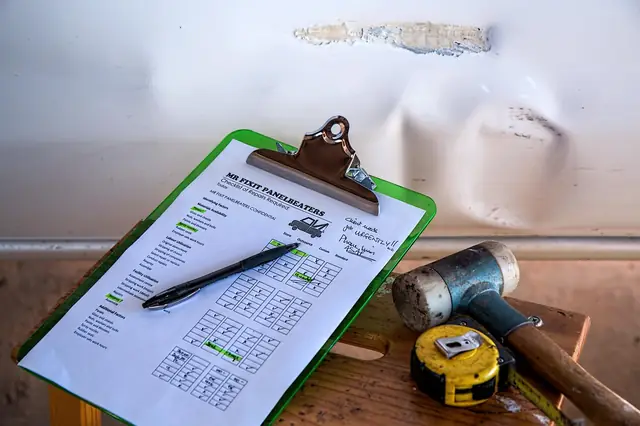
Photo: Pixabay
On this page 7 sections
- How Auto Repair Estimate Authorization Laws Affect What You Can Collect
- Written Estimate Requirements and Repair Cost Overage Limits
- Verbal Authorization, Texts and E-Signatures: What Counts as Proof
- Handling Additional Work Found Mid-Repair
- Teardown and Diagnostic Fees: Disclose Them Upfront
- Storing Authorization Records for Chargeback Defense
- Next Steps: Connect Your Estimates and Payments
Key takeaways
- In many states, written estimate and authorization rules decide whether you can legally collect the full invoice.
- Overage limits mean extra work found mid-repair usually needs new, documented approval before the bill exceeds the agreed amount.
- Disclose teardown and diagnostic fees before the car goes on the lift, and get written approval for them.
- Store estimates, approvals and payment records together so you can answer a chargeback with proof.
In many states, an auto repair estimate authorization law decides whether your shop can collect the full invoice when a job grows mid-repair. This guide explains how estimate and authorization rules usually work, what counts as proof of customer approval, and how to keep records that hold up in a payment dispute.
Here's a familiar scenario. A customer drops off a car for a brake noise. Your tech finds worn rotors, a leaking caliper and a cracked CV boot, and the final invoice lands well above the original quote. At pickup, the customer says they never agreed to the extra work and refuses to pay for it. Or they pay by card and dispute the charge two weeks later.
Whether you can collect that difference often depends on paperwork you completed before anyone picked up a wrench.
This article is general information, not legal advice. Auto repair rules differ by state and sometimes by city or county. Confirm your obligations with your state's consumer protection agency, attorney general's office or a qualified attorney.
How Auto Repair Estimate Authorization Laws Affect What You Can Collect
Many states have consumer protection laws written specifically for auto repair. Some are dedicated statutes, often titled something like a "consumer auto repair act" or "automotive repair act." Others are regulations issued under a general consumer protection law. The details vary, but most share one principle: the customer should know what the work will cost and agree to it before the shop does it.
That principle has direct consequences for your revenue:
- Unauthorized work may not be collectible. In states with authorization requirements, charges for work the customer didn't approve may be unenforceable. A regulator could also treat them as a violation.
- Your lien rights can depend on it. Many states give repair shops the right to hold a vehicle until authorized charges are paid. If part of the invoice was never properly authorized, your ability to hold the car for that portion may be weak. Ask an attorney how your state handles this before you refuse to release a vehicle.
- Card disputes follow the paper trail. When a customer disputes a card payment, the outcome usually depends on whether you can show they agreed to the charge. Complying with your state's estimate rules and building a strong chargeback defense rely on the same paperwork.
Put simply, a signed estimate does more than protect you from complaints. It is part of what makes the invoice collectible.
Written Estimate Requirements and Repair Cost Overage Limits
We aren't listing state-by-state thresholds here. They change, and the specifics matter too much to summarize loosely. Instead, here are the types of rules shops commonly run into, so you know what to look up for your state.
| Rule type | What it usually means | What to confirm for your state |
|---|---|---|
| Written estimate requirement | Shop must provide a written estimate before starting work, sometimes only above a certain job size | Whether there's a dollar threshold, and what the estimate must include |
| Customer waiver | Customer may decline a written estimate, often in writing | Whether waivers are allowed and how they must be documented |
| Repair cost overage limit | Final bill can't exceed the estimate by more than a set amount or percentage without new approval | The exact limit and whether it applies to parts, labor or both |
| Re-authorization for added work | Shop must get consent before doing work beyond the original estimate | Which consent methods are accepted (signed, verbal, electronic) |
| Itemized invoice | Final invoice must separate parts and labor, and may need to identify new, used or rebuilt parts | Required line items and disclosures |
| Replaced parts | Customers may have a right to request old parts back | Whether you must offer them proactively |
| Shop registration or licensing | Some states or localities require repair shops to register | Whether your registration number must appear on estimates and invoices |
Find the current rules through your state consumer protection office or attorney general, or through the agency that licenses repair facilities if your state has one. Then build those rules into your estimate templates and shop management software so compliance happens automatically on every repair order.
Verbal Authorization, Texts and E-Signatures: What Counts as Proof
Customers rarely wait in the lobby while you diagnose. They drop their keys in the after-hours box, leave for work and expect a call. As a result, mid-repair approvals often come by phone or text.
Two questions matter. Does your state accept that consent method? And can you prove the approval happened? States that allow verbal authorization commonly expect the shop to record details of the call, so check your state's specific requirements.
| Method | Strength as proof | How to make it stronger |
|---|---|---|
| Signed paper estimate | Strong, if the signature and amounts are clear | Have the customer initial any revisions, and scan the document into the repair order |
| E-signature on a digital estimate | Strong, if the platform logs timestamps and the approving contact | Send it to the phone number or email on file, and keep the audit trail |
| Text message approval | Moderate to strong, depending on what was sent | Include the itemized amount in the message and ask for an explicit "yes, approved" reply |
| Phone call | Weakest on its own | Record the date, time, number called, person who approved, amount approved and staff member, then send a confirmation text or email |
| Approval from someone other than the owner | Risky | Confirm the person is authorized (for example, a spouse, fleet manager or warranty administrator) and note it |
A verbal "go ahead" that only one service advisor remembers is hard to defend. Logged call details plus a written confirmation are much easier.
Handling Additional Work Found Mid-Repair
Finding more work during a repair is routine: seized fasteners, a second leak, a part that fails during teardown. A consistent process keeps your techs moving and the invoice collectible.
- Stop at the approved amount. Train techs and advisors to treat the authorized total, including any overage allowance your state permits, as a hard limit.
- Document the finding. Take photos or a short video of the worn part, leak or measurement. Most customers approve faster when they can see the problem, and the images help in any later dispute.
- Send a revised, itemized estimate. Separate parts and labor and show a new total. Don't just say "it's about $400 more."
- Get approval through a method your state accepts. Record it on the repair order with the time and the name of the person who approved it.
- Record declined work, too. If the customer declines a recommended repair, note it on the invoice. This protects you if they later claim you should have caught the problem or return with a related failure.
- Reconcile before pickup. Before printing the final invoice, confirm that every line item traces back to an approval.
That final step catches most problems before the customer reaches the counter.
Teardown and Diagnostic Fees: Disclose Them Upfront
Some jobs can't be quoted until you take things apart: internal engine noise, transmission problems, intermittent electrical faults. Customers are often surprised that diagnosis costs money, especially when they decide not to do the repair.
Prevent that surprise before work starts:
- Put diagnostic time on the initial estimate. State the fee or hourly rate and what it covers, such as scan tool time, road testing or pinpoint testing.
- Spell out teardown terms. If a component must be disassembled to quote the repair, disclose the teardown charge. Also disclose the cost to reassemble the vehicle if the customer declines the repair. Some states have specific rules for teardown estimates, so check yours.
- Disclose standard add-ons. Shop supply charges, hazardous waste disposal fees and similar line items belong on the estimate, not as a first appearance on the invoice.
- Disclose card pricing as well. If you run a cash discount program or dual pricing for card and cash customers, show both prices on estimates as well as at checkout, and follow your state's rules on card pricing disclosures.
A clear, approved diagnostic fee gives you something to point to when a customer who declines the repair questions the charge.
Storing Authorization Records for Chargeback Defense
When a customer disputes a repair charge with their card issuer, you usually get a limited window to respond with evidence. Your processor's dispute notice will state the deadline. Shops that can pull the full file in minutes stand a much better chance than shops digging through paper folders.
What to Keep for Every Repair Order
- Initial estimate with the customer's signature or electronic acceptance
- Any written waiver of an estimate, if your state allows it
- Each revised estimate, with approval method, timestamp and approving person
- Call logs and text or email confirmations for verbal approvals
- Photos and videos of findings
- Itemized final invoice matching the approved amounts
- Payment receipt and, for card-present sales, the signed or PIN-verified record
- Notes on declined recommendations and any returned parts
Payment Habits That Reduce Dispute Exposure
- Take payment in person when you can. A chip or tap transaction at pickup, after the customer reviews the invoice, is generally easier to defend than a card number taken over the phone.
- Bring the terminal to the customer. For mobile mechanics and roadside work, handheld card terminals let the customer review the invoice and pay on the spot instead of reading a card number over the phone.
- Be careful with keyed payments. If a customer pays by phone while the car is still on the lift, a virtual terminal for card-not-present payments works. Keyed transactions usually carry more dispute risk, so send the invoice and get written approval before charging.
- Match the charge to the paperwork. The amount charged should equal the authorized invoice total. Any mismatch, even a small one, gives the customer a dispute argument.
- Keep records past the dispute window. Store files at least as long as your state's record-retention rules require. Ask your attorney or accountant how long that is.
Next Steps: Connect Your Estimates and Payments
Your estimate process and your payment process should work as one system. Ideally, your POS or shop software links the approved estimate, the final invoice and the card transaction to the same repair order.
MannyPay provides payment processing for auto repair shops, including in-person POS systems, smart and mobile terminals, and virtual terminals. Cost programs include cash discount, dual pricing and surcharging where permitted. If you're reviewing what you pay to accept cards, our breakdown of auto repair credit card fees and what shops should pay explains how the pieces fit together.
To see what a setup could look like for your shop, request a free payment processing quote, and our team will walk through your workflow.
Estimate, authorization and lien rules are set at the state level and sometimes locally. Treat this guide as a starting checklist, and confirm your specific obligations with your state regulator or a qualified attorney before changing your forms or collection practices.
This article is for general educational purposes and is not legal, tax or financial advice. Card network rules and state laws change; confirm current requirements for your business.