ASIC Miner Sellers: Getting Card Processing for $5,000+ Rigs
Need an ASIC miner merchant account? Learn why mining hardware sellers get held or declined and how to structure preorders, fraud checks and disputes.
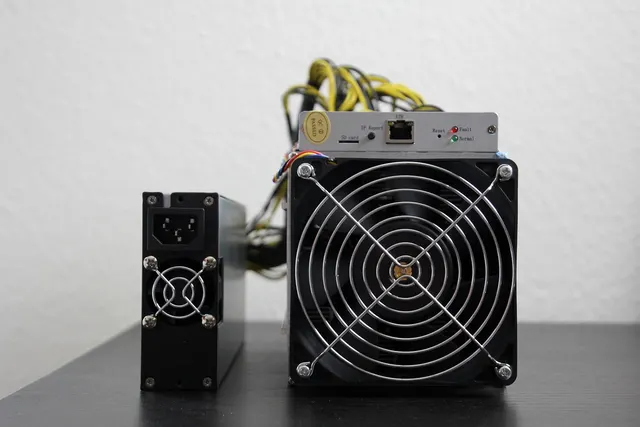
Photo: Pixabay
On this page 6 sections
- Why an ASIC Miner Merchant Account Is Hard to Get
- Preorders Put the Processor on the Hook for Undelivered Rigs
- How ASIC Miner Fraud Works: Stolen Cards and Reshippers
- Accept Credit Cards for Mining Equipment, but Route Bulk Orders to Wire
- Winning "Not as Described" Disputes Over Hash Rate
- Documents That Get Mining Rig Payment Processing Approved
Key takeaways
- Describe your business as a hardware seller, and put any hosting or crypto revenue on the application before an underwriter finds it.
- Capture card payments at shipment, not at order, and move preorder deposits and bulk orders to wire to shrink your future delivery exposure.
- Divide the cost of one lost order by your profit per unit to see how many clean sales a single stolen-card order erases.
- Record a serial-matched hash rate test before each unit ships, because you can't recreate that evidence after a dispute lands.
You can get card processing for ASIC miners, usually through a high-risk merchant account. Getting an ASIC miner merchant account approved, and keeping it open, depends on how you handle the specific risks underwriters attach to this product. Two of those risks involve money moving before the goods do: preorders that ship months after the charge, and stolen cards used to buy hardware that resells easily overseas. The third shows up after delivery, when a buyer disputes because the unit didn't hit its advertised hash rate. Applications that address these risks get priced. Applications that ignore them get declined, or approved and then frozen after the first big week.
Why an ASIC Miner Merchant Account Is Hard to Get
A risk team doesn't see an Antminer or Whatsminer order as an ordinary electronics sale, because several risk factors stack on the same transaction.
Tickets are high and orders are lumpy. A single machine costs thousands of dollars, and a hosting operator or small farm may order a pallet at once. When a processor funds you for a large card sale, it carries the loss if that sale comes back as a chargeback and your account can't cover it.
Demand moves with Bitcoin's price and network difficulty. When the price drops, a machine bought last month looks like a worse investment, and buyer's remorse turns into disputes. Underwriters know a seller's dispute rate can jump for reasons the seller doesn't control.
The product also resells easily across borders, which makes it attractive to card fraud rings. Many acquiring banks also put anything crypto-adjacent in a higher risk tier, even when the merchant sells machines rather than coins. For another crypto-adjacent product, see our comparison of NFT credit card checkout models and who carries the risk.
State that distinction plainly in your application. Selling a miner is a merchandise sale, so it should be described and coded as hardware, not treated like a cryptocurrency purchase. Our explainer on MCC 6051 and quasi-cash crypto purchases covers how actual crypto buys are handled. For sales that do involve crypto, see our guide to Mastercard and Visa registration rules for crypto merchants.
Disclose the rest of the business with the same honesty. Hosting revenue belongs on the application, and our guide to billing hosting clients for monthly power and rack fees covers how to charge for it. Coin sales and crypto accepted as payment belong there too, because a hidden revenue line is how merchants end up terminated and placed on the MATCH list. Any part of your operation that moves crypto for customers may carry its own registration duties. Our guide to FinCEN MSB registration and state licensing walks through them, and a qualified attorney should confirm what applies to you.
Preorders Put the Processor on the Hook for Undelivered Rigs
Manufacturers often release new models in batches that ship weeks or months after ordering, and resellers pass those timelines on to their buyers. A processor calls this future delivery risk. Suppose you charge a card today for a miner that ships next season, and your supplier slips or your business fails in between. The cardholder disputes, and if you can't pay, the acquiring bank absorbs the loss.
So the underwriter's central question is how much card money you've collected for goods you haven't shipped. The bigger that balance, the bigger the reserve, or the faster the decline.
These practices shrink it:
- Charge at shipment, not at order. Collect card details through your gateway and capture payment when the unit ships. An authorization hold expires long before a typical preorder batch arrives, so plan on a fresh authorization at ship time and get the buyer's written agreement to that in your checkout terms.
- Move preorder deposits to wire. Cards then cover in-stock units and final balances only.
- Publish a ship window and a remedy. Give the expected batch month and say what the buyer can do if it slips, such as request a full refund.
- Tell the underwriter your preorder share before they ask. An underwriter who finds undisclosed future delivery during a review is far more likely to hold funds than one who priced it in at approval.
What a Rolling Reserve Does to Cash Flow
A rolling reserve holds back a percentage of your card sales for a fixed period, then releases the oldest holdings on a schedule. The processor sets the percentage and the holding period during underwriting. These are processor and bank terms, not Visa or Mastercard rules, and they vary widely from account to account.
Nothing comes back until the first holding period ends, so the reserve balance climbs for months before releases start offsetting new withholdings. Plan working capital for that climb. Keeping preorder volume off cards is one of the few arguments you can make for a smaller reserve, so ask the underwriter directly what would lower yours.
How ASIC Miner Fraud Works: Stolen Cards and Reshippers
ASIC miner fraud usually follows one pattern. Someone uses stolen card details to order high-end units and ships them to a freight forwarder or reshipping address. The machines leave the country and get sold. Weeks later the real cardholder disputes the charge, and the merchant has lost both the machine and the sale.
Red flags tend to cluster. Billing and shipping addresses in different countries are the classic sign, especially when the shipping address turns out to be a forwarding warehouse. A brand-new email address paired with an expensive model deserves a second look, as do several cards tried on one order. Treat any request to change the shipping address after checkout as a stop sign.
Controls that fit this product:
- Run AVS (address verification) and CVV checks on every card-not-present sale, and route mismatches to manual review instead of auto-approving them.
- Turn on 3-D Secure authentication for online checkout. Under card network rules, fraud chargeback liability on a successfully authenticated transaction generally shifts to the card issuer, though you should confirm the details with your processor. Our guide to 3D Secure for online stores shows how to use it without losing real buyers.
- Ship card-paid orders only to the verified billing address, and refuse known forwarders.
- Require a signature on delivery for every miner.
- Call first-time buyers at the number on file once an order passes a ticket size you set, and verify ID before the box leaves.
Keyed phone and email orders need extra care. A sale entered on a virtual terminal for phone orders can't run through 3-D Secure, so you carry the fraud liability yourself. Apply the same verification steps, and never write card numbers down or keep them in email.
Count How Many Sales One Stolen-Card Order Erases
Run this math with your own numbers. When a stolen card buys a miner and the charge comes back, you lose what you spent to fulfill the order: the machine, the freight and any processing fee that isn't returned. Your processor will usually add a chargeback fee on top. Divide that loss by your profit per unit, and you get the number of clean sales it takes to recover from one bad one.
Here is an illustrative case. Assume you keep one dollar of profit for every twenty dollars of sale price after hardware cost and all other expenses. Everything else you collected went to fulfilling the order, so a fraud loss on that unit equals nineteen-twentieths of its price. Earning that back takes the profit from roughly nineteen other sales of the same model. Hardware resale margins are often thin, which is why a short verification call on a high-ticket order costs far less than the loss it can prevent.
Accept Credit Cards for Mining Equipment, but Route Bulk Orders to Wire
Cards fit single units and verified repeat buyers. They fit a farm buildout badly, because one dispute on a pallet of machines can exceed anything your reserve holds. Many sellers set a card ticket ceiling and move everything above it to another rail.
| Payment method | Reversal risk | Cost to you | Best fit |
|---|---|---|---|
| Card | Disputes possible for months after the sale | Highest of the four, and may come with a reserve | Single units, verified repeat buyers |
| ACH | Returns possible; consumer unauthorized returns have a long window | Low | Known business buyers |
| Wire | Very hard to reverse once received | Low flat bank fee | Bulk orders, preorder deposits |
| Crypto | Irreversible on-chain | Network fees and price volatility | Buyers who already hold crypto |
Wire is the usual answer for bulk orders. Its weak point is business email compromise, where a scammer impersonates you and sends buyers new bank details. Confirm your instructions by phone, and tell customers you will never change them by email. Sellers weighing ACH for large tickets should first read our breakdown of R10 returns and release holds on ACH. Taking crypto creates tax and bookkeeping obligations, so confirm the treatment with your accountant.
To have card buyers pay more than wire buyers, use a compliant dual pricing program or surcharging where it's permitted. Surcharges fall under both card network rules and state law, so confirm current requirements before you change your checkout.
Winning "Not as Described" Disputes Over Hash Rate
Most of these disputes are honest misunderstandings. Measured hash rate moves with conditions the seller doesn't control. Firmware matters, and so does the room: a unit running in a hot garage on an undersized circuit won't match its spec sheet, and a pool dashboard may report a different figure than the machine's own interface. The buyer sees a low number and files a dispute calling the unit defective. Manufacturer spec sheets typically list a nominal hash rate, often with a tolerance. Copy that language into your listing exactly instead of rounding up.
Build the evidence when the unit ships, not after a dispute lands:
- Record each unit's serial number on the invoice and packing slip.
- Run a pre-ship test and capture a short video showing the serial number next to a timestamped pool dashboard reading. Log the firmware version with it.
- Disclose condition plainly for used or refurbished units, including any hashboard repairs.
- Spell out the warranty, separating claims that go to the manufacturer from claims that come to you.
- Require the customer to accept your return terms at checkout, including any restocking fee.
When a dispute arrives, respond with the listing as it appeared at the time of sale and the terms the buyer accepted. Add the test record whose serial number matches the signed delivery confirmation. Include any troubleshooting help or return offer you sent. Our article on winning crypto purchase chargebacks covers response timing and how to package the file.
Documents That Get Mining Rig Payment Processing Approved
Underwriters reviewing a business selling crypto mining hardware online want proof of one thing above all: that you hold, or can reliably source, the machines you take money for. A storefront collecting payments for rigs it hopes to buy later is exactly the merchant they are trying to screen out. Bring:
- Supplier invoices from the manufacturer or an authorized distributor, matching the models you list
- Proof of whether you hold stock or drop-ship, and from where
- Carrier tracking histories for recent orders, with signatures
- Recent business bank statements, plus prior processing statements if you have them
- A live website showing ship windows and preorder terms
- Published return and warranty policies, along with a support phone number
- Formation documents and owner ID
- A written description of every revenue line, hosting and crypto payments included
The same logic runs through what crypto exchange underwriters need to see: show that the money and the merchandise can both be traced.
MannyPay offers high-risk merchant accounts and connects them to gateways including Authorize.net and NMI. Approval and terms depend on underwriting. This week, write down your preorder share and your card ticket ceiling, then gather your supplier invoices. With those in hand, request a free quote, and a MannyPay specialist will respond within one business day.
This article is for general educational purposes and is not legal, tax or financial advice. Card network rules and state laws change; confirm current requirements for your business.