Fireworks Tent Cash Handling: Drops, Counterfeits, and Theft
Fireworks tent cash handling for seasonal stands: set change banks, run timed drops, catch bleached $100s and get cash off the lot every night.
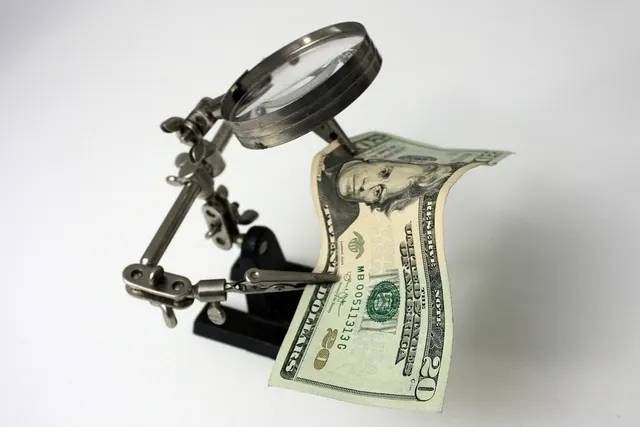
Photo: Pixabay
On this page 7 sections
- Why Fireworks Tent Cash Handling Is Different
- Set Change Banks and Drawer Limits Before Opening Day
- Catch Counterfeit Bills in a Few Seconds
- Cash Drop Procedures for a Tent With No Walls
- Fireworks Stand Safe and Overnight Security
- Reconcile Cash and Card Sales Before Anyone Leaves
- Deposit Daily and Know the Federal Cash Reporting Rules
Key takeaways
- If a $100's security thread glows blue under UV light, it's a bleached $5. A detector pen can pass it, but a UV light won't.
- Older $100s without the 3-D ribbon are still legal tender. Check the security features that design is supposed to have before turning one away.
- Set the drawer limit at the most you could lose in a grab-and-run, and never let two cashiers share a drawer.
- Never split deposits to stay under bank reporting. Tell your bank your season dates before opening day instead.
Fireworks tent cash handling comes down to four controls: a fixed change bank in every drawer, a cash drop whenever a drawer passes a set limit, a security-feature check on every $20 and larger bill, and no cash left on the lot overnight. A stand that runs those four every shift loses far less to counterfeits, skimming and break-ins than one that relies on trusted volunteers and a lockbox under the table.
Why Fireworks Tent Cash Handling Is Different
A store counts cash in a locked back office with a bolted safe and year-round staff. A tent has canvas walls and nowhere secure to put money. In many states and localities, the law sets a short selling window, so most of the season's revenue comes in over a few days. The heaviest hours are the last evenings before the Fourth of July or New Year's Eve, when the line runs past dark and the cashier is surrounded.
The customer mix keeps cash volume high. Families often bring cash set aside for the holiday. Tickets run from a few dollars for sparklers to a few hundred for a large family assortment or a buy-one-get-one bundle, so one drawer can fill with $50s and $100s inside an hour. The people at the register are often seasonal hires or relatives. At nonprofit fireworks stands, they're often church and booster volunteers who rotate by shift and have never run a register. Every control below assumes the cashier is new, rushed and working in bad light.
Set Change Banks and Drawer Limits Before Opening Day
A change bank is the fixed amount of small bills (and coins, if you need them) that goes into a drawer at the start of each shift and comes out at the end. Every drawer gets the same amount every time, and that fixed starting point is what makes a shortage visible.
Illustrative change bank for one drawer, assuming prices end in whole dollars with tax included:
- 100 $1 bills: $100
- 20 $5 bills: $100
- 5 $10 bills: $50
That is a $250 bank. If you add sales tax at the register instead, you need coins. One roll each of quarters ($10), dimes ($5), nickels ($2) and pennies ($0.50) adds $17.50, for a $267.50 bank. Tax-included, whole-dollar pricing makes change faster and counts easier, but some states require tax to be shown separately on the receipt. Check your state's rule with its revenue department or your accountant before you price that way.
Order small bills a week or more ahead. Branches close for the holiday and run short of $1s and $5s when every stand in town asks at once.
Then set a drawer limit: the most cash in $20s and larger bills a drawer can hold before a drop. Set it at the most you could lose to a grab-and-run without hurting the season. This article uses $600 as an illustrative figure. Write yours on a card taped inside the drawer so a first-shift volunteer never has to ask.
Give each drawer one cashier per shift. When two people share a drawer, nobody can be held responsible for a shortage, and honest staff end up under suspicion.
Catch Counterfeit Bills in a Few Seconds
A fake that a bank teller would spot often gets through at a crowded tent at 9 p.m. When the bank rejects it at deposit, the loss is yours.
The U.S. Currency Education Program, which publishes uscurrency.gov, teaches a three-step check: feel the paper, tilt the note, check with light. Train every cashier to use it on $20s, $50s and $100s.
- Feel. Run a finger across the note. Genuine Federal Reserve notes have a distinctive texture that printer paper doesn't match.
- Tilt. On current-design $10, $20, $50 and $100 notes, the numeral in the lower right corner shifts from copper to green. The $100 has two more features. The Bell in the Inkwell changes from copper to green, and the blue 3-D Security Ribbon woven into the paper shows bells and 100s that move as you tilt.
- Check with light. Hold the note up. A portrait watermark should appear in the blank space beside the portrait, visible from both sides. It must match the person printed on the note: Hamilton on the $10, Jackson on the $20, Grant on the $50, Franklin on the $100. You should also see an embedded security thread printed with the denomination. On the $100 it reads USA 100 and runs to the left of Franklin.
The Fake a Detector Pen Misses
The counterfeit most worth training for is a genuine low-value note, usually a $5, that has been bleached and reprinted as a $100. A detector pen tests the paper, and the paper is real currency paper, so the pen can pass it. The light check catches it, because bleaching removes the ink but leaves the $5's built-in features in place. Hold it up and you'll see a $5 watermark instead of Franklin: a large numeral 5 on the current design, or Lincoln on older ones. The thread will read USA 5. Use the pen as a first screen at most.
For night sales, keep a battery-powered UV light at each register. Under UV, each denomination's security thread glows its own color, according to the Currency Education Program's Know Your Money guide. Tape this to the drawer:
| Note | Thread glows under UV | Color-shifting numeral |
|---|---|---|
| $5 | Blue | None |
| $10 | Orange | Yes |
| $20 | Green | Yes |
| $50 | Yellow | Yes |
| $100 | Pink | Yes, plus Bell in the Inkwell |
A $100 whose thread glows blue is a bleached $5.
Cashiers often get one rule wrong: an older $100 without the 3-D ribbon isn't automatically fake. The Currency Education Program states that all designs of U.S. currency remain legal tender, whenever they were issued. On the 1996–2013 design, the corner numeral shifts from green to black instead of copper to green, and the thread still glows pink. Check the features that design is supposed to have.
If a cashier suspects a fake, they should politely decline it, keep it if that's safe, note what the customer looked like and call the manager. Don't hand it back to be passed at the next tent, and don't confront anyone. Report it to local police, who can bring in federal investigators.
Cash Drop Procedures for a Tent With No Walls
A cash drop moves money from the drawer to locked storage during the shift. It's the biggest theft control a stand has, because cash that isn't in the drawer can't be grabbed, skimmed or miscounted.
Use two triggers: the drawer limit, and a drop at intervals during rush periods whatever the count. Vary the timing so anyone watching the tent can't learn the schedule. Each drop follows the same steps:
- The cashier counts the drop, writes the amount on a drop log and seals it in a numbered tamper-evident bag.
- A shift lead checks the bag number and countersigns the log.
- The bag goes straight into a drop safe or locked container cashiers can't open.
Skimming is the bigger internal risk. The usual method is taking cash for a sale that never gets rung up. A POS that prints or texts a receipt for every sale makes that harder, and item-level inventory shows unrung sales as gaps in your stock count. The best POS for fireworks stores tracks assortments and BOGO deals at that level, so missing product shows up as clearly as missing cash.
Fireworks Stand Safe and Overnight Security
A safe sitting on asphalt under a tent is just a box with a handle for anyone with a hand truck. If you keep a safe on site, bolt a drop safe to the floor of a locking storage container or trailer. Many stands already use one for inventory.
Better still, leave almost nothing on the lot. At close, the only cash staying behind should be the next morning's change banks, locked in the container. Everything else goes to the bank's night deposit or a secure place off site that night. Two people should carry it in a vehicle, changing the route and departure time each night.
If someone stays overnight to guard inventory, make sure they know they're guarding product, not cash. Battery or cellular cameras on the register and container help settle a disputed shortage. Robbery training fits in one sentence: hand over the cash and stay safe. Frequent drops keep that loss small.
Reconcile Cash and Card Sales Before Anyone Leaves
Every shift ends with a blind count. The person counting doesn't see the POS total first, so they can't "find" the expected number.
Illustrative shift reconciliation, using the $250 bank and $600 drop limit from above:
| Line | Amount |
|---|---|
| Starting change bank | $250 |
| POS cash sales, tax included | $2,915 |
| Drops logged (4 × $600) | $2,400 |
| Expected cash in drawer | $765 |
| Counted cash in drawer | $752 |
| Over/(short) | ($13) |
Expected cash is $250 + $2,915 − $2,400 = $765. The drawer counted $752, so it's $13 short. Pull the $250 bank for tomorrow. The deposit is then $502 from the drawer plus $2,400 in drop bags, or $2,902. That equals cash sales minus the shortage ($2,915 − $13).
Set a written tolerance before the season. Small, random shortages are usually miscounted change. A shortage that keeps showing up on one person's shifts is a pattern to act on.
Reconcile cards the same night. Match the POS card total to your processor's batch report and settle the batch before close. If a reader ran offline in a cellular dead spot, confirm those sales went through after it reconnected, because an offline approval isn't a guaranteed payment. Our guide to card readers for a fireworks tent rush covers connectivity and offline risk.
Every sale that moves to a card is cash you don't have to guard. MannyPay's mobile card terminals are built for counters that move. A cash discount program can change how customers pay, as long as it follows network rules and state law. Read what's legal for cash discounts and surcharges at fireworks stands before you post a sign.
Deposit Daily and Know the Federal Cash Reporting Rules
Deposit every day into a business account in the stand's legal name. For a nonprofit, that's the organization's account, never a volunteer's. Daily deposits limit how much cash you can lose and leave a paper trail that matches the POS.
Call your bank before opening day with your season dates and a rough estimate of the cash you expect. A business account that suddenly takes in heavy cash for two weeks can trigger a review. A heads-up makes a frozen account during your busiest days less likely.
Federal law requires banks to report cash deposits above a set daily threshold, and those reports are routine. Splitting deposits to stay under the threshold is called structuring, and it's a federal crime even when every dollar is legitimate. Deposit what you took in, as you took it in. Separately, if one buyer pays your business a large sum in cash, as a wholesale customer or display client sometimes does, your business may have to file its own report with the IRS. Ask your bank and accountant for the current thresholds and forms. This is general information, not legal or tax advice.
Before opening day, put the change bank amount, drawer limit, drop steps, UV color card and deposit schedule on one page. Walk every cashier through it on their first shift. If you want more of the line paying by card, start early. Fireworks sellers often need a high-risk merchant account, and our guide to getting a fireworks merchant account approved covers why applications get declined. When you're ready, request a free quote and a MannyPay specialist will respond within one business day.
Sources
- The Seven Denominations (U.S. Currency Education Program)
- Decoding Dollars: The $100 (U.S. Currency Education Program)
- Know Your Money (U.S. Currency Education Program / U.S. Secret Service)
- How to Check Your Money (U.S. Currency Education Program)
- The Latest in U.S. Currency Design (U.S. Currency Education Program)
- Training Course Exam (U.S. Currency Education Program)
- $100 Note, Issued 1996–2013 (U.S. Currency Education Program)
This article is for general educational purposes and is not legal, tax or financial advice. Card network rules and state laws change; confirm current requirements for your business.