MCC 7997 vs. 8299: Which Code Should Your Gym or Dojo Use?
Learn which MCC code for gym, dojo or boxing club accounts fits your business, how it affects fees, risk and HSA cards, and how to fix a wrong one.
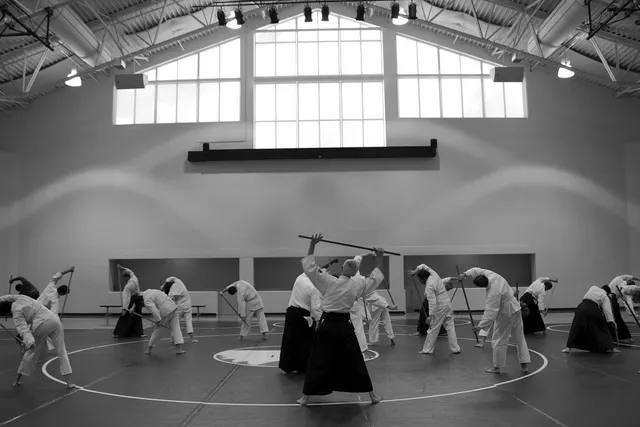
Photo: Pixabay
On this page 8 sections
- What an MCC Code for Your Gym Does to Your Fees
- MCC 7997 Clubs vs. MCC 7941 Sports vs. MCC 8299 Schools
- Which Code Fits a Martial Arts School, a Boxing Gym or a Big-Box Club
- How Your MCC Affects Risk Ratings and Underwriting
- What Your MCC Means for HSA and FSA Cards
- Finding Your Current MCC on Statements
- Requesting an MCC Correction the Right Way
- Next Steps for Gym and Dojo Owners
Key takeaways
- Your acquirer assigns your MCC based on what your business actually does. You can't pick it to get better rates.
- MCC 7997 usually fits membership fitness clubs, 8299 can fit curriculum-based martial arts schools, and 7941 is mainly for sports promoters and venues.
- Your MCC affects which interchange categories you qualify for, how underwriters score your risk, and whether HSA, FSA or corporate cards decline.
- Find your code on your statement or merchant portal. If it's wrong, request a documented correction and disclose all related changes up front.
Most gym owners never think about their merchant category code until something goes wrong. A member's HSA card declines at the front desk, a processor asks for a new review, or the fees on a statement don't match what was quoted. If you're trying to work out the right MCC code for gym memberships, martial arts tuition or boxing classes, this guide explains what the code does, how MCC 7997, 8299 and 7941 differ, which one fits your business model, and how to check and correct yours.
One rule applies throughout: your MCC should describe what your business actually does. Your acquiring bank assigns it during underwriting based on your primary line of business. It is not a setting you choose to get lower rates, and nothing in this article suggests otherwise.
What an MCC Code for Your Gym Does to Your Fees
A merchant category code is a four-digit number that tells the card networks and card issuers what kind of business you are. Every transaction you run carries it, and that one number affects several parts of your payments.
Interchange qualification. Visa, Mastercard and the other networks publish interchange tables. Some rate categories are limited to certain merchant types, and your MCC is one of the inputs that decides which categories your transactions can fall into. Other inputs include card type, whether the card was present, and whether the charge was flagged as recurring.
Your processor's cost, and therefore your rate. The effect depends on how you're priced:
- On interchange-plus pricing, interchange differences tied to your MCC pass straight through to you.
- On flat-rate or tiered pricing, the MCC changes your processor's cost, which can shape the rate you're offered at signup or renewal.
Card controls and rewards. Issuers use MCCs to apply spending controls. HSA and FSA cards, some corporate cards and some prepaid cards restrict or block certain categories. Consumer rewards cards also use MCCs to decide whether a purchase earns a category bonus, so members sometimes notice when a gym is coded differently than they expected.
Illustrative only: If a coding difference changed your effective rate by 0.10 percentage points on $40,000 in monthly card volume, that would come to about $40 a month. Real differences vary by card mix, pricing model and network rules, so confirm current interchange terms with your processor.
For most gyms, how you bill matters at least as much as the MCC. That includes card-on-file recurring dues, ACH drafts, paid-in-full contracts and front-desk retail. Our guide to ACH vs. credit card for gym dues covers that side of the cost equation.
MCC 7997 Clubs vs. MCC 7941 Sports vs. MCC 8299 Schools
These three codes come up most often for fitness and combat sports businesses. The descriptions below are general summaries of how the networks label each code. Confirm the exact wording and current classification with your processor.
| Code | General Network Description | Typical Fit | Common Billing Pattern |
|---|---|---|---|
| 7997 | Membership clubs (sports, recreation, athletic), country clubs, private golf courses | Gyms, fitness clubs, boutique studios with memberships | Monthly recurring dues, annual fees, enrollment fees |
| 7941 | Commercial and professional sports, athletic fields, sports promoters | Fight promoters, leagues, venues selling event access | Event tickets, entry fees, sponsorships |
| 8299 | Schools and educational services not classified elsewhere | Instruction-based programs with a curriculum | Tuition contracts, term or program fees, testing fees |
MCC 7997: The Default Merchant Category Code for a Fitness Club
If members pay for access to a facility or a class membership, MCC 7997 is usually where you land. That covers big-box clubs, 24-hour gyms, CrossFit-style boxes, cycling and yoga studios, and boxing fitness gyms. It is the code underwriters most associate with recurring membership billing.
MCC 7941: Rarely the Right Code for Membership Dues
MCC 7941 is built for commercial sports activity, such as promoters, leagues and athletic fields. A boxing gym that also promotes amateur fight nights may encounter it. Even then, the code applies to the event activity, not to monthly training dues.
MCC 8299: When It Fits a Martial Arts School
Some martial arts schools look less like a club and more like a school. They run structured curricula, belt ranks, testing cycles, kids' programs and tuition agreements. An acquirer reviewing that model may assign MCC 8299, while another acquirer reviewing the same school may assign 7997. The decision rests with your acquirer and depends on how your business is documented.
Which Code Fits a Martial Arts School, a Boxing Gym or a Big-Box Club
Underwriters look at your primary source of revenue and how customers pay. Here is how that typically plays out.
Big-box or 24-hour club. Revenue comes from access memberships, enrollment fees and perhaps personal training. This is classic 7997 territory.
Traditional martial arts school or dojo. Tuition contracts, belt progression and testing fees point toward an instruction model, so 8299 may fit. A dojo selling open-mat memberships and fitness kickboxing classes looks more like 7997. If testing fees are a big part of your revenue, see how schools approach collecting belt testing fees smoothly.
Boxing or MMA gym. Fitness memberships and class packs usually mean 7997. Structured coaching programs with defined terms can lean toward 8299. Promoting events with ticket sales adds 7941-type activity, which your acquirer may want disclosed or set up separately.
Mixed businesses. Many gyms combine dues, a pro shop, personal training and events. Usually one MCC covers the account, based on your main business. When a distinct line of business is large enough, your acquirer may approve a separate merchant account (MID) for it. That arrangement has to be disclosed and approved. Splitting volume across accounts to avoid a code or a review is not acceptable.
Don't shop for a code. Asking for a different MCC to get better rates, avoid a risk category or make HSA cards work is miscoding. It breaks card network rules and can lead to account termination. Serious misrepresentation can also result in a listing on Mastercard's MATCH list, which makes future processing much harder to obtain.
MannyPay works with gyms, dojos and combat sports facilities. You can see how we approach payment processing for boxing, combat sports and fitness businesses.
How Your MCC Affects Risk Ratings and Underwriting
Underwriters don't score you on your MCC alone, but it sets the starting point. Each code carries assumptions about how money moves and where disputes come from.
What underwriters watch with MCC 7997:
- Cancellation disputes from members who believe they canceled
- Recurring charges on cards that were lost, expired or replaced
- Long contracts and auto-renewal terms
- Closure risk, meaning prepaid members are left with nothing if a gym shuts down
What underwriters watch with MCC 8299:
- Future delivery exposure from tuition paid months or years ahead
- Refund policies on unfinished programs
- Large one-time charges for multi-year programs
That future delivery risk is why paid-in-full programs often draw reserves or holds. Our explainer on why processors hold funds on paid-in-full black belt programs walks through it.
Factors that can offset a code's assumptions:
- Clear cancellation terms, shown at signup and on receipts
- A recognizable billing descriptor so members know the charge
- Low dispute history (learn how to calculate your chargeback ratio)
- Monthly billing rather than large prepayments, where it fits your model
Card networks also have rules for recurring transactions, and many states regulate health club contracts and automatic renewals. Requirements vary by state. Treat this as general information and confirm with a qualified attorney and your processor.
What Your MCC Means for HSA and FSA Cards
Gym owners often hear from members whose HSA or FSA card declined. Two things are usually at play.
Card-level restrictions. Many HSA and FSA card programs only approve transactions in healthcare-related merchant categories or at merchants using item-level approval systems. Neither 7997 nor 8299 is a healthcare category, so declines are common.
Eligibility rules. General fitness memberships usually aren't treated as qualified medical expenses under federal tax rules. There are narrow exceptions tied to treating a specific diagnosed condition, and those often go through a member's reimbursement claim rather than a card swipe. Rules can change, so don't advertise memberships as "HSA eligible" without guidance from a qualified tax professional.
What you can do:
- Tell members their plan administrator decides what qualifies.
- Offer itemized receipts they can submit for reimbursement.
- Never ask your processor to recode your account so HSA cards go through.
Finding Your Current MCC on Statements
Plenty of owners have never seen their code. Here's where to look:
- Statement header or summary page. Many statements list the MCC near your merchant ID. Some label it "SIC," which is a related but separate classification system, so ask which one you're looking at.
- Merchant portal. Look under account details, business profile or settings.
- Merchant application or agreement. The code is often recorded at approval.
- Your processor's support line. Ask for your MCC and the exact network description attached to it.
- Interchange line items. If you're on interchange-plus, the category names on your statement can hint at how transactions are qualifying. Treat them as a clue, not proof.
Once you have the code, compare it with how your business actually operates. A dojo coded as a retail store, or a gym coded under an unrelated service category, is worth raising with your processor.
Requesting an MCC Correction the Right Way
No processor can promise that an MCC change won't lead to a closer look at your account. A change in classification is an underwriting matter, and a review is a normal part of the process. What you can control is making the request complete, documented and easy to evaluate.
- Confirm the current code and description in writing from your processor.
- Write a short business description. Include your revenue mix, such as "mostly monthly memberships, some retail and personal training." Label any figures as estimates.
- Gather supporting documents. Include your website, class schedule, membership agreement or tuition contract, pricing page and cancellation policy.
- Make sure your public footprint matches. Your website, billing descriptor and signage should describe the same business you're asking to be coded as.
- Ask what the change affects. That includes pricing, reserves, recurring billing setup and any existing holds.
- Disclose related changes together. If you're also expecting a volume increase or launching a paid-in-full program, say so in the same request so underwriting can review the full picture. Changes that surface after approval can lead to holds or a second review.
- Verify after approval. Check your next statement to confirm the new code and see how transactions are qualifying.
A change of ownership or a switch to a new processor gives you a natural opportunity to get the code right. If you're acquiring a facility, see how to transfer member billing when buying a gym.
Next Steps for Gym and Dojo Owners
Your merchant category code is a small detail with real effects on fees, underwriting and which cards your members can use. Find yours, make sure it reflects how your business actually earns money, and correct it through proper, fully disclosed channels if it doesn't.
If you'd like a second set of eyes on your statement and coding, you can request a free quote from MannyPay. A MannyPay specialist responds within one business day. We can't guarantee a particular code or rate, but we can review your current setup and walk you through the options for your business.
This article is for general educational purposes and is not legal, tax or financial advice. Card network rules and state laws change; confirm current requirements for your business.