Keg Deposits and Tap Rentals: Card Holds That Protect You
How to take a keg deposit that survives a long weekend and charge for missing kegs and tappers without paying fees on every refund.
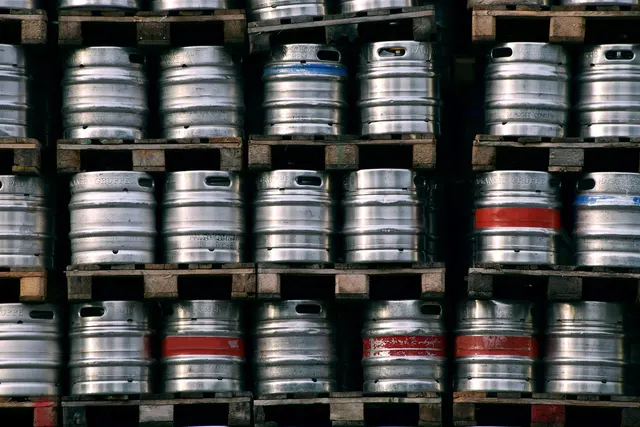
Photo: Pixabay
On this page 6 sections
Key takeaways
- Standard card preauthorizations usually expire within days, so they rarely cover a keg that goes out Friday and comes back the following week.
- With a tokenized card on file and a signed rental agreement, you pay percentage-based processing fees mainly on forfeitures. Depending on your processor, a card verification at pickup may carry a small per-transaction fee.
- Set each deposit at what a lost shell or tapper actually costs you, and file the registration form with the signed agreement. Together they serve as your legal record and your chargeback evidence.
- Book deposits as a liability in your POS and accounting. They become income only when forfeited, and they should reconcile against the deposits your distributor holds from you.
A keg deposit is money you hold against the return of a keg shell and any tap equipment that goes out with it. You refund it when the equipment comes back intact and keep it when it doesn't. Cash works, and so does a card saved on file under a signed rental agreement. The method that fails most often is a standard card preauthorization, because it usually expires before the keg comes back. Your choice of method decides how well you're covered and how much you pay in processing fees on money you end up handing back.
How Keg Deposits Work for Liquor Stores
Your distributor charges you a deposit on every keg shell it delivers. You pass a deposit on to the customer. When the empty comes back, you return the shell to the distributor and recover your own deposit. Tappers (the hand pumps), jockey boxes, carbon dioxide tanks and ice tubs are usually your own equipment, so each needs its own deposit and its own line on the rental agreement.
The rush is seasonal and predictable. Kegs go out on Thursday and Friday ahead of graduation parties, summer holidays, weddings and home football games. They drift back early the next week, usually sticky, and now and then without the tapper. Some never come back. In an ordinary week you might rent a handful of kegs, but after a holiday weekend you may have dozens out, and that is when the deposit process gets tested.
How Much Is a Keg Deposit? Set It at Replacement Cost
No card network rule or federal law sets a retail keg deposit amount. Some states regulate parts of keg sales, so check yours, but the amount is generally your call. A defensible floor for the shell deposit is whatever your distributor charges you for that shell. For tappers, use your replacement cost plus the time it takes to reorder one. If the deposit is lower than what a missing keg costs you, it isn't protecting you. Post the amounts at the register and print them on the rental agreement so nobody is surprised at return time.
Keg Registration Laws: What the Tag and Form Require
Many states, and some counties and cities, have a keg registration law. These laws generally exist so that police can trace an underage drinking party back to the person who bought the keg. The details vary widely, but most follow a similar pattern:
- A numbered tag or sticker goes on each keg at the time of sale.
- The buyer fills out a form with identifying details from a government ID, and sometimes the address where the keg will be served.
- The retailer keeps the form for a period set by law and may have to show it to law enforcement.
- Removing or defacing the tag may be an offense. In some places, a keg returned without its tag forfeits the deposit.
Your state alcohol beverage control agency publishes the rules that apply to you, and your distributor rep usually knows them too. These are state and local laws, not card network rules, so your processor can't tell you what they require. Treat this section as general information, and confirm your obligations with the agency or with a lawyer who handles liquor licensing.
The registration form also helps on the payments side. It ties a verified ID to a keg number. Paired with the rental agreement, it becomes the core of your evidence if a customer later disputes a forfeiture charge. If you already scan IDs for age checks, our guide to liquor store ID scanners that work with your POS covers how to capture that data cleanly.
Cash, Card Hold or Card on File: Which Keg Deposit Method Holds Up
There are four common ways to collect a deposit, and they behave very differently once the keg leaves the store.
| Method | At pickup | At return | Main risk |
|---|---|---|---|
| Cash deposit | Cash goes in the drawer | Cash paid back out | Drawer shortages, or staff paying out without the keg |
| Card sale, refunded later | Deposit charged as a sale | Refund to the same card | You may lose the processing fee on every refund |
| Card preauthorization (hold) | Funds held, not charged | Hold released or captured | Hold often expires before the keg returns |
| Card on file with signed agreement | Card saved as a token, no charge | Charged only if equipment is missing | Needs clear written terms to survive disputes |
Why a Standard Preauthorization Runs Out
A preauthorization asks the issuing bank to set funds aside without moving them. It looks like the natural keg deposit credit card hold, but it breaks down in two ways.
Timing is the first. Card network rules set how long an authorization stays valid, and the window depends on the merchant category. For an ordinary retail sale the window is short, typically measured in days, and the issuing bank may release the hold even sooner. Hotels and car rental counters get longer holds and incremental authorizations because network rules tie those tools to their merchant categories. A liquor store usually can't use them. If you capture an expired authorization, the charge may decline. If it goes through anyway, you're open to a dispute on authorization grounds. Before you build a process around holds, ask your processor how long a card-present authorization stays valid on your account.
Debit cards are the second problem. When the hold lands on a debit card, it ties up real money in the customer's checking account until it drops off. Picture someone who returned the keg on Sunday and still sees a "pending" charge on Wednesday. That customer tends to call the store, or the bank.
Holds still work for same-day or overnight rentals. They're the wrong tool for a keg that goes out Friday and returns the following Tuesday.
Card on File With a Signed Agreement
Most stores that rent regularly settle on this method. At pickup, the customer's card goes into your POS or gateway and is saved as a token. That token is a stand-in value that lets you charge the card later without anyone seeing or storing the card number. Some systems run a small verification authorization to confirm the card is good. The customer then signs a rental agreement that spells out:
- The equipment going out, with keg tag numbers and serial numbers for tappers or jockey boxes.
- The deposit amount for each item and the return deadline.
- Your right to charge the saved card for the listed amounts if items aren't back by the deadline or come back damaged or untagged.
- What happens if equipment shows up after you've already charged for it.
Card network rules also cover storing a card and charging it later. In practice, that generally means telling the customer in writing when and why you'll charge, and getting their agreement first. Your gateway or POS handles the token mechanics. Never write card numbers on the rental form. Paper card data falls in scope for PCI DSS, and a form with a card number on it invites theft at the counter.
Run the Numbers: What Refunded Deposits Cost You
You can price the refund problem from your own statement rather than from anyone's sample rates. You need your effective rate, which is the month's total processing fees divided by total card volume, and any per-transaction fee on your fee schedule. Then check your merchant agreement for one detail: whether the processor keeps the original fee when you issue a refund. Many do.
| Line | How to get it |
|---|---|
| Deposit per rental | Your posted shell and tapper deposit amounts |
| Effective rate | Monthly statement: total fees divided by total card volume |
| Per-transaction fee | The fee schedule on your statement or agreement |
| Fee lost per refunded rental | Deposit times effective rate, plus the per-transaction fee |
| Rentals returned per year | Your rental log or the POS open-deposits report |
| Annual cost of refunded deposits | Fee lost per rental times rentals returned |
If you charge the deposit as a sale and refund it when the keg comes back, you pay that fee on every rental, even when the keg returns spotless. The last line of the worksheet is what you spend each year to hold money you were always going to give back. Run it against your busiest weekends first, because that's where the total piles up.
Now run the same worksheet for a card on file. Kegs that come back on time cost you nothing in percentage fees. You pay the percentage fee only on rentals that forfeit, and in those cases the fee comes out of money you keep. Depending on your processor, the verification authorization at pickup may still carry a small per-transaction charge, so include it on that line.
The gap between the two worksheets widens as rental volume grows. It also shows why refunds are the worst place to lose money: you pay to take the deposit and get nothing back for returning it. There is one exception. If a keg comes back the same day, before your batch closes, a void usually reverses the transaction without the fee a refund carries. Processors differ on this too.
Card refunds belong on the card that paid. Paying cash out of the drawer to settle a card deposit is a classic refund fraud setup, and many merchant agreements prohibit it. For cash deposits, require a manager or a second employee to sign off on any payout above a threshold you set. Our piece on cash handling procedures with dual control explains how to set that up.
Charging for Unreturned Kegs and Tappers
When the deadline passes, follow the same sequence every time. Contact the customer using the details on the registration form and give a short final window, such as close of business the next day. Then charge only the amounts in the agreement for the specific items still missing. If the keg came back but the tapper didn't, charge the tapper deposit and nothing else. Charges that match the agreement line by line are far easier to defend than a round number.
Keep a file for each rental. It should hold the signed agreement, the registration form, a note of the reminder you sent and the receipt for the forfeiture charge. If the customer disputes the charge as unauthorized, that file is your response. The tactics overlap with our guide to fighting liquor store chargebacks, especially the value of a verified ID tied to the transaction.
Some customers return a keg weeks late, after you've already charged them. Settle your policy in advance and print it on the agreement. Spell out whether a late return earns back part or all of the forfeited deposit, and how long that offer stands.
Tracking Keg Deposits as a Liability in Your POS
A deposit isn't a sale. Until the customer forfeits it, you owe it back, so it belongs in a liability account (something like "customer deposits: kegs"), not in revenue. Forfeited deposits generally become income at the point you keep them. Have your accountant confirm that treatment, and ask whether deposits are subject to sales tax, because that varies by state.
In the POS, set up each deposit as its own item, separate from the beer. Make deposit items non-discountable so a case discount or loyalty coupon can't shave them. If your state doesn't tax keg deposits, mark the deposit items non-taxable. The setup mirrors container deposits, which we walk through in bottle deposits and alcohol taxes in your liquor store POS.
Run an open-deposits report weekly, and daily after a holiday weekend. For every rental, it should list the keg tag number, the customer, the date out, the return deadline and the payment method. Reconcile the report against what your distributor shows you owe on shells. Your customer deposits and your distributor deposits should roughly mirror each other. When they drift apart, one of two things has usually happened. Either a keg came back without being closed out in the POS, or a shell went missing between your back room and the distributor's truck.
If your current system can't save a card on file or keep deposit items out of discounts, it's working against your rental program. Use the requirements in this section as a checklist when you compare the POS systems MannyPay offers. Our liquor store payment processing page covers the rest of the counter.
Before your next big holiday weekend, ask your processor two questions in writing. First, how long do your card-present authorizations stay valid? Second, do you get the processing fee back when you refund? The answers tell you which deposit method fits your store. If you'd like a specialist to review your setup and pricing, request a free quote. A MannyPay specialist responds within one business day.
This article is for general educational purposes and is not legal, tax or financial advice. Card network rules and state laws change; confirm current requirements for your business.