Liquor Store Credit Card Processing Fees: What You Should Really Pay
Benchmark your liquor store credit card processing fees: calculate your effective rate, isolate the negotiable markup and spot padded statement fees.
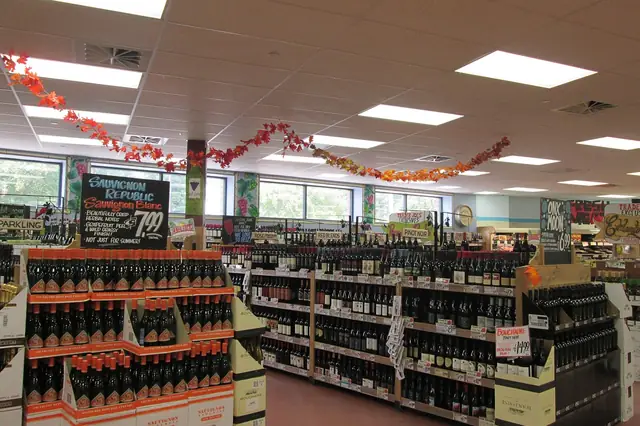
Photo: Pixabay
On this page 7 sections
- Why Credit Card Processing Fees Hit Liquor Store Margins Harder
- Interchange Rates for Liquor Stores: The Three Layers of Every Sale
- Flat-Rate vs. Liquor Store Interchange-Plus Pricing
- How to Calculate Your Effective Rate From a Monthly Statement
- Hidden Fees Common on Liquor Store Statements
- How to Negotiate Lower Liquor Store Processing Rates
- Next Steps: Get a Second Look at Your Statement
Key takeaways
- No single rate is "right" for every liquor store. A fair cost depends on your ticket sizes, card mix and how cards are entered.
- Interchange and network fees are pass-through costs. The processor markup is the part you can negotiate, so measure it separately.
- Fixed per-transaction fees eat into small tickets like single cans, while percentage markups weigh most on premium bottles and cases.
- Statements can include PCI fees, inflated network fees, keyed-entry downgrades and terminal leases. Question each one.
Ask three liquor store owners what they pay for card processing, and you may hear three different answers. Each one can be fair for that store. That's because liquor store credit card processing fees depend on how you sell:
- How many single cans you sell compared with premium bottles
- How many customers pay with rewards cards compared with debit cards
- How many sales are tapped at the counter compared with keyed in for phone orders
So there's no single average credit card fee every liquor store should expect. This guide shows you how to benchmark your own costs instead. You'll learn how to calculate your effective rate, separate the costs you can negotiate from the ones you can't and spot the fees that pad a typical liquor store statement.
Why Credit Card Processing Fees Hit Liquor Store Margins Harder
Liquor retail has economics that make processing fees more painful than they are in many other retail categories.
- Thin margins on high-ticket items. Distributor pricing limits what you earn on spirits and wine, and in some states pricing regulations limit it too. A percentage fee on a premium bourbon or a case of wine can absorb a real share of your profit on that sale.
- A very wide ticket range. In one hour, you might ring up a single nip, a six-pack, a mixed case for a party and a collectible bottle. Fee structures treat small and large tickets differently, so a pricing model that works at one end of your range can be expensive at the other.
- Concentrated peaks. Volume spikes in short windows: Friday and Saturday evenings, the night before Thanksgiving, New Year's Eve and big game days. Those weeks can produce a large share of your yearly fees.
- Premium card use on big purchases. Customers stocking up for weddings, holidays or corporate events often pay with rewards or business cards, which usually carry higher interchange than basic debit.
Most liquor stores take very few card payments online. The levers that matter are in-store: your pricing model, card entry method, hardware terms and statement fees.
Interchange Rates for Liquor Stores: The Three Layers of Every Sale
Every card sale carries three layers of cost.
| Component | Who sets it | Negotiable? | What drives it in a liquor store |
|---|---|---|---|
| Interchange | Card networks; paid to the card-issuing bank | No | Card type (debit, credit, rewards, business), entry method, merchant category |
| Network assessments and fees | Visa, Mastercard, Discover, American Express | No | Volume and transaction count |
| Processor markup | Your processor or provider | Yes | Your contract: percentage, per-transaction fee, monthly fees |
What Pushes Interchange up or Down at the Counter
- Card type. Debit cards often carry lower interchange than credit cards, though the cost varies by issuing bank. Rewards and business credit cards often cost the most.
- Entry method. A card tapped or dipped at the terminal generally qualifies for lower interchange than a card number keyed in by hand. Keying is common for phone orders, curbside pickup and local delivery.
- Merchant category code (MCC). Liquor stores are typically classified under the package store category for beer, wine and liquor. Confirm that your account is coded accurately. Never accept a code that misrepresents what you sell just to get lower interchange. Miscoding breaks card network rules and can get your account terminated.
An Illustrative $50 Bottle Sale
The figures below are hypothetical, not actual network rates:
- Interchange: 1.75% + $0.10 = $0.975
- Network fees: 0.13% = $0.065
- Processor markup: 0.30% + $0.10 = $0.25
- Total: about $1.29, or roughly 2.6% of the sale
Only the processor markup, about $0.25 in this example, is truly the processor's to set. When a provider quotes a "rate," ask whether it covers all three layers or only the markup.
Flat-Rate vs. Liquor Store Interchange-Plus Pricing
Liquor stores usually encounter three pricing models.
| Model | How it works | Where it tends to fit | Watch out for |
|---|---|---|---|
| Flat rate | One blended percentage (sometimes plus a fixed fee) for most cards | Very low volume; owners who value simplicity | You pay the same on cheap debit swipes as on premium credit, so the blend can cost more than needed |
| Tiered | Sales sorted into "qualified," "mid-qualified" and "non-qualified" buckets | Rarely the best fit | The provider decides which bucket applies, and downgrades are hard to audit |
| Interchange-plus | Actual interchange and network fees passed through, plus a stated markup | Most stores with steady volume | Read the markup terms closely; the "plus" includes the monthly fees too |
Liquor store interchange-plus pricing is usually the most transparent choice. You see what each card actually costs and can verify the markup line by line. For a deeper comparison, see our guide on when to switch from flat-rate to interchange-plus pricing.
Match the Markup Structure to Your Ticket Mix
The structure of the markup matters as much as its size:
- Fixed per-transaction fees hurt small tickets. Illustratively, a $0.10 per-transaction fee on a $6 single can equals about 1.7% before any percentage applies. On a $120 bottle, the same $0.10 is under 0.1%.
- Percentage markups hurt big tickets. Adding 0.30% to a $300 order of premium spirits costs $0.90. Adding it to a $6 can costs two cents.
If you run a high-traffic, small-ticket store, such as a convenience-style location near a campus or a busy urban corner, push hardest on the per-transaction fee. If you run a destination wine and spirits shop with large average tickets, focus on the percentage.
How to Calculate Your Effective Rate From a Monthly Statement
Your effective rate is the simplest honest benchmark. It shows what card acceptance actually costs as a share of your card sales.
- Find total card volume for the month: the gross dollar amount processed.
- Find total fees: every processing deduction, monthly fee and equipment charge, plus annual fees spread across the year.
- Divide total fees by total card volume.
Illustrative example: $80,000 in card volume and $2,240 in total fees gives an effective rate of 2.8%.
Isolate Your Markup Rate
- Add up the interchange and network fee lines. On an interchange-plus statement, these are usually itemized.
- Subtract them from total fees. What remains is what your provider earns.
- Divide that remainder by card volume.
Continuing the illustration, say $1,840 of the $2,240 was interchange and network fees. The markup is then $400, or 0.5% of volume. That's the number you negotiate and the number you compare between providers.
Liquor Store Tips for a More Accurate Benchmark
- Check a peak month and a slow month. December and a quiet late-winter month can produce different effective rates because your card mix shifts.
- Note your average ticket. Divide card volume by transaction count. A low average ticket means fixed fees matter more.
- Count keyed sales. Phone orders and delivery carry higher interchange. If they make up a meaningful share of sales, they can push up your effective rate even when you aren't being overcharged.
Hidden Fees Common on Liquor Store Statements
These fees show up often, and each one deserves a question.
- Inflated network fees. Some providers add a markup to the network assessments they pass through. Others invent similar-sounding line items, such as "network access" or "regulatory" fees. Ask for documentation tying each item to an actual card network charge.
- Non-qualified surcharges. On tiered plans, keyed phone orders and rewards cards may land in the most expensive bucket, whose rate can be much higher than the actual interchange.
- PCI non-compliance fees. These are charged monthly when your annual security questionnaire isn't on file. Completing it often removes the fee.
- Terminal leases. Long, non-cancelable leases can cost far more than buying the equipment outright. The lease may also be with a third party, so it can stay in force after you switch processors.
- Early termination fees and liquidated damages. Some contracts charge an estimate of the processor's lost future revenue if you leave early.
- Monthly minimums, statement fees, batch fees and annual fees. Each is small, but together they add up, especially for a store that's quiet outside peak seasons.
- Rate increase notices. Providers sometimes announce increases in a statement message rather than a separate letter. Read the message box every month.
How to Negotiate Lower Liquor Store Processing Rates
Numbers will get you further than a general request for "a better deal."
- Gather three to twelve months of statements, including your busiest holiday month.
- Calculate your effective rate and markup rate using the steps above.
- Ask for interchange-plus pricing in writing, with the percentage markup, per-transaction fee and every monthly fee stated.
- Ask to remove junk fees: PCI fees once you complete the questionnaire, statement fees, batch fees and padded network charges.
- Review contract terms for length, auto-renewal, termination fees and equipment ownership.
- Reduce keyed entry. Keep more sales card-present with up-to-date smart terminals that accept tap and chip payments at the counter and mobile card terminals for curbside pickup.
- Compare quotes on the same volume. Give each provider identical statements so their numbers are comparable.
Some liquor stores struggle to get or keep an account at all because processors treat alcohol as elevated risk. If that sounds familiar, read why liquor store merchant accounts get flagged and how to get approved before you start shopping rates.
Cost-Offset Programs: Proceed Carefully
Some stores offset fees by adjusting prices for card payments. The main options are:
- Dual pricing programs: showing separate cash and card prices.
- Cash discount programs: giving a discount for paying in cash.
- Credit card surcharging: adding a fee to credit card payments where state law permits.
These programs come with liquor-specific cautions:
- Some states regulate how retail alcohol prices are set, posted or discounted.
- A few states restrict or prohibit credit card surcharges.
- Card network rules limit how surcharges can be applied and on which cards. Confirm the current rules with your provider.
Check with your state alcohol beverage control agency and a qualified professional before you change how prices appear on shelves or receipts. This article is general information, not legal advice.
Next Steps: Get a Second Look at Your Statement
MannyPay works with liquor stores and package retailers on in-store processing. It offers cost-offset programs, including cash discount, dual pricing, surcharging where permitted and zero cost processing for eligible merchants. It also sells counter and mobile hardware from Clover, Valor, Dejavoo and PAX.
Results depend on your volume, card mix, state rules and underwriting. To see how your current costs compare, request a free processing quote and send a recent statement.
This article is for general educational purposes and is not legal, tax or financial advice. Card network rules and state laws change; confirm current requirements for your business.