Certificates of Analysis: The Peptide Docs Processors Expect
Learn what a credible peptide certificate of analysis must include and how COAs help you pass processor underwriting and win chargeback disputes.

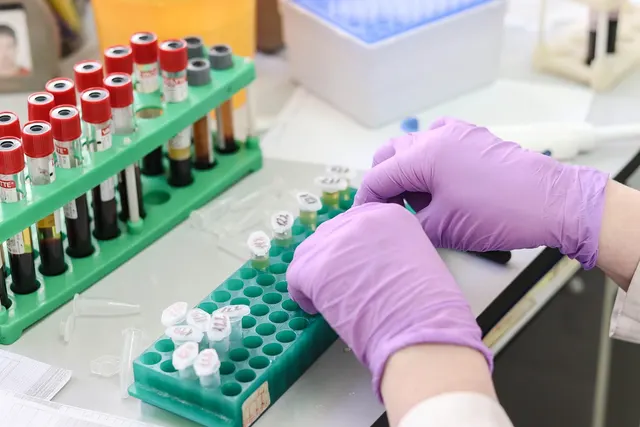
Photo: Pixabay
On this page 8 sections
- Why a Peptide COA Does Double Duty
- What a Peptide Certificate of Analysis Should Contain: HPLC, Mass Spec, and Lot Numbers
- Third-Party Testing for Peptides vs. In-House Testing
- How Underwriters Review a Peptide COA During Application
- Peptide Batch Testing Documentation: Linking COAs to Orders
- Displaying COAs on Your Site Without Creating Compliance Risk
- Red Flags: Recycled, Edited, or Supplier-Only COAs
- Next Steps for Peptide Sellers
Key takeaways
- A credible peptide COA ties one specific lot to identity (mass spec) and purity (HPLC) results from a lab that can be independently verified.
- Third-party lab reports generally carry more weight with underwriters than supplier-only or in-house COAs.
- Recording the lot number shipped on every order turns your COA library into chargeback evidence.
- Recycled, edited, or unverifiable COAs are underwriting red flags and can end a merchant relationship.
If you sell peptides online, a peptide certificate of analysis affects more than product quality. Processors and their acquiring banks treat lab documentation as one of the clearest signals of whether a peptide business is run responsibly. The same documents can also decide whether you win or lose a "not as described" chargeback. This guide covers what a credible COA contains and how third-party testing differs from in-house testing. It also covers how underwriters review lab reports, how to link COAs to orders for dispute defense, and the red flags that can get an application declined or an account closed.
This article is general information, not legal or regulatory advice. The legality of selling specific peptides varies under federal and state law. A COA documents what is in a vial. It does not make a product legal to sell. Confirm your obligations with a qualified attorney.
Why a Peptide COA Does Double Duty
Peptide merchants are generally underwritten as high-risk, and a few reasons overlap. The regulatory status of some products is unsettled, customers frequently dispute quality, and the category has a history of mislabeled and counterfeit products. Underwriters can't test your inventory themselves. Your documentation stands in for that testing.
A lab report works in two places:
- At underwriting: It shows that you know what you're selling, buy from traceable sources, and keep records an acquiring bank can audit.
- In disputes: When a customer claims a product was fake, underdosed, or contaminated, a lot-specific COA tied to that order is often your strongest evidence.
Merchants who build their documentation for both uses from the start tend to have an easier time staying in good standing. For the broader account picture, see MannyPay's peptide merchant account and payment processing page.
What a Peptide Certificate of Analysis Should Contain: HPLC, Mass Spec, and Lot Numbers
A COA is only as useful as the details on it. A one-page document with a logo and a purity percentage won't hold up to scrutiny. A credible report usually includes the following.
Identification and Traceability
- Product name and, where applicable, the peptide sequence
- Lot or batch number that matches the number printed on the vial label
- Manufacture date and test date (the test date should come after manufacture)
- Unique report or sample ID
- Name of the client who submitted the sample
HPLC Purity Report
High-performance liquid chromatography (HPLC) separates the components in a sample, so the lab can report what share of the material is the target peptide. A complete HPLC peptide purity report should show:
- The actual chromatogram, not just a summary number
- Retention time of the main peak
- Peak area percentages, including impurity peaks
- Method details such as column type, mobile phase, and detection wavelength
- The calculated purity result
One distinction matters here. HPLC purity is a relative measure of the peptide compared with other detected compounds. It is not the same as the quantity of peptide in the vial. Some labs also report net peptide content, which accounts for water, salts, and counterions. If your product pages state an amount per vial, a report that addresses quantity supports that claim better than purity alone.
Mass Spectrometry (Identity)
Mass spectrometry confirms the material is the peptide it's labeled as. Look for:
- Observed molecular weight compared with the theoretical molecular weight
- The spectrum itself
- The instrument or method used
HPLC tells you how clean a sample is. Mass spec tells you what it is. A COA with only one of the two leaves an obvious gap.
Additional Tests
Depending on the product and how it's sold, labs may also test for endotoxins, sterility, heavy metals, residual solvents, or moisture content. These tests aren't always expected. When they're relevant to your products, they strengthen your file.
Lab Credentials and Verification
- Lab name, physical address, and contact details
- Accreditation information, including the accrediting body and the scope of accreditation
- Analyst name and signature or an authorized approval
- A way to verify the report independently, such as a lab portal lookup or QR code that links to the lab's own site
Third-Party Testing for Peptides vs. In-House Testing
Not all COAs carry equal weight. The source of the test matters as much as the results.
| Source | What It Is | How Underwriters Tend to View It |
|---|---|---|
| Supplier/manufacturer COA | Issued by the company that made or sold you the peptide | Useful as a starting point, but the seller is grading its own product |
| In-house testing | Your own lab or equipment | Shows investment in quality control, but isn't independent |
| Third-party lab report | An independent lab you contract with directly | Generally the most persuasive, especially when lab-verifiable |
Many sellers keep the supplier's COA and also send samples from each lot to an independent lab. The two reports should broadly agree. If they don't, you've caught a problem before your customers or your processor does.
When choosing a third-party lab, ask:
- Is the lab accredited, and does the accreditation scope cover peptide identity and purity testing?
- Will it issue reports in your business name, tied to your submitted sample?
- Can anyone verify reports through the lab directly?
- What turnaround time does it offer, so testing doesn't hold up inventory?
How Underwriters Review a Peptide COA During Application
Underwriting practices differ among acquiring banks, but reviewers of peptide applications commonly look at several things.
- Coverage: Do you have COAs for the products listed on your site, or only for a few?
- Consistency: Do the product names, sequences, and amounts on the COAs match your product pages?
- Currency: Are the reports recent and lot-specific, or one old report reused indefinitely?
- Verifiability: Does the lab exist, and can the reviewer confirm the report with it?
- Context: Do your site's marketing, claims, and disclaimers match what the documentation supports?
COAs are one piece of a larger review that also covers your website, product mix, fulfillment, refund policy, and processing history. Strong lab documentation won't offset health claims or prohibited products on your site. Our guide to peptide website pages that get merchant accounts closed covers that side. Labels matter too. Read whether "research use only" labels protect your peptide merchant account before you rely on one.
Present your documentation honestly. Don't hide products from an underwriter, move them to a separate site, or describe them as something else. Those tactics break card network rules and can lead to termination and placement on the MATCH list. A high-risk merchant account applied for with complete, accurate documentation is far more durable.
Peptide Batch Testing Documentation: Linking COAs to Orders
A COA library helps in a dispute only if you can prove which lot a specific customer received. That link is made at fulfillment, not after the chargeback arrives.
What to Record per Order
| Record | Why It Matters |
|---|---|
| Lot number(s) shipped | Connects the order to a specific COA |
| COA file and report ID for that lot | The core quality evidence |
| Product page as it appeared at purchase | Shows what the customer was told |
| Tracking and delivery confirmation | Answers "never received" claims |
| Customer communications | Shows how you handled complaints |
| Refund policy accepted at checkout | Shows terms the customer agreed to |
Practical ways to capture lot numbers:
- Scan or select the lot at pick-and-pack and save it to the order in your store platform.
- Print the lot number on the packing slip and keep a copy.
- Rotate inventory so one SKU isn't shipping from several lots at once without being tracked.
Illustrative Example
The following is illustrative, not a real case. A customer disputes a charge and says the product "wasn't real." The merchant pulls the order and finds the lot number logged at packing. They attach the third-party COA for that lot, which includes HPLC and mass spec results and a lab verification link. They add the product page snapshot and the delivery confirmation, then submit the package as representment evidence. Without the lot record, the merchant could offer only a generic COA that may not match what the customer received.
COAs mainly help with quality and "not as described" disputes. They do little against true fraud or stolen-card claims. For those, tools like 3D Secure authentication are more relevant. For a full breakdown by dispute type, see winning peptide purity, delivery, and fraud chargebacks.
Displaying COAs on Your Site Without Creating Compliance Risk
Publishing COAs builds customer trust and shows underwriters you're transparent. How you present them still matters.
Do:
- Post lot-specific COAs and tell customers how to match the lot on their vial to the report.
- Publish the full report, including chromatograms and spectra, not a cropped summary.
- Link to the lab's own verification page where available.
- Keep older lot reports archived and accessible for customers with older stock.
Avoid:
- Placing efficacy, dosing, or health language next to COAs. Lab results describe composition, not what a product does.
- Describing products in regulatory terms they don't meet, such as implying government approval.
- Redacting the lab name or contact details, which makes reports unverifiable.
- Adding your own graphics or edits on top of results. A watermark is fine, but nothing should touch the data.
Red Flags: Recycled, Edited, or Supplier-Only COAs
Experienced reviewers have seen problem documentation many times. These patterns tend to draw attention:
- Recycled reports: The same report ID, date, or results appear across different lots or products.
- Edited reports: Mismatched fonts, misaligned text, altered dates, or a purity figure that doesn't match the chromatogram.
- Impossible timelines: Test dates that come before the manufacture date, or reports dated in the future.
- Unverifiable labs: No address, no website, no way to confirm the report, or a lab that won't confirm it.
- Supplier-only files: Every product relies only on the manufacturer's own COA with no independent testing.
- Summary-only documents: A purity percentage with no chromatogram, spectrum, or method details.
Never alter, fabricate, or borrow a COA. Submitting falsified documents to a processor or using them in a chargeback response can be treated as fraud. It can lead to account termination, held funds, and MATCH listing. If a lot fails testing or a report looks wrong, pull the product and test again.
Next Steps for Peptide Sellers
Before you apply or reapply for processing, audit your documentation:
- Confirm every product on your site has a current, lot-specific COA.
- Add independent third-party testing where you rely only on supplier reports.
- Set up lot-number capture at fulfillment so every order maps to a COA.
- Review your COA page and product pages for health claims or unsupported language.
- Keep the full file organized so an underwriter or dispute analyst can review it quickly.
Good documentation won't guarantee approval or settle every dispute, but it gives underwriters and dispute analysts something concrete to evaluate. If you're ready to discuss processing for your peptide business, request a free quote and a MannyPay specialist will respond within one business day.
This article is for general educational purposes and is not legal, tax or financial advice. Card network rules and state laws change; confirm current requirements for your business.