Future Delivery Risk: Why Processors Hold Funds on Travel Bookings
Learn how processors measure future delivery risk in travel, why they hold booking funds, and how to restructure deposits and payouts to shrink holds.
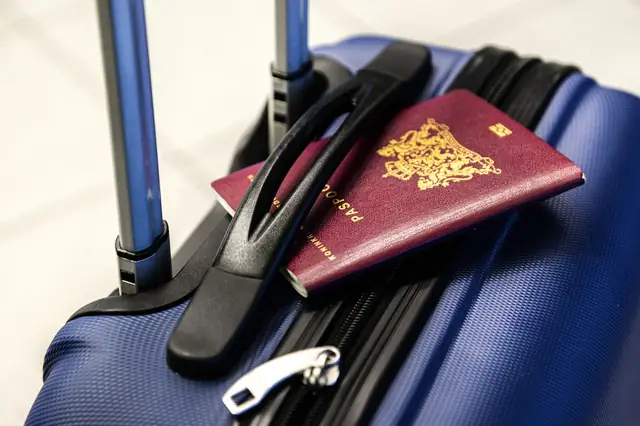
Photo: Pixabay
On this page 8 sections
- What Future Delivery Risk in Travel Means to Your Processor
- How Processors Calculate Travel Risk From Booking Windows
- Travel Reserve Requirement Types: Delayed Funding, Release-on-Departure and Volume Caps
- Restructuring Deposits and Final Payments to Lower Exposure
- Using Trust Accounts and Supplier-Direct Charges
- What to Do When Your Processor Suddenly Holds Travel Booking Funds
- How MannyPay Works With Travel Businesses
- Next Steps
Key takeaways
- Processors hold travel funds because they may have to refund trips that are paid today but delivered months later.
- Your booking window, monthly card volume and refund history drive most of the exposure calculation.
- Smaller deposits, later final payments, trust accounts and supplier-direct charges can all lower the amount at risk.
- When funds are held unexpectedly, document your future bookings and negotiate release terms rather than opening workaround accounts.
Future delivery risk in travel is the main reason processors hold funds, set reserves or cap volume for travel agencies, tour operators and booking sites. A traveler pays in spring for a fall cruise. Your card processor treats that payment as a promise that has not been kept yet. If the trip collapses and your business cannot refund it, the processor may have to cover the refund.
This guide covers how processors size that exposure from your booking windows and how the common hold structures work. It also covers practical ways to shrink holds by changing how you take deposits, final payments and supplier payouts, and what to do if your processor freezes funds without warning.
What Future Delivery Risk in Travel Means to Your Processor
When a customer pays by card, the acquiring bank behind your merchant account takes on liability for that transaction. If the cardholder later disputes the charge because the service was never delivered, the dispute comes back to you. If you can't pay it because you've closed, gone insolvent or spent the money, the acquirer absorbs the loss.
For most businesses, delivery happens at the moment of sale or within days. Travel is different. Some examples:
- Tours and group trips are often booked well before departure.
- Cruises and destination weddings can be paid in stages over many months.
- Airline tickets and hotel packages depend on third-party suppliers that the agency doesn't control.
Processors call the total of these paid-but-undelivered bookings future delivery exposure, or delayed delivery exposure on a merchant account. Under card network dispute rules, a cardholder's window to dispute a non-delivered service generally starts from when the service was expected, not from the day they paid. A charge you ran months ago can still become a chargeback well after the trip date.
Why Travel Gets Extra Scrutiny
Travel combines several risk factors at once:
- High tickets, often card-not-present.
- Long booking windows.
- Dependence on airlines, hotels and operators that can fail or cancel.
- Exposure to events outside your control, such as weather, health emergencies or political disruption.
The merchant category code also signals this to underwriters. Our guide to how MCC 4722 shapes travel agency card fees explains how the code affects pricing. For the broader underwriting picture, see why travel agency merchant accounts are classified as high risk.
How Processors Calculate Travel Risk From Booking Windows
Every acquirer uses its own model, but most look at the same inputs:
- Monthly card volume. How much you process.
- Booking window. The average or typical time between payment and departure.
- Refund and chargeback history. Both the ratios and the trend.
- Card-present vs. keyed vs. online mix. Keyed phone bookings usually carry more fraud risk than authenticated online checkouts.
- Supplier concentration. How much of your volume depends on one cruise line, tour operator or consolidator.
- Financial strength. Your balance sheet, bank statements, time in business and whether customer funds are kept separate.
- Cancellation and refund policy. How clearly it's written and how consistently customers agree to it.
An Illustrative Exposure Calculation
Here is a simplified version of the math. These numbers are illustrative only, not actual underwriting thresholds.
| Factor | Agency A | Agency B |
|---|---|---|
| Monthly card volume | $100,000 | $100,000 |
| Typical booking window | About 1 month | About 6 months |
| Paid but undelivered at any time | Roughly $100,000 | Roughly $600,000 |
| Added tail for post-trip disputes | Small | Same, on a larger base |
Both agencies process the same volume. Agency B, however, has roughly six times as much money tied to trips that haven't happened. A processor will usually want a larger cushion against Agency B. That cushion might be a reserve, delayed funding or a cap.
Underwriters often ask for a future bookings report to estimate this. It lists upcoming departures by date and amount, along with supplier contracts and recent processing statements. Having that report ready, accurate and updated monthly is one of the most useful things you can do.
Travel Reserve Requirement Types: Delayed Funding, Release-on-Departure and Volume Caps
A processor holding travel deposits usually uses one structure or a mix of several. Terms vary by acquirer and by account, so confirm the details in your own merchant agreement.
| Structure | How It Works | Cash Flow Effect | Often Used When |
|---|---|---|---|
| Delayed funding | Deposits settle to you after a set delay rather than the next business day or two | Steady lag on all sales | Moderate windows, newer accounts |
| Release-on-departure (delivery-based funding) | Funds for a booking are released on or after the travel date | Large lag on long-window bookings, faster on short ones | Long booking windows |
| Rolling reserve | A percentage of each deposit is held for a period, then released on a schedule | Partial, predictable hold | General high-risk accounts |
| Up-front or capped reserve | A fixed amount is held, sometimes built from deposits until a target is reached | One-time or capped hit | Established merchants with known exposure |
| Volume or ticket caps | Limits on monthly volume or single-transaction size | Limits growth, not cash | New accounts, unusual tickets |
A full explanation of percentage-based holds is in our guide to how a rolling reserve works and how to lower it.
Don't confuse these with authorization holds. An authorization hold freezes funds on the cardholder's card. The structures above hold funds in the merchant's settlement. If customers are asking why money is pending on their card, our article on how long credit card authorization holds last covers that side.
Restructuring Deposits and Final Payments to Lower Exposure
You can't eliminate future delivery risk, but you can reduce how much of it sits on your merchant account. The goal is to shorten the time between when you collect money and when the trip happens.
Match Deposits to What Suppliers Actually Require
If a tour operator only needs a modest deposit to hold a booking, there is little reason to collect the full trip price at signup. Collecting just enough to cover the supplier deposit and your service fee keeps undelivered volume lower.
Move Final Payments Closer to Departure
Schedule the balance for a set number of weeks before departure, aligned with supplier final-payment deadlines. Then charge it with documented authorization. Illustrative example: a $10,000 trip booked eight months out could be paid as a 20% deposit at booking and the balance about two months before travel. Under that plan, most of the money sits on your account for weeks rather than most of a year.
Keep Every Charge Legitimate and Documented
A deposit and a later final payment are two real transactions at two real points in time. That is normal. Splitting one sale into several same-day charges to slip under a ticket cap is not normal. It violates card network rules and can end your account. If a cap is blocking a legitimate large booking, ask your processor for a temporary increase. Our guide to card limits and holds on large charter payments walks through that conversation.
Reduce Dispute Risk on Keyed and Online Bookings
Phone bookings keyed into a virtual terminal for card-not-present payments should carry:
- A signed card authorization form.
- AVS and CVV checks.
- Written acceptance of your cancellation terms.
For online checkouts, 3D Secure authentication for online bookings can shift some fraud liability and strengthen your position in disputes. Lower chargeback ratios over time give you a strong case for reducing a reserve.
Write Refund Terms Travelers Actually See
Before payment, state clearly:
- Which amounts are non-refundable.
- Your cancellation deadlines.
- Supplier-imposed penalties.
- Your travel insurance recommendations.
Then keep the customer's acceptance on file. Clear terms don't stop every dispute, but they make disputes far easier to win.
Using Trust Accounts and Supplier-Direct Charges
Trust or Escrow Accounts for Customer Funds
Holding customer travel payments in a separate trust or escrow account shows that the money is reserved for travelers and suppliers, not operating expenses. Some states have seller-of-travel laws that may require registration, trust accounts or bonds. The requirements differ, so confirm your obligations with a qualified attorney.
Even where a trust account is not legally required, trust statements give underwriters direct evidence that the money behind your future bookings exists. That can support a request for a lower reserve.
Supplier-Direct Charges
With many cruise lines, tour operators and hotels, the agency can have the supplier charge the traveler's card directly. In that case, the supplier is the merchant of record and the agency earns a commission. Those charges never pass through your merchant account, so they never become your exposure.
Here are the trade-offs:
- Lower exposure. The supplier carries the delivery risk on its own charges.
- Lower reported volume. This may matter if you're trying to build processing history.
- Less control. You don't control the customer's payment experience or the timing of refunds.
The charge must be run on the merchant account of the business actually providing the service. Running another business's sales through your account is transaction laundering, and so is the reverse. It can lead to termination and placement on the MATCH list.
Payout Timing to Suppliers
Ask your processor whether funds can be released on a schedule tied to your supplier payment deadlines, or on a release-on-departure basis rather than a blanket hold. Agree on review dates, for example after a set number of months of clean processing, so that a reserve isn't open-ended. Get any agreed changes in writing. If you take bookings through a tour platform, see our comparison of FareHarbor, Peek and Rezdy booking fees and payout timing.
What to Do When Your Processor Suddenly Holds Travel Booking Funds
Sudden holds often follow a trigger:
- A spike in volume or an unusually large ticket.
- Rising refunds or chargebacks.
- A supplier failure.
- A disruption at a major destination.
- A business change the processor wasn't told about, such as a new product line or ownership change.
If funds stop arriving, take these steps:
- Ask in writing what is held, why, and what will lead to release.
- Review your merchant agreement for reserve, funding and termination terms.
- Send a current future bookings report with departure dates, amounts and supplier confirmations.
- Provide supporting records, such as trust account statements, supplier contracts and recent financials.
- Propose a specific alternative, such as release-on-departure or a capped reserve instead of a full hold.
- Keep serving travelers and resolve refund requests quickly. New chargebacks during a hold make it harder to lift.
- Avoid workarounds. Opening accounts under another business name or routing charges elsewhere breaks network rules and can lead to MATCH listing.
Going forward, tell your processor before major changes in volume, ticket size or business model. Unexpected activity is one of the most common reasons travel accounts get frozen.
How MannyPay Works With Travel Businesses
MannyPay provides merchant accounts for low- and high-risk businesses, including payment processing for travel agencies and tour operators. Through its high-risk merchant account options, MannyPay also supports online and in-person acceptance, 3-D Secure authentication and international payment processing for cross-border bookings.
Reserve and funding terms depend on underwriting and on your booking data. Having your future bookings report, supplier agreements and statements ready makes that review more productive.
Next Steps
Start by measuring your own exposure. Calculate how much of your card volume is paid but not yet traveled, and how far out it runs. Then look at which levers you can pull:
- Smaller deposits.
- Later final payments.
- A trust account.
- More supplier-direct charges.
Treat this as general information, not legal or financial advice, and confirm state requirements with a qualified professional.
When you're ready to review your travel processing setup, request a free processing quote. A MannyPay specialist responds within one business day.
This article is for general educational purposes and is not legal, tax or financial advice. Card network rules and state laws change; confirm current requirements for your business.