California SB 478 and Restaurant Service Charges Explained
Learn what California SB 478 restaurant service charge rules require on menus, QR codes, online ordering and receipts, and how the SB 1524 exception works.

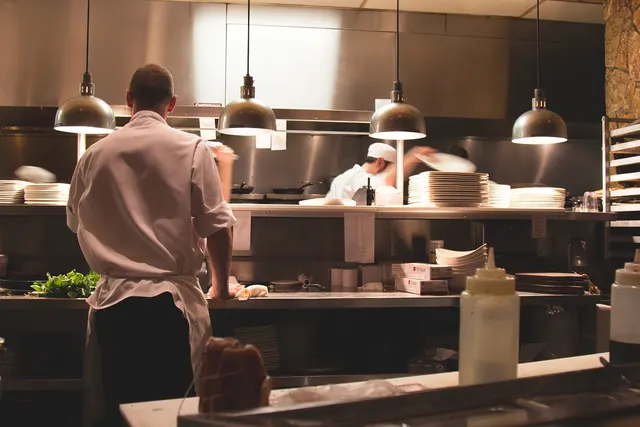
Photo: Pixabay
On this page 7 sections
- What California SB 478 Changed for Advertised Prices
- The SB 1524 Restaurant Service Charge Exception and Its Conditions
- SB 1524 Service Charge Menu, QR Code and Online Ordering Disclosure Rules
- Service Charges vs. Tips vs. Card Surcharges
- What the Attorney General's FAQ Says
- Receipt and POS Changes to Make Now
- Next Steps for California Restaurants and Food Trucks
Key takeaways
- SB 478 (Civil Code §1770(a)(29)) requires advertised prices to include all mandatory fees except government taxes and fees and reasonable shipping costs.
- SB 1524 lets restaurants, bars and food concessions keep mandatory fees only if each one is clearly and conspicuously shown, with its purpose, wherever prices appear.
- Since July 1, 2025, those disclosures must meet the "clear and conspicuous" text definition in Civil Code §1791(u).
- Line up your menus, QR code pages, online ordering, POS settings and receipts so the fee has the same name and explanation everywhere.
If you run a restaurant, bar or food truck in California and add a service charge, kitchen fee or automatic gratuity to checks, the California SB 478 restaurant service charge rules decide where and how that fee must appear. This guide covers what SB 478 changed, how the SB 1524 restaurant exception works and what the Attorney General's FAQ said. It also lists the menu, online ordering, receipt and POS changes that keep your disclosures compliant.
Date check: The sources for this article were published in 2024 and 2025 and reviewed for an October 2026 publish date. Laws and official guidance change. Confirm current rules with a California attorney before you reprint menus. This is general information, not legal advice.
What California SB 478 Changed for Advertised Prices
SB 478, often called the California junk fee law or the California honest pricing law, added a new item to the list of unlawful practices in the Consumers Legal Remedies Act. The law is at Civil Code Section 1770(a)(29), per the California Attorney General's SB 478 FAQ.pdf). It took effect July 1, 2024, according to this KTB Legal overview.
The main rule bars businesses from advertising, displaying or offering a price that leaves out mandatory fees or charges. Per the Attorney General's hidden fees page, only two things can be left out of the advertised price: taxes or fees imposed by the government, and reasonable shipping costs. The AG's FAQ summed it up this way: "the price a Californian sees should be the price they pay."
Two points matter for operators:
- It's a disclosure law, not a price cap. The FAQ says businesses can still charge what they want and can show a breakdown of fees, as long as the listed price includes everything the customer must pay, as Greenberg Traurig summarized.
- Private lawsuits are a real risk. Customers can bring CLRA claims on their own or as class actions. According to the same KTB Legal overview, remedies can include damages, restitution, injunctive relief, punitive damages and attorney fees.
The SB 1524 Restaurant Service Charge Exception and Its Conditions
Restaurants got a narrower path. Governor Newsom signed SB 1524 on June 29, 2024, as an urgency measure, according to the California Restaurant Association. It carves two kinds of fees out of Section 1770(a)(29) (SB 1524 bill text):
- Mandatory fees on individual food or beverage items sold directly to a customer by a restaurant, bar, food concession, grocery store or grocery delivery service
- Fees on banquet or catering menus or contracts that fully disclose the terms of service
The exception comes with conditions. To rely on it, a mandatory fee must be:
- Clearly and conspicuously displayed on any advertisement, menu or other display that shows the price of the food or beverage item.
- Explained. The disclosure must say what the fee is for.
- Formatted to the legal standard. Starting July 1, 2025, any disclosure that must be "clear and conspicuous" has to use text that meets the definition in Civil Code Section 1791(u), as noted in Greenberg Traurig's SB 1524 analysis. Read that definition with your attorney before you design menus.
If a fee doesn't meet these conditions, you lose the exception and fall back under the general SB 478 rule: the fee has to be built into the listed price.
What the Exception Does Not Clearly Cover
The exception is written for individual food and beverage items sold directly to the customer, and for banquet and catering arrangements with full terms. The AG lists food delivery platforms and event tickets among the businesses the general law covers. If you sell through third-party delivery apps, run ticketed dinners or sell prix fixe packages through an event platform, ask your attorney how the rules apply to each channel.
SB 1524 Service Charge Menu, QR Code and Online Ordering Disclosure Rules
The law applies to any display "that contains the price of the food or beverage item." In practice, every place a guest sees your prices should also show the fee and its purpose. Make a list of those places and fix each one.
| Where prices appear | What to check |
|---|---|
| Printed dine-in menus | Fee and purpose shown on each menu page with prices, not only on the back |
| Menu boards and food truck windows | Disclosure on the board itself, readable from where guests order |
| QR code menus | The web menu that loads shows the fee, not just the printed table tent |
| Website and online ordering | Fee shown on menu pages before checkout, not first revealed in the cart |
| Delivery and marketplace listings | Your item prices and fee disclosures match what you charge |
| Ads, social posts and promos with prices | The fee disclosure appears with every advertised price |
| Catering and banquet menus or contracts | Fee terms spelled out in the document the client signs |
Write a Specific Purpose Statement
Vague labels invite trouble. Greenberg Glusker advises avoiding generic terms such as "service fee" or "employee benefits" and using a more specific description instead (Greenberg Glusker).
Illustrative example only (not legal language): "A 4% kitchen charge is added to all checks. It goes toward wages for our cooks and dishwashers. It is not a tip."
Whatever percentage you use, the menu, the online ordering label and the receipt should all call the fee by the same name.
Food Truck Specifics
Food trucks move from stop to stop, and the menu and prices sometimes change with them. Put the fee disclosure on the permanent menu board, not on a sign you might forget to hang. Check pre-order pages and event vendor listings that show your prices. For catering gigs, write the fee and its purpose into the booking agreement. Our guide to the best food truck POS system for a moving kitchen covers how to keep your menus in sync across locations and online ordering.
Service Charges vs. Tips vs. Card Surcharges
People often lump these three charges together, but they follow different rules.
| Charge | Who decides | Main rules to watch |
|---|---|---|
| Mandatory service charge or automatic gratuity | The restaurant | SB 478 and SB 1524 disclosure; wage, payroll and tax treatment |
| Voluntary tip | The guest | Tip and gratuity labor laws; tip-adjust and tip-pooling practices |
| Card surcharge | Applies only to card payers | State law plus Visa, Mastercard and other card network rules |
A mandatory charge isn't a tip just because it goes to staff. How you tax it, pay it out and report it is a separate labor question. Our explainer on restaurant service charge vs. tip rules walks through the differences. Never run a mandatory charge through the tip line on the terminal.
Is a Restaurant Surcharge in California Legal?
A mandatory restaurant fee can still be legal under SB 1524 if it meets the disclosure conditions above. When SB 1524 was signed, SFGATE reported that restaurants could keep charging service fees as long as the fees were displayed conspicuously on the menu.
Card surcharges are a different question. Whether you can add a fee only for credit card payments depends on state law and card network rules, and those rules have their own requirements. Don't relabel a card surcharge as a "service charge" to get around them. If you're weighing options, compare cash discount vs. surcharge vs. dual pricing, and confirm the current California and card network rules before you start any program.
What the Attorney General's FAQ Says
The Attorney General released the SB 478 FAQ on May 8, 2024. At the time, the AG's position was that restaurants would have to fold surcharges into menu prices, and that listing them on menus or receipts wouldn't be enough, according to the San Francisco Chronicle. That reading led to SB 1524.
The AG's current hidden fees page reflects the change. It says most of the rules don't apply when a restaurant, bar, food concession or grocery store sells individual food or beverage items.
These points from the FAQ still apply:
- Mandatory fees that fall outside the restaurant exception must be included in the advertised price.
- Taxes and fees imposed by a government can be left out of the listed price.
- Disclosing a fee before or after payment doesn't fix a listed price that leaves it out.
- The law controls how you present prices, not what you charge.
Receipt and POS Changes to Make Now
Your POS is where disclosures become charges, and it's often where mistakes first appear. A practical checklist:
- Name the fee the same way everywhere. Use the same label on the menu, in online ordering and on the receipt.
- Show it as its own line. List the service charge separately from tax and from the tip line.
- Match automatic gratuity rules to the menu. If the menu says parties of a certain size get an automatic gratuity, set exactly that party size in the POS so servers don't have to add it by hand.
- Audit online ordering. Confirm the fee and its purpose appear on menu pages, then place a test order and compare the receipt.
- Check every menu source. Third-party listings and old PDFs often show outdated prices or leave out fees.
- Train staff. Servers and cashiers should be able to explain what the fee is for in one sentence.
- Keep dated records. Save a copy of each menu version and screenshots of your online menus. These help if a guest disputes a charge. See how chargebacks work, step by step.
Check whether your restaurant POS system lets you set service charges, automatic gratuity thresholds and custom receipt text in its back-office settings, and confirm the exact steps with your provider. If you're considering adding kiosks, see our guide on whether self-order kiosks are worth it for your restaurant.
Next Steps for California Restaurants and Food Trucks
SB 1524 lets California restaurants, bars and food concessions keep mandatory fees. The condition is that every menu, ad and online listing with prices shows the fee clearly, along with a specific purpose. List every place your prices appear, rewrite your purpose statement, set up your POS and receipts to match, and have an attorney review the result.
If you want help setting up service charge, tip and pricing settings on your terminals, explore MannyPay's payment solutions for restaurants and bars or food truck payment processing, or request a free quote. A MannyPay specialist will respond within one business day.
Sources
- SB 478 – Hidden Fees (California Attorney General)
- SB 478 FAQ (California Department of Justice)
- Bill Text – SB-1524 Consumers Legal Remedies Act: Advertisements: Restaurant, Bar, and Other Food Services
- SB 1524 – California Restaurant Association
- California 'Junk Fee' Bill SB 1524 Becomes Law: What It Means for Restaurants (Greenberg Traurig)
- California AG Publishes FAQs on California's 'Junk Fee' Law (Greenberg Traurig)
- California's Drip Pricing Law and Restaurant Exemption (Greenberg Glusker)
- New Laws Provide Greater Protections for Consumers and Renters in California (KTB Legal)
- California Surcharge Ban: Here's What the Official Guidance Says for Restaurants (San Francisco Chronicle)
- Gov. Newsom Signs Bill to Keep California Restaurant Surcharges Legal (SFGATE)
This article is for general educational purposes and is not legal, tax or financial advice. Card network rules and state laws change; confirm current requirements for your business.