Buy Now, Pay Later for Small Business: Fees, Break-Even and Fit
At Stripe's list rates, buy now pay later for small business costs about twice a card sale. Run the break-even math to see whether offering BNPL pays off.

Photo: Pixabay
On this page 6 sections
Key takeaways
- Stripe lists Klarna at 5.99% + 30¢ and a domestic card at 2.9% + 30¢. Both charge the same 30¢, so at those rates the premium is about 3.1% of each order. Negotiated BNPL rates can be lower.
- In the worked example ($500 order, 45% margin, Stripe's rates), about 7% of BNPL orders have to be sales the store would otherwise have lost before the fee pays for itself.
- In the same example, if a customer's $400 card order grows by about 8% with BNPL, the extra profit covers the whole fee premium. That cutoff changes with your margin and order size, so track basket size as well as new orders.
- Test BNPL at the standard rate. A temporary reduced rate makes it look cheaper than it will be later.
At Stripe's published U.S. rates, a buy now, pay later sale costs about twice as much as a card sale. Stripe lists Klarna at 5.99% + 30¢ per transaction and a domestic card at 2.9% + 30¢. Negotiated rates can be lower: Stripe's own Klarna guide puts the general range at 3.29% to 5.99% plus 30¢, and at the low end the premium is much smaller. Whatever your rate, buy now, pay later for small business sales pays off only when the orders it creates or enlarges earn more than the extra fee you pay on orders you would have gotten anyway. It works best for planned, high-ticket purchases like furniture and jewelry, and it struggles where returns are frequent.
BNPL fees are negotiated and change often. Treat every rate below as a benchmark, and get your own terms in writing.
What a BNPL Sale Looks Like From the Merchant's Side
The customer picks a pay-over-time option at checkout. The BNPL provider makes its own approval decision in seconds and shows a repayment schedule. That might be a short split, such as four payments, or a longer monthly plan. If the shopper is approved, the provider pays you the purchase amount minus its fee and collects the installments itself.
In the standard arrangement, the provider carries the risk that the customer stops paying. You still have the obligations of any sale: deliver what you sold and honor your return policy. Complaints work differently, though. When a customer says an item never arrived or isn't as described, the complaint usually goes to the provider instead of becoming a card chargeback, and the provider will ask you for evidence.
Layaway is the older alternative, where you hold the item until it's paid off. Our comparison of BNPL vs. layaway for independent stores explains when each one sells more.
What BNPL Fees Cost Compared With Cards
Stripe publishes its BNPL prices, which makes it a useful public benchmark. Its local payment methods pricing page lists Klarna at 5.99% + 30¢ for U.S. and Canadian transactions. International transactions add 1.5%, and another 1% applies when currency conversion is needed. Stripe's standard card rate is 2.9% + 30¢ for domestic cards. According to Stripe's Klarna guide, Klarna's three core products (Pay in 4, Pay in 30 and Financing) each have their own fee structure, and high-volume businesses can get custom arrangements. That's why a negotiated quote can land well below the list price.
BNPL costs more because the provider pays you the full amount up front and absorbs the credit losses. On short plans it often charges the shopper no interest, so your fee funds much of its revenue. These factors tend to move your rate in a negotiation:
| Factor | How It Tends to Affect Your Fee |
|---|---|
| Plan type and length | Pricing differs by product, so ask about each plan you'd offer |
| Promotional 0% APR financing | You may be paying the customer's interest, which raises your rate |
| Industry and return or dispute history | Riskier categories may be priced higher |
| Monthly volume | Larger merchants have more room to negotiate |
| International customers | Cross-border and currency conversion fees can stack on top |
Watch for introductory pricing. Stripe says certain businesses may qualify for temporarily reduced rates of 2.9% + 30¢ on Klarna and Affirm when Stripe turns those methods on for them. A trial run during the discounted window will make BNPL look cheaper than it will be once the standard rate applies, so run your numbers at the standard rate.
The Break-Even Math for Buy Now, Pay Later for Small Business
Every BNPL order falls into one of three groups. Some customers would have bought the same thing by card, so all you get is a higher fee. Others would have bought anyway but spend more because the monthly payment feels manageable. The rest are truly incremental: the sale wouldn't have happened at all. It's easy to count the second and third groups and forget the first, and the first group is where the cost hides.
A Worked Example With Published Rates
Take a home goods store. The fees are Stripe's published list prices. The order value, margin and order counts are illustrative.
- Average BNPL order: $500
- Gross margin: 45%
- BNPL fee: 5.99% + $0.30, or $30.25 per order
- Card fee: 2.9% + $0.30, or $14.80 per order
- Orders that would have happened by card anyway: 100 a month
The premium is $15.45 on each of those 100 orders, or $1,545 a month with no new revenue. Each incremental $500 order brings in $225 of gross profit. Subtract the $30.25 BNPL fee and it contributes $194.75. Divide $1,545 by $194.75 and you get 7.9. So the store needs about 8 incremental orders a month on top of the 100 just to break even. Put another way, roughly 7% of its BNPL orders have to be sales it would otherwise have lost.
To run your own numbers:
Break-even incremental orders = (orders you'd have gotten anyway × fee premium per order) ÷ (order value × gross margin − BNPL fee per order)
Your inputs can change the answer a lot. If you pay less than 2.9% + 30¢ on cards, the premium is larger and you need more incremental orders. A thinner margin also raises the number: at 25% margin, each incremental order nets only $94.75, and break-even rises to 17 orders. If you negotiate a BNPL rate below Stripe's list price, the number falls.
Bigger Baskets Pay for Themselves Sooner
Upsized orders are easy to leave out of the math, and they change the result. Keep the same assumptions and suppose a customer who would have spent $400 by card adds a $100 item because the plan makes it feel affordable. The $400 card sale would have cost $11.90 in fees. The $500 BNPL sale costs $30.25. The extra $100 earns $45 in gross profit, so the store still comes out $26.65 ahead.
In this example, a customer only has to spend about $32 more than they would have by card to cover the entire fee premium. That's an 8% increase on a $400 order. The cutoff applies only to this example. A lower margin or a smaller order raises it, so calculate your own figure and look for it in your reports.
Measure Lift With Your Own Data
A provider's marketing claims tell you little about your own store. For 60 to 90 days before launch, record average order value, conversion rate and return rate. After launch, compare BNPL orders with card orders in the same product categories. Track BNPL returns separately, because a returned order can wipe out the margin the math depends on. If your platform lets you show BNPL messaging on some product pages and not others, that split is the cleanest test you can run. Our checkout conversion rate benchmarks can help you set a baseline before launch.
Where Pay-Over-Time Checkout Earns Its Fee
BNPL helps most when the ticket is large compared with a paycheck and the purchase is planned. Small tickets with frequent returns get the least out of it.
Furniture and Mattresses
Sofas, mattresses and dining sets are considered, high-ticket purchases, and a monthly figure can make them easier to commit to. The friction is in fulfillment. Special orders can take weeks, and customers often pay deposits before the piece exists. Ask each provider whether funding is triggered when the order is placed or when it ships, and how it handles split deliveries. Our guide to taking card deposits on custom orders covers the deposit side, and MannyPay supports payment processing for furniture stores in-store and online.
Jewelry and Diamonds
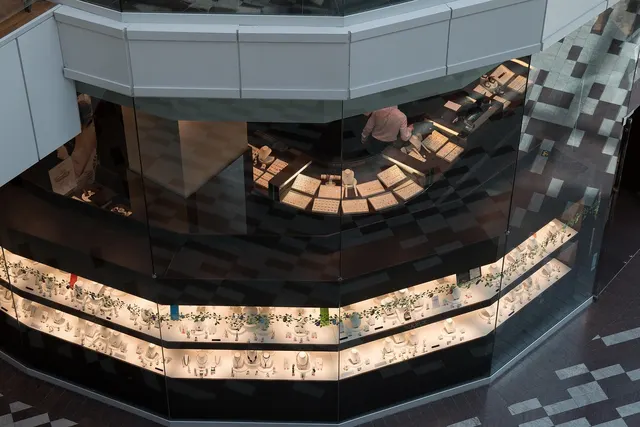
Engagement rings and anniversary pieces are emotional, high-value purchases that bunch up around gifting seasons. A monthly figure can make a hard decision easier. Because each order is large, a single fraudulent approval costs a lot. Ask how each provider verifies identity and who absorbs a fraud loss on an approved plan. Keep your card side healthy too. MannyPay works with jewelry and diamond merchants on high-ticket card acceptance.
Apparel and Boutiques
Smaller tickets suit four-payment splits better than long financing. Returns are the threat here. If the fee isn't refunded when an order comes back, every return costs you the full BNPL fee on a sale that no longer exists. Plug your actual return rate into the break-even math before you sign.
Online Stores
BNPL messaging on product and cart pages can ease price hesitation before the shopper reaches checkout. Use the provider's approved promotional language, because statements about installment amounts or interest rates can fall under federal and state credit advertising rules. For other ways to cut drop-off, see our payment fixes for checkout abandonment.
Refunds, Disputes and Funding Terms to Get in Writing
These terms vary by provider and contract, and they determine your real cost and your cash flow. Get answers to these questions before you sign:
- Is the merchant fee returned on a full refund? On a partial refund?
- How do exchanges work when the new item costs a different amount?
- Is there a deadline for issuing refunds through the provider's portal?
- What evidence does the provider want when a customer disputes a purchase, and how long do you have to respond?
- Is funding triggered at order placement or at shipment, and on what schedule?
For disputes, keep the same file you would keep for a chargeback, including proof of delivery and every customer message. BNPL payouts arrive separately from card deposits, usually with fees already deducted, so build them into your monthly credit card reconciliation routine. The funding question matters most if you sell made-to-order goods or take preorders online.
Adding BNPL Online and at the Counter
Most BNPL providers offer plugins for the major e-commerce platforms, where BNPL appears as a separate payment method next to your card gateway. If you sell on Shopify with MannyPay processing or run a WooCommerce store, confirm that the provider supports your platform and theme. Before launch, test a full order, a partial refund and a cancellation.
In-store BNPL usually runs through a QR code, a text link sent to the customer's phone, or a POS integration. Ask your POS provider which methods it supports, especially if you're replacing hardware. MannyPay offers POS systems for retail counters. Train staff to bring up the option early on high-ticket items and never to promise approval or quote interest rates. Process returns through the original payment method.
Card networks are also building installment features into existing cards. Our explainer on Visa's installment interchange rates covers how that option could compete with BNPL apps at your checkout. For a wider look at providers, read BNPL for merchants: costs, providers and fit.
Your next step is to run the break-even formula with your real margin, card rate and return rate, then check every written BNPL quote against that number. Your card rate is one of those inputs, so review it too. MannyPay can go over your current statement and options such as zero cost processing for eligible merchants. Request a free quote, and a specialist will respond within one business day.
This article is general information, not legal, tax or financial advice. Confirm current provider terms and any credit advertising requirements with a qualified professional.
Sources
This article is for general educational purposes and is not legal, tax or financial advice. Card network rules and state laws change; confirm current requirements for your business.