Best POS System for Food Trucks With a Filipino Menu
Choose the best POS system for food trucks serving Filipino food: offline mode, combo modifiers, and what card fees really cost on small tickets.

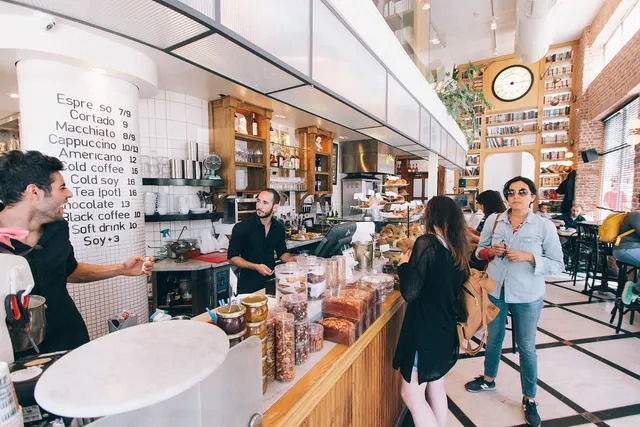
Photo: Pixabay
On this page 8 sections
- What the Best POS System for Food Trucks Has to Survive
- Match the Hardware to How Your Window Runs
- Ring up Your Hardest Plates Before You Buy
- What a $12 Silog Plate Really Costs to Accept
- Surcharging at a Truck Window Has Limits
- Faster Lines During Festival and Lunch Rushes
- Tips, Sales Tax and Sales by Stop When the Truck Moves Daily
- Contract Questions for Every Food Truck POS Quote
Key takeaways
- On Visa credit at card-present restaurant rates, interchange is a straight percentage, so the processor's per-sale fee is what hits a $12 plate hardest.
- Cap offline sales in dollars and upload stored transactions as soon as the signal returns, because a later decline is usually your loss.
- Surcharges can only go on credit cards, never debit. Visa caps them at 3%, and some states ban them, so check your route before you turn one on.
- Make every vendor ring up your most modifier-heavy plates in the demo before you compare prices.
The best POS system for food trucks keeps taking cards when the cell signal drops, lasts a full service on battery, and rings up "two-meat combo, garlic rice, extra egg" in a couple of taps. For most trucks serving Filipino food, that means a handheld smart terminal or a compact tablet POS with its own cellular data and an offline mode you can cap. Pair it with pricing that doesn't penalize a $12 plate. Brand, screen size and reporting extras matter less than connectivity, fast modifiers and the per-sale fee.
You find out whether a setup works at 12:15 on a Friday, when the line reaches the parking lot and the lechon kawali is almost gone. Test for that moment, not for the sales demo.
What the Best POS System for Food Trucks Has to Survive
A restaurant POS assumes a building with steady Wi-Fi, wall power and a kitchen printer bolted to the line. A truck can count on none of those.
Connectivity you control. Buy a device with built-in cellular data or carry a dedicated hotspot rather than relying on the brewery's guest Wi-Fi. Night markets and festival lots often have overloaded networks once the crowd arrives, which is exactly when you need a connection. Our guide to taking card payments at night markets without Wi-Fi covers backup plans.
Offline mode, used carefully. Store-and-forward mode lets a terminal accept a card with no connection and send it for approval once the signal returns. The sale isn't approved when the customer walks away with the food, and if the card declines later, that loss is usually yours. Choose a system that lets you set a dollar cap on offline sales, and upload stored transactions the moment you're back online. Store-and-forward payments explains the trade-off in more depth.
Battery and heat. A truck running a flat-top and fryers in July is hard on electronics. Ask how long the device lasts on a charge at working screen brightness, treat the spec-sheet number as a best case, and plan to top up from the generator or inverter between rushes.
A small footprint. Counter space at a service window is measured in inches. Every device needs a mount or a home where it won't get splashed with sawsawan.
Match the Hardware to How Your Window Runs
Trucks usually pick from three setups, and plenty end up combining two.
Handheld smart terminals take the order and the payment on one battery-powered device, with tap and chip built in. The Clover Flex 4G and the PAX A920 Pro are examples. This is the common choice for a truck that wants one device at the window plus the option to walk it down the line. Check whether the model prints receipts; if it doesn't, decide whether your customers need paper at all.
A tablet or countertop POS with a separate card reader gives you a bigger screen for building orders and better reporting views. It also takes more counter space and adds parts to charge and mount. It suits a long menu or two people working the window, especially with a kitchen printer or display behind them.
Phone-based readers are the lightest option. A small Bluetooth reader like the Clover Go pairs with a phone or tablet, and works well as a second register during a rush or at a pop-up table. As your only device it's weaker, because your phone is probably also your hotspot and your supplier hotline.
For a side-by-side of form factors, read countertop vs. wireless vs. mobile card readers, or browse current mobile card terminals and handheld payment terminals. Our cuisine-neutral checklist, what matters in a food truck POS for a moving kitchen, covers the hardware basics in more depth.
Ring up Your Hardest Plates Before You Buy
Filipino menus are modifier-heavy, and this is where cheap setups fall apart. One combo can mean two proteins from a list, a rice choice, an egg add-on and a spice level for the sisig. If the POS handles that with dozens of separate buttons, the line slows down. In the demo, build these items yourself and ring each one up:
- Silog plate as one item with a required protein choice (tapa, longganisa, tocino or bangus), each priced on its own
- Two-meat combo with a "choose two" step and a rice choice where garlic rice carries an upcharge
- Lumpia sold by piece count and as a party tray, built as one item with size variants so reports add up
- Halo-halo with paid add-ons like extra leche flan or ube ice cream
- Today's special, which you should be able to add, price and remove from your phone in seconds
Two small features matter more than they look. A sold-out toggle hides the lechon kawali on every device with one tap, so your second handheld stops selling what the kitchen no longer has. Separate kitchen and receipt names let the crew call an item "tapsilog" while the receipt reads "Tapsilog (beef tapa, garlic rice, fried egg)" for a first-timer. If you also run a storefront, the same menu questions come up in choosing a POS system for your Filipino bakery.
What a $12 Silog Plate Really Costs to Accept
Most of what you pay to take a card is interchange, the fee that goes to the bank that issued the customer's card. Visa and Mastercard set it in published rate tables, and it varies with the card type and how the card is accepted. A tapped or dipped card is a card-present sale. A card number typed into the terminal usually lands in a more expensive category and carries more fraud risk, so don't let the crew key in cards every time a reader acts up.
Food truck owners often assume the card networks punish small tickets. On Visa credit at restaurant rates, they mostly don't. Visa's card-present restaurant program charges a straight percentage on consumer credit with no per-item fee: 2.10% (minimum $0.04) for traditional cards and 2.60% for Signature and Signature Preferred cards, according to Wells Fargo's April 2026 qualification matrix and NMI's Fee Navigator. Debit works the other way. In Visa's U.S. interchange table, regulated debit costs 0.05% + $0.21. Regulated debit means cards from banks with $10 billion or more in assets, per weAudit's rate summary. Exempt debit at restaurants costs 1.19% + $0.10.
The table below runs those rates on one plate and one party tray. It assumes the card is tapped at the window and the sale qualifies for Visa's card-present restaurant program. Whether it qualifies depends on how your merchant account is classified, so confirm with your processor. The figures are interchange only, before network fees and the processor's markup.
| Visa card type | $12 silog plate | $80 lumpia party tray |
|---|---|---|
| Traditional credit (2.10%) | $0.25 (2.10%) | $1.68 (2.10%) |
| Signature credit (2.60%) | $0.31 (2.60%) | $2.08 (2.60%) |
| Exempt debit (1.19% + $0.10) | $0.24 (2.0%) | $1.05 (1.3%) |
| Regulated debit (0.05% + $0.21) | $0.22 (1.8%) | $0.25 (0.3%) |
Because of its fixed fee, regulated debit takes a bigger percentage of a plate than of a tray. Even so, it costs less than any other card in the table on that $12 sale. Credit costs the same percentage at any ticket size. So the bigger small-ticket penalty usually comes from the processor, not the network. A per-transaction markup of $0.10 (illustrative) adds 0.83 percentage points to a $12 plate and about 0.13 points to an $80 tray. Read the per-item fee on every quote as closely as the percentage.
Illustrative Math: Find Your Break-Even Ticket
These numbers are illustrative, not quotes from any processor. Quote A charges 2.6% + $0.15 per sale; Quote B charges a flat 2.9% with no per-sale fee. Leave monthly software and device fees aside for now.
On a $10 halo-halo, Quote A takes $0.41 and Quote B takes $0.29. To find where A pulls ahead, divide the fixed fee by the difference in rates: $0.15 ÷ 0.3% = $50. At a $50 ticket both cost $1.45. Below $50, B is cheaper; above it, A wins. A truck selling mostly single plates and desserts sits well under that line. Run the same calculation on every quote with your own average ticket, then compare effective rates (total fees divided by total card sales). How to read your processing statement line by line shows where each number lives.
Surcharging at a Truck Window Has Limits
Cost programs can offset fees, but each has rules that bite at a service window. Surcharges fall under both card network rules and state law. Visa lowered its surcharge cap to 3% effective April 15, 2023, according to law firm ArentFox Schiff, and the surcharge also can't exceed your actual cost of acceptance. Visa's rules limit surcharges to credit card transactions, per Merchant Cost Consulting.
Mastercard's rules likewise allow surcharges on credit cards only, not debit or prepaid. They cap the surcharge at 4% or your Mastercard credit cost, and the receipt has to show the surcharge amount, as Paycove summarizes Mastercard's rules page. Before you start, Visa requires 30 days' notice to your processor and signage at the point of sale, per Card Payment Options.
The debit exclusion is easy to miss at a busy window. Every customer who pays with debit pays the menu price with no surcharge, so your POS has to tell credit from debit automatically and add the fee only to credit. State law adds another layer: Connecticut and Massachusetts prohibit surcharges, PaymentCloud notes, which matters if your route or festival calendar crosses state lines. California operators should also read California SB 478 and restaurant service charges.
Dual pricing for small businesses shows a cash price and a card price, which takes menu-board space a truck may not have. A cash discount program treats the card price as the regular price and gives cash payers a discount. Our comparison of surcharge vs. cash discount for Filipino restaurants walks through which recovers more. This is general information, not legal advice; confirm current requirements before you turn any program on.
Faster Lines During Festival and Lunch Rushes
A mobile POS earns its keep in the short window when the office park empties or the festival crowd peaks.
Push customers to tap. Tapping skips the insert-and-wait step of a chip transaction. Put a "tap here" sticker where the card goes.
Line bust with a second device. One crew member walks the line with a handheld and takes paid orders that print or display in the kitchen, so the window only hands out food. Call or print order numbers clearly, or the window turns into a crowd.
Cut screens you don't need. If customers rarely want a receipt, default to no receipt or a text receipt. Each extra prompt costs a few seconds, and over a long rush those seconds become customers who walk away.
Sell before you arrive. Pre-orders for pickup spread demand and lock in sales before the crowd shows up. See online ordering without high delivery app fees for setup options.
Tips, Sales Tax and Sales by Stop When the Truck Moves Daily
Set tip prompts with sensible presets, and decide before opening day how tips split between the window and the kitchen. Tip handling falls under federal and state wage law, so check with your accountant. Before you try passing card fees on to staff, read whether you can deduct card fees from employee tips.
Sales tax rates can change when you cross a city or county line, and states treat prepared food differently. Pick a POS that lets you set a tax rate per location or event and switch it before the window opens. Some events have their own reporting arrangements, so ask the organizer, and confirm how to file with a tax professional.
Tag every sale with its stop: the weekday office park, the Saturday farmers market, the fiesta. After a month you'll know which locations cover their fuel and event fees and which only feel busy. Item reports by stop also tell you how much lumpia to roll for each one, which cuts waste on slow days and sellouts on busy ones.
Contract Questions for Every Food Truck POS Quote
- How long is the term, and what is the early termination fee?
- Is the hardware purchased, leased or provided? If leased, can the lease be canceled, and what is the total cost over the full term?
- Will the device work with another processor if you leave, or is it locked?
- Which devices support offline mode, and can you set a dollar limit on offline sales?
- What monthly fees apply beyond the rate: software, per-device, PCI compliance, account minimums?
- How fast do deposits land, and what does faster funding cost? Weigh it with our guide to same-day funding and instant payouts.
- What is the chargeback fee, and what records will you need to fight one? See how small food businesses win chargeback disputes.
- Who answers the phone on a Saturday night when the terminal won't connect?
Before your first demo, pull last month's average ticket and transaction count. If your current statement shows it, split your card sales into credit and debit. Then list your three hardest menu items and make every vendor ring them up in front of you. To have a MannyPay specialist run the fee comparison with you, request a free quote; someone will respond within one business day. You can also see how we work with food truck businesses and Filipino-American businesses.
Sources
- Visa USA Interchange Reimbursement Fees
- Wells Fargo Merchant Services Payment Network Qualification Matrix, Effective April 2026
- NMI Fee Navigator: Current Interchange
- weAudit: Credit Card Processing Rates 2026
- ArentFox Schiff: Visa Reduces Its Merchant Surcharge Cap to 3% Effective April 15, 2023
- Merchant Cost Consulting: Visa Surcharging Rules
- Paycove: Is It Legal to Charge Credit Card Fees? The Card Rules and the State Laws
- Card Payment Options: Visa's Credit Card Surcharge Rules in the U.S.
- PaymentCloud: Visa Surcharge Rules Are Changing
This article is for general educational purposes and is not legal, tax or financial advice. Card network rules and state laws change; confirm current requirements for your business.