Can Auto Repair Shops Charge a Credit Card Fee? Surcharge Rules
Can auto repair shops charge credit card fees? Learn how surcharging, cash discounts and dual pricing work, and how to disclose fees on repair orders.

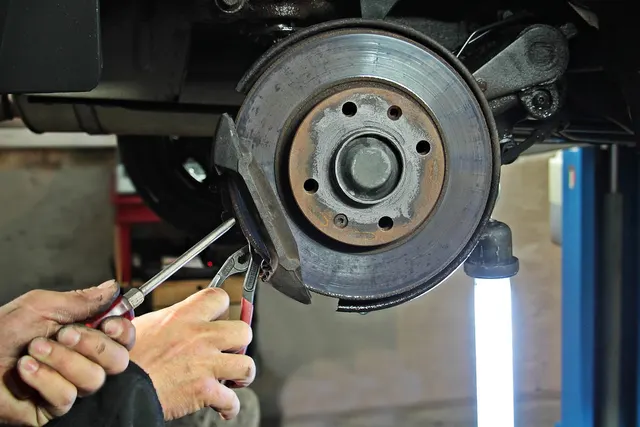
Photo: Pixabay
On this page 8 sections
- Can Auto Repair Shops Charge Credit Card Fees? The Short Answer
- Surcharging vs. Cash Discounting vs. Dual Pricing
- Visa and Mastercard Rules for Surcharging Repair Invoices
- States Where Surcharges Are Restricted
- Disclosing a Surcharge on Repair Orders and Estimates
- Why Debit Cards Can't Be Surcharged
- How Customers React and How to Explain It
- Next Steps for Your Shop
Key takeaways
- Shops can often pass on card costs, but card network rules, state law and auto repair consumer laws all apply at the same time.
- Surcharges apply only to credit cards. Debit and prepaid cards can't be surcharged, even when run as credit.
- Any card fee should appear on the written estimate and the repair order so the final bill matches what the customer authorized.
- Cash discount and dual pricing programs are alternatives with different rules. Confirm current terms with your processor and a qualified professional.
Can auto repair shops charge credit card fees? In many cases, yes. Repair tickets are often large, and processing costs add up quickly on a brake job or a transmission rebuild. But passing those costs to customers is governed by three rulebooks at once: card network rules, state surcharge laws and your state's auto repair consumer protection rules.
This guide explains the three main ways shops recover card costs. It covers what Visa and Mastercard generally require and how state restrictions work. It also shows how to disclose fees on estimates and repair orders, why debit cards are off-limits for surcharges and how to explain the fee at the counter.
This article is general information, not legal or tax advice. Surcharge rules change, so confirm current requirements with your processor, the card networks and a qualified attorney before you start.
Can Auto Repair Shops Charge Credit Card Fees? The Short Answer
Most shops have legal options, but the right one depends on your state and how you take payments. A surcharge that is fine at the counter can still cause problems if it pushes the final invoice above what the customer authorized on the estimate.
Before choosing a program, know what you actually pay to accept cards. Our guide to auto repair credit card processing fees and what shops should really pay walks through reading your statement. Many shops find a pricing fix before they ever need a customer-facing fee.
Surcharging vs. Cash Discounting vs. Dual Pricing
All three programs shift some processing cost away from the shop. They work very differently, though, and they carry different compliance obligations.
| Program | How It Works | Applies To | Key Obligations |
|---|---|---|---|
| Surcharging | A fee is added on top of the price when a customer pays by credit card | Credit cards only | Network registration, caps, signage, receipt line item, state law |
| Cash discount | The posted price includes card costs; customers paying cash get a discount | Generally all card types, structured as a discount | Clear signage; the discount must be real and consistently applied |
| Dual pricing | Two prices are shown, a cash price and a card price | Generally all card types | Both prices displayed clearly on estimates, invoices and signage |
Auto Repair Credit Card Surcharges
A surcharge is a separate line added at payment when the customer uses a credit card. It is the most tightly regulated option. You can learn how a compliant program is set up on MannyPay's credit card surcharging page.
Mechanic Cash Discount Programs
With a cash discount, your listed labor rate and parts prices already account for card costs. Customers who pay cash receive a discount off that price. Because the posted price is the card price, this approach avoids surcharge rules in many situations. It still has to be set up and disclosed correctly. See how a cash discount program works.
Dual Pricing for Auto Repair Shops
Dual pricing shows both prices side by side: one total for cash and another for card. Shop management systems and smart terminals can print both on the estimate and the final invoice. That transparency suits repair work, where customers review line items closely. MannyPay explains the setup on its dual pricing program page.
Visa and Mastercard Rules for Surcharging Repair Invoices
Card network rules apply to every merchant that accepts those cards, whatever state you are in. The details change periodically, so treat this as an overview and confirm current terms with your processor.
In general, the networks expect surcharging merchants to:
- Notify in advance. Merchants typically must tell their acquirer or processor, and in some cases the network, before they begin surcharging. There is an advance notice period.
- Stay under the cap. Networks set a maximum surcharge percentage. The surcharge also generally can't exceed what you actually pay to accept the card. Your processor can confirm the current cap.
- Post notice at the point of entry and point of sale. Customers should see that you surcharge before they commit, at the door, the service counter and the terminal.
- Show the surcharge as a separate line item. The receipt should show the surcharge amount apart from labor, parts and shop supplies.
- Treat the surcharge consistently. Apply it the same way across credit card brands, or follow each brand's specific rules if you handle them differently.
American Express and Discover maintain their own surcharge rules. If you accept them, review their requirements as well.
Keyed and Card-Not-Present Payments
Many shops take keyed payments. A customer calls to approve extra work and pays over the phone before pickup, or a fleet manager pays by phone. The disclosure obligation still applies. Tell the customer about the surcharge before you run the card, and make sure the emailed or printed receipt shows it as a line item. A virtual terminal for keyed payments can be configured to apply and display the fee consistently.
Fleet and Commercial Cards
Fleet accounts often pay with commercial or fleet cards. Some run on Visa or Mastercard, and others run on separate fleet networks with their own merchant agreements. Ask your processor how each card type is handled before you assume a surcharge applies.
States Where Surcharges Are Restricted
State law sits on top of network rules. Where they conflict, follow the stricter one. The picture varies widely:
- Some states prohibit or restrict surcharges on credit card transactions.
- Some states cap surcharges at a level below the network maximum.
- Some states have specific disclosure requirements on how the fee must be shown.
- Some states have broader price-transparency or "junk fee" laws that can affect how any added fee must be displayed.
These laws have changed in recent years through legislation and court decisions, and they continue to change. Rather than relying on a list that may be outdated, check your state's current rules with your processor and an attorney. If you operate locations in more than one state, check each one.
In a state that restricts surcharging, cash discount or dual pricing may still be an option, depending on how the law is written. Get professional confirmation before switching.
Disclosing a Surcharge on Repair Orders and Estimates
This is where auto repair differs from most retail. Many states have auto repair consumer protection laws that require written estimates and customer authorization before work begins. They often limit how far the final bill can exceed the estimate without further consent. Our guide to auto repair estimate authorization laws covers this in detail.
A surcharge that first appears at checkout can make the final total higher than the authorized amount. In some states, that could be a consumer law problem on top of a payment compliance issue.
What to Put on the Estimate
- A clear statement that credit card payments carry a surcharge, with the percentage.
- If you use dual pricing, both the cash total and the card total.
- A note that debit cards and cash are not surcharged, if you surcharge credit only.
What to Put on the Repair Order and Invoice
- The surcharge as its own line, separate from labor, parts, shop supplies and taxes.
- The same percentage shown on the estimate.
- Wording consistent with your counter and terminal signage.
When Supplemental Work Is Authorized by Phone
Supplemental authorizations are common. A tech finds a leaking water pump during a timing belt job, and the service writer calls for approval. When you quote the additional amount, mention that a card surcharge would apply. Note it in the authorization record along with the time, the name of the person who approved and the approved amount.
Illustrative example: A customer approves a $1,200 estimate. If your shop uses an illustrative 2.5% surcharge, a credit card payment adds $30. Showing both "$1,200 cash/debit" and "$1,230 credit" on the estimate means the customer authorized the amount they actually pay. This is an illustration only, not a recommended or maximum rate.
Why Debit Cards Can't Be Surcharged
Card network rules prohibit surcharging debit cards. That includes debit cards run as credit (signature debit) and prepaid cards. The surcharging permission the networks adopted applies to credit cards, and some state laws reinforce the limit.
This creates a practical problem at the counter. A customer may not know whether the card in hand is debit or credit, and your service writer can't tell by looking at it. Compliant surcharge programs handle this at the terminal. The system identifies the card type and applies the surcharge only to eligible credit cards. Manually adding a fee to every card swipe is how shops end up in violation.
If your terminal can't reliably tell debit from credit, talk to your processor about upgrading. Smart terminals for service counters are a common choice for shops that want card-type detection, dual pricing displays and itemized receipts in one device.
How Customers React and How to Explain It
Repair customers are often already stressed. The car broke down unexpectedly, the bill is larger than they hoped, and they're picking up at the end of the day. A surprise fee at the counter makes that worse. The goal is no surprises.
Practical Ways to Reduce Pushback
- Disclose early. Mention card pricing when you write the estimate, not when you hand over the keys.
- Use plain language. For example: "We offer a lower price for cash and debit. Credit cards include a processing charge, shown on your estimate."
- Train every service writer. Customers notice when one advisor explains it differently than another.
- Keep signage consistent. Counter signs, estimates, invoices and the terminal screen should all say the same thing.
- Offer alternatives. Debit, cash or check let customers avoid the fee.
Consider the Effect on Disputes
A fee the customer didn't understand can lead to complaints, chargebacks or a refusal to pay. Clear authorization records protect you on both the repair and the fee. For unpaid balances, our explainer on what to do when a customer won't pay and how a garage keeper's lien works covers your options.
Next Steps for Your Shop
Before adding any card fee, work through this checklist:
- Review your current processing statement to see your actual cost of acceptance.
- Confirm your state's surcharge rules and auto repair estimate requirements with a qualified professional.
- Choose surcharging, cash discount or dual pricing based on what your state allows and what fits your customers.
- Make sure your terminals and shop software can detect card type and display fees correctly.
- Update estimates, repair order templates, signage and phone scripts.
- Train service writers before the program goes live.
MannyPay works with shops through its auto repair payment processing solutions, including surcharging, cash discount, dual pricing and zero cost processing programs for eligible merchants. Results depend on your business and your state's rules, so no specific savings are promised. To review your options, request a free quote, and a MannyPay specialist will respond within one business day.
This article is for general educational purposes and is not legal, tax or financial advice. Card network rules and state laws change; confirm current requirements for your business.