Why Your Processor Held Your Shop's Engine Replacement Payment
An auto repair large transaction hold usually means a ticket broke your approved limits. See what to send to release funds and how to raise your cap.
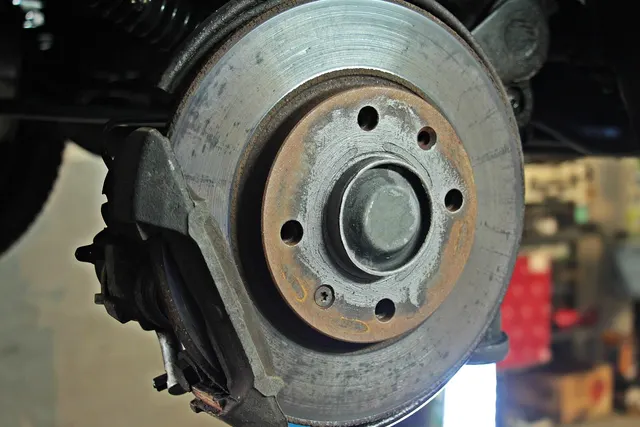
Photo: Pixabay
On this page 6 sections
- Why Engine Jobs Trigger an Auto Repair Large Transaction Hold
- Keyed Engine Jobs Carry Risk the Chip Doesn't Cover
- What to Send When a Repair Payment Is Held
- The Job File That Gets Held Funds Released
- Raise Your High-Ticket Limit Before the Next Big Job
- Two Cards, Deposits and Split Sales: What Visa Actually Prohibits
Key takeaways
- Divide your biggest job by your approved high ticket and by your monthly volume. If it's several times the first and a large share of the second, expect a hold.
- A cardholder can dispute a keyed engine job as card-absent fraud for up to 120 days under Visa condition 10.4, so have the payer dip or tap whenever they can come in.
- Call your processor's risk team before you run an unusually large ticket. A short call costs less than days of held funding.
- Visa allows deposits, installment payments and part-card, part-cash payments. Running one sale as several charges to get under a limit is a prohibited split transaction.
An auto repair large transaction hold almost always means one sale landed far above the figures on your merchant application. The customer's card was approved. Your processor's risk system then flagged the engine replacement as an outlier and paused the deposit so a person could look at it. Most of the time the money is released once you show the job was real. The lasting fix is to set your account limits to match the work your shop actually does.
The timing hurts. You likely paid the parts supplier for the engine days before the car left the bay. While the deposit is held, your shop is paying for the job itself.
Why Engine Jobs Trigger an Auto Repair Large Transaction Hold
Your merchant application asked for your expected monthly volume, your average ticket and your largest single sale. Underwriters used those answers to size the risk the sponsor bank takes on by processing for you. Once you're approved, the processor's monitoring software checks every batch against those numbers. Each processor and bank sets its own thresholds, so no single network rule says "hold anything over X."
Many owners fill in the application with a normal week in mind: oil changes, brakes and diagnostics at a few hundred dollars each. That's accurate for most tickets. It leaves out the engine and transmission jobs that carry a shop's cash flow.
Illustrative example (all figures are assumptions, not data from a real shop). The application lists a $400 average ticket, a $2,000 high ticket and $60,000 in monthly card volume. The shop charges $7,000 for an engine replacement, after paying $3,900 for a remanufactured engine earlier that week. The sale is 3.5 times the approved high ticket ($7,000 ÷ $2,000) and about 11.7% of a month's expected volume ($7,000 ÷ $60,000). While it's held, the shop is out $3,900 in parts and hasn't been paid for the remaining $3,100 of labor and margin.
Run the same two ratios on your own biggest jobs. If one sale is several times your high ticket and also a sizable share of your monthly volume, a hold is predictable, not bad luck. It doesn't mean the processor suspects you of fraud. The software saw a sale it wasn't told to expect, so a person has to review it.
Keyed Engine Jobs Carry Risk the Chip Doesn't Cover
How you took the card matters almost as much as the amount. When a chip card is inserted or tapped, it creates a one-time code that's very hard to counterfeit. Since October 1, 2015, U.S. card brands have moved liability for counterfeit card-present fraud to whichever party didn't support chip technology. But that shift doesn't change who's liable for card-not-present sales. A keyed sale carries only what someone typed in.
Big repairs get keyed often, and usually for good reasons. The owner might be out of town, or a parent in another state might be paying for a student's transmission. Some customers want to pay by phone and grab their keys after closing, which is why text-to-pay and key drop box payments for after-hours pickup are now common. Each case is legitimate. Taken together, they also fit the pattern risk teams watch most closely: a large card-not-present charge from someone the shop has never met.
Here's why that pattern worries them. Under Visa's dispute rules, a cardholder who says they didn't authorize a card-absent sale is covered by dispute condition 10.4. The issuer has up to 120 calendar days from the processing date to file. That same source lists skipping verification tools such as Address Verification Service (AVS), the CVV2 security code and Visa Secure as merchant errors in those disputes. If a stolen card number paid for your engine job, you could lose the $7,000 sale months after you paid for the engine, and a chargeback fee usually comes on top.
You can lower that risk in two ways. When the payer can come in, have them dip or tap at the counter. When they can't, collect the security code and billing ZIP, save the authorization response, and get written approval from the cardholder as well as the vehicle owner. Our guide to taking repair payments by phone when someone else is paying walks through that approval step. A payment link is another option, as long as the payment page supports 3-D Secure authentication.
Be wary of one request in particular. A new customer overpays, then asks you to send the difference to a different card, or by check or Zelle. That's a well-known stolen-card scheme. Refund only to the card you charged.
What to Send When a Repair Payment Is Held
Holds come in a few forms. Sometimes the processor pulls one transaction and funds the rest of the batch on time. Sometimes the whole batch waits. Less often, risk restricts the account while it reviews recent activity. You'll usually get notice by email or in your merchant portal, and some risk teams call.
What they ask for depends on the processor and sponsor bank, but every reviewer is checking the same two things: the real cardholder authorized the charge, and the repair was delivered. Expect to be asked for some of these:
- The final repair order showing the work performed
- The signed estimate or written authorization from before work began
- Proof the car went back to the customer, such as a signed and dated pickup release
- Contact details for the cardholder
- Your supplier invoice for the engine or transmission
- For a keyed sale, the authorization response, including whether the CVV2 and ZIP matched
Send everything in one reply, and send it fast. A partial answer leads to follow-up questions, and every round adds days. If the notice doesn't say exactly what's needed, ask the analyst for the full list before you send anything.
The Job File That Gets Held Funds Released
Shops that get held funds back quickly build the same file for every large job. Your shop management system probably stores most of it already, so the work is mostly exporting.
The repair order. Include the VIN and mileage, the customer's complaint and your diagnosis, a part number for each part, the labor hours and the total. "Engine work" invites questions. "Replace engine with remanufactured long block," with the part number and hours, answers them.
The signed authorization. Many states require a written estimate and customer approval before work starts, and the details vary by state. Where it isn't required, a signed estimate is still the strongest document you can give a risk analyst or a chargeback reviewer. Our breakdown of auto repair estimate authorization laws explains how the rules differ. Confirm your own state's requirements with a qualified professional.
Photos. Before installation, photograph the failed unit next to its replacement. At pickup, photograph the odometer. A technician can do both in about a minute, and few documents make a sale look more real.
The supplier invoice. A dated invoice for the engine, tied to the VIN on your repair order, shows the cost behind your price. It also shows the charge paid for real work instead of moving money through the account.
The same file protects you if the customer later says the repair failed. Our article on chargebacks when customers say the fix didn't work covers how issuers weigh that evidence.
Raise Your High-Ticket Limit Before the Next Big Job
Getting one payment released fixes this week. Raising your limits keeps the same thing from happening on every engine job. Send a written request to your processor's risk or underwriting team before your busy season, not in the middle of it. Your own records show when big jobs cluster.
A strong request includes:
- The limits currently on file. If you don't know them, ask.
- Recent processing statements, enough months to show a pattern.
- A short description of your heavy work, such as engine replacements and transmission rebuilds, with a realistic price range.
- Repair orders from past large jobs, each paired with its supplier invoice.
- The new high-ticket and monthly volume figures you want, with one sentence of reasoning for each.
Ask for limits your history supports. If your past invoices come close to the new ceiling, the request is easy to approve. A ceiling far above anything you've billed invites questions. When one unusually large job is coming up, such as a diesel engine for a commercial customer, call risk before you run the card. Many processors will add a note to the account or approve a one-time exception if you tell them ahead of time. That call takes a few minutes, while a surprise hold can tie up the money for days.
Opening a new account? Get it right on the application. If you request a quote through MannyPay's auto repair payment processing page, list your largest realistic repair as your high ticket, not your typical brake job.
Two Cards, Deposits and Split Sales: What Visa Actually Prohibits
Some owners wonder whether they can run a big repair as several smaller charges to stay under the limit. This rule is widely misunderstood, so here's how it works.
The prohibition comes from the card network. Section 5.7.3.1 of the Visa Core Rules bars splitting one transaction across two or more receipts, except for a short list of named cases. Visa's Dispute Management Guide for Merchants lists the cases that matter to a shop: advance payments, installment plans and mixed payments, such as part Visa and part cash. Running the same card several times in one day, or over consecutive days, to keep each charge under your limit or to get past a decline is a split sale. Risk systems catch the pattern quickly, the review that follows is usually tougher than the original hold, and repeat cases can cost you the account.
Two common setups are generally fine:
- A documented deposit, then the balance at pickup. That's an advance payment for two real stages of the job. Our guide to special-order parts deposits shows how to set them up so they hold up later.
- Part of the bill on a card and the rest another way. Visa's card acceptance guidelines encourage split tender when the card's available balance can't cover the whole sale. Note every tender on the repair order.
A customer paying with two different cards is where owners get caught. If they do it because neither card has enough credit, it's a real payment choice. If your shop suggests it to get under your processor's maximum ticket, many processors treat that as a violation of the merchant agreement. Ask your processor to show you the wording in yours. If customers regularly can't fit a big repair on one card, offer pay-over-time financing on big repairs instead.
This week, ask your processor for the high-ticket and monthly volume figures on file. Then list your five largest jobs from the past year next to them. If those jobs sit well above your approved high ticket, send the limit request now. Or request a free quote for an account set up for engine and transmission work from the start.
Sources
- Visa Dispute Management Guide for Merchants
- Card Acceptance Guidelines for Visa Merchants
- Authorization vs Capture vs Settlement (PaymentBrief, on Visa Core Rules Section 5.7.3.1)
- Visa Reason Code 10.4: Other Fraud, Card-Absent Environment (Chargebacks911)
- Credit Card Fraud: EMV Compliance and Shift of Liability as of October 1 (Barley Snyder)
This article is for general educational purposes and is not legal, tax or financial advice. Card network rules and state laws change; confirm current requirements for your business.