CanPay vs. Aeropay vs. Hypur: Pay-by-Bank Apps for Dispensaries
CanPay vs Aeropay vs Hypur: compare merchant fees, customer fees, POS integrations and enrollment friction to pick a pay-by-bank app your shoppers will use.

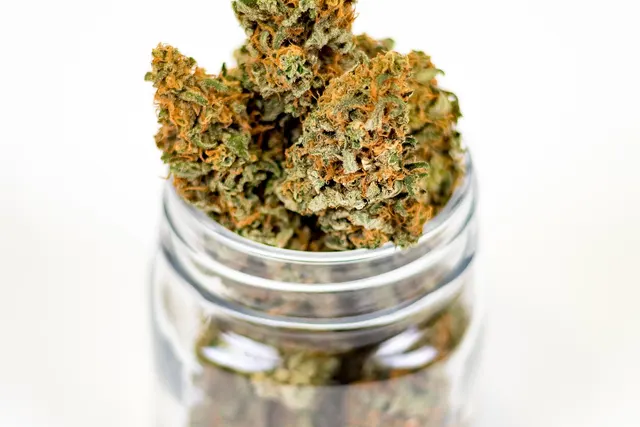
Photo: Pixabay
On this page 8 sections
- How Cannabis Payment Apps Move Money Legally
- CanPay vs. Aeropay vs. Hypur: Merchant Fees and Customer Fees Side by Side
- POS and Online Menu Integrations
- State Availability and Banking Partners
- Getting Customers to Enroll at the Counter
- Dispensary ACH Payments: Returns, Fraud, and Settlement Timing
- Which App Fits Your Dispensary
- Next Steps
Key takeaways
- Pay-by-bank apps pull funds from a shopper's bank account over ACH, which is why dispensaries can use them when card acceptance is off the table.
- Compare total cost, not the headline rate: per-transaction fees, monthly fees, return fees and any fee charged to the shopper.
- The best app is the one your customers will actually enroll in, so POS integration and counter enrollment matter as much as price.
- ACH returns and multi-day settlement shift risk and cash flow, so get return liability and funding timelines in writing.
If you run a dispensary, you've probably been pitched at least one cannabis pay-by-bank app as a way to cut cash at the counter. This guide covers CanPay vs. Aeropay vs. Hypur and how to compare them. You'll learn how these apps move money, which fees to compare on both the merchant and customer side, what to ask about POS and online menu integrations, how state coverage and banking partners affect you, and how to choose the app your shoppers will actually download.
A note on numbers: This guide does not list specific fees, supported states or integration partners for any provider. Those terms change, often depend on your volume and contract, and vary by market. Use the questions below to get current, written terms directly from each company.
How Cannabis Payment Apps Move Money Legally
Most dispensaries can't accept credit or debit cards the normal way. Cannabis remains restricted under federal law, and legality varies by state. As a result, card networks and most acquiring banks generally won't process marijuana sales. That leaves cash, which brings security, counting and armored-transport costs, and pay-by-bank apps that use the ACH network. For more on how federal status affects this, see our guide to what Schedule III rescheduling changes for dispensary payments.
The flow typically looks like this:
- The shopper downloads the app and links a checking account. This is usually done through a bank-login connection or by entering account and routing numbers.
- The app verifies the shopper's identity and the account.
- At checkout, the shopper authorizes a payment in the app, often by scanning a code or entering a one-time token at the POS.
- The provider initiates an ACH debit from the shopper's account.
- Funds settle to the dispensary's business bank account after the provider's processing window.
Behind each app is a bank or credit union willing to serve cannabis businesses. That institution does its own due diligence, so expect to provide your state license, ownership details, banking information and possibly compliance documentation during onboarding.
Avoid Setups That Disguise the Transaction
Some vendors have pitched "cashless ATM" or similar card-based setups that make a cannabis purchase look like something else. These arrangements have drawn card network scrutiny. Miscoding transactions can get a merchant terminated and placed on the MATCH list, which makes future processing much harder to get. A legitimate pay-by-bank app is transparent about what is being sold, and so should you be.
CanPay vs. Aeropay vs. Hypur: Merchant Fees and Customer Fees Side by Side
All three companies market themselves to cannabis retailers as alternatives to cash, but their pricing structures, products and emphasis differ, and each changes over time. Instead of trusting a comparison chart from a blog or a sales deck, request a written fee schedule from each provider and line the schedules up yourself.
| Fee Type | What to Ask | Why It Matters |
|---|---|---|
| Per-transaction fee | Is it flat, a percentage, or both? | Flat fees hurt small tickets. Percentages hurt large ones. |
| Monthly or platform fee | Is there a minimum, and what does it include? | It matters most for low-volume or new stores. |
| Setup and integration | Are there one-time costs for onboarding or POS connection? | It affects your first-year cost. |
| Return and NSF fees | What do you charge when an ACH debit is returned? | Returns can add up quietly. |
| Customer-side fee | Does the shopper pay anything to use the app? | Shopper fees are a major reason people won't enroll. |
| Promotions | Who funds sign-up incentives or rewards? | Provider-funded incentives can boost adoption at no cost to you. |
| Contract terms | What are the term length, early termination fee and price-change notice? | Locked-in pricing protects your margins. |
How Ticket Size Changes the Math
The cheaper app depends on your average ticket. Here's a hypothetical comparison that doesn't reflect any provider's actual pricing:
| Ticket (Illustrative) | App A: $0.50 Flat | App B: 1.5% |
|---|---|---|
| $25 pre-roll | $0.50 | $0.38 |
| $80 typical basket | $0.50 | $1.20 |
| $200 stock-up order | $0.50 | $3.00 |
A store with lots of quick, low-dollar sales may prefer one structure. A store with larger medical or bulk baskets may prefer the other. Pull a month of POS data and run your real ticket mix through each quote.
Customer Fees Can Sink Adoption
Some apps or dispensaries pass a per-transaction fee on to the shopper. Even a small fee can push a customer back to the ATM. If a provider charges shoppers, ask whether you can absorb that fee and how the cost appears on the customer's receipt. Also check your state's cannabis rules and consumer protection laws before you add fees at checkout.
If you also run hemp-derived or other regulated product lines, our breakdown of CBD credit card processing fees, reserves and hidden costs is a useful reference point for comparing high-risk pricing.
POS and Online Menu Integrations
Your dispensary POS already connects to your state's seed-to-sale tracking system. The payment app needs to fit into that workflow without creating double entry. Integrations usually fall into three levels:
- Native integration: The app shows up as a tender type. The POS pushes the exact amount, and the payment reconciles automatically.
- Semi-integrated: The POS and app communicate, but staff may need to confirm or match steps by hand.
- Standalone: The budtender keys the amount into a separate device or portal. This is the most error-prone option and the hardest to reconcile at close.
Online ordering adds another layer. Many shoppers browse a menu, reserve products and pay at pickup. Where your state allows it, some may pay at the time of order or for delivery. Ask whether the app works inside your online menu platform, and confirm your process still meets ID-verification requirements at handoff.
Integration Questions to Ask
- Which dispensary POS and online menu platforms do you integrate with today, not "on the roadmap"?
- Who handles setup and troubleshooting: you, the POS company or my team?
- What happens at the counter if the integration goes down mid-shift?
- Can I export transaction data that matches my POS tender reports and state reporting?
- Does the app handle partial payments, voids and refunds cleanly?
State Availability and Banking Partners
Coverage is not uniform. A provider may operate in some adult-use markets but not others, or support medical sales in one state and adult-use in another. Coverage also changes as banking relationships and state rules change. Confirm the provider is live in your state for your license type before you sign.
The banking partner matters too. If a provider's bank exits the cannabis space, service can be disrupted. Ask:
- Which financial institution(s) process your transactions in my state?
- Do you have a backup banking relationship if one partner leaves?
- Will my own depository bank accept settlements from you without issues?
- How much notice will I get if coverage in my state changes?
Where Hypur Cannabis Payments Fit
When you evaluate Hypur cannabis payments, ask how its payment product relates to any compliance or banking-connectivity tools it offers, and whether you need both. The same question applies to every provider. Some bundle reporting and compliance features, some are mostly a consumer checkout app, and pricing may differ depending on what you take. Make sure each quote covers the same scope.
Multi-state operators should also ask whether one provider covers all their locations. Running different apps in different states complicates training, reporting and shopper messaging.
Getting Customers to Enroll at the Counter
This is where most pay-by-bank rollouts succeed or stall. A low fee doesn't help if shoppers won't download the app. The friction points are predictable: downloading, linking a bank account, completing identity checks, and sometimes hitting low spending limits on early transactions.
Don't try to enroll people at the register during a Friday evening rush or a holiday spike. Instead:
- Enroll during the wait. Put QR codes at check-in, in the lobby and on menu boards so shoppers can sign up while their ID is verified or their order is pulled.
- Give budtenders a short script. For example: "If you'd rather skip the ATM next time, you can pay from your bank account. It takes a couple of minutes, and I can help while your order's being bagged."
- Lead with the shopper's benefit. No ATM fee, no cash to carry, faster checkout on repeat visits.
- Use provider-funded incentives carefully. Discounts and giveaways are restricted in some states, so confirm what's allowed before you promote a sign-up offer.
- Track enrollment weekly. Measure the share of transactions paid by app, not just downloads.
Pay attention to your customer mix. Regulars and medical patients who visit often tend to be more willing to set up an app once. Tourists and one-time shoppers usually aren't. If you already know many customers use a particular app, that can outweigh a small fee difference.
Dispensary ACH Payments: Returns, Fraud, and Settlement Timing
An approved ACH payment is not guaranteed cash the way people often assume. Debits can come back for insufficient funds, closed accounts or customer claims that a payment was unauthorized. Under ACH network rules, consumers generally have a longer window to dispute unauthorized debits than many merchants expect.
| Risk | What It Looks Like | Ask the Provider |
|---|---|---|
| Insufficient funds | The debit returns days after the sale. | Do you guarantee funds, or is the return charged back to me? |
| Unauthorized claim | The shopper says they didn't approve the payment. | Who bears the loss, and how do disputes work? |
| Account takeover | A fraudster links someone else's bank account. | What identity and account checks do you run? |
| Settlement delay | Funds arrive after weekends or holidays. | What's the funding timeline, and is it in the contract? |
Practical safeguards:
- Match the name on the app to the ID you're already checking for age verification.
- Ask about per-transaction and daily limits for new users.
- Reconcile POS tenders to bank deposits daily so you catch missing or returned funds early.
- Plan cash flow around multi-day settlement, especially before tax payments and vendor invoices.
Which App Fits Your Dispensary
There's no universal winner in the CanPay vs. Aeropay vs. Hypur comparison. The right choice depends on your store profile:
| Store Profile | Prioritize |
|---|---|
| High-volume adult-use, small tickets | Low per-transaction cost, fast enrollment, native POS integration |
| Medical-focused with repeat patients | Easy repeat checkout, loyalty features, reliable support |
| Multi-state operator | Consistent coverage, consolidated reporting, stable banking partners |
| Heavy online ordering or delivery | Menu platform integration and pay-at-order support where allowed |
A simple selection process:
- List your POS, online menu and state license types.
- Request written quotes covering every fee in the table above.
- Ask each provider for references from dispensaries in your state, then call them.
- Run your actual ticket mix through each pricing model.
- Pilot at one location or for a set period, and measure the share of sales paid by app.
Some dispensaries offer more than one app to capture shoppers who already use one. That can raise adoption, but it adds training and reconciliation work.
Next Steps
Start with your data: average ticket, transaction count, POS platform and the share of customers who are regulars. Then get written terms from each provider and judge them on total cost, integration quality, state coverage and how easily a shopper can enroll in under a few minutes.
This article is general information, not legal or compliance advice. Cannabis payment rules vary by state and federal law, so confirm your plans with a qualified cannabis attorney or compliance professional.
If your business includes regulated lines beyond the dispensary itself, MannyPay works with cannabis-related businesses and offers high-risk merchant accounts for regulated industries, subject to underwriting. For a sense of how regulated merchants approach approval, see our guide to getting approved and staying open as a 7-OH merchant. To talk through which compliant options apply to your license and state, request a free quote or contact the MannyPay team. A specialist will respond within one business day.
This article is for general educational purposes and is not legal, tax or financial advice. Card network rules and state laws change; confirm current requirements for your business.