Dispensary Online Ordering: Prepay or Pay at Pickup?
Dispensary online ordering payment compared: bank prepay vs. pay at pickup, with no-show math, ACH return risk, purchase limits and refund rules.

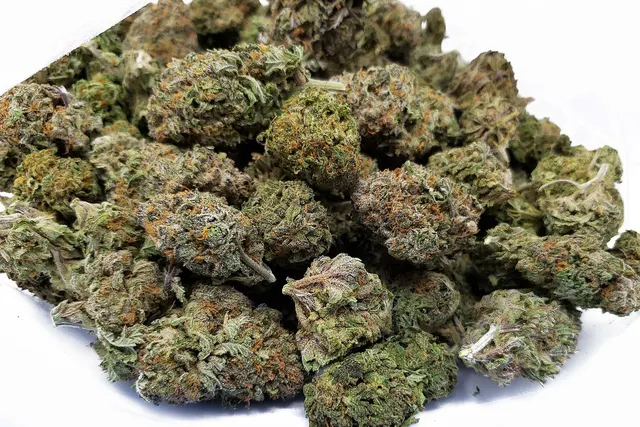
Photo: Pixabay
On this page 9 sections
- Card Checkout Isn't on the Table, Even After the 2026 Rescheduling Rule
- Dispensary Online Ordering Payment Starts With Your State's Rules
- Prepay With Pay-by-Bank: What It Fixes and What It Costs
- Pay at Pickup: Lower Friction, Higher Inventory Cost
- Worked Example: Counter Minutes Versus Per-Order Fees
- Purchase Limits Get Checked at Handoff, Not Checkout
- Express Lanes Work Now; Lockers Need a Regulator's Answer
- Write the Refund Policy Before You Turn on Prepay
- Pull 30 Days of Orders Before You Decide
Key takeaways
- Labor savings alone rarely cover a per-order pay-by-bank fee. Prepay pays off only when the orders it rescues earn more margin than its net weekly cost.
- Rescheduling under the April 2026 rule didn't open card checkout. Visa and Mastercard policies still bar cannabis sales, so prepay means ACH.
- An unauthorized-debit claim (R10) can come back up to 60 calendar days after settlement. Get each provider's return-liability terms in writing.
- A prepaid order doesn't guarantee the quantity. Limits are checked at handoff, so your POS must handle partial refunds.
For most dispensaries with a real no-show problem, the better dispensary online ordering payment setup is optional prepay through a pay-by-bank app, with pay at pickup kept as a fallback. That holds only if your state lets customers pay before they are on the licensed premises. Prepay cuts no-shows and shortens the handoff at the counter; pay at pickup converts more browsers into orders and avoids per-order fees and ACH return risk. Three numbers you already have will settle it for your store: your no-show rate, how long a pickup takes at the counter, and what a pay-by-bank provider charges per order.
Card Checkout Isn't on the Table, Even After the 2026 Rescheduling Rule
For a dispensary, "prepay" means a bank debit, not a card checkout. That comes from card network rules. It isn't a gap in your processor's menu. Visa and Mastercard prohibit their cards for cannabis transactions. According to a Government Accountability Office report covered by Cannabis Business Times, the group representing the networks said they would not change those policies unless cannabis is legalized federally.
Rescheduling hasn't changed that. The American Bar Association's status update explains that an April 28, 2026 final rule moved two things to Schedule III: FDA-approved cannabis products and cannabis covered by a qualifying state medical license. Adult-use cannabis remains in Schedule I. Schedule III is still a controlled-substance category, so the networks' position stands at both medical and adult-use counters. Our article on what Schedule III rescheduling changes for dispensary payments covers the tax and banking side. The full menu of legal payment options for cannabis dispensaries has its own guide.
Skip the "cashless ATM" shortcut. It runs a PIN debit card as if it were an ATM withdrawal and rounds the sale up to give change back. Goodwin's analysis of the card-network crackdown notes that Visa warned banks at the end of 2021 that these setups may violate Visa rules. A Mastercard spokesperson said in 2023 that the network had told its financial institutions to end the activity. A pay-by-bank app that settles a disclosed cannabis transaction is the defensible route.
Dispensary Online Ordering Payment Starts With Your State's Rules
In most adult-use and medical markets, an online order is a reservation. The sale happens when a licensed employee checks ID on the licensed premises and hands over the product. That is when the transaction hits your POS and the state's seed-to-sale tracking system.
States differ on where payment fits in that sequence. Some let customers pay ahead as long as ID checks and handoff still happen on site. Others restrict when money can change hands or add conditions through license rules or regulator guidance. These are state laws and regulations, not network or processor rules. Before you build a prepay flow, read your regulator's rules on preorders and remote payment and confirm with your compliance attorney. This article is general information, not legal advice.
Because the sale happens at handoff, two settings matter. Your POS should carry a prepaid order as a pending sale until pickup. And because tax is usually calculated on the completed sale, you need a rule for which price and tax apply if either changes between order and pickup.
Prepay With Pay-by-Bank: What It Fixes and What It Costs
The customer links a checking account inside a pay-by-bank app and authorizes a debit for the order total. The provider pulls the funds over the ACH network and settles them to your account. Several standalone apps serve dispensaries, and we compare them in CanPay vs. Aeropay vs. Hypur. Some online menu platforms bundle their own option.
Prepay helps in three ways. A customer who has already paid is more likely to show up. Pickup moves faster because nobody counts cash or makes change. And you handle less cash, which means less counting time, less money in the safe and fewer armored pickups.
The costs are real:
- Enrollment friction. First-time customers must link a bank account before checkout, and some will quit at that screen.
- Per-order fees. Each provider sets its own pricing. That usually means a per-transaction charge to the merchant and sometimes a convenience fee for the customer. This is provider pricing, not a network rule, so get a written quote. Whether those fees are deductible is covered in 280E and payment fees.
- ACH returns. Nacha's operating rules govern the ACH network. As Plaid's guide to ACH returns summarizes them, an insufficient-funds return (code R01) must come back within two banking days of settlement. When a consumer claims a debit was unauthorized (code R10), the return can come up to 60 calendar days after settlement, long after the product has left your store.
That 60-day window is why you should ask every provider, in writing, who absorbs returns, how its risk screening works and whether it guarantees funds once it approves an order.
Pay at Pickup: Lower Friction, Higher Inventory Cost
Pay at pickup asks the least of the customer. They tap "reserve," get a confirmation and pay at the counter in cash or through a pay-by-bank app on their phone. You owe no fee on orders that never complete.
The cost lands in inventory. Most dispensary POS and menu systems pull reserved units out of sellable stock so you don't oversell. When a customer doesn't show, that product sits in a bag behind the counter while walk-ins hear it's sold out. On a limited drop or a holiday weekend, you don't get that revenue back.
Set a hold window and enforce it in software. "Held until close of business on the day ordered" is simple to explain. Set the POS to release expired holds automatically, and state the window on the confirmation screen and in the text message. Track repeat no-shows. Requiring prepay only from customers who have abandoned several orders is a reasonable middle path.
Cash is also the slowest way to close a pickup. If most pickup customers pay cash, check whether an ATM inside your dispensary and your dispensary cash management routine can absorb the volume.
Worked Example: Counter Minutes Versus Per-Order Fees
Every number below is illustrative, not market data. Replace each one with your own.
Assumptions:
- 300 online orders a week at a $60 average ticket
- No-show rate of 15% with pay at pickup and 4% with prepay
- A pay-at-pickup handoff (ID, limit check, cash, change) takes 4 minutes; a prepaid handoff (ID, limit check, bag) takes 2 minutes
- Budtender cost of $20 an hour
- Pay-by-bank fee of $1.00 per completed order, paid by the store
| Pay at pickup | Prepay | |
|---|---|---|
| Orders completed | 255 | 288 |
| Abandoned orders | 45 | 12 |
| Counter time | 1,020 min (17.0 hrs) | 576 min (9.6 hrs) |
| Payment fees | $0 | $288 |
Prepay saves 7.4 counter hours a week, worth about $148 at the assumed wage. That doesn't cover $288 in fees. The per-order math shows why: two minutes saved at $20 an hour is worth about $0.67, which is less than the $1.00 fee.
So labor savings alone rarely justify prepay. The case rests on the 33 extra completed orders, about $1,980 in illustrative weekly sales. In this example prepay costs a net $140 a week ($288 minus $148). That gives you a clear decision rule: prepay pays off if the orders it saves produce more than $140 a week in gross margin. Discount that figure, because some no-shows would have come back and bought later anyway. If your no-show rate is already low and the pickup line rarely backs up, prepay probably costs more than it returns. If held product regularly blocks walk-in sales, it likely pays for itself.
Purchase Limits Get Checked at Handoff, Not Checkout
This rule causes the most confusion. A prepaid order doesn't guarantee the customer can buy that quantity.
Your online menu should check each cart against the per-transaction limit. That includes the equivalency math many states use to count concentrates and edibles differently from flower. But the check that counts happens when the sale completes. Depending on the state, it may cover a day or a longer period. Medical patients may have allotments tied to a state registry that updates between order and pickup. A customer who bought somewhere else that morning can arrive over the limit.
When that happens, staff have to reduce the order. On a pay-at-pickup order, that's just a smaller sale. On a prepaid order, it's a partial refund, so your POS must handle one without voiding the whole ticket. Our roundup of dispensary POS systems with Metrc sync and limit tracking covers which systems do this well.
Express Lanes Work Now; Lockers Need a Regulator's Answer
Prepay pays off most at the counter. A dedicated lane for paid orders cuts the handoff to an ID scan, a limit check and a bag. On a Friday evening, that keeps online customers out of the walk-in line.
After-hours lockers are harder. Many states require an employee to verify ID and age at the moment of handoff, and a locker that opens without staff involvement may not meet that rule. Before you buy hardware, ask your regulator in writing:
- Whether locker pickup is allowed at all
- Whether staff must verify ID before a locker is released
- What camera coverage is expected
- Whether pickup is limited to business hours
In-store self-order kiosks for dispensaries raise similar questions about where ID checks happen.
Write the Refund Policy Before You Turn on Prepay
Show the policy at checkout and cover four cases:
- Out of stock: Decide whether staff may substitute a product at the same or lower price with the customer's consent, or must refund the item.
- Limit reduction: Refund removed items automatically.
- Price changes between order and pickup: Pick one rule and apply it every time.
- Cancellations: Set a cutoff, such as before the order is pulled, and give a full refund for any cancellation before it.
Send refunds back through the provider that took the payment. Paying a prepaid customer back in cash from the drawer breaks the match between your POS, the provider's settlement report and your bank deposits. It also leaves no record tied to the original debit. Tell customers bank refunds take a few business days, and ask whether the provider returns its transaction fee on a refund.
Product returns are a separate issue. Many states tightly restrict them, and returned cannabis usually has to be logged as waste in the tracking system rather than put back on the shelf. Follow your state's procedure.
Pull 30 Days of Orders Before You Decide
Export the last 30 days of online orders and calculate three figures: no-show rate, median pickup handoff time and how often held inventory caused a stockout. Get written per-order fees and return-handling terms from two pay-by-bank providers and plug everything into the table above. Then compare prepay's net weekly cost with the margin on the orders it would save. If prepay comes out ahead, launch it as an option alongside pay at pickup and require it only from repeat no-shows. If you also sell hemp, CBD or ancillary products that can use conventional processing, review MannyPay's payment options for cannabis-related businesses or request a free processing quote. A MannyPay specialist responds within one business day.
Sources
- Federal Cannabis Rescheduling: Status Update (American Bar Association)
- Visa, Mastercard Likely Won't Change Cannabis-Payment Policies Under Schedule III, GAO Finds (Cannabis Business Times)
- Navigating the Hazy Landscape: Challenges and Solutions in Cannabis Payment Processing (Goodwin)
- ACH Return Codes: A Complete Guide for Businesses (Plaid)
This article is for general educational purposes and is not legal, tax or financial advice. Card network rules and state laws change; confirm current requirements for your business.