CBD Website Claims That Get Merchant Accounts Shut Down
Learn the CBD website compliance mistakes underwriters flag, from disease claims to reviews, and how to rewrite pages to hold up under processor review.

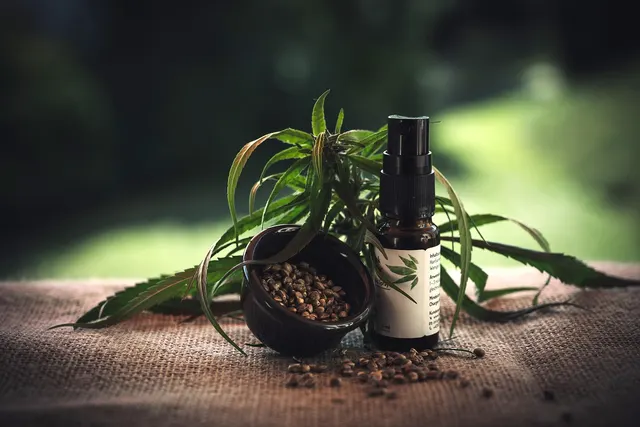
Photo: Pixabay
On this page 7 sections
- Why Underwriters Read Your CBD Site Line by Line
- CBD Health Claims the FDA and Underwriters Flag
- Customer Reviews and Testimonials as Hidden Risk
- CBD Website Requirements for a Merchant Account
- What an FDA Warning Letter on CBD Means for Your Processor
- A Pre-Application CBD Website Compliance Checklist
- Next Steps
Key takeaways
- Underwriters read product pages, blog posts, reviews, image text and product names. Any disease or drug claim can stall an application or end an existing account.
- Rewrite claims to describe what the product is (format, cannabinoid content, ingredients, lab testing), not what it does to the body.
- Reviews and testimonials you publish or feature count as your claims, so moderate them like marketing copy.
- Batch-matched COAs, age verification, clear shipping and refund policies, and a pre-application audit help prevent avoidable problems.
CBD website compliance is one of the first things a payment processor checks when you apply for an account. A single phrase like "treats anxiety" on a product page can stall an application or close an account you already have. This guide covers the wording that underwriters and regulators flag, the hidden risk in reviews and blog posts, the pages processors expect to see, and how to rewrite your site so it holds up better under review.
This is general information, not legal advice. CBD marketing falls under federal and state rules that change often. Have a regulatory attorney review your site before you rely on any wording.
Why Underwriters Read Your CBD Site Line by Line
When you apply for a CBD merchant account, the acquiring bank takes on risk for every transaction you run. The bank answers to the card networks for the merchants it boards. That makes your website the main evidence of what you sell and how you sell it.
Underwriters may review:
- Product pages, including titles, descriptions, bullet points and size or flavor options
- Blog posts and FAQ pages, especially content that discusses medical conditions
- Reviews and testimonials, whether on-site, imported or embedded from social media
- Images and packaging, because claims printed on a label count even if the page text is clean
- Metadata, such as page titles, URLs, alt text and SEO keywords
- Policy pages, lab reports and age verification
Review doesn't necessarily stop at approval. Acquirers may keep monitoring a merchant's website after boarding, sometimes with automated tools. Assume that a blog post you add six months after approval will get the same scrutiny as your launch pages.
Claims also drive chargebacks. If your site promises pain relief and the customer feels no difference, you have set up a "not as described" dispute. Our guide on fighting CBD chargebacks for "didn't work" and unrecognized charges covers that side of the problem.
CBD Health Claims the FDA and Underwriters Flag
Over-the-counter CBD products are not FDA-approved drugs. When a site says a product can diagnose, treat, cure, mitigate or prevent a disease, regulators can treat that product as an unapproved drug. Processors know this, and disease claims are one of the main things underwriters look for on CBD sites.
Wording that draws attention includes:
- Disease and condition names: anxiety, depression, insomnia, arthritis, cancer, diabetes, epilepsy, seizures, PTSD, ADHD, Alzheimer's and fibromyalgia
- Treatment verbs: treats, cures, heals, prevents, reverses, fights and relieves
- Drug comparisons: "alternative to opioids," "replace your prescription" and "works like ibuprofen"
- Medical authority: "doctor recommended," "clinically proven" and "pharmaceutical grade"
- Pet health claims: "eases joint pain in dogs" and "calms separation anxiety"
- Claims built into names: product names like "Pain Relief Gummies," URL slugs like /cbd-for-anxiety and hashtags like #CBDforPain
A disclaimer at the bottom of the page doesn't fix any of these. Boilerplate stating that statements "have not been evaluated" does not cancel a disease claim elsewhere on the page.
Gray-Zone Wellness Language
Words like "calm," "relief," "recovery," "sleep" and "stress" are not disease names, but many underwriters still question them. They draw extra attention when they appear next to a condition or in a product name. Tolerance varies by processor and acquiring bank. Ask your processor what it accepts instead of guessing, and lean conservative.
How to Rewrite Risky CBD Marketing Claims
The rule of thumb is to describe what the product is, not what it does to the body. Lead with format, cannabinoid content, ingredients, sourcing, flavor and lab testing.
| Flagged Wording | Why It's Flagged | Rewrite Direction (Illustrative) |
|---|---|---|
| "Treats anxiety" | Names a disease and claims treatment | "Full-spectrum hemp extract gummies, 25 mg CBD per gummy, third-party lab tested" |
| "Cures chronic pain" | Cure claim tied to a condition | "Topical balm made with broad-spectrum hemp extract and shea butter" |
| "Natural sleep aid for insomnia" | Disease name plus a drug-like function | "Lavender-flavored CBD tincture, 30 mL bottle, batch COA linked below" |
| "Anti-inflammatory formula" | Implies a physiological drug effect | Remove it, then list the ingredients and cannabinoid profile |
| "Safer alternative to opioids" | Drug comparison | Remove it entirely; no rewrite is appropriate |
| "Clinically proven" | Unsupported medical authority claim | "Tested by an independent accredited lab" (only if true) |
| "Helps dogs with arthritis" | Animal disease claim | "Peanut butter-flavored hemp chews for dogs, sized by weight" |
The dosage and size figures in the table are illustrative. Use the numbers from your own product and its lab report. Have counsel review even descriptive copy, because no wording is guaranteed to pass every processor.
Customer Reviews and Testimonials as Hidden Risk
Many merchants clean up product copy but miss the review section. If you publish, feature or pin a review, or reply to it approvingly, underwriters and regulators can treat it as your own marketing claim.
Common problem spots:
- On-site reviews, such as "This cured my migraines" on a product page
- Featured testimonials on the homepage or in email campaigns
- Imported reviews pulled from another platform without moderation
- Embedded social posts and influencer content that use disease language
- Affiliate pages that make claims while linking to your checkout
- Your own replies, such as "So glad it helped your anxiety!"
To reduce the risk:
- Set a moderation filter that holds any review containing condition or treatment keywords.
- Publish a review policy telling customers that reviews describing medical outcomes won't be posted.
- Audit existing reviews, not just new ones. Older reviews are easy to overlook.
- Give affiliates and influencers written guidelines that prohibit health claims, and remove those who don't follow them.
- Train staff to reply to reviews without repeating or endorsing health language.
Blog Posts That Act Like Product Claims
A post titled "Can CBD Help With Arthritis?" that links to your tinctures works like a product claim, even if it cites research. Underwriters connect educational content to the buy button. Choose topics that don't imply treatment, such as how to read a COA, full-spectrum vs. isolate, storage and shipping, and how hemp is grown and extracted.
CBD Website Requirements for a Merchant Account
Clean copy covers only part of the review. Processors also look for structural signs of a legitimate, compliant store.
Certificates of Analysis
Link a current third-party Certificate of Analysis (COA) from each product page. Underwriters check that:
- The COA matches the product name, batch or lot number, and the potency on the label
- The report shows the cannabinoid profile, including THC content
- The lab is independent of your company
- Reports are current and easy to find, not buried in a PDF archive
Federal rules for hemp-derived THC have been changing. Our guide to what the federal hemp THC ban means for your merchant account explains how those changes affect processing.
Age Verification
Use an age gate when visitors enter the site, and verify age at checkout where your products or destination states require it. Minimum ages and verification rules vary by state and product type, so confirm the requirements for every state you ship to.
Shipping, Refund and Contact Policies
Processors expect to see:
- A shipping policy that lists the states you don't ship to, backed by checkout rules that block those addresses. See how to block banned states at checkout for Delta 8.
- A refund and return policy that is visible before purchase and matches what you actually do
- Terms of service and a privacy policy
- Contact details, including a business address, phone number and support email
- Clear subscription terms if you sell auto-ship, which state automatic renewal laws may govern
What an FDA Warning Letter on CBD Means for Your Processor
The FDA has sent warning letters to CBD sellers whose websites made disease claims. The FTC and state attorneys general have also taken action against deceptive health claims. FDA warning letters are posted publicly, and processors and acquiring banks pay attention to them.
For a merchant account, a warning letter can lead to:
- An immediate account review and requests for documentation
- A new or larger reserve on your deposits
- Held funds while the bank assesses its exposure
- Termination of the account
When an account is closed for cause, the merchant may be added to the MATCH list, which makes future approvals much harder. If you're dealing with a closure now, read how to get held funds back after a processor drops your CBD store and how rolling reserves work and how to lower them.
If you receive a warning letter:
- Contact a regulatory attorney right away. The letter will ask for a response within a set time.
- Remove the cited claims everywhere: your site, social media, email, packaging and affiliate pages.
- Document every change with dated screenshots.
- Tell your processor before it finds out on its own. Volunteering a remediation plan tends to go better than being caught by surprise.
Don't try to keep processing by moving products to another website, splitting sales across accounts or describing your business differently on an application. Those approaches violate card network rules and can turn a fixable problem into a permanent one.
A Pre-Application CBD Website Compliance Checklist
Run through this list before you apply, and again every quarter.
Copy and Content
- No disease names or treatment verbs in product titles, descriptions, bullets or FAQs
- No drug comparisons, "clinically proven" or "doctor recommended" language
- Product names, URL slugs, image alt text and meta descriptions are free of health claims
- Packaging images match the compliant site copy
- Blog posts don't link condition-focused content to products
- Reviews are filtered for medical language, and older reviews have been audited
- Affiliate and influencer guidelines are in writing
Structure and Policies
- Batch-matched third-party COAs are linked on every product page
- An age gate is in place, plus checkout age verification where required
- The shipping policy lists restricted states, and checkout blocks them
- Refund, terms, privacy and contact pages are live and accurate
- Subscription terms are clearly disclosed, if applicable
- The billing descriptor and business name match the website
If you sell on a hosted platform, also confirm that the platform and its built-in payments allow CBD. Our guide to payment gateways that work for CBD on Shopify walks through the options.
Next Steps
A compliant site won't guarantee approval, but a noncompliant one makes approval unlikely and keeps an existing account at risk. Fix the copy first, then the reviews, then the structural pages. Keep auditing after you go live.
MannyPay works with CBD and Delta 8 merchants through its high-risk merchant accounts, with online acceptance and 3-D Secure authentication available. To understand the costs involved, see our breakdown of CBD processing rates, reserves and hidden costs. When your site is ready, request a free quote, and a MannyPay specialist will respond within one business day.
This article is for general educational purposes and is not legal, tax or financial advice. Card network rules and state laws change; confirm current requirements for your business.