Pet CBD Payment Processing: Getting Dog and Cat Products Approved
Pet CBD payment processing gets high-risk review. See how FDA and state feed rules, pet health claims, autoship disputes and wholesale shape approval.

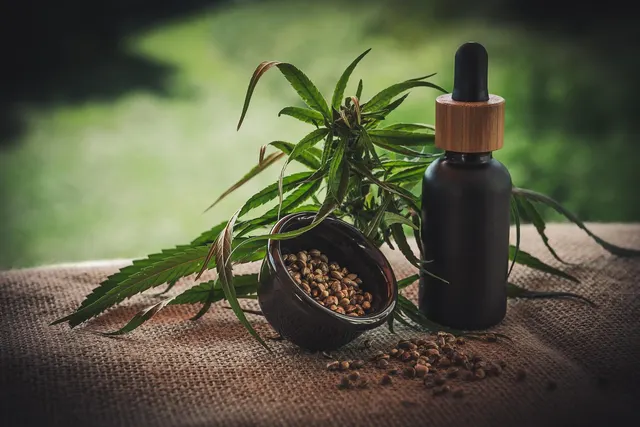
Photo: Pixabay
On this page 6 sections
Key takeaways
- Hemp has no approved route into U.S. animal food, so a chew one state lets you register may not be allowed in the next. Build your list of states you ship to around that.
- Visa's 1.5% merchant VAMP line also requires 1,500 events a month. Small brands are really held to the dispute limit in their merchant agreement. That limit is the acquirer's own policy, shaped by Visa's 0.5% and 0.7% thresholds for acquirer portfolios.
- A pet that died or was rehomed is a dispute cause specific to this category. Make cancelling one step and refund that shipment without argument.
Pet CBD payment processing goes through the same high-risk underwriting as human CBD, and on several points the review is stricter. FDA has never approved cannabis for any use in animals, and hemp has no approved route into pet food or treats. Owners also dispute charges quickly when a chew doesn't seem to help. The brands that get approved come in with clean claims, batch-level lab reports, an autoship setup built to prevent "I didn't authorize this" disputes and a clear account of who buys from them wholesale.
How Pet CBD Payment Processing Differs From Human CBD
Underwriters treat pet CBD like any other hemp-derived CBD. The acquiring bank wants to know where your cannabinoids come from, how much THC the finished product contains, which states you ship to and how you bill. Someone will also read every claim on your website. If your human CBD line already has an approved account, adding pet products usually means telling your processor and going through a review, not filing a new application. Tell your processor before the pet line goes live.
Three things catch pet brands off guard. State feed officials get a say, because chews and treats look like pet food to state departments of agriculture. Dosing runs by weight, so customers buy the wrong strength or run out early, and some decide the product "didn't work" and call their bank. Owners are also emotionally invested. If a dog gets sick the week it started a new chew, even by coincidence, the owner may call the card issuer before contacting you.
Full-spectrum tinctures contain trace THC, and federal hemp THC rules are changing. If your pet line is full spectrum, read what the federal hemp THC ban means for your merchant account and confirm your formulas with counsel.
Refuse one shortcut outright. Some sellers ask to be set up under a pet-supply merchant category code because most of the catalog is toys and treats. If you sell CBD, the account has to be underwritten and coded for CBD. Using a pet-store code to hide CBD is miscoding. Banks treat it as grounds for closing the account, and in serious cases it can put the business on the MATCH list. Our breakdown of which CBD MCC codes apply and what each one triggers covers the codes processors actually use.
What Federal and State Rules Say About CBD for Pets
FDA's question-and-answer page on cannabis and CBD says the agency has not approved cannabis for any use in animals and cannot vouch for the safety or effectiveness of these products. In early 2025, FDA's Center for Veterinary Medicine (CVM) asked veterinarians for information on cannabis-derived products. Covington's summary of that request noted that FDA has not approved, conditionally approved or indexed any animal drug containing CBD.
That means your claims decide how regulators classify your product. A chew marketed to treat or prevent a disease reads as an animal drug, and no approved CBD animal drug exists. CVM enforces this. The AVMA reported that CVM sent warning letters to Bailey's Wellness, Holista and House of Alchemy over CBD oils, chews and pellets promoted with unproven benefits on websites and social media.
Most pet brands misunderstand one rule. Human CBD sellers write "supports joint comfort" instead of "treats arthritis" and assume the softer wording protects them. That protection is thin even for products sold to people. In January 2023, FDA denied three citizen petitions asking it to allow CBD as a dietary supplement, according to the same Covington summary. The supplement framework was written for products people take, so a dog chew has no supplement category to fall back on. Use the softer wording anyway, because it lowers your underwriting risk. Just don't treat it as legal protection.
At the state level, feed rules come from the Association of American Feed Control Officials (AAFCO), whose members are state feed agencies plus CVM. In guidelines issued May 1, 2019, AAFCO said the 2018 Farm Bill removed hemp from the controlled substances list but did not authorize it as an animal feed ingredient. AAFCO later joined 16 industry groups in an open letter urging states not to legalize hemp in pet food on their own. The letter said no hemp ingredient had passed the established feed-ingredient review.
Some states have passed laws allowing hemp in pet products anyway, while others follow AAFCO. As a result, a soft chew you can register as a treat in one state may not be allowed in the next. Underwriters will ask where you ship and whether your products are registered where required. If some states are off limits, show that your store enforces it by blocking restricted states at checkout. The method that guide describes for Delta 8 works the same way for pet products.
This is general information, not legal advice. Animal product rules vary by state and change often, so confirm your labels, registrations and claims with a qualified attorney before you apply.
Pet Health Claims Underwriters Flag
Underwriters read your site the way a regulator would, and they take screenshots. These claims hold up pet CBD applications most often:
| Claim on the site | Why it gets flagged |
|---|---|
| "Stops seizures" or "for dogs with epilepsy" | Names a disease and promises treatment |
| "Relieves arthritis pain" | Disease claim, and a very common one on pet CBD sites |
| "Shrinks tumors" or "supports dogs with cancer" | The disease claim most likely to draw regulator attention |
| "Replaces your dog's anxiety meds" | Suggests replacing prescribed treatment |
| "Vet recommended" with no named source | Implies a medical endorsement you may not be able to document |
| Reviews you publish saying "cured" | Testimonials you display count as your marketing |
Check your marketing calendar as well as your product copy. The Fourth of July and New Year's Eve are peak weeks for calming chews and for "keeps your dog calm during fireworks" promotions. CVM has addressed exactly that. On July 1, 2021, it publicly urged owners not to give CBD to dogs frightened by fireworks, as High Times reported. Your holiday emails, Instagram captions, affiliate reviews and package inserts all count as your claims.
Pages that pass review stick to facts: ingredients, cannabinoid content per serving, a dosing chart by weight, the batch lab report and a line encouraging owners to talk to their veterinarian. For a fuller list of claims to remove, see CBD website claims that get merchant accounts shut down. Link every product to its certificate of analysis.
Autoship Disputes and Visa's Monitoring Thresholds
A daily chew runs out on a predictable schedule, so autoship fits pet CBD well. It is also a common source of disputes. Customers forget they subscribed, don't recognize the billing descriptor or decide the product isn't working. Pet brands also see a cause human CBD brands rarely do: the pet died or was rehomed, and a renewal charge came through anyway. A grieving owner who sees that charge often calls the bank.
Plan for that situation. Let customers cancel from the account page or by replying to any order email, and have support refund that shipment without pushback. Dogs gain and lose weight, so let subscribers change strength in one step instead of cancelling. Card network subscription rules and state automatic renewal laws also apply. Our guide to CBD autoship billing without getting shut down covers them.
Visa's Acquirer Monitoring Program (VAMP) is a network rule. It measures a ratio: fraud reports plus non-fraud disputes, divided by settled transactions. According to Chargeflow's VAMP guide, since April 1, 2026 a U.S. merchant is rated "Excessive" at a 1.5% ratio with at least 1,500 such events in a month. When Visa began enforcing that level on October 1, 2025, the threshold was 2.2%.
Small brands often treat 1.5% as their limit. A brand with a few thousand transactions a month can't reach 1,500 events, so that threshold rarely applies to it directly. The pressure comes through the acquirer instead. Visa measures each acquirer across its whole merchant portfolio, with an "Above Standard" line at 0.5% and an "Excessive" line at 0.7%. According to cside's VAMP reference, those acquirer thresholds did not change in April 2026. Acquirers pass that pressure on through the dispute limits in your merchant agreement. Those limits are the acquirer's own risk policy, not a Visa rule, and they vary from one acquirer to the next.
Worked example (all numbers illustrative). Assume a brand settles 1,400 Visa transactions a month, 1,000 of them autoship renewals, at a $45 average order. With no reminder before renewals, assume 14 disputes and fraud reports, a 1.0% ratio (14 ÷ 1,400). That is under Visa's 1.5% merchant threshold but above the 0.7% line Visa applies to the acquirer's portfolio. Now add an email and text reminder a few days before each renewal, plus one-click pause. Assume 30 subscribers cancel before being charged and disputes fall to 7. The ratio becomes 7 ÷ 1,370, about 0.51%. The 30 lost renewals cost $1,350 a month (30 × $45).
Losing that $1,350 a month is a real cost. But a ratio near 1% can lead to a larger rolling reserve or a closure review, and losing the account costs far more. Check the dispute threshold in your own agreement and ask how your processor measures Mastercard volume. For disputes that still come in, see how to fight "didn't work" and unrecognized-charge disputes.
Wholesale, Groomers and Vet Clinics Carry Their Own Risk
Tell your underwriter what share of revenue comes from retail accounts and how they pay. Large wholesale orders on a card add cost and dispute exposure to an account already rated high risk. Many brands move independent pet stores to ACH or net terms instead; see getting paid on wholesale CBD orders. Apply your state shipping restrictions to wholesale orders too.
Stores that carry your products face their own risk. A pet store adding CBD usually needs to tell its processor. A groomer who rings up CBD treats as a "grooming add-on" is miscoding the sale. Explaining this to new retail partners protects your brand when one of their accounts gets reviewed.
Vet clinics are the most sensitive channel, because state law controls what a vet may say about cannabis. In California, AB 2215 (2018) protected vets who discuss cannabis with clients. AB 1885 (2022) went further and barred the state veterinary board from disciplining vets who recommend it, with limits. According to Vicente LLP's analysis, a vet employed by or under contract with a licensed cannabis business may not discuss or recommend it, and no vet may distribute cannabis advertising. Clinics in other states should check with their state veterinary board and their processor before stocking pet CBD. MannyPay's payment processing for veterinary clinics page covers in-clinic options. Raise the CBD question at the start of that conversation.
Documents to Prepare for a Pet CBD Merchant Account
A complete file shortens review. Gather:
- Formation documents for the business and a government ID for each owner.
- A voided check or bank letter for the settlement account.
- Recent processing statements with chargeback history, if you've processed before.
- A current certificate of analysis from an independent lab for every SKU and batch, showing cannabinoid content and THC.
- Labels and photos for each product, including the weight-based dosing chart.
- State hemp registrations, plus feed or treat registrations in states that require and allow them.
- Your website URL with problem claims removed, and a list of affiliates and marketplaces selling your products.
- Your subscription terms, refund policy and the billing descriptor customers will see.
- The states you won't ship to and how checkout enforces it.
- Your wholesale accounts by type and how each one pays.
Our underwriting checklist for high-risk merchant accounts explains what reviewers do with each document.
Start with the website, because underwriters look at it first. Remove the risky claims, link every lab report and set your shipping states according to each state's feed rules. MannyPay sets up CBD and Delta 8 merchant accounts through its high-risk processing program, and approval depends on the sponsor bank's underwriting review. When your file is ready, request a free quote and a MannyPay specialist will respond within one business day.
Sources
- FDA Regulation of Cannabis and Cannabis-Derived Products, Including Cannabidiol (CBD)
- Covington: CVM Seeks Information on Use of Cannabis-Derived Products in Veterinary Practice
- AVMA: FDA Issues Warning Letters to Companies Selling Unapproved CBD Products
- National Law Review: AAFCO Issues Updated Guidelines Regarding Hemp in Animal Food
- AFIA: Hemp in Animal Food: Sure, It's There, But Is It Legal?
- High Times: FDA Warns Against Unregulated CBD Products for Dog Anxiety Amid Fireworks
- Chargeflow: New Visa VAMP Rules 2026: What Changed vs VDMP and VFMP
- cside: VAMP Thresholds 2026: Ratio Formula, Rules, and Merchant Survival Guide
- Vicente LLP: Recommending Cannabis for Pets: Legal Considerations for Veterinarians
- CannabizMD: Protecting Pets Through Policy (California AB 2215 and AB 1885)
This article is for general educational purposes and is not legal, tax or financial advice. Card network rules and state laws change; confirm current requirements for your business.