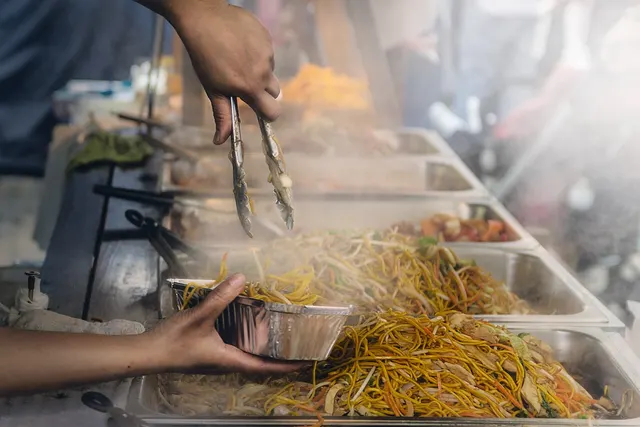
Fil-Am Festival Vendors: Card Readers for Pistahan-Style Events
Pick a Filipino festival vendor card reader that works in crowds: signal backups, faster halo-halo lines, shared booths and parish fundraiser accounts.

Photo: Pixabay
On this page 7 sections
- Why Fiesta Vendor Payment Processing Gets Tricky at Festivals and Parish Fairs
- Choosing a Filipino Festival Vendor Card Reader: Phone Tap or Standalone Terminal
- When the Outdoor Event Card Reader Loses Signal in a Crowd of Thousands
- Keeping the Line Moving at Your Filipino Food Festival Booth
- Sharing a Booth: Night Market Vendor Payments for Two Sellers
- Church and Nonprofit Booths: Whose Account Gets the Money
- Set up Before the Festival Calendar Fills
Key takeaways
- Plan for the cell network to fail at your busiest hour. Bring a second connection on a different carrier, and set your offline-mode limit before the gates open.
- One-tap menu buttons and fewer screen prompts speed up a line more than a faster reader does.
- Two vendors sharing a tent should run two readers on two accounts. Ask your processor before you run anyone else's sales through yours.
- Parish and nonprofit booth money belongs in the organization's merchant account, never a volunteer's personal app.
The best Filipino festival vendor card reader for a Pistahan-style weekend needs two things: a connection that doesn't rely only on the crowd's cell signal, and a menu loaded so each sale takes a couple of taps. Add a backup plan for the hour the network chokes and you've covered most of what goes wrong. A phone with a tap-to-pay reader can handle a quiet parish table. A street festival with thousands of people is a different job, because your reader is competing with every attendee uploading videos of the tinikling stage. Settle your hardware and backup connection before the tent goes up. Then answer the question most people skip: whose merchant account each sale belongs to.
Why Fiesta Vendor Payment Processing Gets Tricky at Festivals and Parish Fairs
Filipino community events come in a few shapes, and each one strains payments in its own way.
Big outdoor festivals pack large crowds into a few city blocks or a park for a day or two. Sales surge around lunch and again after the main stage acts. Simbang Gabi food tables work in short bursts. The Masses before Christmas let out all at once, and within minutes a crowd wants puto bumbong and bibingka. Filipino night markets in parking lots and plazas run for hours after dark on generator power, with a long, steady line at the BBQ stick grill.
What these events share matters more than how they differ. Tickets are small, usually a skewer or a turon at a time. The crowd is mixed. Titas and lolos often carry cash while their grandkids pay with a phone or a watch. Power is borrowed or temporary. The person running the reader is often a cousin or a parish volunteer who has never held the device before.
Choosing a Filipino Festival Vendor Card Reader: Phone Tap or Standalone Terminal
You have two basic routes. One is your phone, using either tap-to-pay software built into a supported model or a small Bluetooth reader paired to an app. The other is a standalone terminal that runs its own payment software and connects on its own. Many models also print receipts or order tickets.
Phones are cheap and familiar, but at a booth they do too many jobs. The same device fields the supplier's text about more ice while it plays the music, and it drains its battery taking payments in the sun. If it dies or loses signal, the booth stops taking cards.
A dedicated terminal keeps payments apart from everything else. Handhelds like the Clover Flex Pocket or the PAX A920 Pro let a second person walk the line and take payment before customers reach the table. Smaller readers like Clover Go suit a one-person table with light volume. Check each model's product page for its connection options, especially whether it has its own cellular service. At a festival, that detail matters more than screen size.
| Your booth | What usually fits |
|---|---|
| Parish table after Mass, one or two volunteers, light card volume | Phone-based reader, with a cash box as the main channel |
| Night market stall with a steady line for hours | Standalone terminal with its own connection, plus a phone as backup |
| Large festival, two or more people serving, long lines at peak | Handheld terminal for line-busting plus a second device on a different network |
For a wider look at the options, MannyPay's mobile card terminals for vendors page lists the portable devices it carries. If you also run a truck between events, our guide to POS systems for Filipino food trucks covers the full-time setup.
When the Outdoor Event Card Reader Loses Signal in a Crowd of Thousands
A card authorization uses very little data. It still needs a working connection to reach the processor and bring an answer back. When thousands of phones crowd the same cell towers, those requests time out. The reader spins while the customer waits, and the line behind them gets restless.
Prepare in this order:
- Know your device's connections. Find out whether your terminal has its own cellular service or depends on Wi-Fi, and which carrier its SIM uses.
- Bring a second path on a different carrier. A mobile hotspot on another network gives you a fallback when your main carrier's towers are saturated.
- Ask the organizer about vendor Wi-Fi, but don't count on it. Shared event Wi-Fi gets crowded too, so treat it as a last resort.
- Test twice. A test sale during setup in an empty plaza tells you little about the lunch peak. Run another one once the crowd arrives.
- Pack power. Bring charged battery packs and a cable for every device. Generator outlets at night markets are often shared and unreliable.
About offline mode: Some terminals can store a card sale when there's no connection and send it once the signal returns. That sale has not been approved. If the card is later declined, the food is gone and so is the money. Find out whether your device offers this, set a per-sale limit you can afford to lose, and keep large catering orders off offline mode.
One firm rule: never write card numbers on paper to "run later." Storing card numbers that way creates a security problem under PCI DSS, the card industry's data security standard. Keying those numbers in afterward also turns a tap sale into a keyed sale, which usually costs more and is easier for the cardholder to dispute. When the network is down and offline mode is off, take cash or point people to the nearest ATM.
Keeping the Line Moving at Your Filipino Food Festival Booth
The halo-halo line is rarely slow because of the card reader. The delay hides in everything around the tap. A cashier hunts for the right button, then the customer sits through a tip screen nobody wanted. Meanwhile the dessert gets built after payment instead of during it.
Here's an illustrative comparison. Assume one cashier handles every card sale and the line never runs dry. At 25 seconds per sale from order to approval, that cashier completes 144 sales an hour (3,600 seconds ÷ 25). Stretch each sale to 45 seconds with extra prompts and a laggy connection, and the same cashier completes 80 (3,600 ÷ 45). That's 64 fewer customers served in your best hour, before counting anyone who gave up and walked to the next stall.
Small changes win back that time:
- Load the menu as buttons. Set up one-tap buttons for single items and your common bundles, such as "3 BBQ sticks" or "Turon x2." Never type a price at the table.
- Use round prices. Round numbers speed up cash change too. If you want tax-included pricing, confirm with your state's tax agency how to post and report it.
- Trim the prompts. Decide whether a tip screen fits your booth, since many festival sellers skip it. Print receipts only when someone asks.
- Split the work. One person takes payment and calls the order number while the other builds the halo-halo or pulls skewers off the holding tray.
Small tickets also change your fee math. Most pricing adds a fixed charge to every sale on top of a percentage. That fixed piece is the same whether the customer buys one turon or a family combo, so on the turon it eats a much bigger share of the sale. Bundles help the line and the margin at once. Our article on small-ticket card fees at Filipino bakeries works through that math in detail. Some vendors also use a cash discount program to offset processing costs. These programs come with signage and setup requirements, so get yours configured before the event rather than taping a sign to the table that morning.
Visitors from the Philippines sometimes ask to pay with an e-wallet. Before you promise anything, read whether U.S. businesses can accept GCash or Maya.
Sharing a Booth: Night Market Vendor Payments for Two Sellers
Two families often split a tent, one selling lumpia and the other ube desserts. The cleanest setup is two readers on two merchant accounts, each in the seller's own business name.
This matters for more than bookkeeping. Refunds and chargebacks land on the account holder, and so does the tax reporting. Processors report card sales under the account holder's taxpayer ID. If your cousin's leche flan runs through your reader, those sales show up on your tax paperwork, not hers. Merchant agreements also generally prohibit processing sales for a separate business, and doing it can cost you the account.
Some setups are different. You might buy desserts wholesale from a relative and resell them as your own product, under your own name, taking responsibility for every sale. Even then, talk to your processor before the event rather than after. A tax professional can tell you how to report the arrangement.
Church and Nonprofit Booths: Whose Account Gets the Money
Parish fiestas and Simbang Gabi tables are usually fundraisers. The money belongs to the parish or the ministry, so it should run through a merchant account opened in the organization's name and settle to the organization's bank account. A volunteer's personal payment app is the wrong place for it, even for one night. It mixes church money with personal money and puts the volunteer's name on the tax reporting.
Cash will still be a big share at a parish booth, especially with older parishioners. Have two people count the cash box together and reconcile it against the card report the same night. Write the total on a deposit slip before anyone goes home. The card reader earns its place even at a mostly cash table, because every card sale leaves a record the finance council can check.
Watch how you record overpayments. A parishioner might hand over a large bill for a plate of pancit and say "keep the change for the church." Log that extra amount separately from sales. Donations and purchases can be receipted and reported differently, so confirm the right treatment with the parish's accountant.
MannyPay's page on payment processing for nonprofits and churches covers organization accounts. If your group also takes preorders, see running a lumpia fundraiser with preorders and pickup. For money that comes in year-round, read how Filipino associations collect dues and donations.
Set up Before the Festival Calendar Fills
Account approval and hardware shipping both take time, so finish them well before your first event date. List the season's events and estimate your busiest hour at each. Then choose a device and a backup connection that can survive that hour. When you request a free quote from MannyPay, say whether you sell alone or share a booth, and mention it if you're running the table for a parish. A MannyPay specialist responds within one business day. For the broader picture, see MannyPay's payment solutions for Filipino-American businesses.
This article is for general educational purposes and is not legal, tax or financial advice. Card network rules and state laws change; confirm current requirements for your business.