Kamayan Boodle Fight Dinners: Per-Person Deposits and Minimums
Set a kamayan dinner reservation deposit, headcount deadline and no-show policy that protect your food costs when boodle fight groups shrink or skip.
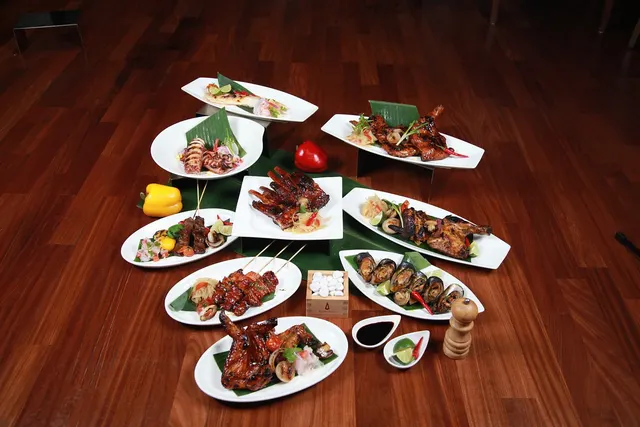
Photo: Pixabay
On this page 7 sections
- Why Kamayan Is Riskier Than a Normal Reservation
- Setting a Kamayan Dinner Reservation Deposit: Tickets vs. Per-Person Deposits
- Headcount Changes: Deadlines and What's Refundable
- Collecting From Each Guest vs. One Organizer
- Adding Drinks, Lechon Upgrades, and Gratuity to the Final Bill
- No-Show and Late-Cancel Charges That Hold Up
- Tools for Selling Kamayan Nights Online
Key takeaways
- Size the per-person deposit to at least cover the food you buy and prep for each seat, and make it nonrefundable only after a stated headcount deadline.
- A minimum spend doesn't protect a kamayan spread, because drinks can fill it while empty seats leave food on the leaves. Use a guaranteed headcount instead.
- Take the deposit on the organizer's card and let guests split only the balance at the table. That leaves you one cardholder agreement to defend.
- A no-show charge holds up best when the customer agreed to it in writing at booking and you charged exactly what the policy says.
A kamayan dinner reservation deposit protects something a normal reservation never puts at risk: food you have already bought and cooked for a specific number of people. Two things make it work. First, take a per-person deposit or sell a fully prepaid ticket, with a headcount deadline set before you order seafood. Second, have the customer accept a written no-show policy when they book. With both in place, a group that arrives short costs you some margin instead of the whole night.
Why Kamayan Is Riskier Than a Normal Reservation
When a regular reservation doesn't show, you lose a table turn. The food stays in the walk-in and goes to the next guest.
A boodle fight works the other way. You order shrimp and crab for a specific count. Rice is mounded down the length of the banana leaves, and every dish from the inihaw na liempo to the ensaladang mangga is portioned for the guests you expect. Once the spread is on the table, none of it can go to another customer.
Timing adds to the damage. Kamayan bookings bunch up around graduation season and holiday weekends, which are the nights you could have filled those seats with walk-ins. A long table held for a big family that arrives half full costs you the missing covers plus the walk-ins you turned away at the door.
So the payment question is when a guest's commitment becomes binding. The answer should be the moment you commit cost to their seat.
Setting a Kamayan Dinner Reservation Deposit: Tickets vs. Per-Person Deposits
Restaurants usually sell kamayan in two formats, and each calls for a different payment structure.
| Format | How it's sold | Payment structure that fits |
|---|---|---|
| Kamayan night (communal, set date) | Individual seats at shared long tables | Prepaid ticket at full price, nonrefundable but transferable |
| Private boodle fight booking | One group, one table, a date they choose | Per-person deposit plus guaranteed headcount, balance at the table |
Kamayan night prepaid tickets suit a set-date event where strangers share tables. You know your seat count, sell to it and prep to it. Customers are used to paying in full for ticketed events. Let ticket holders hand a seat to a friend instead of refunding it, which keeps the seat filled and skips the refund conversation.
A restaurant per-person deposit suits private groups, because the organizer often doesn't know the final count when they book. The deposit holds the date, and the balance settles at the table along with drinks and add-ons.
To size the deposit, start with your food cost per seat for the spread, including any seafood you order just for that booking. Set the deposit at or above that number. Your worst case on an empty seat then becomes lost profit rather than lost cash.
An Illustrative Example: A Party That Books 10 and Seats 7
Every figure in this example is made up for illustration and doesn't come from any restaurant's menu or cost sheet. Assume, for illustration only, a $50 per-person price for the boodle fight and $20 per seat in food and prep once the spread is committed. The group booked 10 and 7 showed up. Tax, tip, drinks and card fees are left out so the arithmetic stays clear.
| Policy (illustrative) | Revenue | Food committed | Left after food |
|---|---|---|---|
| Full table of 10, for comparison | 10 × $50 = $500 | 10 × $20 = $200 | $300 |
| Charge only the guests who show | 7 × $50 = $350 | $200 | $150 |
| $20 deposit per seat, nonrefundable after the deadline | 10 × $20 = $200 in deposits + 7 balances of $30 = $410 | $200 | $210 |
| Guaranteed headcount of 10 | 10 × $50 = $500 | $200 | $300 |
The deposit doesn't make you whole, but it pays for every plate of food you laid out for the three missing guests. The guarantee does make you whole. It's also the harder policy to sell to customers, so many restaurants use the deposit for smaller groups and add a guarantee for big parties. Run the same table with your own menu price and food cost before you pick a deposit amount.
The Minimum-Spend Trap
Many restaurants reach for a group dinner minimum spend on the long table. For a buyout or a private room, a minimum makes sense. For a kamayan spread it fails in a specific way: drinks count toward the minimum. Picture a short group that orders plenty of beer and cocktails. They can clear the minimum while several seats' worth of crab and rice goes in the trash.
Think of the two tools as covering different costs. The minimum spend protects your room, while the guaranteed headcount protects your food. If the booking includes a kamayan spread, guarantee the headcount, and add a minimum only if the room itself has a cost.
Headcount Changes: Deadlines and What's Refundable
Pick one headcount deadline and tie it to your real purchasing schedule. If you place the seafood order several days ahead, the deadline is that order day, not the night before the dinner. Put it in the booking in plain words, for example: "Final headcount due by [day and time]. You'll be billed for the final headcount or the number of guests seated, whichever is higher."
Then spell out how each kind of change is handled:
- Seats dropped before the deadline get a refund of the deposit for those seats, or a credit if you prefer. Say which one in the policy.
- After the deadline, dropped seats are billed at the guaranteed count.
- Added guests can be accepted up to a later cutoff if the kitchen can scale, billed at the same per-person rate.
- Emergencies such as a weather closure or a death in the family are your call. A credit toward a future booking keeps goodwill without handing back the cash.
Refunds have a cost of their own. When you refund a card deposit, the processing fee on the original sale may not come back to you; it depends on your processor's terms. Check your agreement. If changes before the deadline are common, a credit can cost you less than a refund.
Collecting From Each Guest vs. One Organizer
You can take the deposit from the organizer or from each guest, and the two choices put the risk in different places.
Collecting from the organizer gives you a single cardholder who accepted your policy and a single person to call. If a dispute comes, you defend one charge backed by one agreement. The organizer collects from cousins and coworkers, which is how most Filipino family gatherings already handle money.
Collecting from each guest spreads the cost, but it multiplies your exposure. Every guest is a separate transaction with its own per-transaction fee and its own chance of a dispute. The guest who never saw your policy is the one most likely to call their bank.
For most private bookings, a hybrid works best. The organizer pays the deposit for the full count on one card, and each guest pays a share of the balance at the table while your POS splits the check. For ticketed kamayan nights, per-guest payment is fine, because each buyer accepts the terms at checkout.
The same logic runs through deposit schedules for debut party packages, where one payer and clear milestones prevent most disputes.
Adding Drinks, Lechon Upgrades, and Gratuity to the Final Bill
Settle the night on one check and apply the deposit as a prior payment, not a discount. Recording it as a payment keeps your sales reports clean and shows the full meal price on the receipt. Sales tax treatment of deposits and service charges varies by state, so confirm your setup with your accountant.
Drinks belong on an open tab attached to the same table in your POS, so the bill reflects what was actually ordered.
Lechon upgrades need their own lead time and their own deposit. A whole or half lechon is the most expensive item you'll commit to for a group, and it can't be scaled back on the day. Treat it as a separate preorder with its own nonrefundable deadline. Our guide to lechon preorder deposits and no-show rules covers that timing.
Gratuity for large parties should be disclosed at booking, with the percentage and the amount it's calculated on. Calculate it on the full pre-deposit subtotal and say so, or guests may think they're being charged twice. Some states regulate how mandatory fees and service charges must be disclosed, and a mandatory service charge may be treated differently from a voluntary tip for payroll and tip distribution. Confirm both with a qualified professional before you print the policy.
If you're considering a card-fee program, think through how it interacts with the deposit. A dual pricing program shows the cash and card price side by side. Apply it consistently to the deposit and the final bill, and confirm the specific disclosure requirements with your processor, since they come from your processor, the card networks and, in some places, state law. Surcharging rules also vary by state and card network, so get any surcharge plan checked before launch.
No-Show and Late-Cancel Charges That Hold Up
A disputed no-show charge comes down to evidence. The card issuer wants to see that the cardholder agreed to specific terms before paying, and that you charged what those terms said. Build that record at booking:
- Show the full policy on the booking page and require a checkbox or initials. Spell out the deposit and the no-show charge, along with the headcount deadline and what happens after it.
- Repeat the policy in the confirmation email or text, and send a reminder shortly before the headcount deadline.
- Charge exactly the amount the policy states, on the timing it states, and never more.
- Keep the timestamped booking and the customer's agreement with every message you exchanged. Hold on to your supply invoices for that date as well.
If you plan to charge a card later for a late cancellation, have your payment gateway store it as a token, with the customer's written permission for that specific use. Writing card numbers on a notepad or saving them in a spreadsheet creates real security and compliance risk. With tokenization, you never hold the card number at all. Holds have limits too: an authorization taken well ahead of the event may expire before the dinner, so ask your processor how long holds last before you rely on one.
For building the dispute file itself, see how small food businesses win chargeback disputes.
Tools for Selling Kamayan Nights Online
Online checkout is the cleanest way to take a boodle fight reservation, because the customer enters their own card and checks the policy box themselves. Set up a product for each kamayan night with inventory equal to your seats through Shopify or WooCommerce. Turning on 3-D Secure authentication adds a cardholder verification step that can cut down on fraud disputes over prepayments.
Phone bookings still happen, especially when an older relative is organizing the reunion. A virtual terminal for phone deposits handles them. Keyed-in sales usually cost more and carry more fraud risk than online checkout, though, so point callers to the booking page when you can.
At the table, a handheld terminal for pay-at-table splits lets guests along a long banana-leaf table pay their shares without a line forming at the counter. For the wider processing picture, our guide to credit card processing for Filipino restaurants covers pricing and equipment. MannyPay's page on payment solutions for Filipino-American businesses shows what we support.
Before graduation season, write the policy and set the headcount deadline to match your seafood order day. Then run one test booking all the way from checkout to the final split check. If your current setup can't store a card token or apply a deposit to a table check, request a free quote and a MannyPay specialist will respond within one business day.
This article is for general educational purposes and is not legal, tax or financial advice. Card network rules and state laws change; confirm current requirements for your business.