Selling Pandesal Wholesale to Filipino Grocers: Terms and Invoicing
Bakery wholesale invoicing for Filipino bakeries: price pandesal for resale, set safe payment terms, handle day-old credits and get grocers to pay on time.
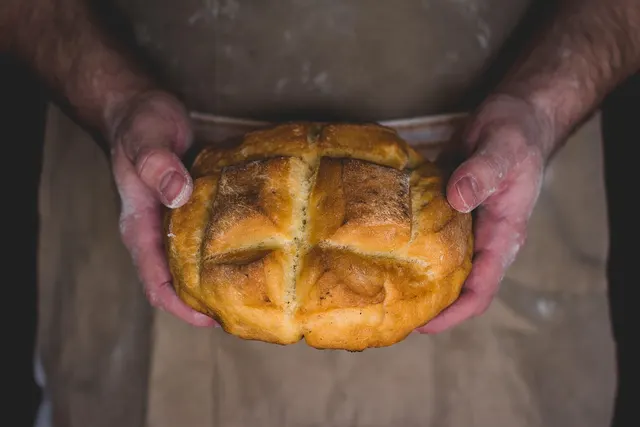
Photo: Pixabay
On this page 8 sections
- Price Pandesal for the Grocer's Shelf, Not Your Counter
- Standing Orders Keep Bakery Wholesale Invoicing Simple
- Net Terms for a Perishable Product: Start on COD
- Card on File: What Visa and Mastercard Require
- ACH Usually Costs Less, but Payments Can Come Back
- A Day-Old Credit Decides Who Absorbs the Stale Bread
- Collect From Late Payers Without Losing the Account
- Delivery Tickets and Driver Collections
Key takeaways
- At the illustrative prices in this article, a 25-cent price cut for no returns beats a capped credit once more than about 6% of bags come back unsold.
- A day-old credit doesn't change what the stale bread costs. It only decides whether you or the grocer absorbs that cost.
- Net 30 on daily pandesal deliveries means about five weeks of bread is out before the first payment arrives. Net 7 cuts that to about two weeks.
- Visa's stored-credential rules require the grocer's consent before you store the card, and the charges have to be flagged as stored-credential transactions.
Bakery wholesale invoicing for a Filipino grocer works best with three pieces of paper. The first is a signed agreement on prices and payment terms before the first drop. The second is a signed delivery ticket at every drop. The third is one weekly statement that the grocer pays on short terms, by card on file or bank transfer. New accounts should start on cash or card at delivery and move to Net 7 only after a clean month. Most disputes start with a driver's memory and a pile of handwritten receipts, which is where short counts and forgotten credits come from.
This piece is for a bakery that already sells pandesal and ensaymada at its own counter and wants to supply a few nearby Asian markets. Check one thing first. Selling baked goods to stores for resale is usually regulated differently from selling directly to customers. Many state cottage food laws are written for direct sales, so wholesale generally means a licensed commercial kitchen and labeled packaging. If you bake at home, read our piece on cottage food payment rules for home kitchens. Then confirm with your state agriculture or health department before you quote a price.
Price Pandesal for the Grocer's Shelf, Not Your Counter
The grocer has to sell your bag of pandesal at about your counter price and still make money. So your wholesale price needs room for the grocer's margin, your delivery costs and whatever you credit back for unsold bread.
The numbers below are an illustrative example. They are assumptions for this article, not industry averages. Say a bag of pandesal costs you $3.00 all in, delivery included, and sells for $6.00 at your counter. At a wholesale price of $4.25, the grocer makes $1.75 a bag at that shelf price and you keep $1.25 before returns. That looks comfortable until stale bags start coming back. The credits section works through what happens then.
Price each product separately. Sealed hopia keeps much longer than pandesal, so the grocer takes less risk and you can give a smaller discount. Ensaymada falls between the two. Put every item and pack size on one price sheet, and date it so any price change has a clear start date.
Sales tax works differently when goods are bought for resale. Many states document that with a resale or exemption certificate from the buyer, and bakery items may be taxed differently from other goods. Ask a tax professional what to collect from each grocer, and file it before the first invoice goes out.
Standing Orders Keep Bakery Wholesale Invoicing Simple
Grocers don't want to phone in an order every night, and you don't want to take one in the middle of a bake. A standing order fixes both. Set a quantity for each day of the week, because a weekend breakfast crowd usually wants more pandesal than a Tuesday. Changes come by text or email before an agreed cutoff, never as a verbal request to the driver.
Every delivery gets a numbered ticket, signed by the person who receives it. At the end of the week, the tickets roll up into one statement showing:
- Each delivery by date and ticket number
- Credits as separate negative lines, each tied to a ticket
- Payments received since the last statement
- The balance due and its due date
With a weekly statement you chase one payment instead of seven, and the grocer can check one document against their receiving log. If your books run on QuickBooks, a QuickBooks integration with your payment gateway can bring payment data into your books and cut down on manual entry.
Net Terms for a Perishable Product: Start on COD
Net terms are a short-term loan from you to the grocer, and the balance grows faster than most bakers expect. Go back to the illustrative account: 240 bags a week at $4.25, which is $1,020 of bread a week. You deliver daily, and each Monday you issue a statement for the week before.
| Terms | When the First Payment Is Due | Bread Delivered Before That Payment (Illustrative) |
|---|---|---|
| COD (cash or card at delivery) | At each drop | Nothing beyond the current drop |
| Net 7 on the weekly statement | Day 15 | About 2 weeks, roughly $2,040 |
| Net 30 on the weekly statement | Day 38 | About 5 weeks, roughly $5,390 |
Under Net 30, that five-week balance never goes away. It becomes the normal amount the grocer owes you on any given day, while you buy flour and butter every week. Start new accounts on COD for their first month. After a clean month, move them to Net 7 on the weekly statement. Go longer only for an established, high-volume grocer, and only with a written credit limit, such as two weeks of standing orders. If a regional chain insists on Net 30, build the cost of waiting into that customer's price.
Tighten terms before the holidays, not after. Standing orders climb during Simbang Gabi and the run-up to Noche Buena, and an open balance can double quickly. Work out in October how you'll pay for the extra ingredients and staff hours while those larger December statements are still waiting to be paid.
Card on File: What Visa and Mastercard Require
With card on file, you charge the grocer's card for the weekly statement on a set day, such as Monday for the week before. You store the card in your gateway or a virtual terminal for keyed and recurring charges, which tokenizes the number so you don't handle it again. Never write card numbers on a delivery ticket or in a notebook. That puts you out of line with PCI DSS, the card industry's data security standard.
Visa's developer documentation calls these "credentialed transactions," also known as card-on-file payments: payments that store a customer's card details for later or use details already stored. Charging a saved card falls under network rules, not just your agreement with the grocer. Visa's stored credential framework, published in Visa Business News, says that when a merchant captures a stored credential for the first time, it must:
- Follow the cardholder disclosure and consent requirements in the Visa Rules.
- Get the cardholder's consent to store the credential.
- Tell the card issuer, through a transaction, that the credential is now on file.
- Flag later stored-credential transactions with the right indicators.
The Merchant Advisory Group's guide to the Visa and Mastercard mandate adds the timing. The merchant has to get consent to store the card before the first transaction in a recurring series is processed.
For a bakery, the authorization form should cover four things:
- The day of the week you will charge.
- How the amount is calculated: the statement balance after credits.
- The window the grocer has to dispute a statement line before you charge.
- How either side can end the arrangement.
Keep the signed form for as long as the arrangement is active. Ask your processor whether your gateway sets the stored-credential indicators automatically.
The dispute window matters more than it looks. A short count settled by text on Friday costs you nothing. The same disagreement after the charge goes through can turn into a chargeback.
The trade-off is the processing fee, which comes out of the same thin wholesale margin as the day-old credits. If you'd rather keep one price list, a cash discount program is one compliant route. Surcharging where state law permits it is another, but network rules limit how you disclose and apply it, and some states restrict it. Set up either program through your processor rather than adding a fee line to the invoice yourself.
ACH Usually Costs Less, but Payments Can Come Back
Bank transfers by ACH usually cost less per payment than cards. Your provider sets the price, often a flat fee per transaction, so check the fee schedule before you compare. With an ACH debit, the grocer authorizes you to pull the statement amount from their business account on a date you set. With an ACH credit, the grocer sends the payment from their own bank whenever they get to it. For collecting on time, the debit is better.
An ACH debit can still come back unpaid after it looks settled. Under Nacha's rules, as summarized in Ramp's return code guide, most returns, such as insufficient funds or a closed account, must come back within two banking days of settlement. An unauthorized-debit claim on a business account (return code R29) runs on that same two-day clock. The 60-day window people worry about applies to unauthorized debits from consumer accounts. A grocer paying from a business account is lower risk on that point, but you should still wait a few banking days before treating a debit as paid. Don't raise a grocer's credit limit or lengthen their terms until several payments have cleared without a return.
Checks are the slowest option and can bounce. If a grocer insists on paying by check, deposit it the day it arrives and keep the account on COD or Net 7.
A Day-Old Credit Decides Who Absorbs the Stale Bread
Unsold pandesal causes more friction between bakeries and grocers than price does, so put the rule in writing on day one. There are two common models.
- No returns: the grocer owns the bread once it's delivered, and you charge a lower price to make up for it.
- Capped credit: you credit unsold bags up to a set share of the week's delivery, but only bags handed back to your driver, or photographed and logged.
A driver exchange is a version of the capped credit. Day-old bags are swapped for fresh ones at the next drop and noted on the ticket.
Many owners misread what a credit does. Continue the illustrative example: 240 bags a week, a $3.00 cost per bag, a $6.00 shelf price, and 24 bags (10%) that go unsold either way.
| Weekly Result | Capped Credit at $4.25 | No Returns at $4.00 |
|---|---|---|
| Bakery revenue after credits | $918 | $960 |
| Bakery gross profit (cost $720) | $198 | $240 |
| Grocer profit on 216 bags sold | $378 | $336 |
| Combined profit | $576 | $576 |
The combined profit is the same under both models. The 24 stale bags cost $72 to make no matter what the agreement says. The credit rule only decides whose books that loss lands on. Here, the capped credit moves $42 a week from you to the grocer.
So the choice comes down to a break-even return rate. At these prices, the two models pay you the same when about 5.9% of bags come back, because $4.00 is 94.1% of $4.25. If returns run below that, the higher price with credits earns you more. Above it, the flat no-returns price does. Track returns for the first month, then choose.
One thing the table can't show is volume. A grocer who carries all the risk tends to order fewer bags. For pandesal going to a new account, a capped credit is usually easier to sell. No returns suits long-life items like hopia and grocers with steady foot traffic. Whichever model you choose, list each credit on the statement as its own line tied to a ticket number. Never quietly subtract it from the next delivery.
Collect From Late Payers Without Losing the Account
In a close community, the grocer may sit two pews over from you at Sunday Mass. That's why the collection steps belong in the agreement before anything goes wrong. Then enforcing them comes across as policy, not a personal slight.
- The morning after the due date, text the statement.
- At one week late, call, and mention that the agreement moves the account to COD at two weeks.
- At two weeks late, deliver only against payment at the door until the balance clears.
- Pause the standing order only as a last step, after giving notice.
State law limits how much you can charge in late fees and finance charges and how you have to disclose them. If you want one in the agreement, have an attorney or accountant review the wording. In practice, switching to COD works faster than a fee, because the grocer still needs bread on the shelf tomorrow morning.
Delivery Tickets and Driver Collections
Your driver is often the only person from the bakery who sees the grocer every day, so the ticket is your evidence for every invoice. Use duplicate tickets or a tablet app. The receiver counts bags with the driver and signs, and each side keeps a copy. A photo of the crates on the shelf settles most short-count arguments.
COD accounts mean the driver collects money before dawn, and cash riding in a van is a risk to the driver and to your books. A mobile card terminal for delivery drivers lets the driver take a card at the door and text or email the receipt right away, so the payment matches the ticket. If you still take cash, have the driver write a receipt from a numbered book and put the money in a locked box. Count it at the bakery against the day's tickets. To keep costs down on counter sales, see our breakdown of Filipino bakery card fees on small tickets.
Before the next grocer's first delivery, put four things on one page and get it signed: the dated price sheet, the payment terms, the point where the account switches to COD, and the day-old credit rule. If you want help setting up stored-card billing or terminals for your drivers, MannyPay provides payment processing for Filipino-American businesses. Request a free quote, and a MannyPay specialist will respond within one business day.
Sources
- Visa: Improving Authorization Management for Transactions with Stored Credentials
- Visa Acceptance Developer Center: Introduction to Credentialed Transactions
- Merchant Advisory Group: A Guide to Visa and Mastercard's New Mandate for Stored Payment Credentials
- Ramp: ACH Return Codes, Full R01 to R85 List
This article is for general educational purposes and is not legal, tax or financial advice. Card network rules and state laws change; confirm current requirements for your business.