Shooting Range POS System: Lane Billing, Waivers and Rental Gun Tracking
What a shooting range POS system must do beyond retail: bill lane time, gate lanes on waivers, log rental guns by serial, and enforce house ammo rules.
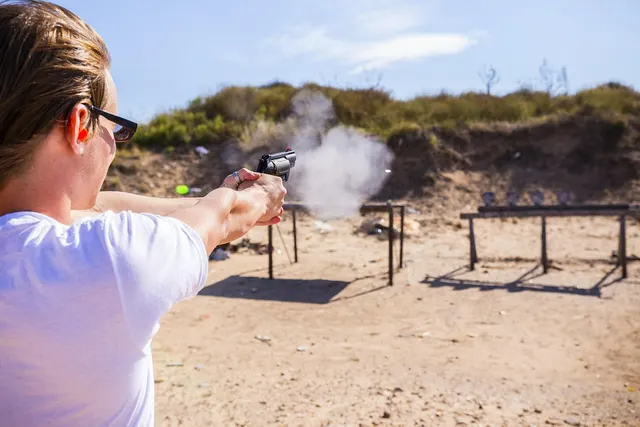
Photo: Pixabay
On this page 7 sections
- Why a Shooting Range POS System Runs on Open Tabs
- Set Your Lane Pricing Rules Before the Software Does
- Make the Waiver the Gate to the Lane
- No 4473 for Range Rentals, so Your Gun Rental POS Is the Record
- Online Bookings and Memberships Bring Card-Not-Present Rules
- Underwriting a Range and the Firearms Merchant Code
- Five Rules to Test Live in Every Vendor Demo
Key takeaways
- Ask each vendor how its grace period works. In the example below, two settings that both look reasonable produce tabs $12.50 apart for the same visit.
- ATF says no 4473 or NICS check is needed for a gun rented on your premises, so your POS log may be the only record of who held each rental.
- California's firearms MCC law depends on which category brings in a business's highest sales value, so a range's revenue mix matters. Ask counsel before you decide whether it covers you.
- Make vendors show the five rule tests working live in the demo. Hearing that a feature exists isn't enough.
A shooting range POS system has to do four jobs a retail register can't. It keeps one open tab tied to a lane and everyone on it, bills lane time without staff doing math, refuses to assign a lane until every shooter has a signed waiver, and tracks each rental gun by serial number until it's back on the counter. Selling ammo and T-shirts is the easy part. Time billing and rental tracking are where ordinary retail software breaks.
There's also a recordkeeping gap many owners don't see until something goes wrong. ATF doesn't require a Form 4473 for a gun rented and fired on your premises, so the only record of who held that rental is often the one your POS keeps.
Why a Shooting Range POS System Runs on Open Tabs
Retail sales close at the register. Range visits don't. Picture a shooter who takes Lane 6 and rents a pistol. Twenty minutes in, they buy more ammo and decide to stay another half hour. The tab keeps growing while the customer is behind the glass, and it should close only when the lane is clear and the rental is back.
| Function | Basic Retail POS | Range-Ready POS |
|---|---|---|
| Sales model | Item-based, closed at checkout | Open tabs tied to a lane and its shooters |
| Time billing | Not supported | Lane timers with set increments and grace periods |
| Customer records | Optional | Required: waiver status and ID |
| Rentals | Not supported | Serial-tracked check-out and check-in |
| Rule enforcement | None | Prompts such as "rental requires house ammo" |
| Scheduling | None | Reservations, classes, deposits, online booking |
If you also sell guns, the counter brings its own federal paperwork, such as Form 4473 and the acquisition and disposition (A&D) record. Our guide to gun store POS software for bound book and serial tracking covers that side.
Many ranges pair a countertop POS system at the check-in desk with a customer-facing tablet for waivers. Staff carrying a handheld terminal for lane-side sales can sell targets or ammo without sending shooters back through the door. Before you order, confirm your range software supports the exact hardware.
Set Your Lane Pricing Rules Before the Software Does
Every vendor demos lane timers, but the settings behind them decide what customers actually pay. You'll pick a billing increment and a grace period. Then set a fee for extra shooters and decide whether overtime posts to the tab on its own. Ask for lane transfers that keep the tab intact. You'll also want maintenance blocks that pull a lane with a damaged target carrier off the board. The grace period is where ranges get surprised, because software can apply it in two different ways.
Illustrative example. These prices are assumptions, not market rates: $25 for the first hour per lane, a flat $10 for a second shooter, overtime in 30-minute blocks at $12.50 each, and a 10-minute grace period. Two friends start at 2:04 p.m. and clear the lane at 3:38 p.m., 94 minutes in all. They rent one pistol for $15 and buy two boxes of range ammo at $20 each. Two $2 targets go on the tab too.
The first hour plus the second shooter comes to $35. Add-ons ($59) bring the tab to $94 before overtime. Only the last 34 minutes depend on the setting.
Under the first setting, the grace period only forgives running up to 10 minutes past the hour. Once a party goes beyond that, every 30-minute block they start is billed. So 34 minutes becomes two blocks ($25), and the pre-tax tab is $119. Under the second setting, the grace period applies to each block. The first 30 minutes counts as one block and the leftover 4 minutes falls inside the grace window. Overtime is $12.50, for a tab of $106.50.
Neither setting is wrong. The first protects lane revenue on a packed Saturday; the second is gentler on regulars. Still, a $12.50 swing on one tab is exactly what a regular will dispute, so pick a rule on purpose and post it at check-in. Then ask each vendor to run this example live.
Reservations need the same care, since demand tends to bunch up on weekends and before hunting season. Good software holds a set number of lanes for bookings and takes a deposit when someone reserves. For walk-ins, it should text people when a lane opens, so they wait at the ammo wall instead of crowding the desk.
Make the Waiver the Gate to the Lane
Digital waivers fix the binder problem, and federal law backs electronic signatures in general. Under the ESIGN Act, 15 U.S.C. § 7001, a signature or contract tied to a transaction can't be denied legal effect solely because it's electronic. That doesn't make any particular waiver enforceable. Whether a release holds up depends on your state's law and your wording, so have a local attorney review the document along with your check-in process.
The feature that matters most is a hard stop: no lane assignment until every shooter in the party has a current, signed waiver on file. Beyond that, look for ID scanning that flags the age limits you set. Waivers should expire on your schedule. The system should also record when a first-time shooter finishes your safety briefing.
Minors need their own workflow. Federal law, at 18 U.S.C. § 922(x), generally bars anyone under 18 from possessing a handgun. The statute makes exceptions, including target practice and courses in safe handgun use, but only with prior written consent from a parent or guardian who isn't prohibited from possessing a firearm. The juvenile must also carry that consent. Other conditions apply and state law can be stricter, so confirm the details with counsel. In the POS, link the minor's profile to the consenting adult and the signed consent, and keep a copy staff can produce at the lane.
No 4473 for Range Rentals, so Your Gun Rental POS Is the Record
Federal paperwork for on-site rentals is lighter than many owners expect. ATF guidance on firearm rentals says renting a firearm for use on a licensee's business premises isn't considered a disposition of the firearm. That means no Form 4473 or NICS check. Nor does the licensee log the gun out of the A&D record. The same document lets licensees rent handguns to people under 21, and long guns to people under 18, for use at an on-premises range. On-premises rental of National Firearms Act (NFA) firearms is permitted too.
That exemption stops at your property line. ATF's quick reference guide for licensees lists loaning or renting a firearm for use away from your licensed premises as a transfer that needs a Form 4473. Talk to your attorney before any rental leaves the building.
Less paperwork doesn't mean no obligations. ATF is explicit that neither licensees nor non-licensees may rent or lend firearms or ammunition to someone they know or have reasonable cause to believe is prohibited from having them. Ask your attorney what screening check-in should include. One option to raise is having renters attest on the waiver that they aren't prohibited.
In practice, your gun rental POS holds the chain of custody. Log every rental by serial number against the shooter and lane, with the time it went out and the time it came back. The tab shouldn't close while a rental is out. When a shooter swaps a Glock for a revolver mid-session, both guns belong on the record. Any firearm that needs cleaning or repair should go on hold so nobody can rent it, and NFA rentals belong in the same log. If an incident happens on the line, that record shows who had which gun and when.
House ammo rules fit the same workflow. Many ranges require renters to buy range ammunition, which keeps reloads out of rental guns and keeps loads that could damage the backstop off the line. It's house policy rather than federal law, and without software it depends on the cashier remembering. A well-configured system asks for ammo in the matching caliber when a rental hits the tab. It won't complete the rental without that sale unless a manager overrides it with a logged reason. Some states also tax ammunition separately; our walkthrough on configuring your register for state gun and ammo excise taxes shows how to set up those tax lines. Confirm current rates with your tax advisor.
Online Bookings and Memberships Bring Card-Not-Present Rules
Memberships smooth out slow months if member pricing and included lane hours apply at checkout automatically, with no side spreadsheet. Dues collected by bank transfer need a different kind of authorization than card billing; see our explainer on Nacha authorization rules for recurring ACH memberships. For classes and league nights, collect waivers at registration so class night doesn't start with a line at the desk.
Bookings paid on your website are card-not-present transactions, which raises your fraud exposure. Your range software has to connect to a payment gateway, and your cancellation terms should appear before payment. Higher-risk bookings can go through 3-D Secure authentication. MannyPay supports online and e-commerce payment acceptance, and our article on 3D Secure liability shift for online stores explains the tradeoffs.
Underwriting a Range and the Firearms Merchant Code
Processors often underwrite firearms-related businesses as high-risk, especially ranges with a gun or ammo counter. On your application, disclose every revenue stream, including gun and ammo sales, not just lane fees and memberships. Never describe a range or gun counter as another kind of business to get approved. Misrepresenting your business can cost you the account.
Which merchant category code (MCC) your range gets is still unsettled. The International Organization for Standardization established a code for firearms and ammunition merchants on September 9, 2022. In March 2023, the four major card networks paused their rollout of it as states moved in opposite directions. California's AB 1587 requires merchant acquirers to assign that code to firearms merchants beginning May 1, 2025. Texas went the other way. Under HB 2837, firearms retailers may only use or be assigned a code for general merchandise or sporting goods retailers. By 2024, Colorado and New York had joined California in mandating the code, while more than a dozen states had banned it.
Here's the detail ranges tend to miss. California's law doesn't reach every business with a firearms license. AB 1587 defines a firearms merchant as a California-licensed firearms dealer or ammunition vendor whose highest sales value comes, or is expected to come, from the combined sale of firearms and ammunition, accessories included, as the business states it to its acquirer. That is a largest-category test, not a majority test.
A business can qualify even if gun-related goods are well under half its revenue, as long as they outsell every other category. By the same logic, a range whose highest sales value comes from lane time and memberships rather than gun-related goods may sit differently under that definition than a store with a few lanes in back. Ask counsel how your state's law applies to your revenue mix, and report that mix accurately.
Your processor should be able to tell you which code it will assign and why.
Congress could still change the picture. The U.S. House has passed H.R. 1181, the Protecting Privacy in Purchases Act, which would bar payment card networks and covered entities from requiring or assigning a merchant category code unique to firearms retailers. The version received by the Senate went to the Senate Banking Committee in July 2026. It becomes law only if the Senate passes it and the president signs it, so check its status before relying on it.
Dual pricing and surcharging where permitted can offset card costs, though each carries its own disclosure requirements. For benchmarks, read what a fair processing rate looks like for gun businesses. If you've been turned down before, start with why gun stores get declined for merchant accounts. MannyPay offers high-risk merchant accounts and works with firearms businesses, subject to underwriting.
Five Rules to Test Live in Every Vendor Demo
Write down the rules your staff enforce from memory, because those are what the software should enforce for them. In every demo, ask the vendor to show these working on screen, not just confirm they exist:
- Try to assign a lane to a party where one shooter hasn't signed a waiver. The system should refuse.
- Run the illustrative lane tab above and compare the overtime result with the rule you've posted.
- Add a rental pistol without ammo and see whether the sale stops or asks for a manager override.
- Attempt to close a tab while a rental is still checked out.
- Check in a 16-year-old and confirm the system links a guardian and the signed consent.
Any vendor that passes all five is worth a second meeting. Then confirm the software works with a processor that will underwrite your range as it actually operates. To review hardware and processing options for your lanes, request a free quote from MannyPay. A specialist responds within one business day.
Sources
- ATF, guidance on renting firearms for use on licensed premises
- ATF, Federal Firearms Licensee Quick Reference and Best Practices Guide
- 18 U.S.C. § 922, Unlawful Acts (Justia U.S. Code)
- 15 U.S.C. § 7001, General Rule of Validity (ESIGN Act, Cornell LII)
- PYMNTS, Payment Networks Pause Implementation of Code for Gun Shops
- California Legislative Information, AB 1587 Financial Transactions: Firearms Merchants: Merchant Category Code
- Texas HB 2837 bill text (LegiScan)
- The Reload, House Passes Bill Barring Gun Retail Tracking Codes
- Congress.gov, H.R. 1181 Protecting Privacy in Purchases Act (119th Congress)
- GovInfo, H.R. 1181 Referred in Senate (RFS)
This article is for general educational purposes and is not legal, tax or financial advice. Card network rules and state laws change; confirm current requirements for your business.