Liquor Store Credit Card Fraud: Stopping Stolen Cards on Top Shelf
Liquor store credit card fraud drains margins fast. Learn the schemes behind stolen-card bottle buys and the controls that cut chargebacks.
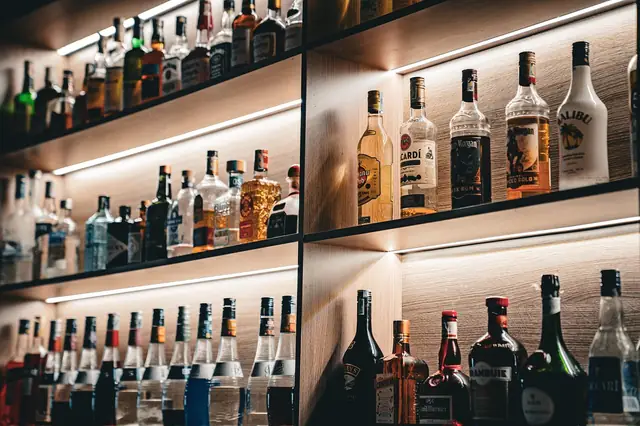
Photo: Pixabay
On this page 8 sections
- Liquor Store Credit Card Fraud: Why Your Store Is a Target
- Common Schemes: Premium Bottles, Phone Orders, and Card Testing
- Why You Should Never Key in a Card at the Counter
- Matching ID to Cardholder on High-Value Purchases
- Fighting Liquor Store Chargebacks: Evidence That Wins
- Setting Ticket Limits and Velocity Alerts for High-Value Bottle Fraud
- A Liquor Store Fraud Prevention Checklist
- Next Steps for Your Store
Key takeaways
- Premium spirits are easy to resell, so stolen cards often target allocated bourbon, cognac and large-format bottles.
- Keying in a card at the counter removes chip data and leaves you with little evidence if the real cardholder disputes the charge.
- Phone orders picked up by couriers and small online "test" orders are common card-not-present schemes in liquor retail.
- Ticket limits, velocity alerts and organized dispute evidence such as chip receipts, ID scan logs and video reduce both fraud losses and chargebacks.
Liquor store credit card fraud follows a predictable pattern. Someone with a stolen card skips the mixers, picks up the most resellable bottles in the store, and pays without asking what anything costs. A few weeks later, the real cardholder disputes the charge. You lose the bottle, the sale and a chargeback fee. This guide covers common in-store, phone-order and online fraud schemes at liquor stores. It also covers the specific controls that reduce fraud chargebacks without slowing down honest customers.
Liquor Store Credit Card Fraud: Why Your Store Is a Target
Fraudsters want goods they can turn into cash quickly. A liquor store's top shelf works well for that.
- Resale value is high and buyers are easy to find. Allocated bourbons, limited releases, aged Scotch, cognac and prestige Champagne have active secondary markets. Some bottles resell above retail.
- Bottles are compact and hard to trace. A single bag can hold several hundred dollars of product. Once a bottle is resold, it is rarely traced back to the store it came from.
- Transactions are fast. Busy counters on Friday evenings, holiday eves and big game days give staff little time to notice warning signs.
- Liquor stores sell other cash-like goods. Many also sell lottery tickets, prepaid cards or gift cards, which attract the same buyers.
Card issuers and processors know this too. Liquor stores can be reviewed more closely during underwriting, and a run of fraud chargebacks can put your account under scrutiny. Our guide on why liquor store merchant accounts get flagged explains how dispute history affects approval and pricing.
Common Schemes: Premium Bottles, Phone Orders, and Card Testing
Card fraud at liquor stores tends to follow a handful of recognizable patterns.
The Top-Shelf Grab
A customer walks in, heads straight to the locked case and asks for the most expensive bottles you have. They may buy several of the same item, ignore the price and decline a bag or receipt. If the first card declines, a second or third card comes out of the wallet.
The "Card Won't Read" Request
The customer says the chip "doesn't work" and asks you to swipe the card or type in the number. Sometimes they read the number off a photo on their phone. In a related scam, a card declines and the customer hands over a phone number for "their bank" so you can get a voice authorization code. The person on the line is an accomplice, and the code is fake.
Phone Orders With a Courier Pickup
A caller orders high-value bottles over the phone, reads off a card number and says a driver or rideshare courier will pick up the order. The cardholder never comes in, and nobody who arrives can be tied to the card. Fraudsters favor this stolen credit card liquor purchase pattern because it never puts them in front of your camera.
Online Orders and Card Testing
If you sell online for pickup or delivery (where your state's alcohol laws allow it), expect two problems:
- Card testing: bots or individuals place many small orders, or attempt many authorizations, to find out which stolen card numbers still work.
- High-value pickup orders: someone buys a large order online with a stolen card, and a person other than the cardholder shows up to collect it.
| Scheme | Warning signs | Primary control |
|---|---|---|
| Top-shelf grab | Price indifference, multiple cards tried, repeat purchases of one bottle | ID-to-card match, ticket limits |
| "Card won't read" | Requests to swipe or key, card number on a phone screen | Chip or contactless only at the counter |
| Voice authorization scam | Customer supplies the bank's phone number | Call only the number from your processor |
| Phone order, courier pickup | Rush, no price questions, third-party pickup | Cardholder must pick up with card and ID |
| Card testing | Bursts of small or declined online orders | Gateway velocity rules, 3-D Secure |
Why You Should Never Key in a Card at the Counter
When a customer is standing in front of you, the card should be dipped or tapped. Keying it in, or swiping a chip card, throws away your best protection.
A chip or contactless transaction produces data showing the physical card was present and authenticated. A keyed transaction carries none of that. If the real cardholder later says "I didn't make this purchase," you generally have very little to show the issuer, and fraud disputes on keyed sales are hard to win. Keyed transactions also typically cost more to process than chip transactions. Ask your processor how your pricing treats each entry method.
Set a simple counter policy:
- Accept chip and contactless payments, including mobile wallets, at the counter.
- If the chip truly won't read, ask for another form of payment.
- Never key in a number from a phone photo, a slip of paper or someone reading it aloud.
- For any voice authorization, call only the number your processor gave you, never one the customer supplies.
Contactless wallets also help, because the phone's own authentication works in your favor. See our guide to contactless payments and NFC setup for small businesses. Current smart terminals that accept chip, tap and mobile wallets make a "chip or tap only" rule easy for staff to follow.
Matching ID to Cardholder on High-Value Purchases
Your staff already check ID for age under state law. That habit gives you a natural fraud check: on high-value purchases, compare the name on the ID to the name on the card.
A few cautions apply:
- Card network rules limit when ID can be a condition of a card sale. Age verification is a separate legal requirement for alcohol. If you want a written policy that ties high-value card purchases to a name match, confirm the wording with your processor first.
- Don't confront. If something doesn't match, staff can politely decline the sale or ask for another payment method. They should never accuse anyone or try to detain them.
- Write the threshold down. "Name match required on purchases over [your store's amount]" is easier for a new cashier to follow than "use your judgment."
ID scanners linked to your POS can log each scan with a timestamp, and that record becomes useful evidence later. Our guide to choosing a liquor store ID scanner that works with your POS covers integration options.
For phone and online orders, the strongest control is to require the cardholder to pick up the order in person, present the same card and show an ID with a matching name. If a courier arrives instead, release nothing above your threshold.
Fighting Liquor Store Chargebacks: Evidence That Wins
Some fraud will still get through. When a dispute arrives, the quality of your evidence decides the outcome. The card networks and your processor set the response windows, and they are short, so check your processor's portal or notifications every business day.
Evidence for In-Person Sales
- Transaction record showing chip or contactless entry
- Itemized receipt with date, time, terminal and cashier
- ID scan log showing a name match, if your scanner records it
- Security camera footage or stills matched to the transaction time
- Any notes the cashier made at the time
Evidence for Phone and Online Orders
- Order details, including billing and pickup or delivery information
- Address verification (AVS) and card security code (CVV) results
- 3-D Secure authentication results, where used
- Pickup log with the ID name, the card's last four digits and a signature
- Delivery confirmation showing an ID check at the door, where delivery is legal
- Emails, texts or call notes with the customer
Keep camera footage long enough to cover the dispute timeline. Some systems overwrite footage within days, and disputes can arrive weeks after the sale. Check your system's retention setting and extend it if you can.
Be realistic. A keyed sale with no ID log and no video is rarely worth contesting as fraud. Put that energy into prevention so the next one is a chip read with a recorded ID scan.
Setting Ticket Limits and Velocity Alerts for High-Value Bottle Fraud
Fraud often shows up as a pattern rather than a single transaction. Your POS and gateway can watch for patterns your cashiers will miss on a busy night.
In-Store Controls
- Ticket thresholds: require manager approval or a name match above a set amount. Illustrative example: a store might set a manager prompt at $300 and a name-match requirement at $500. Choose numbers that fit your own average ticket.
- Item-level flags: tag allocated and limited-release bottles in your POS so that selling several in one ticket triggers a prompt.
- Decline alerts: flag tickets where more than one card declines before one is approved.
- Daily reports: review high-value sales, voids and keyed entries each morning.
Many of these features depend on your POS. Our breakdown of liquor store POS features that actually matter covers inventory tags, reporting and permissions.
Online and Phone Controls
- Set gateway velocity rules that block repeated attempts from the same card, IP address or device in a short window.
- Require AVS and CVV matches, and hold mismatched orders for review.
- Add 3-D Secure authentication for online orders so more card-not-present orders go through issuer verification.
- Add a CAPTCHA or similar bot check at checkout to slow down card testing.
- Cap phone orders, or accept them only for pickup by the verified cardholder.
One caution: never split a large sale across several transactions to stay under a limit or avoid a decline. Splitting tickets breaks card network rules, and it is also a warning sign of fraud.
A Liquor Store Fraud Prevention Checklist
Use this as a starting point for staff training:
- Chip or tap only at the counter. No keyed or photo-read card numbers.
- Voice authorizations go through the processor's number only.
- Name match on purchases above your posted threshold.
- Allocated bottles flagged in the POS, with manager approval for multiples.
- Phone and online orders picked up only by the cardholder with card and ID.
- Gateway velocity rules, AVS/CVV checks and 3-D Secure turned on.
- Camera footage retained long enough to cover disputes.
- Daily review of high-value, keyed and multiple-decline transactions.
- Dispute notifications checked every business day.
Next Steps for Your Store
Stolen cards will keep showing up at the top shelf, because that's where the resale value sits. Your job is to make your store a poor target. Accept chip and tap at the counter, verify the cardholder on high-value purchases, tighten phone and online pickup rules, and keep the evidence that wins disputes.
MannyPay offers payment processing for liquor stores covering in-store, online and phone sales, with terminals, gateways and 3-D Secure authentication. Fraud controls vary by setup and underwriting. Request a free quote, and a MannyPay specialist will respond within one business day to review your current setup.
This article is general information, not legal advice. Alcohol sales, delivery and age-verification rules vary by state. Confirm your obligations with a qualified professional and your processor.
This article is for general educational purposes and is not legal, tax or financial advice. Card network rules and state laws change; confirm current requirements for your business.