Can You Sell Supplements With Stripe, PayPal, or Shopify Payments?
Does Stripe allow supplements? See how Stripe, PayPal, Shopify Payments and Square treat vitamins, nootropics and weight-loss products before a freeze hits.
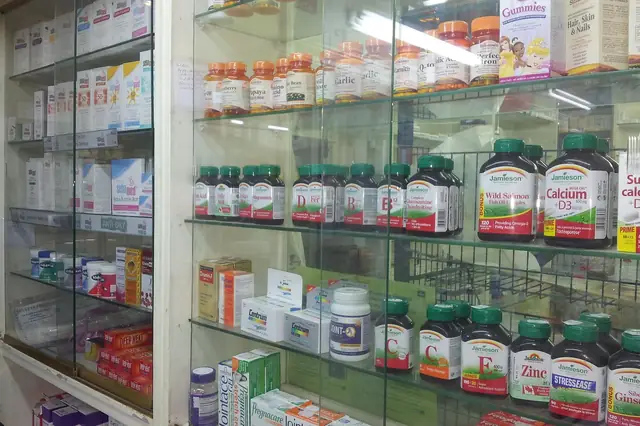
Photo: Pixabay
On this page 7 sections
- Does Stripe Allow Supplements? What Its Restricted Business List Says
- PayPal Supplements Policy: Rules for Ingredients and Health Claims
- Shopify Payments and Square: Where Supplements Fall
- Product Types That Trigger Instant Shutdowns
- Warning Signs Your Aggregator Account Is Under Review
- When to Move to a Dedicated Nutra Merchant Account
- Next Steps
Key takeaways
- Most aggregators answer the supplement question with "it depends," based on ingredients, claims, and how you bill, not on the word "supplement" itself.
- Health claims, drug-like ingredients, and free-trial or subscription billing are the most common reasons supplement accounts get frozen.
- Document requests, payout delays, and new reserves are early signs of a review. Respond quickly and never open a replacement account to get around a decision.
- Once your catalog or volume puts you in higher-risk territory, a dedicated nutra merchant account is built to underwrite your business before you go live.
Does Stripe allow supplements? Usually the honest answer is "sometimes." The same is true for PayPal, Shopify Payments, and Square. Each platform publishes restricted-business terms, and none of them puts every supplement in one bucket. A basic multivitamin store and a store selling fat burners on a free-trial subscription can get very different treatment. This guide covers how these policies are generally structured, which product types tend to get a yes, a no, or a conditional answer, the warning signs that come before a freeze, and when a dedicated nutraceutical merchant account makes more sense.
How to read this guide: Payment platforms revise their restricted-business lists and acceptable-use terms without much notice. We describe how these policies typically work rather than quoting them. Before you build your business on any platform, read its current terms yourself. If you're unsure where your products fit, ask the provider in writing. This is general information, not legal or regulatory advice.
Does Stripe Allow Supplements? What Its Restricted Business List Says
Stripe publishes a list of restricted and prohibited businesses. As with most aggregators, some categories are generally not allowed at all and others may be allowed only with additional review. Supplement sellers usually fall into the second group, so the conditions attached to that review are what matter.
For Stripe nutraceuticals sellers, and for supplement sellers on other aggregators, restricted-business policies tend to turn on three questions:
- Is the product drug-like? Products marketed to treat, cure, or prevent a condition, or that contain ingredients regulators treat as drugs, are the likeliest to be prohibited.
- What are you claiming? Copy promising specific health outcomes, rapid weight loss, or pharmaceutical-style results draws scrutiny even when the ingredients are ordinary.
- How do you bill? Free trials that convert into recurring charges, and other negative-option offers, are a long-standing concern in the payments industry because they produce chargebacks.
Check Stripe's current list for the exact wording that applies to your products.
How Aggregator Reviews Typically Work
Payment platforms' reviews often look at the whole business, not just the product list. Reviewers may check your website copy, checkout flow, refund policy, and dispute history. On any aggregator, a store can be approved at signup and flagged months later when a new product launches, an ad campaign brings in a different kind of customer, or the dispute rate climbs. For help with the refund side, see our guide to structuring empty-bottle money-back guarantees.
Plain answer: Conventional vitamins and minerals sold with modest claims and straightforward one-time checkout are often workable. Claim-heavy, ingredient-sensitive, or trial-based models are where accounts get into trouble.
PayPal Supplements Policy: Rules for Ingredients and Health Claims
PayPal's acceptable use policy addresses regulated products, drug-like items, and misleading claims, and those rules are where supplements usually land. In practice, the PayPal supplements policy tends to turn on two questions: what's in the bottle and what you say it does.
Things that commonly cause problems for supplement sellers on PayPal and similar platforms:
- Ingredients marketed as alternatives to prescription drugs, or products described as working "like" a medication
- Products sold "for research purposes" that are really meant for human consumption
- Before-and-after claims, guaranteed results, or disease-related language on product pages and ads
- High refund or dispute volume, which can lead to holds on your balance even when the products themselves are allowed
PayPal's terms allow it to hold funds or limit an account while it reviews it. For a supplement brand with a lot of inventory on order, a balance hold can hurt as much as a closure. Read the current user agreement and acceptable use policy for the specifics. If regulators are also involved, see our guide on protecting your processor after an FDA warning letter.
Plain answer: Mainstream wellness products are often accepted. Ingredient-sensitive products and aggressive marketing claims are the most common reasons for account limitations.
Shopify Payments and Square: Where Supplements Fall
Shopify Payments
Shopify Payments has its own list of prohibited and restricted businesses, which you should review separately from Shopify's general rules for running a store. A supplement brand may be allowed to run a storefront on Shopify and still be declined for, or removed from, Shopify Payments.
That distinction matters. If Shopify Payments isn't available for your products, you can usually keep the store and connect a third-party processor instead. MannyPay supports a Shopify payment integration for merchant accounts, along with WooCommerce, BigCommerce, Magento, and other platforms.
Plain answer: Shopify Payments can work for many supplement stores. If it declines you, you generally don't have to rebuild your site. You need a different processor behind it.
Square
Square is best known for in-person payments, but supplement sellers also use it online, at trade shows, and at gym counters. If you're wondering whether Square treats supplements as restricted, the pattern is similar to the other platforms: its terms restrict certain product categories and drug-like claims. Like other aggregators, Square can review an account after it has started processing. If you sell supplements from a practice, see our comparison of Fullscript vs. in-office dispensing for supplement margins and payments.
Plain answer: Square can work for low-claim retail supplements. Higher-risk nutra models such as continuity billing or ingredient-sensitive catalogs are more likely to draw a review on any aggregator.
Product Types That Trigger Instant Shutdowns
The quickest way to lose an aggregator account is to sell something the platform treats as prohibited rather than restricted. The table below shows how product types are commonly treated. It's illustrative and not a ruling from any platform. For a closer look at why some ingredients are off-limits, see our guide on why processors refuse merchants selling SARMs, peptides, or kratom. If you sell male enhancement products, see our guide to getting and keeping a male enhancement merchant account.
| Product Type | Typical Aggregator Answer | What Pushes It Toward "No" |
|---|---|---|
| Vitamins and minerals | Often yes | Disease-related claims, unusual ingredients |
| Protein and general sports nutrition | Often yes or conditional | "Steroid alternative" marketing, stimulant blends |
| Weight-loss supplements | Conditional | Rapid-loss claims, free trials, drug comparisons |
| Nootropics | Conditional | Ingredients not sold as dietary supplements, "smart drug" positioning |
| Muscle-building with SARMs or prohormones | Commonly no | Platforms typically treat these as drug-like products |
| "Research use only" compounds sold for consumption | Commonly no | The label rarely changes the review outcome |
| Male enhancement products | High scrutiny to no | Drug comparisons, ingredient adulteration concerns |
| CBD, kratom, 7-OH | Usually separate high-risk categories | Varies by platform and by state and federal law |
A few patterns lead to shutdowns across almost every platform:
- Free-trial and negative-option billing. "Just pay shipping" offers that roll into monthly charges produce disputes, and many state laws regulate how they must be disclosed. Our guide to automatic renewal laws by state covers the disclosure basics.
- Labels that don't match the marketing. Calling a product "not for human consumption" while dosing instructions sit on the product page is a well-known red flag. We cover this in detail in whether research-use-only labels protect a merchant account.
- Drug comparisons. Copy that positions a supplement as a substitute for a prescription treatment invites a closer look. The same pressure has hit clinics selling compounded GLP-1 medications.
- Undisclosed product changes. Adding a new category after approval without telling your provider can lead to a review and, if it turns up prohibited items, a closure.
Warning Signs Your Aggregator Account Is Under Review
Freezes rarely come out of nowhere. Most accounts show some of these signs first:
- Document requests: supplier invoices, certificates of analysis, product labels, or proof of where you source your products
- Website change requests: removing specific claims, adding a refund policy, or clarifying subscription terms
- Payout changes: longer payout schedules, partial payouts, or payouts paused "pending review"
- New reserves: a portion of sales held back. Our explainer on how a rolling reserve works covers what that means for your cash flow.
- Rising disputes: a climbing chargeback rate, especially after a promotion or a new traffic source
- Questions about your business model: emails asking how you bill, who fulfills orders, or which products you've added
What to Do If You See Them
- Respond quickly and completely. Partial answers often lead to more requests.
- Keep a compliance folder ready: certificates of analysis, labels, supplier details, current terms of service, and refund policy.
- Fix problem claims on your site and in your ads, not just on one page.
- Track your dispute ratio weekly and find the cause of any spike.
- Start talking to a backup processor before you need one.
Do not open a new account under a different business name, split products across accounts, or describe your business as something else to get around a decision. That can get your business placed in an industry database of terminated merchants that other providers check, which makes future approvals much harder. The legitimate path is full disclosure to a provider that underwrites your actual business.
When to Move to a Dedicated Nutra Merchant Account
Aggregators are built to approve many merchants quickly with little upfront review, and to sort out risk after the fact. A dedicated merchant account works the other way. The acquiring bank reviews your products, website, and billing model before you go live, so there are fewer surprises later.
| Factor | Aggregator Account | Dedicated Nutra Merchant Account |
|---|---|---|
| Underwriting | Light at signup, reviewed later | Detailed before approval |
| Product scope | Often limited to lower-risk catalogs | Built around your disclosed catalog |
| Subscription billing | Often a trigger for review | Underwritten upfront, with disclosure requirements |
| Reserves | Can be added during a review | Set during underwriting, if required |
| Pricing | Typically flat and simple | Varies with risk profile |
It's probably time to switch if:
- You sell weight-loss, nootropic, or performance products that keep drawing reviews
- You run subscriptions or plan to
- Your volume is large enough that a sudden freeze would threaten payroll or inventory
- You've already received document requests or had payouts held
What a Nutra Underwriter Will Ask For
Expect to provide a product list, labels, certificates of analysis, processing statements if you have them, a compliant website with clear terms and a refund policy, and details on how you bill and fulfill orders. Our step-by-step guide to getting approved for a nutraceutical merchant account walks through the full package. For costs, see our breakdown of supplement processing fees, MCCs, and reserves. If you sell trial offers, also read our overview of Visa and Mastercard registration rules for nutra trial offers.
MannyPay offers merchant accounts for nutraceutical and supplement sellers as part of its high-risk payment processing services, with integrations for major ecommerce platforms and 3-D Secure authentication for online checkout. Approval depends on underwriting, and terms such as reserves vary by business.
Next Steps
Start with an honest review of your catalog. List every product, the claims made about it, and how you bill for it. If you run subscriptions, see our guide to setting a subscribe-and-save shipment cadence that cuts disputes. Then compare that list against your current platform's restricted-business terms. If anything falls into the conditional or "no" columns, deal with it before a review deals with it for you.
If you've outgrown aggregator rules, or want a backup in place before you need one, you can request a free quote from MannyPay. A specialist responds within one business day to talk through your products and options.
This article is for general educational purposes and is not legal, tax or financial advice. Card network rules and state laws change; confirm current requirements for your business.