Best Pawn Shop Software: Loan Math, Compliance and Card Payments
Test pawn shop software on loan math, Military Lending Act pricing, police holds, ATF bound books and card payments before you sign a multiyear contract.
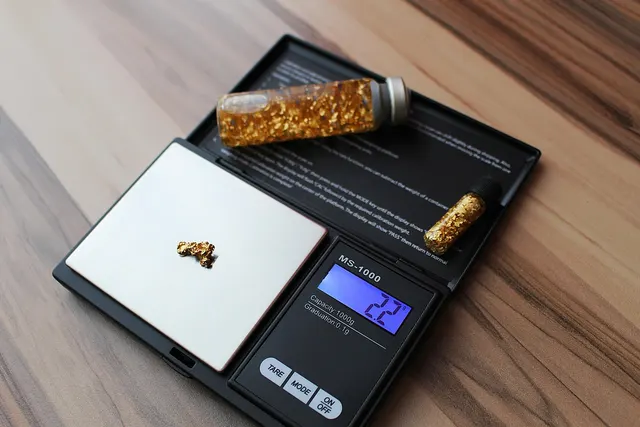
Photo: Pixabay
On this page 7 sections
- Pawn Shop Software Loan Math: Test a Late Redemption
- Police Reporting Should Block Held Items From Sale
- Firearms: Electronic Bound Book and Redemption Checks
- Gold Buys and the Form 8300 Rule Pawnbrokers Misread
- Card Payments in Pawn Shop Software: Integration and Processor Choice
- Online Renewals Must Post Before the Forfeiture Job Runs
- Contract Terms Decide What Switching Costs Later
Key takeaways
- Before you sign, have the vendor build two test tickets: a late redemption under your state's rules and a loan to a borrower covered by the Military Lending Act. The MLA caps that borrower's rate at a 36% MAPR.
- A pawned firearm can't go back to its owner until the software logs three things: the disposition entry, a Form 4473 and a NICS check.
- Form 8300 covers cash you receive, not cash you pay out. The IRS has treated rolled-over pawn loans as related transactions, so the software should total a customer's cash payments across renewals.
- Choose software that works with more than one processor. Pawn shops (MCC 5933) can be treated as higher risk, and if your only compatible processor drops you, you lose integrated payments.
The best pawn shop software does four jobs. It runs your loan book under your state's pawn law, prices loans to military borrowers under the federal Military Lending Act, and sends every pawn and buy to police from the ticket your clerk already filled out. If you hold a federal firearms license, it also keeps an electronic bound book that meets ATF's conditions and won't let a pawned gun leave without a background check. Card payments should go to a terminal you can keep if your processor changes. A standard retail POS handles almost none of that.
In a pawn shop, one item has to exist as a loan, a police record and sometimes a firearms record at the same time. If it forfeits, it becomes inventory at a cost equal to the loan, and nobody should have to retype it. Run the tests below on every platform before you sign a multiyear contract, from established systems such as Bravo and PawnMaster to newer cloud products.
Pawn Shop Software Loan Math: Test a Late Redemption
Pawn lending is regulated mainly by state law, sometimes with local ordinances on top. Finance charge caps, loan terms, grace periods and forfeiture notices differ from state to state. The software has to encode those rules, print your state's disclosures on every ticket, and calculate renewals and partial payments on its own.
Errors usually hide in the partial month, so ask the vendor to build this ticket during the demo.
Illustrative example. Assume a $300 loan with a $45 monthly finance charge, redeemed five days into the second month. If the system bills a second full month, the finance charge is $90. If it prorates daily on a 30-day month, the charge is $45 plus $7.50 (five-thirtieths of $45), or $52.50. These numbers exist only for the arithmetic; your state law sets the real ones.
Which answer is right depends on your state. If the system is set up wrong, it either undercharges on every late redemption or overcharges customers in a way an examiner can find. Ask who updates the rate tables when your legislature changes the rules. If you have stores in more than one state, ask whether one installation can apply each state's rules.
Military Borrowers Need Their Own Pricing
The Military Lending Act covers pawn loans to active-duty service members and their dependents. The Texas Office of Consumer Credit Commissioner's pawnshop advisory bulletin on the MLA rule lists what applies to a covered borrower:
- The military annual percentage rate (MAPR) must be 36% or less.
- The pawnshop must give a mandatory loan disclosure.
- The loan documents can't waive the borrower's protections or require arbitration.
The National Pawnbrokers Association notes that pawnbrokers may use any reasonable means to decide whether a customer is covered.
Worked example. Take the same $300 loan. A 36% annual rate is 3% a month, so a one-month finance charge to a covered borrower tops out at about $9. That compares with the illustrative $45 above. The Texas bulletin reaches the same limit under that state's rules: for covered borrowers, the pawn service charge can't exceed 3% of the amount financed.
A gap that size can't depend on a clerk remembering to ask. The software should store the covered-borrower determination on the customer profile and switch to MLA pricing and ticket language automatically. It should also refuse a renewal that would push the MAPR past 36%.
Police Reporting Should Block Held Items From Sale
Many states and cities require pawnbrokers to report pawns and purchases to law enforcement on a schedule. The software should send each record from the completed ticket, with ID details, item descriptions, and serial numbers and photos where required. Some departments use a third-party service and others a state database or local portal, so confirm the software connects to yours.
Sending the report is only half the job. When police place a hold, the system should refuse to sell, list or forfeit the item until the hold is released. A manager should see rejected reports the same day. Keep a log of what went out, when, and the response; that log is how you show a detective exactly what you reported.
Firearms: Electronic Bound Book and Redemption Checks
ATF Ruling 2016-1, signed April 29, 2016, lets licensees keep acquisition and disposition records electronically instead of on paper if they meet its conditions. It replaced Ruling 2013-5 and, as Williams Mullen explained, opened the door to cloud storage. The conditions include capturing all required information, tracking corrections, keeping records readily accessible and backing them up. Ask the vendor to show how the software meets each condition and to produce the export an inspector would request. Then check the answer against the ruling with your compliance advisor.
Redemptions are where pawn shops differ from other gun dealers. ATF's questions and answers say three things are required to return a pawned firearm: a disposition entry in the record, a Form 4473 and a NICS background check. If the customer is denied, the gun can't lawfully go back to that person, as the NSSF's summary of ATF guidance notes. Good software won't close a firearm redemption until all three are logged. Our firearms payment processing page covers the card side for FFLs.
Gold Buys and the Form 8300 Rule Pawnbrokers Misread
Gold buys need weight, purity and price paid on the ticket, plus a live spot price so clerks quote consistently. Many states and cities set holding periods before you can melt or resell precious metals, so those holds should attach automatically.
Many shops have the cash-reporting rule backward. Form 8300 reports cash a business receives. Under IRS Publication 1544, you file within 15 days when you receive more than $10,000 in cash in one transaction or in related transactions. Paying a seller cash for a gold lot is money going out, so it isn't a Form 8300 event on its own. Other anti-money-laundering rules can still apply to precious metals buyers.
The trap is renewals. In IRS Chief Counsel Memorandum 201540013, the IRS looked at successive pawn loans between the same parties, secured by the same property. It concluded that they are related transactions when the debt rolls from one loan to the next, even if state law treats them as separate loans. If the customer pays more than $10,000 in cash on that chain within a year, the pawnbroker must file. The memo isn't binding precedent, but it shows how the IRS examines pawnshops. Your software should total each customer's cash payments across a loan chain over a rolling 12 months and warn you before the total passes $10,000.
Card Payments in Pawn Shop Software: Integration and Processor Choice
With a standalone terminal, staff key every amount twice and match card batches to tickets by hand at close. An integrated setup pushes the amount from the ticket to the terminal and writes the approval back. In a semi-integrated setup, card data stays in the terminal and never touches the pawn software. That can narrow how much of your environment falls under PCI DSS.
The bigger question is which processors the integration supports. Pawn shops are classified under merchant category code (MCC) 5933, and Global Payments notes that acquirers can view card payments in that category as higher risk. Suppose your software works with only one processor and that account is closed. You either go without integrated payments or replace hardware under pressure. Favor platforms that support several processors and widely used smart terminals for the pawn counter, and get the list in writing.
If you'll take cards for loan interest and redemptions, not just merchandise, tell your processor when you apply. If they find an undisclosed use later, they can close the account. Our guide to why pawn shop merchant accounts get declined covers what underwriters look for.
Paying out loans by card is a different question, and the answer is no. The Visa Merchant Data Standards Manual requires manual, face-to-face cash disbursements to run under MCC 6010, a code for financial institutions. Pay loan proceeds by cash, check or another method your state permits, never as a card refund or a cash-back workaround.
If you plan to run dual pricing or a cash discount program, confirm the software prints cash and card prices on tickets and receipts in the format the program requires. For cost benchmarks, see pawn shop credit card processing fees and what you should pay.
Online Renewals Must Post Before the Forfeiture Job Runs
An online portal keeps loans alive that might otherwise forfeit, but each payment has to post to its ticket immediately. If it waits in a queue while the overnight forfeiture job runs, a customer can lose an item they just renewed. These are card-not-present payments, so they run through a payment gateway. Ask which gateways the portal supports and whether it offers 3-D Secure authentication. Also ask whether it records the customer's acceptance of renewal terms, which you'll need as evidence if the payment is disputed.
If you sell forfeited goods online, a sold item should come off every channel at once. Anything on police hold or inside a holding period should never be eligible to list.
Contract Terms Decide What Switching Costs Later
Get answers on four points before you sign:
- Data export: Can you export full records, photos included, in a standard format, and what does it cost?
- Term: How long is the contract, does it auto-renew, and how much cancellation notice is required?
- Processing tie-in: Does the software price depend on using the vendor's processor?
- Hardware: Do you own it, and will it work with another platform?
Processing tie-ins deserve real arithmetic.
Illustrative example. Assume $60,000 in monthly card volume. A vendor takes $100 off the monthly software fee if you use its processor, but its quote runs 0.30 percentage points higher than an independent one. That extra 0.30% costs $180 a month, so the "discount" leaves you $80 a month worse off. That's before you count the risk of being tied to one processor.
Sometimes the bundle wins. Run the math with your own volume and real quotes to find out.
This is general information, not legal or tax advice. Confirm your obligations with a qualified attorney, accountant or compliance professional. One rule to watch: FastBound, a company that sells bound-book software, reports that ATF has proposed writing electronic recordkeeping authority into regulation. That could change what vendors must build.
Bring three things to your first demo: recent processing statements, the name of your police department's reporting system, and the two test tickets above. To check a vendor's processing quote, request a free processing quote and a MannyPay specialist will respond within one business day. You can also start with our pawn shop payment options.
Sources
- Texas OCCC, Pawnshop Advisory Bulletin: Military Lending Act Rule
- National Pawnbrokers Association, FAQ: Compliance With the Military Lending Act
- ATF Ruling 2016-1, Requirements to Keep Firearms Records Electronically
- Williams Mullen, New ATF Ruling Allows Cloud-Based Storage of A&D Records
- ATF Questions and Answers (procedure for returning a pawned firearm)
- NSSF, ATF Q&A: Firearms Transactions
- IRS Publication 1544, Reporting Cash Payments of Over $10,000
- IRS Chief Counsel Memorandum 201540013, Form 8300 Reporting for Pawnbroker Transactions
- Global Payments, A Handy Guide to MCC Codes for Small Business Merchants
- Visa Merchant Data Standards Manual
- FastBound, ATF Changes 2026
This article is for general educational purposes and is not legal, tax or financial advice. Card network rules and state laws change; confirm current requirements for your business.