Tobacco Merchant Accounts: Why Processors Decline Shops and How to Win
Learn how to get a tobacco merchant account: why smoke shops are rated medium risk, what underwriters check, documents to prepare and red flags to avoid.

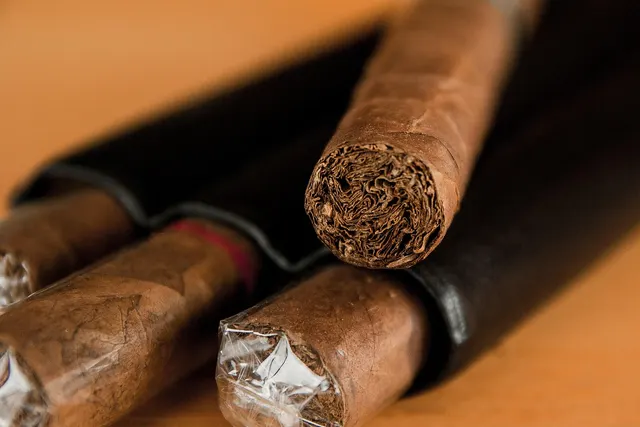
Photo: Pixabay
On this page 7 sections
- Why a Tobacco Merchant Account Is Classified as Medium Risk
- What Underwriters Check: Licenses, Product Mix and Volume
- Documents to Prepare for a Cigarette Store Merchant Account
- Red Flags That Lead to Declines or Rolling Reserves
- Comparing Providers for Tobacco Shop Payment Processing
- Keeping Tobacco Retailer Credit Card Processing in Good Standing
- Next Steps
Key takeaways
- Tobacco shops are usually rated medium risk because of age-restricted products, changing state and local rules and product mix, not high chargebacks.
- Underwriters check whether your licenses, product mix and volume estimates match what your shop actually does.
- A complete, consistent application lowers the chance of a decline or rolling reserve, but no processor can guarantee standard terms.
- After approval, tell your processor about product, channel and volume changes before you make them.
Many owners who apply for a tobacco merchant account get a short decline email. Others are approved with conditions they didn't expect, such as a rolling reserve, a low monthly volume cap or a higher rate. This guide explains why processors treat tobacco shops cautiously, what underwriters check, which documents to have ready and how to keep your account healthy after approval.
A decline rarely means your shop is a bad business. Underwriters handle age-restricted products carefully, and they look for any sign that an account could become a compliance problem for the acquiring bank.
Why a Tobacco Merchant Account Is Classified as Medium Risk
Most cigarette and cigar shops don't have the chargeback problems that put subscription sellers or travel agencies in the high-risk category. Customers walk in, show ID, pay and leave with the product. The sale is face to face, and disputes are uncommon.
Tobacco still sits above standard retail risk for a few reasons:
- Age-restricted products. Federal law sets a minimum age for tobacco sales, and states and localities add their own rules. A shop cited for underage sales is a regulatory risk for the bank that sponsors its merchant account.
- Frequent rule changes. States and cities regularly update flavor restrictions, licensing requirements, product bans and tax rules. A product that was legal to sell last year may not be legal now.
- Product mix drift. Many shops start with cigarettes and cigars, then add vape products, hookah, CBD, kratom or glassware. Some of these categories are high risk on their own, so a shop's risk profile can change without the processor knowing.
- Varying bank appetite. Some acquiring banks don't board tobacco at all, and some accept only certain product types. Mainstream processors often apply blanket policies instead of reviewing each shop.
Underwriters call these accounts "medium risk." They're acceptable with the right documentation, but they're reviewed more closely than a coffee shop or hardware store.
What Underwriters Check: Licenses, Product Mix and Volume
Underwriting is a consistency test. The underwriter compares your application, your documents and your public footprint, looking for anything that doesn't match.
Licensing
Most states require a tobacco retail license, and many cities and counties require their own permit. Underwriters want to see:
- A current license in the legal business name or DBA on your application
- A license address that matches your storefront
- An expiration date that isn't about to pass
- Separate licenses or registrations for other regulated products you sell, if your state requires them
Licensing rules vary by state and locality. Confirm what applies to your location with your state's tobacco licensing authority or a qualified professional.
Product Mix
This is where many tobacco applications fail. Underwriters want a realistic breakdown of what you sell, described in approximate shares of sales, not just a list.
| Product Category | How Underwriters Typically View It |
|---|---|
| Cigarettes, cigars, pipe tobacco | Core tobacco; medium risk with proper licensing |
| Lighters, rolling papers, convenience items | Generally low concern |
| Hookah tobacco and accessories | Usually reviewed alongside tobacco; may need extra detail |
| Vape devices and e-liquids | Often treated as a separate, higher-risk category |
| CBD, delta-8, kratom, 7-OH | High-risk categories with their own underwriting |
| Glassware and paraphernalia | Varies by bank; disclose clearly |
If a meaningful share of your sales comes from vape or hemp-derived products, your account may be underwritten as high risk rather than medium risk. Disclose that share up front. Hiding it only creates a bigger problem later.
For those categories, see our pages on vape and e-cig payment processing and CBD and delta-8 merchant accounts, plus our guide to why vape shops get declined and how to win approval.
Volume and Ticket Size
Underwriters compare your projected monthly card volume and average ticket against your shop's size, location and history. A small single-location shop projecting volume like a regional chain will raise questions. So will a carton-heavy business that reports a small average ticket.
Use real numbers from your POS reports, bank deposits or prior processing statements. If you're new, base estimates on your lease size, foot traffic and inventory purchases, and be ready to explain how you arrived at them.
Ownership and History
Underwriters review the principals as well as the business. They look at personal credit, any prior merchant accounts and whether an owner appears on the MATCH list, the industry database of terminated merchants. A past termination doesn't always mean a decline, but you need to disclose it and explain it.
Documents to Prepare for a Cigarette Store Merchant Account
A complete file is the best way to avoid the back-and-forth that delays approval. Before you request a quote, gather:
- State tobacco retail license and any city or county tobacco permit
- General business license for your location
- Sales tax permit or seller's registration
- Formation documents, such as articles of organization or incorporation, plus your EIN confirmation
- Government-issued photo ID for each owner the processor requires
- Voided business check or bank letter for the deposit account
- Recent business bank statements, usually several months; your provider will specify how many
- Prior processing statements, if you've accepted cards before
- Storefront lease or other proof of location
- Photos of the exterior, signage, counter and shelves
- Product list or sales breakdown by category
- Written age verification policy describing how staff check ID and how you train them
- Refund and return policy as posted in-store
Owners often skip the age verification policy and the photos, but both help. They show the underwriter that the shop is real, that it matches the application and that it takes compliance seriously.
Red Flags That Lead to Declines or Rolling Reserves
A reserve is the processor's way of holding back part of your deposits as protection against future losses. Our breakdown of CBD processing rates, reserves and hidden costs covers how reserves show up in a closely related category. These issues are the most likely to trigger a reserve or a decline:
- Missing, expired or mismatched licenses. A license under a different entity name or address is a common problem.
- Product mix that doesn't match the evidence. For example, your application says "cigarettes and cigars," but your photos, social media or website show kratom or vape displays.
- Undisclosed online or delivery sales. Selling tobacco online involves separate federal and state rules on shipping and age verification. A card-present application that turns out to include online sales can lead to termination.
- Heavy keyed or card-not-present activity on an account approved for in-person sales
- Compliance citations for underage sales or unlicensed products
- Prior terminations or a MATCH listing that you didn't disclose
- Unrealistic volume projections or sudden spikes soon after boarding
- Weak personal credit or a very new business with no financial history
The fix is accuracy, not workarounds. Splitting transactions, running sales through another business's account or describing your shop as general convenience retail to get a different category code all violate card network rules. These practices can get you terminated and placed on the MATCH list, which makes future accounts much harder to get.
Even a well-documented application can be approved with a reserve or volume cap, depending on the acquiring bank's policies. A clean file improves your odds of standard terms and gives you a stronger case for having conditions reviewed later.
Comparing Providers for Tobacco Shop Payment Processing
Processors fall into a few broad types, and each handles tobacco shop payment processing differently.
| Provider Type | Typical Approach to Tobacco | Things to Confirm |
|---|---|---|
| Self-serve flat-rate platforms | Fast signup; many restrict or prohibit tobacco and related products in their terms | Read the prohibited business list before you sign up, not after an account is frozen |
| Traditional ISOs and bank processors | Some board tobacco with full underwriting | Whether their sponsor bank accepts your exact product mix |
| High-risk specialists | Experienced with tobacco, vape and hemp crossover | Reserve terms, contract length, early termination fees |
Whichever type you consider, ask:
- Do you board tobacco retailers with my specific product mix?
- Which acquiring bank sponsors the account?
- What pricing model do you use?
- Will there be a reserve, and under what conditions can it be reviewed?
- What happens if I add a new product category?
Programs That Offset Card Costs
Tobacco margins are often thin, so many shop owners look at programs that shift card costs. MannyPay offers cash discount programs, dual pricing and surcharging where permitted. Each comes with disclosure and signage rules. Surcharging is restricted by card network rules and some state laws, and it doesn't apply to every card type. Confirm current rules for your state before you change prices at the register.
MannyPay is a registered ISO/MSP of Esquire Bank, Merrick Bank and Mission Valley Bank. It provides merchant accounts for low- and high-risk businesses, including tobacco and cigarette retailers. Approval and terms depend on underwriting.
Keeping Tobacco Retailer Credit Card Processing in Good Standing
Getting approved is half the job. Accounts that run smoothly for years usually belong to owners who treat the processor as a compliance partner.
- Renew licenses early and send updated copies to your processor without being asked.
- Report product mix changes before you make them. Adding a vape wall or hemp products can change your risk category, so raise it with your processor first.
- Don't add sales channels quietly. Talk to your processor before you take phone orders, offer delivery or launch a website.
- Keep age verification consistent. Train every new hire, keep training records and ask whether your POS system can prompt ID checks on age-restricted items.
- Flag big volume changes in advance, such as a second location or a holiday promotion, so a spike doesn't trigger a review or funding hold.
- Watch disputes. Chargebacks are usually low in tobacco retail, so a sudden rise can point to staff errors, fraud or a card-not-present problem.
- Post your refund policy at the counter and follow it.
The same habits apply to other age-restricted retailers. Our guide to liquor store merchant account approval covers similar issues for beer, wine and spirits sellers.
Next Steps
Before you apply, assemble your licenses, a realistic product breakdown and a few months of statements. Make sure every document lists the same business name and address. Then talk to a provider that boards tobacco retailers.
You can request a free quote from MannyPay to start the conversation, or browse our high-risk processing options if your product mix includes vape or hemp-derived products.
This article is general information, not legal, tax or regulatory advice. Tobacco laws vary by state and locality and change often. Confirm your obligations with a qualified professional.
This article is for general educational purposes and is not legal, tax or financial advice. Card network rules and state laws change; confirm current requirements for your business.