Emergency Vet Deposits: How ER Hospitals Collect Payment Before Treatment
A practical emergency vet deposit workflow for ER and specialty hospitals: estimate ranges, card holds, top-ups and refunds without stalling care.
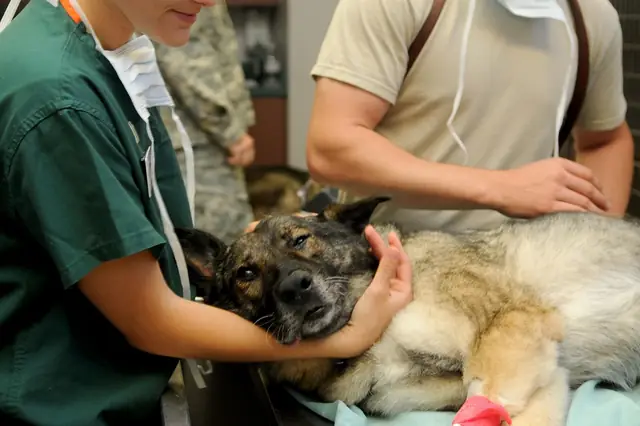
Photo: Pixabay
On this page 8 sections
- Why ER Vet Hospitals Collect Payment Upfront
- Estimate Ranges and Vet Treatment Plan Approval
- Emergency Vet Deposit vs. Card Preauthorization: Which to Use
- Topping up Deposits During Multi-Day Hospitalization
- Handling Clients Who Can't Pay the Full Deposit
- Refunding Unused Deposits Cleanly
- Documentation That Protects You If the Charge Is Disputed
- Next Steps: Putting the Workflow Together
Key takeaways
- Get a signed low/high estimate before collecting an emergency vet deposit, and have the client re-sign whenever the plan changes.
- Use a captured deposit for hospitalizations. Use a card preauthorization only for cases that will settle soon, and complete the original authorization instead of running a new sale.
- Set clear top-up triggers for multi-day stays, and document every approval with names, times and amounts.
- Refund unused deposits to the original card promptly, and keep a complete record set in case a charge is disputed.
At 2 a.m., a client is standing in your lobby with a dog that ate something it shouldn't have. They're scared, they want answers, and your team needs a treatment decision fast. It's a hard moment to talk about money, and it's exactly when a clear emergency vet deposit process matters most. This guide covers the full workflow: estimate ranges and client sign-off, deposits vs. card preauthorizations, top-ups during hospitalization, refunds, and the records that protect you if a charge is disputed.
ER and specialty hospitals that handle deposits well do it the same way every time. They give a written estimate range, get a signature, take payment the right way for the situation, and keep the client informed as costs change.
Why ER Vet Hospitals Collect Payment Upfront
General practices often know their clients, see routine visits and bill at checkout. Emergency and specialty hospitals work differently:
- Many clients are new. A walk-in at midnight has no payment history with you.
- Costs are uncertain. Diagnostics can change the plan within the hour. A suspected foreign body can turn into surgery and several nights of hospitalization.
- Tickets are large. Hospitalization, imaging, surgery and critical care add up quickly, often far beyond a typical wellness visit.
- Outcomes are emotional. When a patient doesn't survive or the result disappoints, unpaid balances become hard to collect and are more likely to turn into disputes.
A deposit doesn't replace compassion. It lets your team commit staff, supplies and cage space without carrying open-ended credit risk on every case.
Most hospitals separate triage and stabilization, which starts right away, from the diagnostic and treatment plan, which begins once the estimate is approved and the deposit is collected. Put that policy in writing, train staff on it and apply it the same way for every client.
Estimate Ranges and Vet Treatment Plan Approval
A single-number estimate for an emergency case is nearly always wrong. Low/high ranges are the standard because they reflect real uncertainty and set expectations before treatment starts. They also give you a defensible basis for the veterinary estimate deposit you collect.
What a Good Estimate Includes
- Line items grouped by phase: exam and triage, diagnostics, treatment, hospitalization (per day) and discharge medications.
- A low and high total. The low end assumes things go as hoped. The high end covers likely complications.
- What's not included. Name possible add-ons such as specialist consults, blood products or additional surgery.
- The deposit amount and how it was calculated. For example, "deposit equals the high end of the estimate" or "deposit equals the low end, with top-ups required."
- Your top-up and refund policy, in plain language.
- Client signature, date and time, plus the name of the staff member who presented it.
Illustrative example (not a pricing benchmark): An estimate shows a low of $1,800 and a high of $3,400. The hospital collects the high end for hospitalized cases, so the client pays a $3,400 deposit. If the final bill comes to $2,600, the client receives an $800 refund at discharge.
Make Sign-Off Fast
Clients sign more readily when the estimate is easy to read on a tablet or printed sheet and a staff member walks through it calmly. Many hospitals present estimates in an exam room rather than at the front counter, which keeps the conversation private and takes pressure off the client.
Consent and medical-records requirements vary by state. Have your practice attorney or state veterinary medical association review your estimate and consent forms.
Emergency Vet Deposit vs. Card Preauthorization: Which to Use
These two tools work differently, and confusing them is a common source of double charges and angry calls.
- A deposit is a completed sale. The money is captured, settles to your account and is later applied to the final invoice.
- A preauthorization places a hold on the card for an amount. No money moves until you complete (capture) the authorization, usually for the final amount.
| Factor | Captured Deposit | Card Preauthorization |
|---|---|---|
| Money moves to you | Yes, at the time of sale | Only when you complete the authorization |
| Best fit | Hospitalization, surgery, multi-day stays | Short outpatient procedures billed the same day |
| Main risk | Refund needed if the final bill is lower | Hold can expire before capture, or the final amount exceeds what was authorized |
| Client experience | Charge appears right away | Hold reduces available credit or bank balance until released |
When a Veterinary Card Preauthorization Makes Sense
A preauthorization can work for same-day cases where the final bill will be known within hours, such as an outpatient procedure with discharge that evening.
If you use one, complete the original authorization at checkout rather than running a new sale. A separate sale while the hold is still active can tie up the client's funds twice, which is especially painful on a debit card linked to a checking account.
Why Deposits Usually Win for Hospitalization
Authorization holds don't last indefinitely. How long a hold stays valid depends on card network rules and your merchant category, and a multi-day hospitalization can outlast it. Capturing more than the authorized amount is also restricted.
Some industries, such as hotels, can increase authorizations as costs grow, but whether your veterinary account supports that depends on your processor setup. Our guide to hotel incidental holds and when to release them explains how holds behave over longer stays, and the bar tab preauthorization guide covers the short-hold version of the same problem.
Before you build a preauthorization workflow, ask your processor how long holds remain valid and whether incremental authorizations are available for your account.
Topping up Deposits During Multi-Day Hospitalization
Hospitalized patients build up charges every shift. Without a top-up process, the deposit is quietly used up, the client is shocked at discharge and you're left holding an unsecured balance.
Set Clear Top-Up Triggers
Choose one or more triggers and put them in your written policy:
- Balance trigger. When running charges reach a set share of the deposit, the client is asked to top up.
- Daily update. During the daily progress call, the doctor or a client service rep reviews charges to date and the projected total.
- Plan change. Any new major procedure, such as surgery, a transfusion or advanced imaging, requires a revised estimate and a new deposit before it proceeds, unless it's a true emergency covered by your stabilization policy.
Run Each Top-Up as a New Transaction
Treat each top-up as its own sale tied to the patient's account, with its own receipt. Have the client re-sign an updated estimate whenever the range changes.
Taking Payment When the Client Isn't on Site
Clients often go home overnight, and family members sometimes pay from another state. For these payments:
- Use a virtual terminal for keyed card payments, and collect the CVV and billing address so you can run address verification.
- Get a signed card authorization form, or written approval by email or text, that names the cardholder, the amount and the patient.
- If the payer isn't the client of record, note how they're related and confirm the client agrees.
Keyed transactions carry more fraud and dispute risk than chip or tap payments. When the client is in the building, take the card in person. A handheld terminal that goes to the exam room makes that easy without sending the client back to the counter.
Handling Clients Who Can't Pay the Full Deposit
Some clients won't be able to cover the deposit. Have options ready so the conversation stays focused on the patient instead of stalling. If financing is one of those options, see our comparison of Scratchpay vs. CareCredit fees and client approval for vets.
- Adjust the treatment plan. Many hospitals offer a range of care: outpatient management, staged diagnostics or a lower-intensity plan the client can afford. Document the options offered and the one chosen.
- Partial deposit with a signed agreement. Some hospitals accept a reduced deposit for established clients or certain case types, with written terms for the remaining balance.
- Third-party financing. Veterinary financing programs let clients apply quickly, often from their phone. Your hospital is typically paid by the lender while the client repays over time. Terms vary, so review merchant fees and client disclosures with each provider.
- In-house payment plans. These carry real collection risk. If you store a card for scheduled payments, get explicit written authorization for the amounts and dates. Our guide to keeping stored cards billing when they expire covers a common snag with scheduled card charges.
- Pet insurance. Many policies reimburse the owner after the visit rather than paying the hospital directly, so insurance usually doesn't replace the deposit. Help clients with claim paperwork, but collect payment under your normal policy.
- Charitable funds. Some hospitals keep or partner with assistance funds for qualifying cases.
Policies on unpaid balances and patient discharge vary by state. Review yours with a qualified attorney.
Refunding Unused Deposits Cleanly
A slow or messy refund can turn a grateful client into a dispute. Build refunds into discharge:
- Reconcile at discharge. Final invoice minus all deposits and top-ups equals the refund or balance due. Show the math on the discharge invoice.
- Refund to the original card. Don't refund a card deposit in cash, by check or to a different card. Refunds to a different payment method are a common fraud pattern.
- Void when you can. If the deposit was taken the same day and the batch hasn't settled, a void is cleaner than a refund. Ask your processor how voids work on your setup.
- Release unused preauthorizations. Don't let a hold sit until it expires. Release it so the client's funds free up sooner.
- Set expectations. Tell the client the refund has been processed and that the time it takes to appear depends on their bank. Give them a refund receipt.
- Handle multiple cards consistently. If several cards paid in, follow a written refund order, such as most recent first, and note it on the invoice.
Documentation That Protects You If the Charge Is Disputed
Veterinary chargebacks tend to fall into a few categories: "I didn't authorize this," "services weren't as described," "I was charged more than I agreed to" or "my refund never arrived." Your defense is a complete record for each case:
- Signed estimates, original and each revision, with dates, times and amounts
- Consent forms for procedures and anesthesia
- Communication logs for every progress call and top-up approval: who called, who approved, the time and the amount discussed
- Card authorization forms for keyed or third-party payments
- Transaction receipts for the deposit, each top-up and each refund, with patient and invoice numbers
- Medical records showing the services were performed
- The itemized final invoice and discharge instructions
- Your posted deposit and refund policy, signed or acknowledged by the client
Your processor sets the deadline for responding to a dispute, and deadlines are short. Store these records where front-desk and accounting staff can pull them quickly. For a parallel from another deposit-heavy industry, see how hotels win fraud and "didn't stay" chargebacks.
Next Steps: Putting the Workflow Together
| Stage | Action | Record to Keep |
|---|---|---|
| Arrival | Triage and stabilize per policy | Triage notes |
| Estimate | Present low/high range, explain deposit | Signed estimate |
| Payment | Captured deposit (or preauthorization for same-day cases) | Receipt tied to patient |
| Hospitalization | Daily update, top-ups at triggers | Call log, revised estimates, receipts |
| Discharge | Reconcile, refund or collect balance | Final invoice, refund receipt |
The right equipment makes this workflow easier to run consistently. Chip and tap terminals at intake and in exam rooms, plus a virtual terminal for remote payers, cover most ER situations. For help choosing hardware, see our guide to the best credit card terminals for vet clinics and curbside checkout.
MannyPay offers payment processing for veterinary clinics, along with smart terminals for front desks and exam rooms. To review your current setup or ask how preauthorizations and holds would work on your account, request a free quote and confirm current terms with our team.
This article is general information, not legal or financial advice. Confirm state-specific consent, records and collections requirements with a qualified professional.
This article is for general educational purposes and is not legal, tax or financial advice. Card network rules and state laws change; confirm current requirements for your business.