Pay by Bank for Ecommerce: When It Cuts Fees and When It Doesn't
Pay by bank ecommerce options can cut card fees on large orders. See the break-even math, ACH return rules and Nacha limits before you add one.

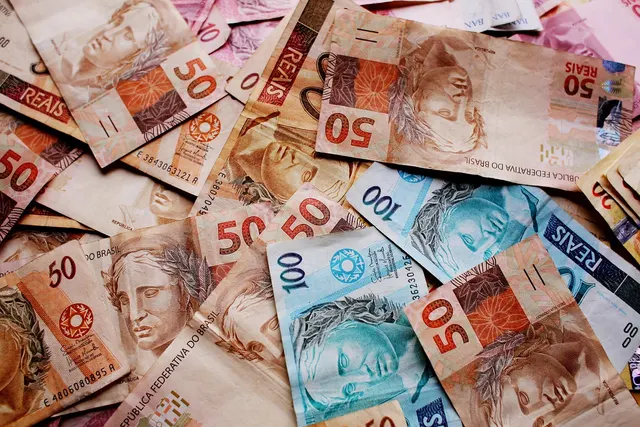
Photo: Pixabay
On this page 7 sections
Key takeaways
- With the article's illustrative pricing, each bank order saves 1.9% of the order minus $0.70. Below about $37, a discounted bank payment costs more than the card.
- One unauthorized return on a shipped order wipes out the savings from more than 52 other bank orders, whatever the order size.
- A store sending only about 40 bank debits in a 60-day window goes over Nacha's 0.5% unauthorized threshold with one bad return.
- Hold large orders from first-time customers until the debit settles and the two-banking-day routine return window has passed, unless the provider confirmed the balance at checkout.
Pay by bank ecommerce payments cost less than cards on large orders and save almost nothing on small ones. The savings last only if unauthorized-debit returns stay rare. Bank payment providers usually charge a flat or capped fee per payment, while card fees grow with every dollar in the cart. On a $1,500 sofa that gap is real money. On a $30 membership it's pennies. Before you add a bank option to your online checkout, you need two numbers: the share of shoppers who will choose it, and how much of that money could come back to you as returns.
How Pay by Bank Works at an Ecommerce Checkout
Shoppers see "pay by bank" as one button. Behind it sit three setups, and each leaves you with a different level of risk.
Keyed ACH debit. The customer types in a routing number and an account number and authorizes the charge. Your provider then sends a debit through the ACH network, the batch system U.S. banks use for payroll and bill pay. When the order is placed, nothing confirms that the account is real or that it has money in it.
Bank login, then ACH. The shopper picks their bank and signs in through a secure screen. That lets the provider confirm the account belongs to them, and many providers check the balance at the same moment. The money still moves over ACH, so the same return rules apply. In the U.S., "open banking payments" usually means this model.
Instant bank payment. On real-time rails, the customer's bank pushes the money to you and it arrives in seconds. You aren't pulling a debit, so there's no ACH debit for the customer to send back as a return. Checkout support for this is still limited and depends on both your provider and the shopper's bank. If a provider promises instant settlement, ask which rail it uses and which U.S. banks can send on it.
Most pay by bank checkouts in the U.S. use one of the first two setups, so ACH rules decide your risk. For the setup steps, see our guide on how to start accepting ACH bank payments.
The Break-Even Math on Bank Payments vs. Card Fees
Card pricing grows with the order total. Bank pricing is usually flat or capped. That one difference drives most of the math.
Here is an illustrative furniture store. Every number below is an assumption for the example. None is a quoted price from any provider or card network.
- 100 online orders a month, average order $1,500
- Blended card cost of 2.9% + $0.30 per order
- Bank payment cost of $1.00 per payment, plus a $50 monthly fee
- 20% of shoppers choose the bank option
- A 1% discount for shoppers who pay by bank
On a $1,500 order, the card costs $43.80 ($43.50 + $0.30). The bank payment costs $16.00: the $1.00 fee plus the $15.00 discount. Each bank order saves $27.80. Twenty bank orders save $556 a month, or $506 after the monthly fee.
Apply the same assumptions to a $30 membership and the picture flips. The card costs $1.17 and the bank payment costs $1.00, a 17-cent saving before the discount, the monthly fee or any return. With the 1% discount added, the bank payment costs $1.30, which is more than the card.
Under these assumptions, the saving per bank order is 1.9% of the order minus $0.70. Below about $37, the discounted bank payment costs you more than the card. This table shows how order size changes the decision:
| Order size (illustrative) | Saving per bank order | Bank orders a month to cover the $50 fee | Bank orders' savings erased by one unauthorized loss |
|---|---|---|---|
| $50 | $0.25 | 200 | 200 |
| $100 | $1.20 | 42 | about 83 |
| $250 | $4.05 | 13 | about 62 |
| $500 | $8.80 | 6 | about 57 |
| $1,500 | $27.80 | 2 | about 54 |
Look at the last column. At every order size in the table, losing one shipped order to an unauthorized-debit claim cancels the savings from about 54 or more other bank orders. Bigger orders don't escape this. The saving on each order can never reach 1.9% of its value, so even a $10,000 order needs about 53 clean bank orders to make up for one loss, and the figure never drops below 52. Bank payments pay off only when that kind of loss is rare. The next section covers how rare the network rules require it to be.
Run your own version with your real card cost, not a list rate. Your effective rate is your total card fees divided by your total card volume, both taken from a recent statement. Keep your adoption guess conservative. Shoppers with a card saved in their browser or wallet are used to paying with one tap, so treat any first guess as a placeholder until your checkout data replaces it. Our comparison of ACH vs. credit card costs, speed and risk covers the wider trade-offs.
ACH Returns Can Erase Months of Savings
Cards have chargebacks. ACH has returns, and their timing surprises merchants.
Routine returns come back quickly. Under the Nacha Operating Rules, returns for insufficient funds (R01) and for closed, missing or invalid accounts (R02 through R04) must come back within 2 banking days of settlement. You lose the sale and probably pay a return fee. If you held the shipment, though, you still have the goods. A bank login with a balance check prevents many of these returns.
Unauthorized-debit claims are the dangerous kind. On a consumer account, an unauthorized return such as R10 can come back up to 60 calendar days after settlement, which can be long after you shipped. ACH has no card-style dispute for "item not as described," so an unhappy customer's main option is to say the debit wasn't authorized. For the illustrative furniture store, one such return on a shipped $1,500 order costs about three months of the $506 net savings. Our explainer on ACH return codes like R01, R10 and R29 covers what each code means for you.
Nacha also tracks how often your debits come back. It measures return rates over a rolling 60-day window against three benchmarks:
- 0.5% unauthorized (codes R05, R07, R10, R11, R29 and R51). This is a hard threshold. Going over it can lead to Nacha enforcement, including fines, through your provider's bank.
- 3% administrative (R02, R03 and R04: closed, missing or invalid accounts). This is a "level," not a violation. Crossing it triggers a Nacha review of your origination practices.
- 15% overall, covering returns for any reason. This is also a level, and crossing it triggers the same kind of review.
Small merchants often miss how this math works at low volume. The illustrative store sends about 40 bank debits in a 60-day window. One unauthorized return is 2.5% of those, five times the 0.5% threshold. Before you launch, ask any provider how it monitors smaller accounts against these numbers.
Two other rules are often misunderstood:
- Nacha doesn't set your return fee. Nacha's Unauthorized Entry Fee is $4.50 per unauthorized return, paid between banks, and your bank often passes it on to you. Nacha does not set what your processor or bank charges you for a return. That charge is your provider's pricing, so you can compare it and negotiate it.
- Fraud monitoring is now required for every business originator. Nacha phased in rules requiring risk-based processes to spot fraudulent ACH payments. Phase 1 took effect March 20, 2026, for larger originators. Phase 2 extended the rules to all remaining business originators regardless of volume, effective June 19, 2026, with a practical compliance date of June 22 because June 19 is a federal holiday.
In practice, that means three controls:
- Verify the account by bank login before the first debit wherever you can, because fraudsters reuse the same fake bank accounts across many stores.
- Save the checkout wording, the timestamp, the IP address and the confirmation email for every authorization. That record is your evidence when a claim arrives.
- Review your return rate by code every month instead of waiting for your provider to raise it.
Which Online Stores Should Add It First
Furniture and other big-ticket retail. Large orders put the most card fees at stake on each sale. Made-to-order pieces ship weeks later, so waiting for a bank payment to settle fits a timeline the store already runs on. Our furniture store payment page covers the rest of the setup for that business.
B2B and wholesale. Business buyers already pay suppliers by ACH, so a bank option at checkout or on an invoice link asks nothing new of them. Restock orders are large, and the return window works in your favor. An unauthorized claim on a corporate account (code R29) generally has to come back within 2 banking days, compared with 60 calendar days on a consumer account. Confirm with your provider which accounts it treats as business accounts.
Subscriptions and memberships. At low price points the fee savings are thin, as the $30 example shows. The case here is renewal stability. Cards expire and get reissued after fraud, and each reissue can break a renewal. Bank accounts don't expire, but customers do close them. Recurring debits need the customer's authorization for the whole series, and your renewal terms still have to meet automatic renewal disclosure laws.
Small-basket consumer stores. These have the weakest case. Under the table's assumptions, a store with a $50 average order needs 200 bank orders a month just to cover the monthly fee.
Ship on a Schedule That Matches Your Risk
A card authorization tells you within seconds that the funds are reserved. A standard ACH debit tells you nothing until it settles, which takes a few business days depending on your provider's cutoff times. Even after it settles, a consumer can return it as unauthorized for 60 calendar days.
So set a shipping rule by order size and customer history. Ship small orders from verified accounts right away, because a loss there is cheap. Hold large orders from first-time customers until the debit settles and the 2-banking-day routine return window has passed, unless the provider confirmed the balance at checkout. For made-to-order goods, the build time covers the wait.
Some providers sell a payment guarantee that covers returns for a fee. Compare that fee with the losses you could expect at your order sizes, using the last column of the table above. Also ask whether bank payments count toward any reserve on your account. Our guide to upfront, capped and rolling reserves explains how holds affect cash flow.
Getting Shoppers to Choose the Bank Option
Adoption makes or breaks the math, and shoppers rarely switch on their own.
Show a reason right next to the button. A small discount for paying by bank gives shoppers a concrete benefit. Card network rules and state laws treat a discount for one payment method differently from a fee added for paying by card, and both govern how you word price differences. This is general information, not legal advice, so have counsel review your checkout language. If you want to offset card costs on every sale, dual pricing and surcharging where it's permitted are separate programs with their own disclosure rules.
Make the option fast to use. A bank login beats typing account numbers, and repeat buyers should have their account saved so the second purchase takes one click. Placement matters too. Put the option up front on carts above your break-even order size and on B2B invoices, and keep it available but less prominent on small carts. Keep cards at checkout either way, because removing them costs you sales.
What to Ask a Pay by Bank Provider
- Is pricing a flat fee or a percentage per payment, and is the percentage capped?
- What are the monthly fee, the routine return fee and the unauthorized return fee?
- Do you verify accounts by bank login or by micro-deposits, and is a balance check included?
- Which rail moves the money, and how many days until funds reach my account?
- How do you monitor my return rates against Nacha's thresholds at my volume?
- Do you offer a payment guarantee, and what does it exclude?
- How are recurring authorizations captured and stored?
- Does it plug into Shopify or WooCommerce without a custom build?
- Can I export returns by reason code?
For the integration side, see how to choose a payment gateway provider.
Start with last quarter's online orders. Using your own effective rate, add up the card fees on orders above the break-even size from the table. If that total is small, a bank option isn't worth the work yet. If it's large, take your numbers to providers and run their pricing through the formula above. To review your online payment setup alongside those numbers, request a free quote, and a MannyPay specialist will respond within one business day.
Sources
- ACH Return Codes: Full R01 to R85 List & What to Do (Ramp)
- ACH Return Codes: A Complete Guide for Businesses (Plaid)
- ACH Return Codes: R01-R29 Reference Guide for SaaS (Dodo Payments)
- Improving ACH Network Quality: Unauthorized Entry Fee (Nacha)
- ACH Return Fee: Why You Were Charged and What It Costs (weAudit)
- NACHA New Rules 2026: The Changes Businesses Need to Know (Trustpair)
This article is for general educational purposes and is not legal, tax or financial advice. Card network rules and state laws change; confirm current requirements for your business.