ACH Authorization Requirements: Forms, Wording, and Proof
Learn what a strong ACH authorization form includes, how to capture online and phone consent, and how to keep proof that holds up to unauthorized claims.
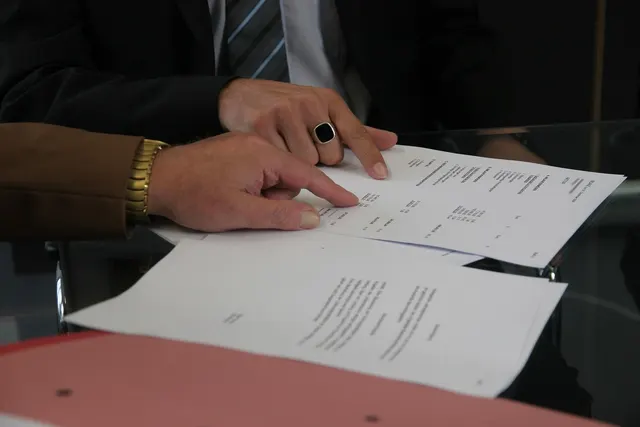
Photo: Pixabay
On this page 8 sections
- Why ACH Debit Authorization Requirements Matter
- What Every ACH Authorization Form Should Include
- Nacha Authorization Rules for Written, Online, and Phone Consent
- One-Time vs. Recurring ACH Authorization Rules
- How Long to Keep ACH Authorization Records
- Defending Unauthorized Return Claims
- Sample ACH Authorization Language
- Next Steps
Key takeaways
- Every ACH authorization should state the amount, timing, account, your business name and how the customer can cancel, in plain language that can't be misread.
- Written, online and phone authorizations each carry different capture and proof expectations. Confirm the current rules for each channel with your originating bank.
- Keep authorization records for as long as the authorization is active and for the retention period your bank specifies afterward, organized so you can produce a copy fast.
- Treat an unauthorized return as a stop sign: don't resubmit without checking with your bank, and use your authorization record to resolve the claim and lower your return rate.
An ACH authorization form is the record that proves your customer agreed to let you debit their bank account. It can be a signed document, an online consent or a recorded call. When a member, parent or donor later tells their bank they never approved a debit, that record is your main defense. This guide covers what a strong authorization includes, how written, online and phone consent differ, the extra care recurring debits need, how to organize records, how to respond to unauthorized returns, and sample wording you can adapt.
Rules change. Nacha updates its Operating Rules regularly, and federal consumer protection rules also apply to debits from consumer accounts. Treat this article as general information, not legal advice. Confirm current requirements with your processor, your originating bank (ODFI) and a qualified attorney.
Why ACH Debit Authorization Requirements Matter
Card payments run through a network authorization at the moment of sale. ACH debits don't. The customer's bank posts the debit based on the routing and account number you submit, without checking whether the customer agreed. Under Nacha's rules, the originator (you) is responsible for having that consent.
That's why authorization is the foundation of ACH. If a consumer tells their bank a debit wasn't authorized, the bank can return it. These claims can arrive weeks after the money seemed settled, so a weak authorization can hurt you long after the sale. Ask your bank how long customers have to make these claims on consumer accounts.
Unauthorized returns cost more than the debit itself:
- The funds are pulled back from your account.
- Your processor may charge a return fee.
- Staff time goes into tracking down the customer.
- Your unauthorized return rate rises. Banks and processors watch this rate closely, and high returns can lead to reviews, added requirements or loss of ACH origination privileges.
Businesses that rely heavily on bank debits feel this most. That includes gyms billing monthly dues, schools collecting tuition installments, nonprofits running monthly giving programs and subscription sellers. These are high-volume, repeat payments, so a small flaw in your form gets multiplied across hundreds of accounts. Gym owners can also see our guide to gym membership billing without chargebacks. For a broader look at the tradeoffs, see our guide on ACH vs. credit card costs, speed and risk.
What Every ACH Authorization Form Should Include
The guiding principle is simple. The authorization should be clear and easy to understand, and the customer should know they are approving debits to their own account. In practice, a strong form covers these elements:
| Element | What to Include | Why It Matters |
|---|---|---|
| Customer identity | Full name of the account holder | Shows who gave consent |
| Account details | Routing number, account number, checking or savings | Ties consent to a specific account |
| Your business name | Legal name and the name that appears on bank statements | Prevents "I don't recognize this" returns |
| Authorization statement | Explicit permission to debit, plus credits to correct errors | The heart of the form |
| Amount | Fixed amount, or how a variable amount is determined | Avoids disputes over unexpected charges |
| Timing | Date of a one-time debit, or frequency and start date for recurring | Sets expectations |
| Revocation terms | How to cancel and how much notice you need | Reduces revoked-authorization returns |
| Authentication | Signature, e-signature, recorded verbal consent or similar | Shows the customer, not someone else, agreed |
| Date and contact info | Authorization date and a phone or email for questions | Gives customers an alternative to calling their bank |
Give the customer a copy, or make it easy for them to access one. That's good practice, and for recurring consumer debits it may be required. Confirm with your ODFI or counsel.
Common Gaps That Lead to Returns
- Name mismatches. A martial arts school operating as "Tiger Kicks" but billing under "TK Holdings LLC" invites unrecognized-debit claims. Show both names on the form.
- Vague amounts. Phrases like "applicable fees" don't tell a parent what tuition will cost each month.
- Missing cancellation steps. Customers who don't know how to stop debits often ask their bank to stop them instead.
- The wrong signer. A grandparent paying a student's tuition from their own account must be the person who authorizes. A student or parent can't consent for someone else's account.
- Stretching one authorization too far. A dues authorization doesn't automatically cover add-ons. Schools that collect belt testing fees smoothly either get separate consent or write those fees into the original terms.
Nacha Authorization Rules for Written, Online, and Phone Consent
Nacha treats debits differently depending on how the customer authorized them. Each channel has its own expectations. Before you launch or change a channel, ask your ODFI for the current requirements.
Written and Signed Forms
Paper forms signed at the front desk are still common for gym enrollments and school registrations. Electronic signatures on a tablet or e-sign platform can serve the same purpose if they meet applicable federal and state electronic signature laws. Capture the signature, the date and a complete copy of the terms the customer saw.
Online Authorizations
Online debits generally carry heightened fraud-prevention expectations because you never see the customer. When you talk to your ODFI, expect these topics to come up:
- Fraud screening, including validating a bank account before or when you first debit it
- Reasonable steps to confirm the customer is who they say they are
- Secure transmission and storage of banking information
For your own proof, store the exact text displayed, the timestamp, the IP address and the customer's affirmative action. That action should be a box the customer checks, never one that's prechecked. Whatever platform collects bank details, ask how it validates accounts and keeps consent records. The same questions are worth asking about the online payment gateways you use for card checkout.
Verbal ACH Authorization by Phone
Phone authorizations suit pledge drives, enrollment calls and members who call to change plans. Phone debits also come with limits on when they can be used, such as whether you already have a relationship with the caller. Avoid using them for cold outbound calls, and confirm the current conditions with your ODFI before building a phone program.
Plan to keep strong proof of every phone authorization. That usually means a recording of the customer's verbal consent, a written confirmation sent to the customer, or both. Recurring phone authorizations may carry stricter requirements than one-time debits, so ask your bank exactly what it expects for each. If your team also takes card payments by phone through a virtual terminal for phone and mail orders, build call recording and confirmation emails into the same workflow so staff follow one routine.
| Channel | How Consent Is Captured | Proof to Keep |
|---|---|---|
| Written | Wet or electronic signature | Signed form with full terms |
| Online | Affirmative click with authentication | Displayed text, timestamp, IP, validation record |
| Phone | Customer's clear verbal "yes" to a script | Recording and any written confirmation sent |
One-Time vs. Recurring ACH Authorization Rules
A single-entry authorization covers one debit. A parent paying a field trip fee or a donor making a year-end gift authorizes that payment only. Using the same account details for a later charge requires new consent.
A recurring ACH authorization covers a series of debits and needs more detail:
- Frequency (monthly, biweekly, per term)
- Amount, or how it's calculated
- Start date, and an end date or "until canceled"
- How to cancel and the notice period you need
Variable amounts need extra care. If a gym's dues change with add-ons or a school's tuition varies by month, federal consumer rules may require advance notice of the new amount. Some originators instead state a range that debits will stay within. Confirm the approach with counsel. Price increases for existing members deserve the same attention. A clear notice, and in some cases a fresh authorization, protects you. State automatic renewal laws may add their own requirements, so review the automatic renewal compliance map if you sell subscriptions or memberships.
Honor cancellations promptly. A member who emailed to cancel and still gets debited is likely to dispute it with their bank, and they'd be right. For membership-specific details, see our guide to Nacha rules for ACH recurring billing.
How Long to Keep ACH Authorization Records
Nacha's rules set a minimum retention period for authorizations. Ask your ODFI for the current period and exactly when it starts. The safest practice is to keep every record for as long as the authorization is active and for the full retention period afterward. A member who stayed five years needs records that cover the whole membership, not just the first year.
Your bank can also ask for a copy of an authorization, sometimes on a tight timeline. Store records so anyone on your team can find them quickly by customer name or account.
Keep:
- The signed form, online consent record or call recording
- Written confirmations sent to the customer
- Notices of amount changes
- Cancellation requests and the date you stopped debiting
- Account validation results for online debits
If you buy or sell a business, authorizations need to move with the accounts. Our guide to transferring gym member billing covers this in more depth. State law, tax rules or your contracts may require longer retention, so check with a professional.
Defending Unauthorized Return Claims
ACH doesn't have a card-style chargeback representment process. When a debit comes back as unauthorized, your proof matters in other ways.
Banks use specific return reason codes to separate unauthorized claims from other returns, such as insufficient funds or closed accounts. Your processor's return reports should show these codes. Ask your ODFI for the current code list so your team can tell unauthorized and revoked-authorization returns apart from routine failures.
When an unauthorized return arrives:
- Don't resubmit. Treat it as a stop sign. Ask your ODFI what the rules allow, and plan on getting a new authorization before you debit that account again.
- Pull the authorization. Check whether the amount, date and account match what the customer approved.
- Review the timing and reason. If the return looks late or improper, ask your bank whether it can be contested.
- Contact the customer. Many claims come from an unrecognized business name or a forgotten enrollment. Showing the signed form often resolves the issue, and you can offer another way to pay.
- Collect lawfully if needed. Valid debts can be pursued outside the ACH system. Our guide to recovering past-due dues legally explains the guardrails.
- Fix the root cause. Track unauthorized returns by channel, staff member and form version to see where consent is breaking down.
Nonprofits should handle donor claims gently. A donor who forgot about a monthly gift is still a supporter. See cutting fees on monthly gifts with ACH donations for program design tips.
Sample ACH Authorization Language
The wording below is illustrative only. Adapt it with your processor, ODFI and attorney before use.
One-Time Debit
I authorize [Legal Business Name], doing business as [Name on Bank Statement], to electronically debit my [checking/savings] account below one time in the amount of $[amount] on or after [date] for [purpose]. If an error occurs, I authorize a credit to correct it. I confirm I am authorized to approve debits from this account. Name / Routing Number / Account Number / Signature / Date
Recurring Debit
I authorize [Legal Business Name], doing business as [Name on Bank Statement], to electronically debit my [checking/savings] account below for [membership dues/tuition/donation] of $[amount] on or about the [day] of each [period], beginning [start date] and continuing until I cancel. If the amount changes, I will receive notice before the changed debit. I may revoke this authorization by [method] at least [number] business days before the next scheduled debit. I authorize credits to correct errors and confirm I am authorized on this account. Name / Routing Number / Account Number / Signature / Date
Phone Script
"Today is [date]. With your permission, [Business Name] will debit your [checking/savings] account ending in [last four] for $[amount] [once on (date) / every (period) starting (date)]. It will appear as [Name on Bank Statement]. You can cancel anytime by [method]. Do you authorize this debit?"
Wait for a clear "yes," confirm the customer's name and note the recording ID. Send a written confirmation if your bank requires one.
Next Steps
Start with a quick audit:
- Compare your current form against the elements table above.
- Confirm that the name on customers' bank statements matches the name on your form.
- Test whether staff can retrieve any authorization quickly.
- Review your return reports for unauthorized and revoked-authorization returns by channel.
- Ask your ODFI to confirm current requirements for each channel you use.
If you're also reviewing how you collect recurring card payments, MannyPay can look at your setup across its payment processing solutions. Request a free merchant services quote, and a MannyPay specialist will respond within one business day.
This article is for general educational purposes and is not legal, tax or financial advice. Card network rules and state laws change; confirm current requirements for your business.