Can Dispensaries Accept Credit Cards? What's Legal and What Works
Can dispensaries accept credit cards? Not for marijuana. See why the card networks say no and which payment options keep your accounts open.
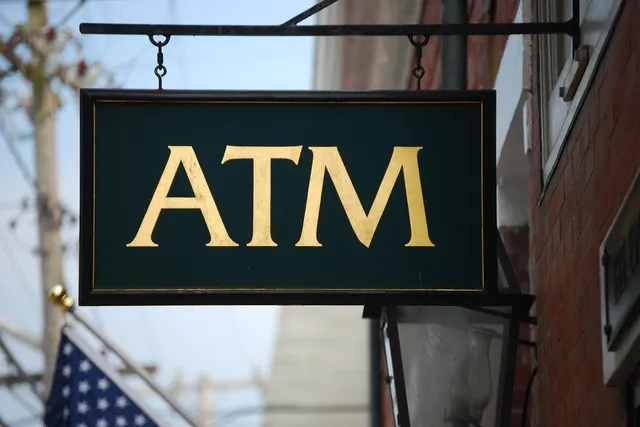
Photo: Pixabay
On this page 7 sections
- Why Dispensaries Can't Accept Credit Cards for Marijuana
- Debit Cards at Dispensaries: Why Credit and Debit Play Out Differently
- Payment Options Dispensaries Can Use Today
- Gray-Area Workarounds and the Risks Behind Them
- What Happens When a Processor Discovers Miscoded Sales
- Hemp and Accessory Sales: Where Cannabis Card Payments Can Work
- Building a Low-Cash Checkout That Stays Compliant
Key takeaways
- Marijuana purchases can't run on Visa or Mastercard because the sales remain illegal under federal law. A state license doesn't change that.
- "Cashless ATM" debit at the register is a gray area that can be shut off with little warning. Keep cash and pay-by-bank ready as backups.
- Coding marijuana sales as another kind of business risks held funds and a listing in the terminated-merchant database that processors check.
- Hemp and accessory lines can take cards only through an account that was underwritten for them, with every connection to marijuana sales disclosed.
Can dispensaries accept credit cards? Not for marijuana. Visa and Mastercard don't allow their cards to be used for cannabis purchases, because marijuana is still illegal under federal law even in states that license and tax it. So most dispensaries run on cash plus options that sit outside the card networks. The decisions that matter come after that. Some alternatives are fully compliant, some end with a closed account, and a surprising number sit somewhere in between.
This is general information, not legal advice. Cannabis law varies by state and is shifting at the federal level. Confirm your setup with a cannabis attorney before you change how you take payments.
Why Dispensaries Can't Accept Credit Cards for Marijuana
Two separate layers get confused here, and a third one sits on top of them.
The first layer is law. Marijuana is still a controlled substance under federal law, and state legalization doesn't override that. The banks that issue cards and sign up merchants are federally chartered or federally supervised. They follow federal anti-money-laundering rules no matter what your state permits.
The second layer is network rules. Visa and Mastercard set the rules for every transaction that runs on their networks, and both bar transactions that are illegal. Because marijuana sales remain federally illegal, both networks have treated them as off-limits, and neither has offered a route for them. Both networks publish their rulebooks, and your attorney can review the current language.
The third layer is processor policy. Some processors decline businesses that the networks would allow, such as glass shops or grow-supply stores. That's one company's risk appetite, not a network rule. It's why one ancillary business gets approved while a near-identical one down the street gets declined.
Federal rescheduling wouldn't flip a switch either. Moving marijuana to a less restrictive schedule would change some tax and research questions. On its own, though, it wouldn't authorize recreational retail sales under federal law, and the networks haven't said they'd rewrite their rules. Our look at what rescheduling would change for dispensary payments covers what to watch.
Debit Cards at Dispensaries: Why Credit and Debit Play Out Differently
Credit is the clearer case. The issuing bank would be lending money for a federally illegal purchase, and no legitimate processor will route that sale.
Debit is where most of the confusion starts. A Visa- or Mastercard-branded debit card run as a signature transaction follows the same network rules as credit, so it's out. PIN debit can also travel over separate PIN and ATM networks, each with its own rulebook. That gap produced the "cashless ATM" setup many shoppers have seen. The customer enters a PIN at a terminal on the counter, and the system processes the payment as an ATM withdrawal instead of a purchase.
Follow one sale through a typical setup to see the problem. The order total includes cents, but the terminal can only run whole-dollar withdrawals, so it rounds up to the next amount it can process. The operator adds a per-transaction fee on top. The customer's bank statement then shows an ATM withdrawal larger than the purchase, and the customer gets the difference back as change from your till.
From the bank's side, a customer took out cash. In reality no cash came out of any machine, so the transaction record describes something that didn't happen. That mismatch is why networks and processors have pushed back on these setups and why terminals have gone dark with little warning. Customers can also be charged an out-of-network ATM fee by their own bank. Those surprise charges turn into complaints and disputes.
Payment Options Dispensaries Can Use Today
Every compliant option avoids the same thing: a card transaction that misstates what was bought.
Cash is the baseline. It's legal and fully compliant. It also costs real money once you add up counting time and armored pickup. Our guide to dispensary cash management with safes and armored pickup breaks down that cost side.
A real on-site ATM that dispenses actual bills is the honest version of "we take debit." The customer withdraws cash and then pays you with it. Machine placement and restocking come with their own rules, covered in putting an ATM in your dispensary.
Pay-by-bank apps move money by ACH from the customer's bank account to yours. ACH runs on its own rules, not the card networks'. These apps depend on bank partners that have chosen to serve cannabis businesses, and those partners can leave. Our comparison of CanPay, Aeropay and Hypur for dispensaries shows how fees and settlement timing differ between providers.
Here is how the common options sort out:
| Payment method | Category | Main risk |
|---|---|---|
| Cash | Compliant | Handling cost and theft exposure |
| On-site ATM dispensing real cash | Compliant | Customer fees and restocking |
| Pay-by-bank (ACH) apps | Outside card network rules | Bank partners that can exit |
| Cards for hemp or accessories through a disclosed, separately underwritten account | Compliant if approved | Changing hemp law and commingled sales |
| Cashless ATM or PIN debit at the register | Gray area | Sudden terminal shutdowns |
| Stored-value balances funded by a card | Gray area | The card charge may misdescribe the purchase |
| Crypto payment apps | Gray area | State licensing questions and provider terms |
| Coding marijuana sales as other retail | Likely termination | Held funds and a terminated-merchant listing |
| Running sales through another business's account | Likely termination | Treated as transaction laundering |
| Payment apps whose terms bar marijuana | Likely termination | Balance holds and account closure |
Gray-Area Workarounds and the Risks Behind Them
"Gray area" here means a product that vendors sell openly and that may be legal in a narrow sense, but that rests on a description of the transaction the networks may reject. The cashless ATM is the main example. A dispensary using one isn't committing fraud by default, but the service can vanish overnight. When that happens, a store that trained its customers to pay by debit has to retrain them on cash over a single weekend.
Stored-value programs work differently. A customer loads a balance and spends it at your counter. If the balance is funded by bank transfer, the card networks never touch it. If it's funded with a card on a third-party site, that card charge may describe a "wallet load" that is really a marijuana purchase, which puts it back in network territory.
Crypto apps skip the card networks entirely. Price swings are the obvious drawback. State money transmitter licensing is a quieter one, and many crypto providers exclude cannabis in their own terms anyway.
If you use any gray-area product, assume it will stop working someday. Keep cash and pay-by-bank running alongside it so an outage costs you a bad day rather than a bad quarter.
What Happens When a Processor Discovers Miscoded Sales
Every merchant account carries a merchant category code (MCC) that tells the networks what kind of business is submitting the transaction. Coding marijuana sales as tobacco or general merchandise misrepresents the business. Pushing them through a friend's account or a separate storefront does too, and networks treat that practice as transaction laundering.
It gets found. Processors and networks monitor merchant websites and online listings, and customer disputes often point straight at the problem. Once it surfaces, the usual sequence looks like this:
- The account is closed, often with little notice.
- Your funds are held, sometimes for months, to cover future chargebacks.
- Any penalties the acquiring bank faces can be passed through to you under your processing agreement.
- Your business and its owners can be added to the shared database of terminated merchants that processors check during underwriting. A listing can make it hard to open a merchant account for years, even for a later business that is completely legal.
The fallout can reach your bank account too. Banks that serve cannabis businesses have federal reporting obligations tied to those customers. Our explainer on what your bank reports about your dispensary shows why a processor termination can prompt questions about your deposit account. If your bank has already closed it, start with the steps to take after a dispensary bank account closure.
Hemp and Accessory Sales: Where Cannabis Card Payments Can Work
Card acceptance is realistic for businesses that don't sell marijuana. Glass shops, apparel brands, grow-supply stores and software vendors can usually get merchant accounts, though many processors treat them as high risk. Hemp-derived CBD has also been processable through high-risk providers that review lab reports and labeling.
Hemp rules have been changing at both the federal and state levels, especially for intoxicating hemp-derived THC products. Confirm current law for every product you carry before you apply, and check again before renewal. Approval is never automatic. Underwriters look at ownership, product mix, your website and your processing history.
Accessory sales inside a licensed dispensary are the hardest case. Expect underwriters to ask what else is sold on the premises and how the registers and ownership are separated. Disclose all of it. A separate account that hides its connection to marijuana sales is the transaction laundering problem described above.
Ancillary operators can start with our guide to getting a bank and merchant account for an ancillary cannabis business. Hemp sellers should read CBD merchant account approval for hemp products. MannyPay offers high-risk merchant accounts and works with cannabis-related businesses, subject to underwriting.
Building a Low-Cash Checkout That Stays Compliant
You can't make a dispensary cashless, but you can make cash less painful. These changes work together:
- Whole-dollar, tax-inclusive pricing. When every total lands on a round number, you handle fewer coins, give change faster, and ATM withdrawals match order totals. Our guide to tax-inclusive pricing and whole-dollar totals covers the state display rules that can limit how you show it.
- An ATM placed before the line. Customers who withdraw before they order don't stall the register.
- Pay-by-bank for prepaid online orders. Each prepaid order is one fewer transaction that touches the till. How much cash that removes depends on how many customers adopt it. Our piece on prepaying versus paying at pickup for online orders helps you choose a default.
- A written plan for outages. Decide in advance who covers the counter and how much change to keep on hand if a non-cash option goes down.
None of this depends on a card network looking the other way, which is why it holds up.
Your next step is to pull your processing agreement and a recent statement and check two things: the merchant category code and the descriptor customers see on their statements. If either one describes your business as something other than what you sell, talk to your attorney and your processor now. Catching it yourself costs far less than having a network catch it. If you also run hemp or accessory lines, request a free quote. A MannyPay specialist will respond within one business day to review what can be properly underwritten.
This article is for general educational purposes and is not legal, tax or financial advice. Card network rules and state laws change; confirm current requirements for your business.