Engagement Ring Financing: Setting up a Program for Your Store
Set up a jewelry store financing program that closes more engagement ring sales. Compare private-label credit, lease-to-own, BNPL and merchant fees.

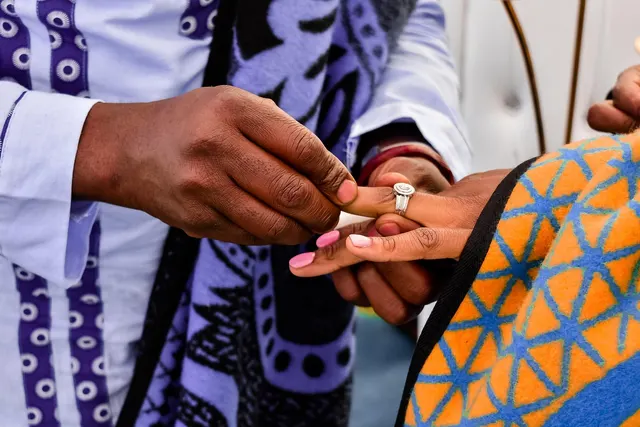
Photo: Pixabay
On this page 8 sections
- Why Financing Closes More Engagement Ring Sales
- Private-Label Jewelry Credit Cards vs. Installment Lenders
- Second-Look Lenders and Lease-to-Own Jewelry for Thin-Credit Buyers
- BNPL for Jewelry Stores: Does It Work on Big-Ticket Rings?
- Merchant Discount Fees and Promotional APR Costs
- How to Build a Jewelry Store Financing Program Step by Step
- Presenting Financing at the Counter and Online
- Next Steps
Key takeaways
- Most jewelers get the broadest coverage by stacking options in a "waterfall": a prime lender first, then a second-look lender, then lease-to-own.
- Longer promotional APR terms usually cost the merchant more in discount fees, so compare net proceeds per sale, not the headline offer.
- BNPL fits fashion jewelry and smaller bridal pieces, but approval limits often fall short on higher-priced engagement rings, so confirm each provider's current limits.
- Read lender contracts for recourse, funding timing, return handling and fraud liability before you sign.
Few customers walk into a jewelry store with the full price of an engagement ring in their checking account. A jewelry store financing program lets you sell the ring the customer wants today, not the one they can afford in cash. This guide covers the main types of financing available to jewelers: private-label credit, installment lenders, second-look lenders, lease-to-own and buy now, pay later (BNPL). It compares what each costs you, who each one approves, and which ticket sizes each handles well. It also covers how to present financing at the counter and online without creating compliance or customer-service problems.
Why Financing Closes More Engagement Ring Sales
Engagement rings are high-ticket, emotional and often time-sensitive purchases. A buyer may have a proposal date set, a budget in mind and a partner whose expectations sit a step above that budget. Financing closes that gap.
Here is what financing changes at the counter:
- The conversation moves from total price to monthly payment. A ring that feels out of reach as a lump sum can fit as a monthly amount.
- Customers trade up. A buyer who planned on a smaller center stone may move to a better cut or carat when the payment difference is modest.
- Fewer walk-outs. Without financing, a customer who can't pay in full often leaves to "think about it" and doesn't return.
- Less strain on your card processing. Large single-card swipes are a common trigger for processor reviews and holds. This explains why a processor may block a $25,000 engagement ring sale. Most financing is funded by the lender, not run as a card sale through your merchant account.
Financing also smooths seasonal swings. Demand for engagement rings tends to cluster around the holidays and Valentine's Day, and having approvals ready during those weeks matters more than at any other time of year.
Private-Label Jewelry Credit Cards vs. Installment Lenders
Prime financing for jewelers usually comes in two forms. Many jewelry financing companies offer one or both.
Private-Label Credit Cards
A private-label card carries your store's name and can be used only at your store (or your group of stores). The customer applies, receives a credit line and can use it again for anniversary bands, watch purchases or repairs.
Strengths for jewelers: - Repeat purchases on an existing line, which suits a long customer relationship that starts with an engagement ring and continues through wedding bands and anniversaries - Store branding in the customer's wallet - Promotional offers you can run during peak seasons
Trade-offs: - Approval usually requires solid credit - Promotional terms are often deferred interest. Interest builds in the background and is charged in full if the balance isn't paid off by the end of the promo. Customers who misunderstand this can become unhappy customers.
Closed-End Installment Loans
An installment lender finances one purchase with a fixed number of payments. The customer pays off the loan, and the account closes.
Strengths: Clear payment schedules. Many lenders offer simple-interest or true 0% promos, where no retroactive interest applies.
Trade-offs: No reusable credit line, so each future purchase requires a new application.
| Feature | Private-Label Card | Installment Loan |
|---|---|---|
| Reusable for future purchases | Yes | No |
| Store branding | Yes | Usually lender-branded |
| Common promo structure | Often deferred interest | Fixed payments; promo types vary |
| Best fit | Stores building repeat bridal clientele | Single big-ticket purchases |
Second-Look Lenders and Lease-to-Own Jewelry for Thin-Credit Buyers
Prime lenders decline a meaningful share of applicants, especially younger buyers with short credit histories. Many engagement ring shoppers fit that profile. Two categories fill the gap.
Second-Look Lenders
Second-look lenders review applicants a prime lender declined. They typically approve some, but not all, of those customers, often at higher customer APRs or shorter terms. Many jewelers set up a waterfall: the customer fills out one application, it goes to the prime lender first, and if declined it flows automatically to the second-look lender.
Lease-to-Own Jewelry
Lease-to-own (sometimes called rent-to-own or lease-purchase) works differently from credit:
- The leasing company buys the ring from you, and the customer leases it.
- The customer doesn't own the ring until they complete the payments or exercise an early purchase option.
- Approval usually leans on income and bank history rather than credit score, so it reaches buyers that lenders decline.
- The total cost to the customer can be far higher than your retail price, especially without an early buyout.
Lease-to-own is regulated differently from credit, and availability and disclosure rules vary by state. Some providers don't operate in certain states at all. Confirm with the provider and a qualified legal professional which states they serve and what your staff must disclose.
Train staff to explain plainly that lease-to-own is a lease, not a loan, and to show the total cost and buyout options. A customer who later feels misled is a customer who disputes, complains or never returns.
BNPL for Jewelry Stores: Does It Work on Big-Ticket Rings?
BNPL providers split a purchase into a short series of payments, often with no interest on the shortest plans. Some also offer longer monthly plans with interest. For jewelers, the question is ticket size.
Where BNPL fits well: - Fashion jewelry, gold chains, earrings and gifts - Wedding bands and lower-priced bridal pieces - Online checkout, where shoppers increasingly expect it
Where it often falls short: - Higher-priced engagement rings and fine watches. Spending limits for individual shoppers vary by provider and by customer, and they are often set conservatively for new users. A buyer may be approved for far less than the ring costs.
Provider limits, fees and plan lengths change frequently. Confirm current terms directly before you build BNPL into your bridal strategy. For a broader look at providers and costs, see our guide to buy now, pay later for merchants. Card networks and issuers are also expanding installment options on existing cards. Our explainer on Visa's installment interchange changes covers one recent development.
Merchant Discount Fees and Promotional APR Costs
Financing isn't free for you. Most lenders charge a merchant discount fee, a percentage withheld from the amount they fund. The fee usually depends on:
- Promo length and type. Longer 0% or deferred-interest promos generally cost the merchant more, because you're effectively paying the interest the customer doesn't.
- Customer credit tier. Second-look approvals often carry higher merchant fees than prime approvals.
- Your volume and negotiating position.
- Monthly or program fees, which some providers charge in addition to per-sale discounts.
Lease-to-own providers may charge you little or nothing per sale, or they may use other fee structures. Ask for the full schedule in writing.
An Illustrative Comparison
The figures below are hypothetical, for illustration only, not actual rates from any provider. They show how to compare net proceeds on an $8,000 ring.
| Option (Illustrative) | Hypothetical Merchant Fee | You Receive |
|---|---|---|
| Prime lender, short standard terms | 2% | $7,840 |
| Prime lender, long 0% promo | 9% | $7,280 |
| Second-look lender | 12% | $7,040 |
The lesson: the most generous customer promo isn't always the right default. Offer long promos selectively, such as for peak-season pushes or higher-margin pieces, and know your net on every option.
Can you pass financing costs to the customer the way some merchants handle card fees? Card surcharge rules and financing agreements are separate matters, and many lender contracts restrict pricing differences. Read whether jewelry stores can charge a credit card fee on diamonds for the card side, and check your lender agreement before changing financed-sale pricing.
How to Build a Jewelry Store Financing Program Step by Step
1. Map your ticket sizes. Pull a year of sales and group them: fashion jewelry, bands, mid-range bridal, high-end bridal and watches. Each tier may need a different option. 2. Pick a prime partner first. It serves your best-credit customers at the lowest cost to you. 3. Add a second-look lender and possibly lease-to-own, ideally connected in a single-application waterfall. 4. Decide whether BNPL belongs online, in-store or both, based on your lower-ticket mix. 5. Review contracts closely. Look for: - Funding timing and method - Recourse: whether you owe money back if a customer defaults or claims fraud - How returns, exchanges and cancellations are processed - Exclusivity, minimum volumes and termination terms - Marketing and disclosure requirements 6. Align your policies. Financed returns go back through the lender, not your card terminal. Update your engagement ring return policy for refunds, restocking and resizing to match. For custom work, decide whether a deposit is collected by card before financing funds the balance. Our guide to custom engagement ring deposit terms covers that workflow. 7. Connect financing to your POS records. Track financed sales as a tender type so reports reconcile. See our guide to the best POS for jewelry stores handling repairs, memo and serialized stock.
Credit advertising, deferred-interest disclosures and lease-to-own rules are governed by federal and state law. This is general information, not legal advice. Confirm your obligations with a qualified professional and use the lender's approved language.
Presenting Financing at the Counter and Online
At the Counter
- Introduce financing early, while the customer is setting a budget, not after they balk at the price.
- Offer it to everyone. Presenting financing selectively based on how a customer looks or sounds invites fair-lending problems and lost sales.
- Use tablets or QR codes so customers can apply privately. Many buyers would rather not discuss credit within earshot of their partner.
- Explain promo terms clearly, especially deferred interest and lease buyouts.
- Handle split tenders cleanly. If financing covers part of the price, the customer may pay the rest by card. Follow the steps in our guide to splitting an engagement ring across multiple cards.
Online
- Show financing on product pages, using only the payment-estimate messaging the lender approves.
- Watch for application fraud. Stolen identities target high-value items financed online. Verify shipping addresses, require signatures on delivery and review our guide to stopping stolen cards on diamonds and watches. Many of the same controls apply to financing.
- Know who carries the fraud risk. Your contract determines whether the lender or you absorbs losses on a fraudulent application.
Next Steps
A strong financing program usually layers several options: a prime lender for your best-credit buyers, a second-look or lease-to-own path for thin-credit shoppers, and BNPL for smaller pieces and online checkout. Compare net proceeds, not headline promos, and read every contract for recourse and return handling.
Financing covers part of each sale, but most jewelers still run deposits, balances, repairs and everyday purchases through card processing. MannyPay provides payment processing, POS systems and merchant accounts for jewelry and diamond businesses, and a specialist can review how your card processing fits alongside your financing partners. Request a free quote, and a MannyPay specialist will respond within one business day.
This article is for general educational purposes and is not legal, tax or financial advice. Card network rules and state laws change; confirm current requirements for your business.