Engagement Ring Return Policies: Refunds, Restocking, and Resizing
Write a jewelry store return policy for engagement rings that covers return windows, restocking fees and custom pieces, and holds up in a dispute.
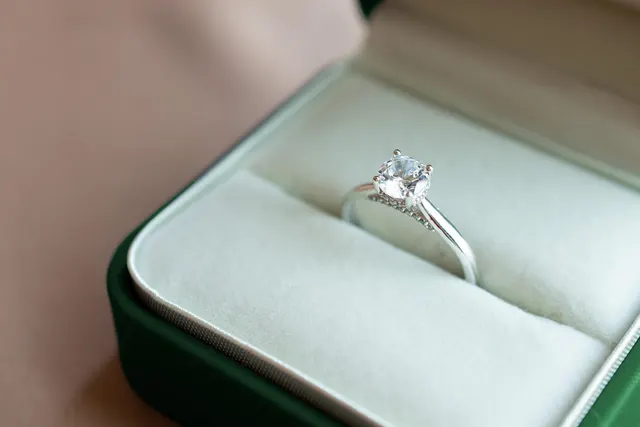
Photo: Pixabay
On this page 7 sections
- Why a Jewelry Store Return Policy Is Different for Engagement Rings
- Engagement Ring Return Policy Options: Windows, Exchanges, and Store Credit
- Jewelry Restocking Fees and State Disclosure Laws
- Sized, Engraved, and Custom Ring Orders: What's Non-Returnable
- Refund to the Original Card on Split or Financed Sales
- Displaying the Policy so It Holds up in a Dispute
- Next Steps for Your Store
Key takeaways
- Engagement ring returns carry grading-report, stone-verification and alteration risks that a generic retail return policy does not address.
- Restocking fees and limited-return terms are generally only enforceable if they are legal in your state and clearly disclosed before the customer pays.
- Sized, engraved and custom pieces need written, signed exceptions at each production milestone, not just a line on a sign.
- Refunds usually need to go back to the original card or tender, so split-tender and financed sales need a documented refund order.
A jewelry store return policy gets its hardest test when an engagement ends and the ring comes back. By then it may have been sized, engraved or set with a stone the couple chose together. This guide covers how to structure return windows, restocking fees and custom-order exceptions so they are legal where you operate, visible before the customer pays and enforceable when a refund has to go back to a card. It also covers split-tender and financed sales, and how to display the policy so it holds up if the buyer files a dispute.
This article is general information, not legal advice. Return and refund disclosure rules vary by state, and card network rules change. Confirm your policy with a qualified attorney and your payment processor.
Why a Jewelry Store Return Policy Is Different for Engagement Rings
Most retail returns are simple. A shirt comes back with tags attached, you inspect it and restock it. An engagement ring is different in several ways:
- The ticket is large. One return can wipe out a week of margin, and a refund on a big-ticket card sale gets more attention from your processor than a small one.
- The item may have changed. A ring that was sized down, engraved with initials or had its center stone reset is no longer the piece you sold.
- Identity matters. A diamond comes with a grading report, often a laser inscription and sometimes an appraisal. You need to confirm the stone coming back is the stone that left.
- Emotions run high. A buyer returning a ring after a breakup may push hard on deadlines and exceptions. Clear terms protect staff from making judgment calls at the counter.
- Disputes are expensive. If the customer is refused a refund and calls their card issuer, you will need documents, not memories. Our guide to winning engagement ring and diamond chargebacks covers the evidence side in detail.
A strong policy treats an engagement ring as a documented asset with a chain of custody, not as general merchandise.
Engagement Ring Return Policy Options: Windows, Exchanges, and Store Credit
You have more options than "full refund" or "all sales final." Most jewelers combine several and assign them by product type.
| Policy Option | How It Works | Best Fit | Watch Out For |
|---|---|---|---|
| Full refund window | Refund to original tender within a set number of days | Unaltered stock rings, loose stones with reports | Stone verification before releasing funds |
| Exchange-only | Customer trades for another item of equal or greater value | Fashion jewelry, bands, pieces past the refund window | Must be disclosed as clearly as a refund policy |
| Store credit | Credit issued for future purchases | Returns after the refund window | State gift card and unclaimed property rules |
| Upgrade or trade-in program | Credit toward a higher-value diamond later | Center stones, bridal sets | Define conditions, documents and value in writing |
| Final sale | No returns or exchanges | Custom, engraved or heavily altered pieces | Requires clear, conspicuous pre-sale disclosure |
A few practical points:
- Start the clock on a clear event. "Days from purchase" is easy to prove. "Days from pickup" is fairer for rings that were sized, but you need a pickup record with a signature or timestamp.
- Require everything back. That means the grading report, appraisal, box and any free items given at the time of sale. A missing report on a certified diamond can sharply reduce its resale value.
- Allow time for inspection. State that refunds are issued after a gemologist or trained staff member verifies the stone and condition. Then process the refund promptly once inspection passes. Unexplained delays invite disputes.
- Be careful with store credit. Expiration dates, fees on unused balances and unclaimed property reporting can be regulated at the state level. Check with your accountant or attorney before you put an expiration date on credit.
Jewelry Restocking Fees and State Disclosure Laws
A jewelry restocking fee offsets the cost of inspecting, cleaning, re-sizing and re-listing a returned piece. It is common in fine jewelry, but its enforceability depends on two things: whether your state allows it in your situation and whether you disclosed it properly.
What State Laws Typically Address
Several states have refund-policy disclosure statutes. They differ, but they commonly address:
- Whether a merchant must post its refund policy if it does not offer full cash refunds
- Where and how the policy must be displayed, such as at the register, on the item or at the store entrance
- What happens if the policy is not posted, which in some states can give customers a default right to return
- Whether restocking fees must be disclosed in advance, and sometimes how they are labeled
Because the details vary and can change, have counsel confirm the rules for every state where you have a storefront and every state you ship to if you sell online.
Setting a Defensible Fee
Whatever amount you choose, make it easy to defend:
- Tie it to real costs. Inspection, refinishing, re-rhodium plating, restoring original size and photography for re-listing are legitimate costs. Document them.
- Apply it consistently. Charging one customer and waiving it for another, without a written reason, weakens your position in a dispute.
- State it as a clear amount or method. "A restocking fee of [X]% of the item price applies to returns of unaltered rings" is clearer than "fees may apply."
- Disclose it before payment. A fee first revealed at the time of return is the kind that gets reversed by issuers.
If you pass card costs to customers through a surcharge or dual pricing program, remember that these programs come with their own rules. See whether jewelry stores can charge a credit card fee on diamonds before layering fees on a large ring sale.
Sized, Engraved, and Custom Ring Orders: What's Non-Returnable
This is where most ring disputes start. A customer argues "I never agreed to that," and the merchant has only a sign on the wall.
Sizing
Sizing a ring up or down slightly is routine, but significant changes can affect the band's structure. Some styles, such as eternity bands and channel-set rings, cannot easily be resized at all. Options include:
- Allowing returns on sized rings, minus a disclosed fee to restore the original size
- Allowing one free resize, then treating further sizing as final
- Marking certain styles as non-returnable once sized
Engraving
Engraving usually cannot be fully removed without refinishing and some metal loss. Many jewelers make engraved pieces final sale, or returnable only before engraving is completed. Get the engraving text approved in writing, with the customer's signature or a recorded online confirmation.
Custom and Made-to-Order Pieces
A custom ring is non-refundable only if the customer clearly agreed to that before you started work. Structure custom orders around milestones:
- Design deposit. Covers sketching or CAD work. State whether it is refundable and whether it applies to the final price.
- Design approval. The customer signs off on the CAD render, metal, size and stone specifications.
- Casting and setting. Once metal is cast and a stone is set, the piece is final sale.
- Pickup. The customer inspects and signs for the finished ring.
Collect a signature at each milestone and store it with the order. A POS that tracks special orders and serialized stones makes this much easier. Our guide to the best POS for jewelry stores with repairs, memo and serialized stock explains what to look for.
Illustrative policy language: "Custom and engraved items are final sale once the customer approves the final design or engraving text. Design deposits of [amount] are non-refundable and will be applied to the final purchase price."
Refund to the Original Card on Split or Financed Sales
A refund to the original card is generally what card network rules expect when the purchase was made by card. Issuing cash for a card purchase can create problems, including the risk of the customer later disputing the original charge too. Confirm the specific rules with your processor.
Engagement rings complicate this because they are often paid several ways.
Split-Tender Sales
A ring might be paid with a deposit on one card, the balance on another and some cash. Decide in advance, and state in your policy, how refunds are allocated. Common approaches:
- Proportional: Each tender gets back its share of the refund.
- Reverse order: Refund card tenders first, then cash or check.
- Tender-matched: Each payment is refunded to the method used, up to the amount paid with it.
Whichever you choose, apply it consistently and note it on the receipt. For sale-side best practices, read how to split an engagement ring across multiple cards the right way.
Third-Party Financing
When a customer finances through a consumer lender, the refund generally flows through that lender's portal or process rather than your card terminal. The lender then credits the customer's account. Your agreement with the lender controls the details, including any fees the lender keeps. Train staff not to issue a card refund or cash for a financed balance.
Fees, Surcharges and Partial Refunds
- If you added a surcharge or used dual pricing, check with your processor on how to treat that amount in a refund. Generally, the fee is refunded in proportion to the purchase.
- A restocking fee is usually handled by refunding the net amount, not by running a separate charge.
- Original processing fees are often not returned to the merchant on a refund. Ask your processor how your statement treats refunds.
Displaying the Policy so It Holds up in a Dispute
A policy only protects you if the customer saw it and agreed to it before paying. Card issuers look for clear, prior disclosure when you argue that a return was outside your terms.
In-Store
- Post the policy at the register where customers pay, not just on a website.
- Print the key terms on the receipt, near the signature or total line.
- For bridal and custom sales, include the policy in a sales agreement and get the customer's initials next to the final-sale and restocking-fee terms.
- Note on the receipt any item-specific status, such as "Final sale: engraved" or "Custom order: non-refundable after design approval."
Online
- Show the return policy on the product page and again at checkout.
- Use an unchecked checkbox that the customer must tick to accept the policy before payment, and log that acceptance.
- Repeat the terms in the order confirmation email.
- For high-value online orders, authentication tools like 3-D Secure for card-not-present sales add another layer of protection against fraud-based disputes. See MannyPay's online payment processing options for e-commerce setups.
Your Documentation Checklist
Keep these with every engagement ring sale:
- Signed receipt or sales agreement showing return terms
- Grading report number and any laser inscription
- Photos of the ring at sale or pickup
- Sizing, engraving and custom-milestone approvals
- Delivery confirmation with signature for shipped rings
- Return inspection notes and stone verification
Next Steps for Your Store
Start by listing every product type you sell, from stock bridal sets and loose diamonds to custom designs and fashion pieces, and assign each one a return rule. Then confirm your restocking fees and disclosures with an attorney in each state where you sell, and ask your processor how split-tender, financed and surcharged refunds should run.
If you are reviewing your setup, MannyPay provides payment processing for jewelry and diamond businesses, including in-store POS, online gateways and card terminals. Request a free quote and a MannyPay specialist will respond within one business day.
This article is for general educational purposes and is not legal, tax or financial advice. Card network rules and state laws change; confirm current requirements for your business.