NYC Clothing Sales Tax Under $110: How to Set up Your POS
The NYC clothing sales tax exemption under $110 applies per item. See what qualifies, how coupons change it, and how to set up your POS to charge it right.
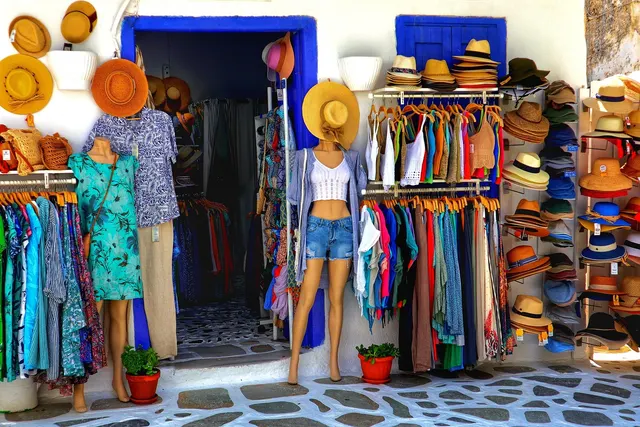
Photo: Pixabay
On this page 7 sections
- The NYC Clothing Tax Exemption Under $110 Runs Line by Line
- What Counts as Clothing Under the NYC Exemption
- Coupons, Markdowns and Sets Change the Price Being Tested
- Surcharges and Dual Pricing Near $110 Are an Open Question
- Online Orders Shipped Outside the Five Boroughs
- Building the Tax Rules in Your POS and Shopify
- Report the Exempt Sales and Reverse Them Exactly
Key takeaways
- On an illustrative $347 NYC receipt, the correct tax is $15.53. A register that tests the receipt total instead of each line collects $30.80.
- A store coupon you absorb can bring an item under $110. A manufacturer's coupon can't.
- Until DTF says whether a card surcharge counts toward the $110 test, keep card and cash prices on the same side of the line.
- Clothing under $110 shipped to Nassau County still owes county and MCTD tax, so online checkout needs destination-based rates.
In New York City, clothing and footwear that sell for less than $110 per item or pair are exempt from all sales tax: the 4% state tax, the 4.5% city tax and the ⅜% Metropolitan Commuter Transportation District (MCTD) tax. At $110.00 or more, the full 8.875% applies to the whole price. The NYC clothing sales tax exemption under $110 is tested one item at a time. That means your POS has to judge every line on the receipt, and it has to know which discounts lower the price being tested.
The rule is short. The mistakes happen at the edges: a markdown that crosses the line, a manufacturer's coupon, a gift set sold under one SKU, an order shipped to Nassau County.
This is general information, not tax advice. Local exemption choices can change each March 1. Confirm current rules with the New York State Department of Taxation and Finance (DTF) or a qualified tax professional.
The NYC Clothing Tax Exemption Under $110 Runs Line by Line
The state's Publication 718-C (February 2025 edition, effective March 1, 2025) sets out the rule. Clothing, footwear and items used to make or repair exempt clothing that sell for less than $110 per item or pair are exempt from the 4% state tax. They're also exempt from local tax where the locality provides the exemption, and from the ⅜% MCTD tax in those localities. The MCTD covers New York City plus Dutchess, Nassau, Orange, Putnam, Rockland, Suffolk and Westchester counties. New York City provides the full exemption, and NYC311 confirms that items at $110 or more pay the full 8.875%.
The test ignores the receipt total. In the example from Tax Bulletin ST-122, a shopper buys two shirts, two pairs of pants and a dress for $190. Every item is under $110, so the whole purchase is exempt. The line is also exact. A pair of boots at $109.99 is exempt. At $110.00 there is no partial exemption: tax applies to the full $110, not just the amount over the threshold. Shoes and other footwear are tested by the pair.
| Item (illustrative) | Price Charged | NYC Tax |
|---|---|---|
| Cotton dress | $95.00 | $0.00 (exempt) |
| Leather sneakers | $109.99 | $0.00 (exempt) |
| Dress shirt | $110.00 | $9.76 (8.875% of $110) |
| Wool jacket | $120.00 | $10.65 (8.875% of $120) |
What Counts as Clothing Under the NYC Exemption
The exemption covers clothing and footwear worn by people. It also covers most fabric, thread, yarn, buttons, snaps, hooks and zippers that become part of exempt clothing or are used to make or repair it. That matters for alterations shops and stores that sell notions.
Some goods never qualify, whatever the price. Pub. 718-C lists costumes, rented formal wear, athletic equipment and protective devices such as motorcycle helmets. It also excludes items made from pearls, precious or semi-precious stones, jewels or metals (or imitations) that are used to make or repair clothing. TB-ST-122 draws the sports line clearly: athletic uniforms are exempt, but mitts, helmets and pads are equipment. Climbing, riding and ski boots, waders, and ballet, bowling, cleated and golf shoes are all exempt.
Two rules from the state's 2006 technical memorandum, TSB-M-06(6)S, catch specialty sellers. Antique clothing is exempt when it's bought to wear rather than as a collector's item, so a vintage shop's racks generally qualify. Doll and pet clothing is taxable at any price. The $28 dog sweater by the register gets taxed even though the $28 scarf next to it doesn't.
Accessories are the usual gray zone. Bags, hair accessories and jewelry sit on the same floor as apparel, but sharing a display doesn't make them clothing. Before you assign a tax category, look up each accessory type in the state's charts of exempt and taxable items, Tax Bulletin ST-530. The charts are examples, not a complete list, so ask your tax advisor about anything they don't name.
Coupons, Markdowns and Sets Change the Price Being Tested
The $110 test applies to the price an item actually sells for. A $130 coat marked down to $99 sells for $99 and is exempt. Coupons are where sellers go wrong, because the state treats two kinds differently.
Store Coupons Count; Manufacturer Coupons Don't
Under TSB-M-06(6)S, a manufacturer's coupon does not reduce the selling price for the $110 test. A store coupon that you absorb, with no reimbursement from anyone, does reduce it. So a $120 jacket with a $15 store coupon sells for $105 and is exempt. The same jacket with a $15 manufacturer's coupon is still tested at $120 and is taxable.
Your POS has to reflect that. Apply store discounts at the line level before tax. An order-level discount taken after tax won't move any single item under $110 in the system. Give manufacturer coupons their own discount type so they don't trigger the exemption.
One Price for a Gift Set Taxes the Whole Set
The same memo says that when exempt clothing is sold with taxable merchandise as a single unit, the full price is taxable. Say you sell a $60 robe and a $30 candle together as a $90 "spa night" box at one price. The robe loses its exemption. Ring them as separate lines and only the candle is taxed. Sets made only of clothing are less clear-cut, and the safest setup is the same. Build "complete the look" bundles as linked SKUs, each with its own price, so each article gets its own $110 test.
Worked Example: One Receipt, Rung Two Ways
Assumptions (illustrative): a Manhattan boutique, a customer buying four items, and NYC's 8.875% combined rate on taxable lines.
| Line | Price | Correct Tax |
|---|---|---|
| T-shirt | $68.00 | $0.00 |
| Jeans | $104.00 | $0.00 |
| Jacket | $135.00 | $11.98 |
| Candle | $40.00 | $3.55 |
| Total | $347.00 | $15.53 |
A register that tests the receipt instead of each line sees $347, taxes everything, and collects $30.80. That's $15.27 too much on one sale. Tax you collect generally has to be sent to the state or refunded, so overcollecting causes trouble with both the customer and your filing.
Surcharges and Dual Pricing Near $110 Are an Open Question
Since February 11, 2024, New York's General Business Law §518 has allowed credit card surcharges, as long as they pass along only the actual cost of processing and are posted transparently. The Department of State's surcharge guide requires businesses to display the highest total price, excluding sales tax. On the tax side, DTF has treated a convenience fee on a taxable sale as part of the taxable price (advisory opinion TSB-A-18(1)S). A Citrin Cooperman analysis notes that a cash discount reduces the taxable receipt.
What we didn't find is DTF guidance on whether a surcharge counts toward the $110 test. Take a $107 shirt (illustrative) with a 3% card surcharge: the card customer pays $110.21 before tax. Under a dual pricing setup, a $112 card price with a 3% cash discount gives the cash customer $108.64. Either way, the same shirt lands on different sides of the line depending on how the customer pays.
The practical decision is to keep both prices on the same side of $110. Price the item so the card price is $109.99 or less, or so the cash price is $110 or more. If you want to price inside that band anyway, get written advice from your tax professional first. Our guide to the New York credit card surcharge law covers the posting rules. MannyPay offers dual pricing programs and credit card surcharging where permitted.
Online Orders Shipped Outside the Five Boroughs
New York taxes a shipped order where the customer takes delivery, not where your stockroom is. The 4% state exemption applies everywhere in the state, but local tax drops off only where the county or city has chosen the exemption. Xero's worked example shows the gap. An $80 shirt delivered in New York City pays no tax. In Nassau County, the same shirt carries the 4.25% county rate plus the MCTD tax, $3.70 in all. Part 2 of Pub. 718-C lists every jurisdiction that charges local tax on clothing under $110, and TB-ST-122 notes that a locality's choice can only change on March 1.
Shipping charges are taxed the same way as the goods. Publication 750 says delivery charges on taxable products are taxable. According to Commenda's summary, the state's shipping bulletin (TB-ST-838) treats delivery of nontaxable products as nontaxable. For mixed carts, split the delivery fee between exempt and taxable items using that bulletin's method.
Building the Tax Rules in Your POS and Shopify
Many in-store systems assign tax by category, not by price, so a rule based on price needs careful setup. A walk-in NYC boutique typically needs two categories. The first is 0% for eligible clothing and footwear under $110. The second is 8.875% and covers clothing at $110 and up, accessories, costumes, pet clothing and everything else taxable. Price changes are the weak point. When a $120 jacket goes on sale at $99, its category has to change with it, so re-check categories every time you run a markdown. A boutique POS with size, color and style matrix inventory makes those bulk updates by style much faster. MannyPay supports Clover POS integration and other retail POS systems.
Online, there are more pieces to set up:
- Categorize every product so the platform can separate apparel and footwear from accessories and equipment.
- Use destination-based New York rates, not one flat NYC rate.
- Test checkout with a $109.99 item, a $110.00 item, a markdown that crosses the line, and a cart shipping to Nassau County.
- Review any manual tax overrides on collections. Shopify's tax tools change, so confirm current settings in its help documentation.
MannyPay supports Shopify payment integration for online stores.
Report the Exempt Sales and Reverse Them Exactly
Exempt sales still have to be reported. If you file the quarterly Form ST-100 and sold eligible clothing or footwear under $110, you also file Form ST-100.7, Quarterly Schedule H, which reports those sales by jurisdiction. Follow its instructions on which amounts stay off the ST-100 jurisdiction lines. If you file a different return, ask your preparer which schedule applies.
Returns need the same precision. Your refund process should reverse the exact tax collected on each original line, and nothing more. If a customer returns the $135 jacket from the example above, refund $11.98 in tax, not a share of the receipt's total tax. The card fees on that sale are a separate question, covered in whether processing fees come back on a refund.
This week, ring five test transactions on your register: a $109.99 item, a $110.00 item, a $120 item with a $15 store coupon, the same item with a manufacturer's coupon, and a clothing-plus-candle gift set. Fix any that come out wrong before your next markdown. If you're replacing hardware or checkout along the way, MannyPay works with apparel retailers on in-store and online payments. Request a free quote and a MannyPay specialist will respond within one business day.
Sources
- Publication 718-C (2/25), Sales and Use Tax Rates on Clothing and Footwear
- TB-ST-122, Clothing and Footwear Exemption (copy hosted by Monroe County)
- TB-ST-530 (3/14), Lists of Exempt and Taxable Clothing, Footwear, and Items Used to Make or Repair Exempt Clothing (copy hosted by Monroe County)
- TSB-M-06(6)S, Year-Round Sales and Use Tax Exemption of Clothing, Footwear, and Items Used to Make or Repair Exempt Clothing
- NYC311, Sales Tax
- Publication 750, A Guide to Sales Tax in New York State
- NYS DTF, Quarterly Filer Forms (Form ST-100 Series)
- Form ST-100.7, Quarterly Schedule H, Report of Clothing and Footwear Sales Eligible for Exemption
- NYS Department of State, Credit Card Surcharge One-Page Reference Guide
- Avalara, New York: Credit Card Convenience Fees May Be Taxable (TSB-A-18(1)S)
- Citrin Cooperman, Cash Discount or Credit Card Surcharge? Considerations for New York Restaurants
- Xero, How to Calculate New York Sales Tax
- Commenda, Sales Tax on Shipping (summary of TB-ST-838)
This article is for general educational purposes and is not legal, tax or financial advice. Card network rules and state laws change; confirm current requirements for your business.