DEA Scheduling of 7-OH: What It Means for Your Card Processing
7-OH DEA scheduling explained for merchants: each stage from FDA recommendation to final rule, how processors react, and how to protect your funds.

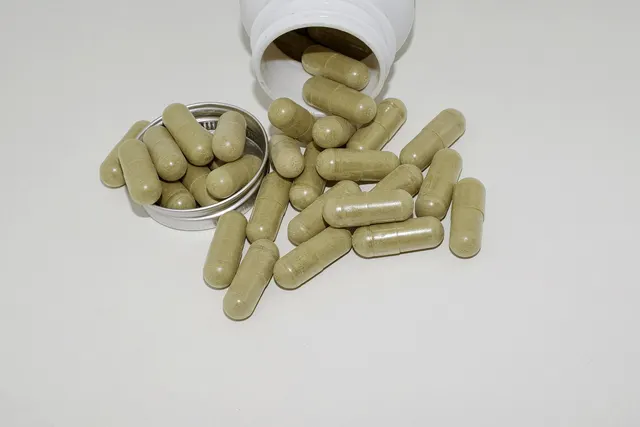
Photo: Pixabay
On this page 7 sections
- Is 7-OH Being Banned Federally? FDA Recommendation vs. DEA Action
- How 7-OH DEA Scheduling Works, Step by Step
- The 7-OH Scheduling Timeline: How Processors React at Each Stage
- What Happens to Open Orders, Reserves, and Payouts If 7-OH Becomes a Controlled Substance
- Separating Kratom Leaf Revenue From 7-OH Revenue Now
- A Contingency Checklist for 7-OH Retailers and Brands
- Next Steps
Key takeaways
- An FDA scheduling recommendation is not a ban. Selling 7-OH generally remains federally legal until DEA publishes a final or temporary rule and that rule takes effect.
- Processors and sponsor banks often tighten terms long before a final rule. Expect product reviews, higher reserves or slower funding as the process moves forward.
- Separating kratom leaf SKUs from 7-OH SKUs now, with full disclosure to your processor, gives you a cleaner path to keep processing if 7-OH is controlled.
- Plan for open orders, subscriptions, refunds and held reserves before any effective date so you aren't improvising after it.
If you sell 7-OH (7-hydroxymitragynine) products, 7-OH DEA scheduling is one of the biggest risks to your merchant account. A federal scheduling decision would change what you can legally sell. It can also change how your processor, acquirer and sponsor bank treat your account well before any decision is final. This guide explains each stage between an FDA scheduling recommendation and a final DEA rule, how payment providers typically respond at each stage, and what you can do now to protect your revenue and held funds.
This article is general information, not legal advice. Scheduling status can change quickly. Check the current status directly with FDA, DEA and the Federal Register, and confirm your obligations with a qualified attorney.
Is 7-OH Being Banned Federally? FDA Recommendation vs. DEA Action
Many merchants hear about an FDA 7-OH scheduling recommendation and conclude that 7-OH is now illegal. A recommendation does not have that effect. If FDA recommends that 7-OH be placed under the Controlled Substances Act, the recommendation starts a federal process. It does not end your ability to sell.
The two agencies have different roles:
- FDA (on behalf of HHS) evaluates the scientific and medical evidence and sends a scheduling recommendation to DEA.
- DEA decides whether to control the substance, which schedule to place it in and when. It acts through formal rulemaking or a temporary scheduling order.
Until DEA publishes a rule and that rule takes effect, 7-OH is generally not a federally controlled substance. Check the current status at its source rather than relying on industry newsletters or social media posts.
Federal status is only one layer. State and local laws are separate, and some jurisdictions restrict these products on their own. Our guide to blocking 7-OH sales to restricted states at checkout covers that layer.
The scope of any final rule matters as much as the decision to schedule. Plain kratom leaf naturally contains small amounts of 7-OH. Concentrated or semi-synthetic 7-OH products are a different category. The rule text, not headlines or summaries, determines whether a rule covers only concentrated 7-OH products or something broader.
How 7-OH DEA Scheduling Works, Step by Step
Federal scheduling follows a defined process. The time each stage takes varies widely. Here is the general path.
The Standard Rulemaking Path
- Initiation. DEA, HHS or an outside petitioner starts the process.
- Scientific and medical evaluation. FDA reviews the substance's abuse potential, pharmacology, public health risk and related factors, then sends HHS's recommendation to DEA. On scientific and medical matters, HHS's recommendation is binding on DEA. If HHS recommends against control, DEA cannot schedule the substance.
- DEA review. DEA considers the recommendation alongside its own data on trafficking, diversion and enforcement.
- Notice of proposed rulemaking (NPRM). DEA publishes a proposed rule in the Federal Register. The NPRM names the substance, the proposed schedule and the scope.
- Public comment and possible hearings. Businesses, consumers and advocacy groups can submit comments. Interested parties may request an administrative hearing, which can add significant time.
- Final rule. DEA publishes a final rule with an effective date. From that date, manufacturing, distributing or selling the substance without DEA registration and controls is a federal violation.
- Legal challenges. Affected parties may challenge the rule in court. Filing a challenge does not automatically pause the rule.
The Temporary Scheduling Path
DEA can also use temporary (emergency) scheduling when it finds an imminent hazard to public safety. It publishes a notice of intent and then a temporary order. The order takes effect without the full comment-and-hearing process and lasts a limited period while permanent rulemaking continues.
This path matters to merchants because it shortens the warning period. The gap between a notice of intent and an effective date can be weeks rather than months or years.
The 7-OH Scheduling Timeline: How Processors React at Each Stage
Acquirers and sponsor banks don't wait for a final rule. They manage legal, reputational and card network risk across their whole portfolio, and they act when that risk rises. The table below shows common reactions. Individual providers vary, and none of this predicts what will happen to your account.
| Stage | Legal Status of 7-OH Sales | Common Processor and Acquirer Reactions | What You Should Do |
|---|---|---|---|
| FDA recommendation sent to DEA | Generally federally legal; state laws vary | Portfolio review, product list requests, new 7-OH applications declined or paused | Document every SKU, update COAs, separate 7-OH from kratom leaf |
| DEA notice of intent or NPRM | Generally still federally legal | Higher reserves, delayed funding, required SKU removal, some account closures | Build a cash cushion, stop open-ended preorders, review your contract |
| Comment period or hearings | Generally still federally legal | Continued tightening and less appetite for 7-OH merchants | Prepare a wind-down plan for 7-OH product lines |
| Final or temporary rule published | Illegal for non-registrants from the effective date | Required removal of 7-OH products, closure of non-compliant accounts, reserves held through the chargeback window | Stop sales before the effective date, process refunds, follow legal advice on inventory |
Why Processors Move Early
Several pressures push payment providers to act before DEA does:
- Sponsor bank risk appetite. The bank behind the acquirer sets the limits. For many bank risk teams, a federal scheduling recommendation is a clear signal to reduce exposure.
- Card network rules. Visa, Mastercard, American Express and Discover prohibit processing illegal transactions. The networks also monitor merchants in sensitive categories and can hold the acquirer responsible when problems surface.
- Chargeback exposure. If a product becomes unsellable, merchants may be unable to fulfill orders. Refund disputes and chargebacks then rise, and the acquirer is liable for any amount the merchant can't cover.
- Termination consequences. In certain circumstances, an account closed for cause can lead to a MATCH listing, which makes it much harder to find a new processor.
Expect your processor to ask for more information over time. Answer accurately and promptly. The merchants who have the most trouble tend to be those who stop responding or whose actual sales don't match what they disclosed.
What Happens to Open Orders, Reserves, and Payouts If 7-OH Becomes a Controlled Substance
Once a rule takes effect, payment questions arrive quickly. Plan for them now.
Open Orders and Preorders
Orders authorized before the effective date but not shipped by that date generally cannot be fulfilled, so you will need to refund them. If you take preorders or allow backorders on 7-OH SKUs, limit them as rulemaking advances. Every unfulfilled order becomes a refund obligation, and slow refunds turn into chargebacks.
Subscriptions and Autoship
Cancel recurring 7-OH shipments before the effective date and notify customers in writing. Charging customers for a product you can't legally ship is a fast route to disputes and possible account closure.
Reserves and Delayed Funding
Expect your acquirer to hold a reserve through the chargeback window after your 7-OH sales stop. That window can last months, depending on network dispute timeframes and your agreement. A reserve may be a rolling percentage, a fixed amount or delayed payouts. Read your merchant agreement now so you know which terms apply to you. For an explanation of how these structures work, see our breakdown of 7-OH processing fees, reserves and holds.
Inventory
Don't run a fire sale just before an effective date. A sudden spike in volume commonly triggers a risk review, and it can increase your refund and dispute exposure. Ask a qualified attorney how to handle any remaining 7-OH inventory lawfully once a rule is final.
If Your Account Is Closed
If a processor terminates your account, ask for three things in writing: the reason for termination, the reserve release schedule and a contact person for follow-up questions. Our guide to getting held funds back after a 7-OH termination walks through the process.
Separating Kratom Leaf Revenue From 7-OH Revenue Now
The merchants best positioned for a scheduling decision can show their processor exactly what share of their sales comes from 7-OH. That figure can decide whether a processor asks you to remove certain SKUs or decides to close the account.
Practical steps:
- Tag every SKU. In your POS and e-commerce catalog, label each product as kratom leaf, kratom extract or 7-OH. Tagging lets you report revenue by category and disable all 7-OH products in one action.
- Keep COAs current for each SKU. Lab certificates should show alkaloid content so you can prove a product is leaf rather than concentrated 7-OH.
- Run category reports monthly. Track your 7-OH share of revenue, average ticket and refund rate. Your processor may ask for these figures, and accurate answers build credibility.
- Keep labeling and marketing factual. Avoid health or efficacy claims on every product. Such claims draw regulator attention and are a common reason underwriters decline applications.
- Disclose everything. If you operate separate entities or accounts for different product lines, each account must be fully disclosed and underwritten for what it actually sells.
Never run 7-OH sales through an account approved only for kratom leaf, under a different descriptor or through another business's account. That is transaction laundering. It violates card network rules and can lead to termination, a MATCH listing and legal exposure.
If you sell both product types, review the kratom merchant account options alongside 7-OH payment processing. Confirm that your account's approved product scope matches your current catalog.
A Contingency Checklist for 7-OH Retailers and Brands
Work through this list now, while 7-OH sales are generally still federally legal.
Documentation
- A complete product list with SKU-level category tags
- Current COAs for every product
- Monthly revenue reports by category (leaf vs. 7-OH)
- A copy of your merchant agreement with the reserve and termination terms flagged
Payments
- Written confirmation of your account's approved product scope
- An answer from your processor on how it will handle 7-OH if a rule is proposed or finalized
- A cash cushion in case reserves increase or payouts slow
- Limits on preorders and backorders for 7-OH SKUs
Operations
- The ability to disable all 7-OH SKUs online and in-store in one step
- State-level checkout blocking for restricted jurisdictions
- Customer notice templates for subscription cancellations and refunds
- A tested refund process so refunds go out quickly
Monitoring and Advice
- Alerts for FDA, DEA and Federal Register notices about 7-OH
- An attorney lined up for scheduling, inventory and state-law questions
- An accountant consulted on the revenue impact of exiting 7-OH lines
For a broader look at what underwriters evaluate, read our guide to getting approved for a 7-OH merchant account.
Next Steps
A scheduling recommendation from FDA would start the federal process, but it would not end your ability to process payments. The text of a final or temporary DEA rule and its effective date determine what you can legally sell. Your processor's risk team, however, may tighten terms well before then. Separate your product lines, document everything and plan for refunds and reserves now so a scheduling notice doesn't catch you unprepared.
MannyPay provides high-risk merchant accounts for sellers of regulated products and reviews each business through underwriting. Approval and terms depend on your products, history and compliance posture. To talk through your current setup, request a free processing quote. A MannyPay specialist will respond within one business day.
This article is for general educational purposes and is not legal, tax or financial advice. Card network rules and state laws change; confirm current requirements for your business.