Mitragynine Pseudoindoxyl Merchant Accounts After DEA's Schedule I Order
A mitragynine pseudoindoxyl merchant account isn't possible after DEA's Schedule I order. See what kratom sellers can still process and what to do now.

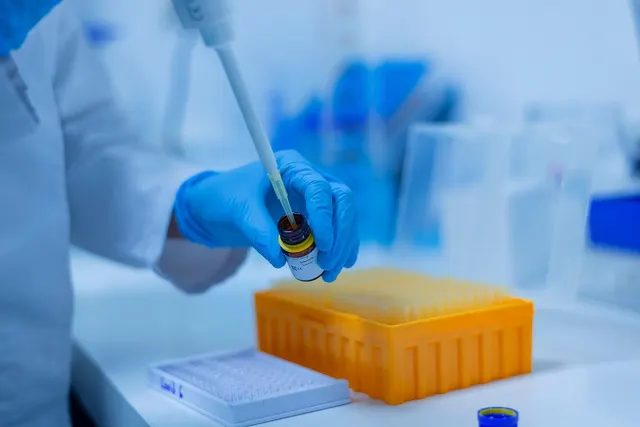
Photo: Pixabay
On this page 6 sections
- Mitragynine Pseudoindoxyl Is Now a Schedule I Substance
- Why Processors Can't Approve a Mitragynine Pseudoindoxyl Merchant Account
- How the Proposed Threshold Affects Kratom Leaf Sellers
- If Your Store Still Lists Pseudo or MGM Products
- State and Local Bans Still Apply on Top
- Watch for DEA's New Temporary Order
Key takeaways
- Since August 26, 2026, MP, MGM-15 and MGM-16 have been Schedule I substances, so no processor can board card sales of them or keep them on an account.
- The proposed threshold isn't in force yet. Until DEA replaces the August order, MP is controlled at any amount.
- Under the proposal, a kratom product has to pass a concentration test and a 100-to-1 mitragynine ratio test. Fortified leaf can fail on the ratio alone.
- Leaf sellers need per-lot COAs that report mitragynine, 7-OH and MP separately and state the lab's limit of quantitation.
No legitimate processor will open a mitragynine pseudoindoxyl merchant account today, and an existing account that sells it is in line for termination. On August 26, 2026, the Drug Enforcement Administration (DEA) placed mitragynine pseudoindoxyl in Schedule I of the Controlled Substances Act. The product is sold as "MP," "MGPI" or "pseudo," and two other 7-OH derivatives, MGM-15 and MGM-16, were scheduled with it. Whether a bank will accept card sales of a Schedule I drug no longer depends on its risk appetite. Federal law now prohibits those sales.
Kratom sellers can still get an account for products that stay outside those controls. That depends on a threshold DEA proposed in October and on lab reports precise enough to show which side of it each product falls on.
Mitragynine Pseudoindoxyl Is Now a Schedule I Substance
DEA's temporary scheduling order for mitragynine pseudoindoxyl, MGM-15 and MGM-16 (91 FR 54948) runs from August 26, 2026, until August 26, 2028. It covers the three substances and their isomers, esters, ethers and salts. A temporary order lasts two years, with a possible one-year extension, while DEA completes permanent scheduling. From the effective date, anyone handling these substances must be registered with DEA and follow Schedule I security, labeling, reporting and order-form rules. A smoke shop or online kratom store has no Schedule I registration, so for retailers the order means one thing: the product can't be sold.
The same order describes MP as a chemical rearrangement product of 7-hydroxymitragynine (7-OH) that has recently appeared on kratom consumer markets. Mitragynine and 7-OH occur naturally in the kratom plant. MP, by DEA's account, is made by chemically modifying purified mitragynine or 7-OH.
The rules have changed several times in a few months:
| Date | What happened | Primary document |
|---|---|---|
| July 6, 2026 | DEA announces intent to temporarily schedule MP, MGM-15 and MGM-16 | 91 FR 40909 |
| August 26, 2026 | Temporary order takes effect; MP, MGM-15 and MGM-16 enter Schedule I with no threshold | 91 FR 54948 |
| Early October 2026 | HHS recommends controlling 7-OH and MP above a concentration and ratio threshold | Cited in DEA's October 14 notices |
| October 14, 2026 | DEA publishes a notice of intent covering 7-OH and MP above a threshold and a separate notice reissuing the MGM-15 and MGM-16 order | FR Docs. 2026-20943 and 2026-20942 |
| No earlier than November 13, 2026 | Earliest date for the new MGM-15 and MGM-16 order | FR Doc. 2026-20942 |
Read the October notices carefully. The August order stays in force. MP remains in Schedule I without any threshold until DEA publishes the new order and withdraws the old one, or until the old one expires. The Justice Department's October announcement said the existing controls on MP, MGM-15 and MGM-16 stay in effect through the new 30-day notice period. For 7-OH itself, DEA had not yet issued a temporary scheduling order when the department made that announcement. Our coverage of DEA's revised 7-OH ban tracks that side of the rulemaking.
Why Processors Can't Approve a Mitragynine Pseudoindoxyl Merchant Account
Before August, a pseudoindoxyl application was a hard high-risk underwriting call. Banks that accepted kratom at all usually drew a line between minimally processed leaf and concentrated or altered alkaloids, and MP fell on the restricted side. Our explainer on why processors underwrite kratom leaf differently from 7-OH covers where that line falls.
Scheduling takes the decision out of the underwriter's hands. Card network rules require that transactions be legal, and the sponsor bank is responsible for every merchant its processors board. However much kratom risk a bank accepts, it can't approve the retail sale of a Schedule I substance by an unregistered seller. Four common misreadings of the order need correcting:
- "Temporary" doesn't mean pending. The August order took effect the day it was published. It is law now, not a proposal.
- The proposed threshold isn't in force yet. Until the new order replaces the August one, MP is controlled at any amount. When a threshold does take effect, it is meant to cover trace amounts in botanical kratom. It won't make products built around MP legal.
- A new name doesn't create a new product. The order covers isomers, esters, ethers and salts, and MGM-15 and MGM-16 are scheduled along with MP. If you want to know whether some other relabeled relative could be treated as controlled, ask a lawyer. Don't keep selling while you wait for the answer.
- "7-OH alternatives" often contain 7-OH. DEA's October notice cites retail sampling in which 71 percent of the products tested combined MP with 7-OH, and 24 percent contained MP alone.
Some sellers are still buying "pseudo" products to ship to states where they believe sales are allowed. No state can make sales of a federally scheduled substance legal. And a supplier's label is weak evidence of what is in the bottle.
How the Proposed Threshold Affects Kratom Leaf Sellers
DEA's October notice explains why it wants a threshold: 7-OH and MP have reportedly been found in trace amounts in some botanical kratom products. Under the HHS recommendation, a product would be controlled if it fails either of two tests:
- Concentration. 7-OH, MP or the two combined exceed 1 milligram per gram in a solid product or 1 milligram per milliliter in a liquid, according to coverage of the Justice Department's announcement.
- Ratio. The mass of mitragynine divided by the mass of MP (or MP and 7-OH combined) is less than 100. This is how the October 14 notice writes the ratio test.
These numbers are only proposed, and the final order could change them. Use the tests for planning and have counsel confirm the final text.
Worked Example: Three Products Through the Proposed Tests
The figures below are illustrative. Assume each product has a per-lot certificate of analysis (COA) from an independent lab that reports mitragynine, 7-OH and MP separately, in milligrams per gram.
| Product (illustrative) | Mitragynine | 7-OH + MP | Concentration test (limit 1 mg/g) | Ratio test (must be 100 or more) | Result |
|---|---|---|---|---|---|
| A: "Pseudo" tablet | 4 mg/g | 10 mg/g | Fails (10 is over 1) | Fails (4 ÷ 10 = 0.4) | Scheduled |
| B: Plain leaf powder | 15 mg/g | 0.02 mg/g | Passes | Passes (15 ÷ 0.02 = 750) | Outside the proposed controls |
| C: "Enhanced" leaf extract | 40 mg/g | 0.6 mg/g | Passes | Fails (40 ÷ 0.6 ≈ 67) | Scheduled |
Product A is the obvious case. Product C is easy to miss. It sits under the milligram-per-gram limit, so the concentration figure alone makes it look fine. The ratio test catches it because, in this example, the extract has too much 7-OH for the amount of mitragynine it contains. A product has to pass both tests.
Product B only passes if the lab can actually tell the compounds apart. DEA notes in the August order that MP is an oxidative metabolite of 7-OH and that identifying it accurately takes specific methods and instruments. Some COAs report only "total alkaloids," or list MP as "not detected" without stating the lab's limit of quantitation (the smallest amount it can reliably measure). Neither gives an underwriter what it needs. Ask your lab for that limit in writing.
Underwriters will want this file from a leaf seller:
- per-lot COAs that report the three compounds separately
- a product list matched to those COAs
- labels and web copy that make no claims about effects
If you sell leaf and need a processor that reviews that documentation openly, see MannyPay's payment processing for kratom businesses.
If Your Store Still Lists Pseudo or MGM Products
Every card sale of a scheduled product creates legal exposure for both you and your processor. It also puts your account at risk of termination and held funds. Work through these steps in order:
- Stop selling. Remove MP, MGM-15 and MGM-16 products from your website, marketplace listings and POS, and lock or delete the SKUs. Our guide to POS setup with locked SKUs and lot tracking covers the mechanics. Don't keep the products under a vague name or ring them up as something else. Our article on the miscoding risk of ringing 7-OH as an herbal supplement explains how banks treat that.
- Clear open orders. Cancel unshipped orders and any subscriptions or autoship plans that include these products, and refund to the original payment method. See handling refunds, open orders and pulled stock when a ban hits.
- Get legal advice on inventory. The August order sets out what unregistered holders must do with existing stock. Selling it off is not one of the options.
- Tell your processor in writing. List what you removed and the date. Processors scan merchant websites after approval. Old product pages, cached listings and social posts can trigger a review after the products are gone, and a dated written record helps you answer it.
- Check your contract. Read the reserve and termination clauses in your processor contract so you know what a review can trigger. If your account has already been closed, our guide to getting held funds back after a processor drops you walks through the process.
State and Local Bans Still Apply on Top
Federal scheduling is only the minimum. Many states and localities regulate kratom, 7-OH and concentrated alkaloids under their own laws, and those laws don't have to match DEA's proposed thresholds. Hillsborough County's ban on 7-OH kratom products shows how quickly a local market can close. A leaf seller still needs a list of restricted states and localities and a checkout that enforces it. Our guide to blocking restricted states at checkout shows how to set that up.
This is general information, not legal advice. Federal, state and local rules on kratom alkaloids are changing quickly. Ask a qualified attorney how they apply to your products and the places you ship to.
Watch for DEA's New Temporary Order
The next thing to watch for is DEA's new temporary order for 7-OH and MP. When it appears in the Federal Register:
- check the final thresholds
- run every SKU's COA through both tests
- update your state blocks
- send your processor the revised product list before your next order ships
If you sell kratom leaf and want a processor that will review your full lab file, MannyPay offers high-risk merchant accounts. You can request a free quote, and a specialist will respond within one business day. Approval depends on the sponsor bank's underwriting, and no processor can board products that federal law has scheduled.
Sources
- Federal Register: Schedules of Controlled Substances: Temporary Placement of Mitragynine Pseudoindoxyl, MGM-15, and MGM-16 in Schedule I (Aug. 26, 2026)
- Federal Register: Notice of Intent, Temporary Placement of Mitragynine Pseudoindoxyl, MGM-15, and MGM-16 in Schedule I (July 6, 2026)
- Federal Register: Temporary Placement of 7-Hydroxymitragynine and Mitragynine Pseudoindoxyl Above a Specified Threshold in Schedule I (Oct. 14, 2026)
- Federal Register: Temporary Placement of MGM-15 and MGM-16 in Schedule I (Oct. 14, 2026)
- U.S. Department of Justice: Department of Justice Announces Updates to Emergency Scheduling Actions for 7-OH and Related Opioid Substances
- Congressional Research Service Legal Sidebar LSB11457
- Hi-Line Today: DoJ Emergency Drug Scheduling for Seven O-H
This article is for general educational purposes and is not legal, tax or financial advice. Card network rules and state laws change; confirm current requirements for your business.