7-OH Certificate of Analysis: What Underwriters Check Before Approval
Know what underwriters check on a 7-OH certificate of analysis, from lot matching and potency units to the DEA's proposed ratio test, before you apply.
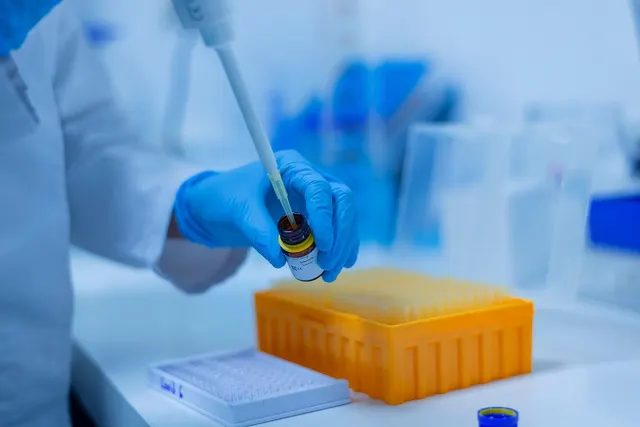
Photo: Pixabay
On this page 7 sections
- Why the COA Now Answers a Federal Question
- The Lab and the Lot: What Gets Checked Before the Results
- Reading the Alkaloid Results on a 7-OH Certificate of Analysis
- Contaminant Panels That Stop a Potency-Only File
- COA Gaps That Send Applications Back
- Posting COAs Online and Keeping Them at the Counter
- When Your Supplier's Lab Testing Won't Hold Up
Key takeaways
- The DEA's October 14, 2026 notice has two tests joined by "or." One is a concentration test (more than 1 mg per gram). The other is a ratio test (mitragynine divided by 7-OH plus MP is less than 100). A low-concentration leaf product can still fail the ratio test.
- The ratio test only works if the COA gives real numbers for mitragynine, 7-OH and MP, each with a stated limit of quantitation. A "not detected" with no LOQ leaves the underwriter unable to place your product.
- A "2%" on a COA can mean a share of total alkaloids, which is how the FDA describes natural leaf. That is a different measure from either federal test. Ask the lab for percent by weight and mg per unit for every alkaloid.
- ISO/IEC 17025 accreditation only counts if the lab's accredited scope covers the alkaloid method it ran on your product.
A 7-OH certificate of analysis (COA) is the lab report an underwriter uses to confirm that the product you sell matches your labels, your website and your merchant application. Analysts want a report they can verify from an independent, accredited lab. The lot number should match your packaging, the alkaloid results should be in units that line up with your label, and a contaminant panel should back them up. Since October 2026, the report also needs enough data to show where each product falls against the DEA's proposed federal threshold. That threshold includes a ratio test many sellers haven't read closely.
This is general information, not legal or regulatory advice. 7-OH law differs by state and is changing at the federal level, so confirm your obligations with a qualified attorney.
Why the COA Now Answers a Federal Question
On July 29, 2025, the FDA recommended that the DEA classify 7-hydroxymitragynine as a Schedule I controlled substance, according to Venable's summary of the HHS and FDA announcement. Nearly a year later, on July 1, 2026, the DEA announced its intent to temporarily place 7-OH and three related substances in Schedule I. The Congressional Research Service explains what that first proposal would have covered: processed products such as extracts and pressed pills above 0.05% 7-OH or 1 milligram of 7-OH in the article. CRS also reports that temporary scheduling of one related compound, mitragynine pseudoindoxyl (MP), took effect on August 26, 2026.
The 7-OH line then moved. On October 14, 2026, the DEA published a new notice of intent in the Federal Register based on an HHS letter dated October 8. It withdraws the July proposal for 7-OH. Instead, it covers 7-OH and MP when either one alone, or both combined, is above a new threshold. The threshold has two tests joined by "or," and the same wording appears in a companion notice published the same day:
- Concentration test: more than 1 milligram per gram for solids, or more than 1 milligram per milliliter for liquids.
- Ratio test: the mass of mitragynine divided by the mass of 7-OH (or MP, or both combined) is less than 100.
The notice says a temporary order will be published on or after November 13, 2026. As of CRS's October 26, 2026 update, the DEA had not finalized temporary scheduling of 7-OH. Check the Federal Register before you rely on this article, because the final order's text is what counts.
Sellers tend to overlook the ratio test. In plain terms, it asks whether 7-OH plus any MP adds up to more than 1% of the product's mitragynine. A product can be far below 1 mg per gram and still fail that test. So a COA now has to report mitragynine, 7-OH and MP as measured numbers, in units a reader can convert to mg per gram. Our article on what DEA scheduling of 7-OH means for card processing covers what happens to existing accounts if an order takes effect.
The Lab and the Lot: What Gets Checked Before the Results
Analysts read the header before the numbers. Lab contact details should be complete and unredacted. If the client name is your manufacturer rather than your company, have a letter of authorization ready. Product name, strength and format should match the SKU on your site or shelf. The report dates should show that it covers inventory you're selling now. Ask your processor how old a COA can be.
Accreditation comes next. Many labs hold ISO/IEC 17025 accreditation. The accreditation body IAS describes it as formal recognition that a lab has shown competence to perform specific tests or calibrations. Note the word specific. A lab accredited for heavy metals is not automatically accredited for alkaloid potency, so check that the scope on the lab's certificate lists the methods used on your product. A report from a lab your manufacturer owns carries less weight than one from a third party. A QR code or report ID that opens the original on the lab's own portal also beats a forwarded PDF.
Lot matching is the easiest check to fail. An analyst may ask for product photos or place a test order, then compare the lot number on the package with the one on the COA. If they differ, or the package has none, the COA proves nothing about the product in hand. Print a lot number on every unit and keep a report on file for every lot you've ever sold.
Reading the Alkaloid Results on a 7-OH Certificate of Analysis
The results section should list 7-hydroxymitragynine, mitragynine and MP. A strong report names the method, usually HPLC or LC-MS/MS, and states a limit of quantitation (LOQ) for each compound. The LOQ is the smallest amount the method can reliably measure, so it gives "not detected" a defined meaning. Under the ratio test, that detail matters. In a concentrated product, a mitragynine result of "not detected" pushes the ratio toward zero. An MP result with no stated LOQ leaves part of the calculation unknown.
Be careful with any "2%" you see. The FDA's kratom information page says 7-OH makes up less than 2% of the total alkaloid content in natural kratom leaves. That figure is a share of all alkaloids. The DEA's concentration test uses milligrams per gram of finished product, while its ratio test compares 7-OH with mitragynine alone. The same lab data can give three different answers depending on which measure you use. If your state limits 7-OH, find out which measure its law uses. Then ask your lab to report percent by weight and mg per unit for every alkaloid it measures.
Worked Example: Running the Checks on Two COAs
The figures below are illustrative. They don't describe any real product. The math applies the proposed threshold as published in October, not a final order.
Product A, a tablet. Assumptions: the label claims 15 mg of 7-OH per tablet and the average tablet weighs 500 mg. The COA reports 7-OH at 3.0% by weight and mitragynine at 0.4%, with MP not detected.
- Label check. 500 mg × 3.0% = 15 mg per tablet. The label matches the COA.
- Concentration test. 3.0% by weight is 30 mg per gram, because 1% of a gram is 10 mg. That is 30 times the 1 mg per gram line.
- Ratio test. 0.4 ÷ 3.0 = 0.13, far under 100. The product fails this test too.
- Alkaloid share. 3.0 ÷ (3.0 + 0.4) = 88% of the measured alkaloids are 7-OH. The FDA puts natural leaf under 2%. This product is concentrated or semi-synthetic and has to be described that way everywhere.
Product B, a leaf powder in a 50-gram pouch. Assumptions: the COA reports 7-OH at 0.02% by weight and mitragynine at 1.2%, with MP below a stated LOQ.
- Concentration test. 0.02% is 0.2 mg per gram, well below 1 mg per gram.
- Alkaloid share. 0.02 ÷ (0.02 + 1.2) = 1.6% of the two measured alkaloids. That is under the FDA's 2% figure. Because the FDA counts all alkaloids, the true share would be lower still.
- Ratio test. 1.2 ÷ 0.02 = 60. That is under 100, so Product B would fall above the proposed threshold on the ratio test alone.
Product B is the case that catches sellers out. By two measures it looks like natural leaf, yet it still fails the federal ratio test. With 1.2% mitragynine, 7-OH would have to come in at 0.012% or lower (1.2 ÷ 100) for the ratio to reach 100. An underwriter who runs this math can't treat Product B as safely below the line. Have counsel apply the published text to each SKU before you submit it.
If a tablet's COA leaves out the unit weight, the analyst can't run the label check and will likely ask for a revised report. If the label and the COA disagree by more than your lab's normal variance, fix one of them before you apply. Our comparison of how processors underwrite 7-OH and kratom leaf differently explains what changes when a product's profile looks like Product A's.
Contaminant Panels That Stop a Potency-Only File
A COA that covers only potency is likely to stall a file. Analysts generally expect a heavy metals panel for each lot, covering lead, arsenic, cadmium and mercury. They also expect a microbial panel for total aerobic count, yeast and mold, E. coli and Salmonella. Products made by extraction or chemical conversion should also have a residual solvents panel. A semi-synthetic product without one will probably draw a request for it. Pesticide testing may apply depending on where the material comes from.
A "pass" column with no measured values draws scrutiny, because analysts want the number and the limit the lab applied. So does a contaminant panel run on a different lot from the potency test. Limits vary by state and by the standard the lab follows, so get current ones from your lab and compliance counsel.
COA Gaps That Send Applications Back
| Gap | Why It Stalls Review | Fix |
|---|---|---|
| Report covers a different strength or SKU | Doesn't verify what you sell | Test each SKU and strength separately |
| Supplier's name only | Chain of custody is unclear | Letter of authorization, or test under your brand |
| Lab details redacted | Lab can't be verified | Use the full, unredacted report |
| PDF looks edited or reformatted | Authenticity concerns | Supply the lab original or a verification link |
| No contaminant panel | Safety file is incomplete | Add metals, microbial and solvent testing |
| Percent results, no unit weight | Label can't be checked against the COA | Request per-unit reporting |
| No MP result, or mitragynine not quantified | Federal ratio test can't be checked | Ask the lab to quantify all three alkaloids with LOQs |
| No lot number on packaging | Report can't be tied to product | Print lot numbers on every unit |
Never alter a COA, merge results from different reports or reuse one lot's report for another. Underwriters verify reports. A falsified document can end your relationship with the processor and follow you to your next application, including through a MATCH list placement.
Posting COAs Online and Keeping Them at the Counter
Online, link each COA from its product page by lot, not from one catch-all PDF. Post it exactly as the lab issued it, with no comments about effects or benefits. A COA records what was measured, not whether a product is safe, and presenting it as a safety guarantee adds risk. Test your QR codes and portal links before a site reviewer does. Pair your COAs with age verification and state blocking, which our guide to blocking restricted states at checkout walks through.
Smoke shops and convenience stores should keep COAs at the counter, sorted by SKU and lot. Fuel retailers face extra questions, covered in selling 7-OH tablets at a gas station. Wholesalers should ship current COAs with every order so their retail accounts can pass their own reviews.
When Your Supplier's Lab Testing Won't Hold Up
If your supplier offers only a potency report or an old COA, send retained samples from each lot to an independent, accredited lab under your business name. From then on, accept inventory only with a full-panel, lot-specific COA that quantifies 7-OH, mitragynine and MP. Pull the SKU if the paperwork never arrives.
Don't try to work around the problem. Listing 7-OH under another product category, or running it under an unrelated merchant category code, breaks card network rules. Our article on the miscoding risk of ringing 7-OH as herbal supplements explains why. If your COAs put a product above the proposed federal threshold on either test, read what to do with refunds, open orders and pulled stock when a ban hits now, before an order is published.
MannyPay provides high-risk merchant accounts and works with regulated categories, including 7-OH businesses. Approval depends on underwriting by our sponsor banks and processing partners, so no outcome is guaranteed. This week, pull the COA for every SKU you sell and run the checks from the worked example. Then request a free processing quote with that file attached, and a MannyPay specialist will respond within one business day.
Sources
- Venable: FDA Announces Plan to Restrict 7-OH Opioid Products
- DEA: DEA to Temporarily Schedule 7-OH and Related Substances to Protect Public Safety
- Congressional Research Service: Temporary Control of 7-Hydroxymitragynine (7-OH) and Other Kratom-Related Substances Under the Controlled Substances Act (LSB11457)
- Federal Register: Temporary Placement of 7-Hydroxymitragynine and Mitragynine Pseudoindoxyl Above a Specified Threshold in Schedule I (October 14, 2026)
- Federal Register (GovInfo PDF): Companion Notice on MGM-15 and MGM-16, FR Doc. 2026-20942 (October 14, 2026)
- FDA: FDA and Kratom
- IAS: Testing Laboratory Accreditation FAQs
This article is for general educational purposes and is not legal, tax or financial advice. Card network rules and state laws change; confirm current requirements for your business.