Balikbayan Box Business Payments: Pickups, Prepaid Boxes and Overages
Set up balikbayan box business payment the right way: collect for prepaid boxes, home pickups and overweight fees, reconcile cash and prevent disputes.
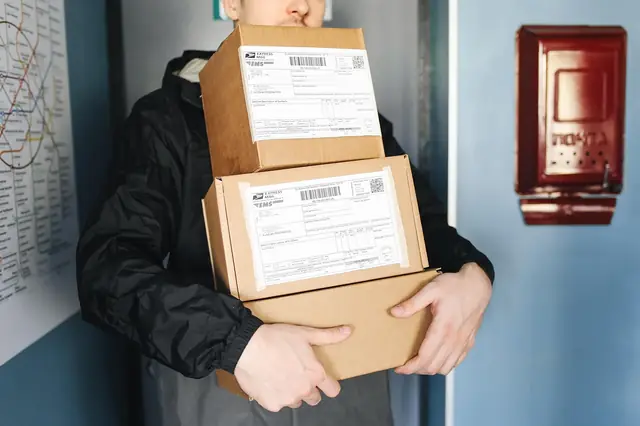
Photo: Pixabay
On this page 8 sections
- How Balikbayan Box Business Payments Work
- Selling Empty Boxes and Prepaid Balikbayan Box Packages
- Balikbayan Box Pickup Payment: Equipping Drivers
- Charging for Overweight and Oversized Boxes After Pickup
- Online Booking and Payment for Door-to-Door Cargo to the Philippines
- Cash, Zelle and Card: Reconciling Driver Collections
- Receipts and Tracking Numbers That Prevent Disputes
- Next Steps: Building Your Payment Setup
Key takeaways
- A single balikbayan box can involve several separate payments, so tie every one to the same box number.
- Give drivers a mobile card reader and a daily route sheet so cash, Zelle and card payments reconcile every evening.
- Weigh and photograph boxes at pickup and get the customer's signature so overweight charges don't become disputes weeks later.
- Receipts showing box size, service type, tracking number and claims policy are your best evidence if a customer disputes a charge.
Balikbayan box business payment is rarely a single transaction. A customer might buy an empty box at a Filipino market in March, fill it through the summer, book a pickup in October and then owe extra because the box is heavier than expected. This guide walks door-to-door cargo forwarders through every payment point, from prepaid box sales to home pickups and overweight charges. It shows how to collect cleanly and how to keep records that hold up.
Even after pickup, the box still takes weeks to reach a province in the Philippines. Every step involves money. Every gap between steps is a chance for cash to go missing or for a customer to forget what they agreed to. For sending money rather than goods, see our guide to remittance options for sending money to the Philippines.
How Balikbayan Box Business Payments Work
Most forwarders collect at some combination of these five points:
| Stage | Who collects | Typical payment methods | Main risk |
|---|---|---|---|
| Empty box or prepaid package sale | Office staff or an agent store | Card, cash | Box sold but never tracked to a customer |
| Booking a pickup | Office, phone or website | Card online or by phone, payment link | Card-not-present fraud, no-shows |
| Home pickup | Driver | Cash, card on a mobile reader, Zelle | Cash shortages, unrecorded payments |
| Overweight or oversize charge | Driver or office after weighing | Card, payment link, cash | Customer disputes the charge |
| Balance or destination add-ons | Office | Card, payment link | Customer no longer reachable |
The common thread is the box number. Every payment should attach to one box or booking ID, whether it's cash in a driver's pouch or a card charged online. If you take only one idea from this article, take that one.
New to card acceptance in general? Start with our starter guide to accepting card payments for Filipino-American business owners, then come back here.
Selling Empty Boxes and Prepaid Balikbayan Box Packages
Many forwarders sell boxes two ways:
- Empty box only. The customer pays for the box now and pays for shipping later, at pickup.
- Prepaid box. The box price includes sea or air freight to a stated destination. The customer simply calls for pickup once it's packed.
A prepaid balikbayan box is convenient for customers, but it creates a liability on your books: you've taken money for a service you may not perform for months. To keep it under control:
- Assign a box number at the time of sale, not at pickup. Print it on the box or a sticker, and on the receipt.
- State exactly what "prepaid" covers. Write down the box size, service type (sea or air), delivery zone and any weight limit. Also explain what happens if the destination falls outside the standard area.
- Put validity terms in writing. If prepaid rates may change or the box must ship within a certain period, say so on the receipt. Rules on prepaid services and unused balances vary by state, so confirm your terms with an attorney.
If Agent Stores Sell Your Boxes
Some forwarders sell through Filipino groceries, remittance counters or restaurants. Be careful about how that money flows. Grocery partners can also read our guide to sales tax and EBT rules for a hot food counter in a Filipino grocery. For partner stores that also sell top-ups, see our guide to selling Philippine load and eload at your store. Restaurant partners can see our guide to ringing up 2- and 3-item combo plates on a turo-turo steam table POS.
Each business should process its own sales on its own merchant account, under an arrangement your processor knows about. Don't run your shipping sales through a partner store's card terminal, and don't run theirs through yours. Card networks can treat that as transaction laundering, which can put both businesses' accounts at risk. If you plan to use agents, tell your payment provider from the start and set up the structure correctly.
Balikbayan Box Pickup Payment: Equipping Drivers
The home pickup is where cash most often goes missing or payments go unrecorded. A driver may cover a long route in a single day, often during the busy months before Christmas, and customers along the way want to pay in different ways.
What a Cargo Forwarder Card Reader Needs
- Cellular connectivity. Drivers can't count on a customer's Wi-Fi in a garage or apartment hallway.
- On-the-spot receipts. Before the driver leaves, the customer should get a printed, texted or emailed receipt showing the box number.
- Simple screens without tipping. Turn off tipping prompts unless you actually want them; they confuse customers paying a freight bill.
- Battery life for a full route. Keep car chargers in every van.
Choosing the Right Device
Options range from mobile terminals for drivers on the road, including phone-attached readers like Clover Go, to handheld terminals with full-screen checkout such as Clover Flex or the PAX A920 Pro. Choose based on whether drivers need to look up bookings, capture signatures and print receipts from the same device.
Assign each terminal to a specific driver or van. When a card batch doesn't match a route sheet, you'll know exactly where to look.
Charging for Overweight and Oversized Boxes After Pickup
Overage charges are a common source of disputes in this business. A customer packs a box with canned goods, rice and shoes, and the driver picks it up. Two days later the warehouse calls to say they owe more, and the customer feels ambushed.
Some forwarders price sea boxes by size and air shipments by weight; some use both. Whatever your model, settle the charge at the door whenever you can:
- Weigh at pickup. Give drivers a portable scale and a tape measure.
- Photograph the reading. Take one photo that shows both the box number and the scale display.
- Collect or get sign-off on the spot. Charge the overage right away, or have the customer sign that they agree to it.
- If the warehouse finds a discrepancy later, send the customer the photo, the warehouse reading and a payment link. Don't charge a stored card without clear prior consent.
Why Long Card Holds Don't Work
Authorizing a card at pickup and capturing a larger amount weeks later doesn't work well. Authorizations expire and are designed for short windows, the way hotel incidental holds work.
If you want to keep a card on file for overages:
- Use your provider's secure storage.
- Get the customer's written authorization.
- Send a notice before any charge.
Online Booking and Payment for Door-to-Door Cargo to the Philippines
Many customers want to book door-to-door cargo to the Philippines online, the way they'd order anything else. A booking page can take a deposit or full prepayment, collect the recipient's address and set a pickup window. For another example of paid preorders paired with a pickup day, see our guide to running a lumpia fundraiser with preorders, payments and pickup. For a holiday example, see our guide to lechon preorder deposits and no-show rules. Community groups can read our guide to collecting dues and donations for Filipino community associations.
Your options include:
- A booking form on your website connected to a payment gateway, or a storefront on Shopify or WooCommerce. MannyPay supports online payment processing for e-commerce and integrations with those platforms.
- Payment links sent by text or email after a phone booking.
- A virtual terminal for phone orders for customers, often older ones, who prefer to read a card number to your office staff.
Online and phone payments are card-not-present, which means more fraud exposure. Two habits help:
- Use 3-D Secure authentication at checkout, which adds a cardholder verification step.
- Check that the billing name matches the sender on the booking.
Be upfront with your payment provider about how long you hold customer money before delivery. Underwriters ask about fulfillment timelines, and a business that collects payment months before shipping should disclose that clearly. If you're still deciding how to structure your online setup, read payment gateway vs. merchant account: what your online store needs.
Cash, Zelle and Card: Reconciling Driver Collections
Some customers prefer cash; others use Zelle. Both are fine, but each has a weak spot:
- Zelle payments arrive in your bank account with whatever memo the customer typed.
- Cash depends on the driver's honesty and math.
Set up a daily route sheet, on paper or in an app, with one row per stop:
| Box # | Customer | Amount due | Cash | Card | Zelle | Overage | Driver initials | |---|---|---|---|---|---|---|---|
Then apply these controls:
- Ask Zelle payers to put the box number in the memo. If possible, have the driver confirm the payment shows up before leaving.
- Have drivers turn in cash with the route sheet the same day. A second person counts it, and both sign.
- Match card batches to route sheets by terminal every evening.
- Investigate any variance right away. Small gaps get much harder to trace after a weekend.
To reduce the cost of card acceptance, some forwarders look at cash discount programs or dual pricing. These programs must be set up and disclosed correctly. Surcharging rules vary by state and differ for debit cards. Read our comparison of cash discount vs. dual pricing vs. surcharging and confirm current rules before you change how you price.
Receipts and Tracking Numbers That Prevent Disputes
Because delivery takes weeks, customers sometimes dispute a charge simply out of anxiety, or because a family member in the Philippines hasn't received the box yet. Your receipt is your first line of defense.
Every receipt, whether printed at pickup or emailed after an online booking, should include:
- Box or tracking number
- Box size and service type (sea or air)
- Recorded weight or dimensions at pickup
- Recipient name and destination province or city
- Estimated delivery window, clearly labeled as an estimate
- Everything paid so far and any balance due
- Your claims policy for loss or damage, plus any optional insurance
- A reminder about prohibited items and the customer's packing list
Keep the signed pickup confirmation, scale photo and packing list together under the box number. Ask your Philippine delivery partner for proof of delivery, such as a recipient signature or photo, and store it in the same file.
If a customer disputes a charge, you'll have a complete record from sale to delivery. Many of the same evidence principles appear in our guide to winning chargebacks on supplier-shipped orders.
Philippine customs rules on balikbayan box contents and duty-free treatment change from time to time, as do U.S. regulatory requirements for freight forwarders and consolidators. This article is general information, not legal or tax advice. Confirm your obligations with a qualified customs broker, attorney or accountant.
Next Steps: Building Your Payment Setup
A well-run balikbayan box payment setup does four things:
- Ties every dollar to a box number.
- Gives drivers a reliable reader and a route sheet.
- Settles overages at the door.
- Issues receipts that tell the whole story.
MannyPay works with Filipino-American businesses and offers mobile and handheld terminals, virtual terminals, online gateways and cost programs. To talk through your routes, booking flow and agent network, request a free quote from MannyPay.
This article is for general educational purposes and is not legal, tax or financial advice. Card network rules and state laws change; confirm current requirements for your business.