Food Truck Merchant Accounts: How New Trucks Get Approved Fast
Getting a food truck merchant account with no sales history? Learn what underwriters check, what to prepare, and how to avoid holds at big events.
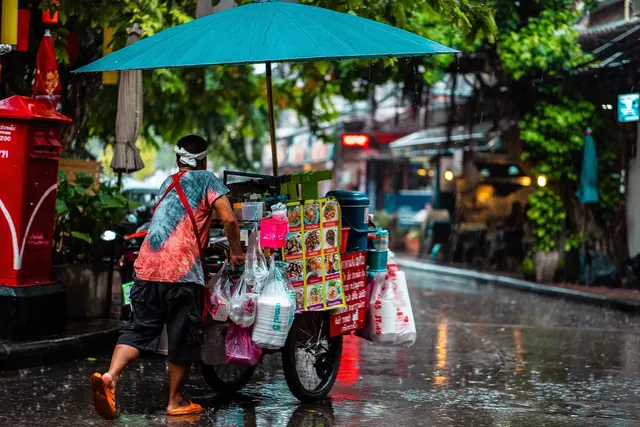
Photo: Pixabay
On this page 7 sections
- Why Food Trucks Are Low Risk but Still Get Held
- Documents to Have Ready for a Food Truck Merchant Account
- Listing a Business Address When Your Business Has Wheels
- Estimating Monthly Volume and Average Ticket Honestly
- Merchant Account vs. Payment Facilitator for a New Food Truck
- Keeping Funds Flowing When Volume Spikes at Big Events
- Next Steps for Food Truck Processor Approval
Key takeaways
- Food trucks are generally low risk. Most delays come from incomplete applications or sales that don't match what you told the underwriter.
- Have your permits, commissary agreement, EIN confirmation, formation documents and bank letter ready before you apply.
- Estimate card volume and average ticket honestly, including your peak season and largest catering invoice, so your approved limits fit how you actually sell.
- Tell your processor before big events, and never split or key in transactions to stay under limits.
A brand-new truck has no processing history, no storefront and sales that rise and fall with the weather and the festival calendar. Many owners assume that makes a food truck merchant account hard to get. Underwriters generally see food trucks as low risk. Most of the friction comes from gaps in the application or from surprises after approval. This guide covers what underwriters look for, which documents to gather, how to list an address for a business on wheels, how to estimate volume honestly and how to keep funds flowing when a big event doubles your sales.
Why Food Trucks Are Low Risk but Still Get Held
From a processor's point of view, a food truck has a lot going for it. Most sales are card-present, with customers tapping or inserting a chip card. The food is handed over within minutes, so you don't carry the "future delivery" risk of a business that takes payment weeks before it provides the service. Tickets tend to be small, and disputes over a lunch order are uncommon.
Low risk doesn't mean no review, though. When you're approved, the processor sets expectations based on your application: roughly how much you'll process each month, your typical ticket and your largest likely ticket. Activity that departs sharply from those numbers gets a closer look, and funds can be paused while it's reviewed.
What Food Truck Underwriting Checks
For a new truck, underwriters lean on the information they can verify because there's no history to review:
- Owner identity and background, including a personal credit check in many cases
- Business legitimacy: formation documents, EIN and local licenses
- Consistency: matching names, addresses and tax IDs across every document
- Business model: what you sell, where you sell it and whether you take catering deposits
- Projected volume and tickets: whether your estimates make sense for a truck your size
Common Triggers for a Hold
- Monthly volume far above your approved amount, often after a festival or a strong first season
- A single transaction much larger than your stated high ticket, such as a catering job
- A long period with no activity, followed by a sudden burst after an off-season
- Many manually keyed transactions when card-present payments were expected
- An unusual run of refunds or disputes
Almost all of these can be avoided with an accurate application and a quick heads-up to your processor.
Documents to Have Ready for a Food Truck Merchant Account
How quickly you're approved depends largely on how complete your file is on the first submission. Each missing document adds a round of back-and-forth. Requirements differ by processor and by city, county and state, so treat this as a starting list and confirm what your provider and local authorities require.
| Document | Why Underwriters Want It |
|---|---|
| Mobile food vendor permit or health permit | Shows you're authorized to sell food where you operate |
| Business license and sales tax permit | Confirms you're registered locally and with your state |
| Commissary agreement | Verifies your operating base and food-prep location |
| IRS EIN confirmation letter | Matches your legal business name to your tax ID |
| Formation documents (LLC or corporation filings) | Confirms ownership and legal structure |
| Bank letter or voided business check | Verifies the account where deposits will land |
| Government-issued photo ID for owners | Required identity verification |
Permits and Licenses
Health department permits for mobile food units are usually issued by your city or county. If you operate in several jurisdictions, gather the permits for each one. A sales tax permit also helps show you're set up properly. If you sell across city or county lines, read up on collecting the right sales tax rate at every stop.
Commissary Agreement
Many jurisdictions require trucks to operate from a licensed commissary for food prep, cleaning and storage. A signed agreement gives an underwriter a verifiable physical location tied to your business, which matters when you have no storefront.
EIN, Formation Documents and Bank Letter
Your legal business name should be identical on your EIN letter, state filing and business bank account. A bank letter on the bank's letterhead, or a voided check showing the business name, confirms where settlements will go. A sole proprietor using a personal account, or a mismatch between the bank account name and the business name, is a common reason for follow-up questions.
Extras That Help
These aren't always required, but they help a new business look real and active:
- Photos of the truck showing your branding and the service window
- Your menu with prices
- Social media pages or a simple website
- A list of booked events, private bookings or regular weekly stops
Listing a Business Address When Your Business Has Wheels
Every application asks for a business address, and "wherever we park on Tuesday" won't work. The goal is an address that is real and verifiable, and that matches your other documents.
| Address Option | When It Works | What to Watch |
|---|---|---|
| Registered business address | When it matches your state filing and EIN records | Must be consistent across all documents |
| Commissary address | Shows where the truck is based and prepped | Confirm whether your agreement allows you to use it as an operating address |
| Owner's home address | Common for small LLCs and sole proprietors | Be clear that the truck operates elsewhere |
A few practical points:
- Be consistent. If your EIN letter shows your home address and your application shows the commissary, explain that one is the legal address and the other is the operating base.
- Describe your service area. Tell the underwriter the cities or regions you serve and whether you travel for events. That explains transactions from different locations.
- Don't invent a storefront. Listing an address you don't use, or a virtual mailbox presented as a physical location, can lead to a decline or a later account closure. Honest answers about a mobile business are routine for underwriters.
Your tax reporting is tied to the business name and tax ID on your account. If they don't match IRS records, you may receive IRS notices and potentially face backup withholding, so confirm the details with your tax professional.
Estimating Monthly Volume and Average Ticket Honestly
Your estimates become your approved limits. Underestimate to look modest, and your first big weekend may trigger a review. Overestimate to look established, and you may get questions you can't answer. The aim is a realistic number with the seasonality explained.
Here's a simple way to build an estimate:
- Set your average card ticket. Think about a typical order, including drinks and tips if tips run on the card.
- Estimate card transactions per service day. Count only card sales, not cash.
- Multiply by service days per month for a typical month, a slow month and a peak month.
- Name your largest likely single ticket, usually a catering or private event invoice.
| Scenario (Illustrative Only) | Avg. Card Ticket | Card Transactions per Month | Monthly Card Volume |
|---|---|---|---|
| Slow off-season month | $14 | 1,000 | $14,000 |
| Typical month | $15 | 2,200 | $33,000 |
| Peak festival month | $16 | 4,000 | $64,000 |
| Largest catering invoice | n/a | 1 | $2,500 |
These figures are illustrative examples only, not benchmarks. Use your own menu prices and expected traffic.
Give the underwriter the whole picture: your typical month, your peak month and when it happens, and whether you take catering deposits in advance. Deposits for future events carry more risk than a lunch order, so disclose them up front rather than letting them surprise the risk team later.
Small tickets also affect pricing. For more on that, see why small tickets can raise your effective processing costs.
Merchant Account vs. Payment Facilitator for a New Food Truck
Many first-time owners compare a dedicated merchant account with a payment facilitator (PayFac). A PayFac boards you as a sub-merchant under its own master account. Either can work for a mobile food vendor. The tradeoffs come down to when underwriting happens and how much control you get.
| Factor | Dedicated Merchant Account | Payment Facilitator |
|---|---|---|
| Upfront review | More documentation before approval | Quick sign-up with lighter initial review |
| When risk review happens | Mostly at the start, with limits set up front | Often later, through ongoing monitoring |
| Merchant ID | Your own | Shared master account, with you as a sub-merchant |
| Pricing structure | More options, including cost programs | Typically simple, standardized pricing |
| Hardware choice | Broader range of terminals and POS systems | Usually tied to the provider's own devices |
| Handling growth | Limits can be adjusted through your processor | Volume spikes may trigger reviews or holds |
A PayFac can get a truck selling quickly. Because less is verified at sign-up, though, a strong first festival is when those reviews tend to happen. A dedicated merchant account asks more of you up front, but your approved limits reflect your actual business, and you can work directly with your provider when you need adjustments.
A dedicated account also gives you access to cost programs such as cash discount programs or dual pricing. Rules on how these are disclosed vary, so confirm current card network and state requirements before you launch one. For details, see our guide to food truck credit card surcharges and cash discount rules.
Keeping Funds Flowing When Volume Spikes at Big Events
Festivals, fairs and stadium events can produce more volume in a weekend than you see in a month. Prepare for them the way you'd prepare your prep list.
- Tell your processor in advance. Share the event name, dates and expected volume. Ask whether a temporary limit increase makes sense.
- Keep payments card-present. Tap and chip transactions are lower risk than keyed entries. If your reader fails, fix it rather than typing card numbers by hand all day.
- Plan for connectivity. Crowded venues can overload cell networks. Devices with built-in cellular, like the Clover Flex 4G, help, but test them on site. Be careful with offline mode: transactions stored offline may decline once they're submitted, and you typically absorb that loss.
- Batch out daily. Settling every day keeps funds moving and makes your activity easier to review.
- Document catering and private events. Keep signed agreements, invoices and proof of delivery in case a dispute comes up.
- Understand festival payout rules. If an organizer runs a cashless wristband system, the payment may flow through the organizer, not your account. Learn how cashless wristbands, fees and festival payouts work before you sign on.
Never split transactions to stay under a limit. Breaking one large catering charge into several smaller ones violates card network rules and can put your account at risk. If a ticket exceeds your approved amount, ask your processor for an increase.
If your processor does pause funds or place a reserve, respond quickly with the documentation it requests, such as event contracts, photos and invoices. Fast, complete answers usually resolve reviews sooner.
Next Steps for Food Truck Processor Approval
Before you apply, run through this checklist:
- [ ] Health and mobile vendor permits for every jurisdiction you serve
- [ ] Business license and sales tax permit
- [ ] Signed commissary agreement
- [ ] EIN confirmation letter and formation documents
- [ ] Bank letter or voided business check with a matching business name
- [ ] Realistic volume estimates for slow, typical and peak months
- [ ] Your largest expected single ticket and catering deposit practices
- [ ] Photos, menu and a list of upcoming events or regular stops
Hardware matters too. Compare mobile card terminals built for on-the-go selling and review our guide to choosing a POS system for a moving kitchen.
MannyPay offers merchant accounts, POS systems and mobile terminals for food truck businesses, along with cost programs for eligible merchants. Approval and pricing depend on underwriting. When your documents are ready, request a free quote, and a MannyPay specialist will respond within one business day.
This article is general information, not legal or tax advice. Confirm permit, tax and disclosure requirements with your local authorities and a qualified professional.
This article is for general educational purposes and is not legal, tax or financial advice. Card network rules and state laws change; confirm current requirements for your business.