Visa and Mesh Crypto Spending: What Changes at Your Checkout
Visa Mesh crypto payments let shoppers pay from crypto wallets at Visa merchants. Learn what changes at your checkout and what's still unknown.

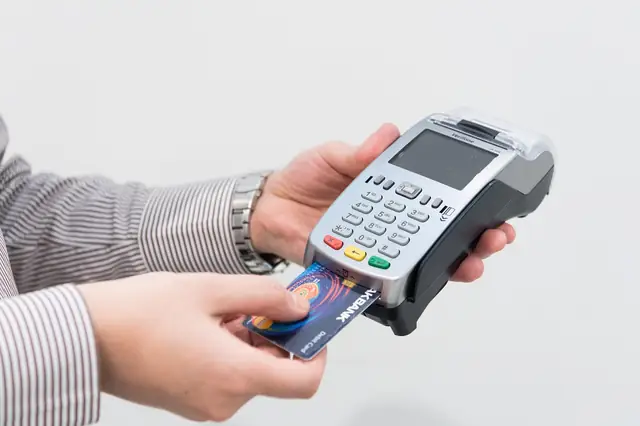
Photo: Pixabay
On this page 8 sections
- What Visa and Mesh Announced on October 19, 2026
- How Visa Mesh Crypto Payments Are Expected to Work
- Do Merchants Need to Change Anything to Accept These Payments?
- Settlement, Fees and Chargebacks: What's Confirmed and What's Still Unknown
- How This Differs From Accepting Stablecoins Directly
- Fraud and Compliance Questions to Ask Your Processor
- What to Watch Before Launch: Wallets, Crypto Wallet Tap-to-Pay Devices and Timing
- Next Steps for Merchants
Key takeaways
- Mesh and Visa announced on October 19, 2026 that shoppers will be able to pay from crypto and stablecoin wallet balances anywhere Visa is accepted, with no separate crypto card.
- Mesh says merchants get a standard payment and don't need new hardware or checkout changes. If you take Visa today, you probably won't need a crypto processor.
- As of October 20, 2026, the companies hadn't announced launch dates, participating wallets, supported devices, merchant fees, refund handling or dispute handling.
- Before launch, make sure your terminals accept contactless payments. Then ask your processor how these transactions will be classified, priced, refunded and handled in disputes.
On October 19, 2026, the crypto payments network Mesh announced a partnership with Visa. It will let shoppers spend crypto and stablecoin balances from participating wallet apps anywhere Visa is accepted, without getting a separate crypto card. For business owners, the main question about Visa Mesh crypto payments is what changes at the register. This article covers what the two companies announced and how the payment is expected to reach you. It also covers what's still unknown about fees, refunds and chargebacks, and what to ask your processor before launch.
Status as of October 20, 2026: The companies haven't announced a launch date, a list of participating wallets or the devices that will be supported. Treat everything below as early guidance and check back for updates.
What Visa and Mesh Announced on October 19, 2026
According to Mesh's press release, the partnership pairs Visa's acceptance network with Mesh's "orchestration" infrastructure, which is the technology that manages how each payment gets funded. These are the points that matter for merchants:
- No separate card for the shopper. A Visa credential is set up in the background inside participating wallet apps.
- In-store and online. Shoppers can tap at a standard contactless terminal or check out online without first selling, transferring or preloading funds.
- Standard payment to the merchant. Mesh says the merchant receives a standard payment and doesn't need new hardware or changes to its checkout workflow.
- Mesh runs the program. Mesh will act as program manager and handle user onboarding and know-your-customer (KYC) identity checks, CoinMarketCap Academy reported.
- Wide reach on paper. The release points to Visa's network of more than 175 million merchant locations in over 200 countries and territories.
Neither company is new to crypto payments. The Block notes that Mesh is the infrastructure firm behind PayPal's "Pay with Crypto" launch. On the Visa side, The Block reports that Visa and WeFi announced plans in April to let users spend digital assets from self-custody wallets. The Block also notes that last year Visa and Bridge partnered to let developers issue Visa cards funded by stablecoin balances. What's new here is that the shopper doesn't need a separate crypto-linked card at all.
How Visa Mesh Crypto Payments Are Expected to Work
The companies haven't published detailed technical specifications. Based on the announcement, a typical purchase should work like this:
- The shopper opens a participating wallet app and taps their phone at your terminal, or chooses the wallet at your online checkout.
- The wallet presents the Visa credential that was set up in the background.
- The authorization request goes over the Visa network, just like any other Visa payment.
- Mesh handles funding and conversion across the shopper's crypto, stablecoin and fiat balances.
- You receive a standard payment through your normal settlement.
Steps 3 and 5 are our reading of Mesh's statement that merchants receive "a standard payment." The exact routing hasn't been published. If you want a refresher on authorization, clearing and settlement, see our guide to how credit card processing works.
What the Shopper Sees vs. What You See
| Shopper | Merchant | |
|---|---|---|
| Payment method | Crypto or stablecoin balance in a wallet app | A Visa transaction |
| Conversion | Handled by Mesh behind the scenes | None on your side |
| Hardware | Phone with a participating wallet | Your existing contactless terminal or online checkout |
| Identity checks | KYC through Mesh's onboarding | None beyond your usual process |
Do Merchants Need to Change Anything to Accept These Payments?
According to Mesh, no. If you already accept Visa, you can probably take these payments without a crypto processor, a crypto wallet or a new checkout button. There are a few practical caveats:
- You need contactless acceptance in-store. In stores, these wallet payments work by tapping. If your terminals only take dip or swipe, or contactless is turned off, no phone wallet will work. Modern smart terminals and POS devices usually support tap, but check that the feature is turned on.
- Online, the wallet has to support your checkout. How each wallet presents the credential at online checkout hasn't been detailed. If your online payment processing already accepts Visa, you're likely set, but test once wallets go live.
- You may not be able to tell these payments apart. The payment should look like a Visa transaction, so your reports may not label it as crypto-funded. That's convenient, but it also means you can't easily track how much of your volume comes from these wallets.
What It Means by Business Type
| Business type | What to think about |
|---|---|
| Retail stores | Returns and exchanges. Refunds are expected to go back to the Visa credential like any card refund, but that hasn't been confirmed. It's also unclear how the money gets back into the shopper's wallet. |
| Grocery markets | Fast lanes and tap speed. Contactless must work reliably at every lane, including self-checkout. Split tender between a wallet and cash or another card should work as it does for any card, but test it once wallets launch. |
| Restaurants and bars | Tips and preauthorizations. Pay-at-the-table and bar tabs depend on authorizing first and adjusting later. How crypto-funded credentials handle tip adjustments and held tabs hasn't been described. Our restaurant payment processing guide covers how those flows normally work. |
| E-commerce stores | Card-not-present risk and saved credentials. It's unknown whether shoppers can save these credentials for subscriptions or one-click checkout. See our ecommerce payment processing guide for the basics. |
Settlement, Fees and Chargebacks: What's Confirmed and What's Still Unknown
Here's what the announcement covers and what it leaves open. All of it is as of October 20, 2026.
| Topic | Confirmed | Still unknown |
|---|---|---|
| Settlement | Merchant receives a standard payment | Whether funding times differ in any way from other Visa transactions |
| Merchant fees | Not addressed in the release | Card product type (credit, debit or prepaid), which affects interchange |
| Chargebacks | Not addressed | How disputes work when the shopper's original funds were crypto |
| Refunds | Not addressed | How refunds are processed, and whether they reach the wallet as dollars, stablecoins or crypto, and at what exchange rate |
| Launch | Announced as a partnership | Dates, countries, wallets and supported devices |
Fees. Some coverage, including The Crypto Times, describes merchants paying their existing Visa processing fees. Neither company has published pricing details, though. What you actually pay will depend on how the credential is classified and on your pricing model. If you're not sure how your rates are built, compare interchange-plus, flat-rate and tiered pricing. For more on how dual-network credit routing could change your card processing costs, see where the Credit Card Competition Act stands.
Cost programs. Card brand rules and state laws treat surcharging differently for credit and debit, so classification matters here too. If you use surcharging, dual pricing or a cash discount program, ask your processor how these transactions will be handled. Our explainer on cash discount vs. surcharge vs. dual pricing covers the differences.
Illustrative example: A customer pays $80 from a crypto wallet and returns the item a week later. You'd expect to refund the $80 to the card the way you always do, but refund handling hasn't been confirmed. The customer might get back dollars, stablecoins or the original crypto at a different price. That should be between them and their wallet, but some customers will probably ask you about it. Once refund details are published, confirm them with your processor. Then give staff a short, consistent answer, such as: "We refunded the full amount to the card you used. Your wallet provider should handle any conversion."
How This Differs From Accepting Stablecoins Directly
The Visa-Mesh setup isn't the same as accepting crypto at your business. Mesh and the wallet handle the crypto side. You handle a Visa payment.
| Visa-Mesh wallet payment | Direct stablecoin or crypto acceptance | |
|---|---|---|
| What you receive | A standard Visa payment | Stablecoins or crypto, unless your provider converts them |
| Setup | Your existing Visa acceptance | Usually a crypto payment processor or your own wallet |
| Refunds | Expected to follow your normal card process, but not yet confirmed | Often sent on-chain. Process depends on the provider |
| Disputes | Not yet detailed. Expected to follow card processes, but unconfirmed | Card-network chargeback rules generally don't apply |
| Accounting | Card settlement records | May need separate crypto recordkeeping |
Taking crypto directly can make sense for some businesses, but it adds systems to run and records to keep. Tax and accounting treatment of digital assets is a specialized area. Any notes here are general information, not advice, so confirm with a qualified tax professional before you hold or convert crypto.
Fraud and Compliance Questions to Ask Your Processor
Mesh handles KYC for wallet users, but you're still responsible for your own fraud controls and for following card network rules. Before these wallets launch, ask your processor:
- Will these transactions be identifiable in my reports or statements?
- What card product type will they show as, and how will that affect my rates?
- Will refunds work the same as for any other Visa transaction?
- Will chargebacks and retrievals follow the standard Visa dispute process?
- Do tip adjustments, preauthorizations and incremental authorizations work normally?
- Can these credentials be stored for recurring billing or card-on-file?
- How does my surcharge or dual pricing program apply to them?
- Do my online fraud tools, including 3-D Secure authentication, apply as usual?
Also keep in mind that these payments don't change underwriting. A crypto-funded wallet payment is still a Visa transaction on your merchant account. That account has to be approved for your actual business type, products and merchant category code. A new way for customers to pay doesn't get around network rules. If you're in a regulated or high-risk industry, keep working with your processor through normal channels.
What to Watch Before Launch: Wallets, Crypto Wallet Tap-to-Pay Devices and Timing
crypto.news reported that initial availability, supported devices and participating wallets are still to be announced. Watch for:
- Participating wallets. Which crypto exchanges and wallet apps sign on, and whether they're popular with your customers.
- Device support. Which phones and operating systems support crypto wallet tap-to-pay.
- U.S. availability. Whether the U.S. is in the first rollout or comes later.
- Merchant-facing details. Card classification, refund and dispute rules, and any guidance Visa issues to acquirers.
In the meantime, here's a short checklist:
- Confirm contactless is turned on at every terminal and self-checkout lane.
- Test a regular phone-wallet tap to make sure your hardware is ready.
- Tell staff that a crypto-wallet payment should ring up as a normal Visa sale.
- Make sure your refund policy is clear and easy to find.
Next Steps for Merchants
In short, Visa Mesh crypto payments should look like ordinary Visa transactions at your register and online checkout. If you already accept Visa through contactless terminals, you probably won't need to change anything. Several details are still open: launch timing, which wallets take part, fees, refunds and dispute handling. Get your questions to your processor now, before customers start asking.
MannyPay provides payment processing solutions, POS systems and card terminals, and online payment gateways for U.S. businesses. To check whether your setup is ready for contactless and wallet payments, request a free quote. A MannyPay specialist will respond within one business day. You can also contact the MannyPay team with questions.
Sources
- Mesh and Visa Partner to Make Stablecoin and Crypto Balances Spendable Across 175 Million Merchants (Mesh press release)
- Mesh and Visa Partner to Make Stablecoin and Crypto Balances Spendable Across 175 Million Merchants (PR Newswire)
- Mesh taps Visa to let users spend crypto without a separate card (The Block)
- Visa partners with Mesh to enable crypto payments at 175 million merchants (crypto.news)
- Visa, Mesh Partner to Let Crypto Wallet Users Spend at 175M Merchants (CoinMarketCap Academy)
- Visa Partners With Mesh to Enable Crypto Payments Across 175 Million Merchants (36Crypto)
- Mesh Partners With Visa to Enable Crypto Payments at 175M Merchant Locations (The Crypto Times)
This article is for general educational purposes and is not legal, tax or financial advice. Card network rules and state laws change; confirm current requirements for your business.