EV Charger Card Readers: Payment Rules and Hardware for Hosts
Adding an EV charger credit card reader? Learn which payment rules may apply, how hardware options compare, and what drives per-session processing costs.
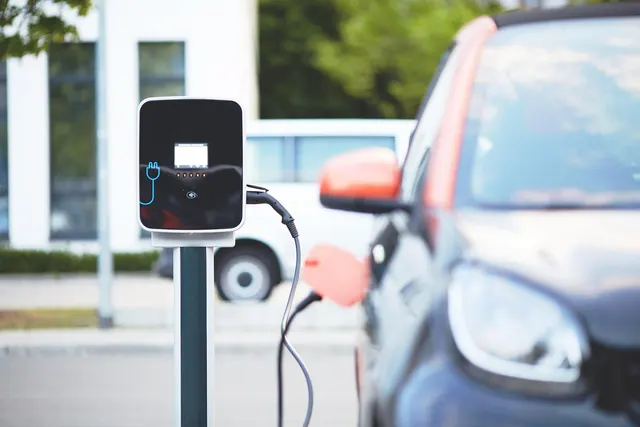
Photo: Pixabay
On this page 6 sections
- Why Public Chargers Are Adding Card Readers
- State and Federal Payment Access Rules for Chargers
- EV Charger Credit Card Reader Options: Integrated, Retrofit or App-Only
- How to Charge for EV Charging: kWh, Time, Session and Idle Fees
- Pre-Auth Holds and the Cost of Small Tickets
- Choosing a Setup for a Hotel or Store Lot
If you're adding public EV chargers to a hotel or store lot, plan on an EV charger credit card reader at the charger or at a payment station beside it. Some states require that drivers be able to pay on the spot with a card, without an app or a network membership. Some grant programs attach a similar condition to the money they award. The hardware you choose also decides how you can price a session and how much of each small sale goes to processing fees.
None of this is legal advice. Charger payment rules are still changing, so confirm the requirements at your address with your state energy office, your weights-and-measures agency or a qualified attorney before you buy hardware.
Why Public Chargers Are Adding Card Readers
Early public charging ran mostly on apps and network membership cards. A driver would pull up and find the charger belonged to a network they hadn't joined. Paying meant downloading an app, creating an account and loading a payment method in a parking lot, sometimes with weak cell signal.
Where policymakers have stepped in, the direction is consistent: if a charger sells electricity to the public, a driver should be able to pay with the cards already in their wallet. That changes how a host should shop. An app-only charger installed today becomes a problem the day your state adopts a card-payment rule or you apply for a grant that requires one.
There is a plain business reason too. Hotel guests and shoppers who can't work out how to pay drive off, and some leave a review about it. A tap-to-pay reader removes that friction.
State and Federal Payment Access Rules for Chargers
Four layers of rules can touch payment at a charger. They come from different authorities, so keep them separate when you ask questions.
Federal funding conditions (law, tied to the money). Chargers built with federal grant dollars may carry payment-access conditions as part of the grant terms. Conditions like these attach to the funding, not to every charger in the country, so a charger bought entirely with your own money generally falls outside them unless a state program adds similar terms. Federal guidance on charger funding has changed more than once. If a grant is involved, get the current payment requirements in writing from the program administrator before you order equipment.
State rules (law, different in every state). Some states require card acceptance on public chargers regardless of who paid for them. Others write card acceptance into their own rebate programs, so the requirement binds you only if you take the incentive. Scope, deadlines and treatment of equipment already installed vary by state. Your state energy or air-quality agency can tell you what applies at your site.
Weights and measures (law, about how you price). In some states, the agency that inspects fuel pumps also oversees EV charging. Where that's true, expect rules on measuring the electricity accurately and showing the price before the session starts, and possibly limits on how you can price. Ask your state's weights-and-measures office directly, because the answer shapes your pricing choices below.
Card network rules (private rules, not law). Visa and Mastercard rules govern how an unattended terminal authorizes and completes a sale. Those rules don't require you to install a reader. They do control how the reader behaves once it's there, including how holds and final amounts are handled.
One more distinction matters for hosts. Payment-access rules generally target chargers that sell charging. Free charging for guests or shoppers may sit in different territory, so ask your state agency whether a free charger needs a reader. Free charging also has a way of turning paid once the electric bill arrives, and adding a reader after installation costs more than building it in from the start.
EV Charger Credit Card Reader Options: Integrated, Retrofit or App-Only
You can take payment at a charger in three ways. Each has its own cost profile and compliance risk.
| Setup | How the driver pays | Main advantage | Main catch |
|---|---|---|---|
| Integrated reader | Taps or inserts a card at the charger | One device, one install, payment tied directly to the session | Limited to the processors the charger maker has certified |
| Retrofit or pedestal terminal | Pays at an add-on unattended terminal or a shared payment kiosk | Works with existing chargers; one station can serve several ports | More wiring, and the terminal has to talk to the charger software |
| App or QR code only | Pays on a phone through an app or web page | Lowest hardware cost | May not satisfy a card-reader requirement; priced as card-not-present |
Integrated readers are an EV charger payment terminal built in at the factory. Ask the manufacturer early which processors its payment module supports. Some modules work with only one or two, which locks you into whatever rates those processors set. Before you sign, find out whether you can bring your own merchant account and gateway.
Retrofit terminals are the same kind of unattended payment terminals used for vending, laundry and kiosks, mounted on or near the charger. On a lot with several ports, one shared self-service payment kiosk can cost less than a reader on every port. Software is where retrofits get hard. Your terminal has to tell the charger to start, and the charger has to report the energy delivered back so the final amount is right.
App-only and QR payment keeps hardware costs down. A payment made on the driver's own phone, though, is a card-not-present sale, which generally carries higher interchange and more fraud exposure than a tap at a terminal. Our breakdown of card-present vs. card-not-present fees and rules explains why. And where a rule calls for a physical contactless reader, a QR sticker won't meet it.
An unattended device in a parking lot is also an easy target for skimmers. Ask whether the reader supports point-to-point encryption for card readers. Encrypting card data at the moment of the tap cuts your skimming risk and can shrink your PCI DSS burden.
How to Charge for EV Charging: kWh, Time, Session and Idle Fees
Four pricing levers are available to most hosts. Check which ones your state's weights-and-measures rules allow before you set a price.
- Per kilowatt-hour (kWh). Drivers pay for the energy delivered, the way they pay per gallon at a pump.
- Per minute or hour. Easy to explain, but a slow-charging car pays more for the same energy, and some states restrict time-based pricing for the electricity itself.
- Per session. A flat fee to start, often paired with an energy price. It helps cover fixed card fees, though drivers notice it on short top-ups.
- Idle fees. A charge that begins after the session ends while the car stays parked. This is how you free up spaces.
Show the full price on the charger screen or a posted sign before the driver taps. Up-front price display is a common requirement where weights-and-measures rules apply, and it is your best defense against "I didn't agree to that" disputes.
Pre-Auth Holds and the Cost of Small Tickets
An unattended charger doesn't know the final amount when the driver taps, so it works like a gas pump. First it authorizes an estimated amount. Energy flows, and then a completion goes through for the actual total. Problems start in the gap between those two numbers.
On a credit card, an oversized hold mostly goes unnoticed. On a debit card, it ties up the driver's checking balance until the issuing bank releases the unused portion, which can take days. Set the estimate near a realistic full session, show the hold amount on screen, and make sure the system sends the completion the moment the session ends. Our explainer on how long authorization holds last and how to release them covers the mechanics. Also ask whether the terminal supports partial approvals, so a prepaid card with a low balance can still start a short session.
Small tickets are where processing fees hurt. Every card sale carries two kinds of cost: a percentage of the sale and one or more fixed per-transaction fees from the processor, the gateway or the charging network. Percentages scale with the ticket; fixed fees don't. To see what a session actually costs you, work out the effective rate from your own quote:
Effective rate = percentage rate + (all fixed fees per session ÷ session amount)
Run that formula twice: once for your shortest common session and once for your longest. On a long fast-charging session, fixed fees barely move the effective rate. On a short top-up, they can add more than the percentage itself. That gap is the argument for a modest session fee or a minimum charge.
Comparing two quotes works the same way. Suppose one processor offers a lower percentage with a higher fixed fee and another offers the reverse. Divide the difference in fixed fees by the difference in percentage rates to find the break-even sale amount. If most of your sessions fall below it, the quote with the lower fixed fee costs you less. Charging-network software fees, whether a monthly per-port subscription or a revenue share, come on top of processing, so get them in writing too.
Choosing a Setup for a Hotel or Store Lot
Hotels: Overnight Guests and Folio Billing
Hotel charging is mostly slow, overnight sessions for guests, plus some walk-in public use. Two decisions matter most. First, decide whether guests can post charging to their room folio through your property management system (PMS), whether public drivers pay at a reader, or both, and confirm with your PMS vendor and charger provider that the systems connect. Second, set idle fees with sleeping guests in mind. A guest who plugs in after dinner and unplugs at checkout shouldn't wake up to an idle charge they never saw. A posted overnight grace period heads off most front-desk arguments and chargebacks. For property-specific setups, see our hotel payment processing page.
Retail Lots: Turnover Over Margin
For a store, chargers exist to bring in shoppers, not to profit on electricity. Price for turnover: an energy-based rate plus an idle fee that starts shortly after the session ends keeps spaces open for the next customer. If you already run retail store payments through one processor, ask whether the charger's reader can settle into a separate merchant ID (MID) under the same relationship. A separate MID keeps charging revenue apart from store sales when you reconcile deposits.
Before you order chargers, get three things in writing: the payment-access rules that apply at your address, the list of processors the charger supports, and the full per-session fee stack. If you want the processing side quoted against your expected session sizes, request a free processing quote, and a MannyPay specialist will respond within one business day.
This article is for general educational purposes and is not legal, tax or financial advice. Card network rules and state laws change; confirm current requirements for your business.