Card-Present vs. Card-Not-Present: Fees, Fraud, and Rules
Card present vs card not present: learn how networks classify each sale, why CNP costs more, who carries fraud liability, and how to cut your fees.
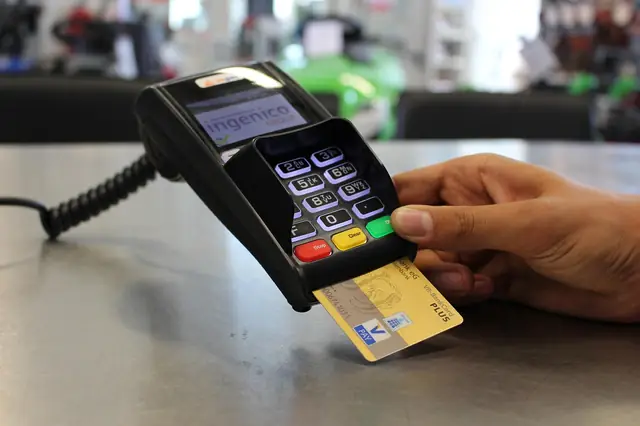
Photo: Pixabay
On this page 7 sections
- Card-Present Transaction Definition: How Networks Classify Sales
- Card Present vs. Card Not Present: The Interchange Gap
- CNP Fraud: Who Carries Liability in Each Case
- Gray Areas: Phone Orders, Tap-to-Pay on Phones, and Kiosks
- Reducing Card-Not-Present Fees With AVS, CVV, and Tokenization
- Choosing Pricing When You Sell Both Ways
- Next Steps
Key takeaways
- A sale is classified by how the card data is captured, not by where your business is. A card typed into a terminal at your counter can still be priced like an online sale.
- Card-not-present transactions usually carry higher interchange because they carry more fraud risk, and merchants generally absorb CNP fraud chargebacks.
- AVS, CVV, 3-D Secure, and tokenization can lower CNP risk. Some of these can also affect the interchange category a sale qualifies for.
- If you sell both in person and remotely, interchange-plus pricing shows you the real cost of each channel. Flat and tiered plans can hide it.
Two identical $200 sales can cost you different amounts to process. One customer taps a card at your counter. The other reads the same card number to you over the phone. The difference comes down to card present vs. card not present classification, one of the main factors that sets your interchange costs. This guide covers how the card networks tell the two apart and why keyed and online sales usually cost more. It also explains who pays when fraud happens, which situations fall into gray areas, and how to set up pricing if you sell both ways.
If you want a refresher on how a transaction moves from your terminal to the customer's bank, start with our guide on how credit card processing works for merchants.
Card-Present Transaction Definition: How Networks Classify Sales
Visa, Mastercard, American Express, and Discover sort every transaction by how the card data reached your processor.
A card-present (CP) transaction is one where the card and cardholder are physically at the point of sale and your terminal reads the card directly. That usually means a chip insert, a contactless tap, or a magnetic stripe swipe. The terminal captures data from the card itself, and some of that data, especially from EMV chips, is hard to counterfeit.
A card-not-present (CNP) transaction is one where the card data reaches you some other way:
- Online checkout on your website or app
- Phone orders keyed into a virtual terminal
- Mail or fax order forms
- Recurring or card-on-file charges
- Invoices and payment links paid by the customer
Your business type does not decide the category. A retail store can run CNP sales, and an e-commerce brand can run CP sales at a pop-up. Each transaction is classified on its own, based on the entry method and the data sent with the authorization.
Card Present vs. Card Not Present: The Interchange Gap
Interchange is the fee paid to the card-issuing bank on each sale. It makes up the largest part of most merchants' processing cost. The networks publish separate interchange categories for CP and CNP transactions, and the CNP categories usually cost more. The reason is risk. With no chip read and no physical card, the issuer has less proof that the real cardholder made the purchase.
The exact gap depends on the card brand, card type (debit, standard credit, rewards, commercial), your merchant category, and the data you send with the transaction. The networks update their tables periodically, so check current interchange schedules or ask your processor for the categories your sales actually qualify for. For international cards, see our breakdown of cross-border fees vs. foreign transaction fees and who pays each.
Illustrative example (hypothetical numbers): Say a CNP sale on a particular card costs half a percentage point more than the same sale tapped in person. On a $1,000 invoice, that is $5 more. If $40,000 of your monthly volume moves from in-person to keyed or online, that same hypothetical gap adds about $200 a month. Your real figures will differ, so use your own statements.
We go deeper on the online side in why card-not-present rates cost more for online stores.
How This Plays Out by Industry
- Retail stores: Most counter sales are chip or tap. Costs creep up through phone holds, special orders, and "the chip won't read so I'll type it in."
- E-commerce stores: Nearly all volume is CNP. The levers are fraud tools, the data you send, and checkout design, not card entry method.
- Professional services: Firms that bill after the work is done often take payments by phone, invoice, or stored card. Much of that volume ends up CNP even when clients come into the office.
- Medical and dental practices: Copays at the front desk can be card-present. Balances billed after insurance pays are usually charged remotely or from a card on file, which is CNP. Our article on charging patient balances to a card on file covers consent and workflow.
CNP Fraud: Who Carries Liability in Each Case
Fees are half the story. The other half is who pays when a cardholder says, "I didn't make this purchase."
| Scenario | Who Generally Bears Fraud Chargebacks |
|---|---|
| Chip card read by a chip-enabled terminal | Counterfeit fraud liability generally sits with the issuer |
| Chip card swiped on a terminal that can't read chips | Merchant may bear counterfeit fraud liability |
| Contactless tap on a compliant terminal | Generally treated like a chip read |
| Online or keyed sale without authentication | Merchant generally bears fraud chargebacks |
| Online sale authenticated with 3-D Secure | Liability can shift to the issuer for qualifying transactions |
For in-person sales, EMV liability rules generally put counterfeit fraud losses on whichever party used the less secure technology. If you accept chip cards on modern smart terminals and let the chip or tap do its job, you are usually in a stronger position.
For CNP sales, the default leans against the merchant. CNP fraud chargebacks are generally your loss unless you used an authentication method that shifts liability, such as 3D Secure authentication for online payments. Even then, liability shift applies to fraud claims, not to disputes over quality, delivery, or cancellation. Network rules differ by brand and dispute type, so confirm the details with your processor.
To understand what happens after a dispute is filed, read how chargebacks work through the full dispute lifecycle.
Gray Areas: Phone Orders, Tap-to-Pay on Phones, and Kiosks
Some situations confuse merchants because the customer seems "present" even when the transaction isn't, or the other way around.
| Situation | Usual Classification | What to Know |
|---|---|---|
| Phone order keyed into a virtual terminal | CNP | Being on the phone with the customer doesn't make it card-present |
| Card keyed at the counter because the chip failed | Typically keyed, often priced at a higher or downgraded rate | Fix or replace failing readers. Don't make keying a habit |
| Customer pays an emailed invoice or payment link | CNP | The customer enters the data, not your terminal |
| Recurring or card-on-file charge | CNP | Card-on-file rules require cardholder consent and proper credential handling |
| Tap-to-pay on a smartphone acting as your terminal | Generally card-present | The phone reads the card's contactless chip. Confirm classification with your provider |
| Self-service kiosk reading a chip or tap | Card-present, often in unattended categories | Unattended sales can have their own rules and interchange categories |
| Customer scans a QR code and pays on their own phone | Usually CNP | It works like an online checkout |
Keyed entry at the counter is the most common hidden cost for storefronts. The customer and card are standing right in front of you, but without a chip read or tap, the issuer gets weaker data. Whether a keyed sale can qualify for any card-present category depends on the card brand and what your system captures. Ask your processor how your keyed sales are actually priced.
Unattended self-service kiosks are their own case. They can read chips and taps, but unattended transactions may be subject to different rules than staffed checkouts.
Reducing Card-Not-Present Fees With AVS, CVV, and Tokenization
You can't turn an online sale into an in-person one. You can make CNP transactions safer and better documented, which can reduce fraud losses and, in some cases, help sales qualify for better interchange categories. If you want to compare a non-card option for remote payments, see our guide to how pay by bank and open banking payments work for merchants.
Address Verification Service (AVS)
AVS checks the billing ZIP code and street address the customer entered against the issuer's records. Some CNP interchange categories expect address verification data. Leaving it out can push a sale into a costlier category.
- Ask for at least billing ZIP code on every keyed or online sale.
- Decide in advance what to do with partial matches. Don't decline every mismatch, but review high-value ones.
Card Verification Value (CVV/CVC)
The three- or four-digit security code helps show the customer had the card. Ask for it on every CNP sale, and never store it after authorization. Card network and PCI DSS rules prohibit keeping it.
Tokenization
Tokenization replaces the card number with a stand-in value that is useless if stolen. It matters most for card-on-file billing, which is common in medical, dental, and professional services. Benefits include:
- Less sensitive card data in your systems, which can reduce PCI DSS scope
- Safer recurring and post-service billing
- Network tokens that the card brands keep updated when cards are reissued, which may help authorizations go through
A Quick CNP Checklist
- Collect AVS data (at least ZIP) and CVV on every keyed and online sale.
- Turn on 3-D Secure for higher-risk online orders.
- Store cards only as tokens, with documented customer consent.
- Use a secure, PCI-compliant virtual terminal for phone and mail orders instead of writing card numbers on paper.
- Settle transactions in daily batches. Delayed settlement can also affect the interchange category you qualify for.
- Train staff never to key a chip card that can be inserted or tapped.
Choosing Pricing When You Sell Both Ways
Many businesses run a mix: a retail shop with a web store, or a dental office with front-desk copays and mailed statements. Your pricing model determines whether you can see what each channel costs.
| Pricing Model | How CP vs. CNP Shows Up | Watch For |
|---|---|---|
| Interchange-plus | Each sale is billed at its actual interchange category plus a disclosed markup | Most transparent. Statements take some practice to read |
| Flat rate | Often one rate for in-person and a higher rate for keyed or online | Simple, but can overcharge on low-cost CP debit sales |
| Tiered (qualified, mid-qualified, non-qualified) | Keyed and online sales often land in costlier tiers | Hard to audit. Tier rules are set by the processor |
If your volume is mixed, interchange-plus usually makes it easiest to see where your money goes. Our comparison of interchange-plus vs. flat-rate pricing walks through the trade-offs with examples.
Passing Costs to Customers
Some merchants use cost programs to offset processing fees. MannyPay offers cash discount, dual pricing programs, surcharging where permitted, and zero cost processing for eligible merchants. Each works differently across channels:
- In person, signage and terminal prompts handle disclosure.
- Online and by phone, you need clear price display at checkout or on invoices before the customer pays.
- Surcharging is governed by card network rules and state law. Debit cards generally can't be surcharged, and some states restrict the practice.
Rules also vary for medical practices and other regulated professions. Review the key differences between cash discount, surcharging, and dual pricing, and confirm current requirements with your processor and a qualified legal professional before launching any program. If you operate in California, see our guide on whether credit card surcharging is legal in California.
Next Steps
Start with your own data. Pull your last few processing statements and sort volume by entry method: chip, tap, swipe, keyed, and online. Look for keyed sales that could have been tapped, CNP sales missing AVS or CVV, and fraud chargebacks that 3-D Secure might have covered. To work out what each sale is costing you, see our guide on how to calculate credit card processing fees on any sale.
If your statements don't break this down clearly, that tells you something too. A MannyPay specialist can review your current statement, explain how your CP and CNP sales are being priced, and talk through equipment and pricing options. Request a free quote, and a specialist will respond within one business day.
This article is for general educational purposes and is not legal, tax or financial advice. Card network rules and state laws change; confirm current requirements for your business.