Is Credit Card Surcharging Legal in California? 2025–2026 Rules
Is credit card surcharging legal in California? Learn what Civil Code 1748.1, Italian Colors and SB 478 mean for card fees and safer ways to offset costs.

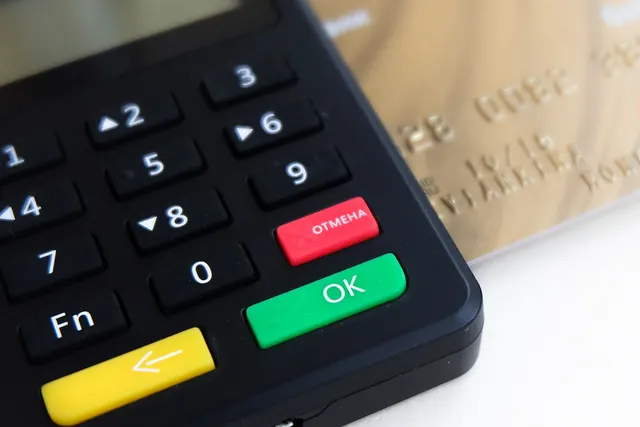
Photo: Pixabay
On this page 8 sections
- The Short Answer: Is Credit Card Surcharging Legal in California?
- What Civil Code §1748.1 Says on Paper
- Italian Colors v. Becerra and the California Surcharge Ban
- How SB 478 Affects a Credit Card Fee for California Businesses
- Surcharge vs. Cash Discount vs. Dual Pricing in California
- Card Network Rules You Still Must Follow
- Safer Options for Offsetting Processing Costs
- Next Steps for California Merchants
Key takeaways
- California Civil Code §1748.1 still bans credit card surcharges on paper. In 2018, the Ninth Circuit held it couldn't be enforced against the five businesses that sued.
- Since July 1, 2024, SB 478 has required mandatory fees to be in the advertised price, so a card fee added at checkout is the riskiest setup.
- Section 1748.1 expressly allows cash discounts offered to all buyers, which makes them the cleanest way to recover card costs in California.
- Visa caps surcharges at the lower of your cost or 3% and requires 30 days' notice to your acquirer, and network rules don't allow surcharging debit or prepaid cards.
Is credit card surcharging legal in California? The honest answer is "it's complicated." This guide covers four things: what Civil Code §1748.1 says, what the Ninth Circuit's 2018 Italian Colors ruling changed (and didn't), how SB 478's price-display rules affect card fees, and why many California merchants use a cash discount instead. Everything here reflects the rules as of our October 2026 review. It's general information, not legal advice, so check your setup with a California attorney.
The Short Answer: Is Credit Card Surcharging Legal in California?
Four layers decide whether a California card fee is safe, and your program has to pass all of them:
| Layer | What It Says | Practical Effect |
|---|---|---|
| Civil Code §1748.1 (1985) | Bans surcharges on consumers who pay by credit card; allows discounts for paying other ways | Still on the books |
| Italian Colors v. Becerra (2018) | Ninth Circuit held the ban unconstitutional as applied to five businesses | Created a gray area, not a clean repeal |
| SB 478 (effective July 1, 2024) | Mandatory fees must be in the advertised price | A fee added at checkout is the riskiest design |
| Card network rules | Caps, notice, disclosure, credit-only limits | Apply even where state law allows a fee |
In short, a traditional surcharge added at the register carries real legal risk in California. A properly run cash discount is built on language the statute itself allows.
What Civil Code §1748.1 Says on Paper
The California surcharge ban is short. Under California Civil Code 1748.1, a retailer in a sales, service or lease transaction with a consumer can't add a surcharge when a cardholder pays by credit card instead of cash, check or similar means.
The same subsection allows the opposite approach. A retailer may offer discounts to encourage payment by cash, check or other methods that don't use a credit card, as long as every prospective buyer is offered the discount (FindLaw's copy of the code, current as of January 1, 2026).
The penalties are enforced mainly by customers themselves:
- Suppose a retailer willfully adds a surcharge and a cardholder demands it back in writing by certified mail. If the retailer doesn't refund it within 30 days, it can owe three times the actual damages.
- The cardholder can also recover reasonable attorney's fees and costs.
- Claims can be filed in small claims court when they're within its limits.
A 2020 bill, AB 2695, proposed replacing the ban with a capped surcharge that had to be disclosed. Section 1748.1 is still in the code today.
Italian Colors v. Becerra and the California Surcharge Ban
The Ninth Circuit decided Italian Colors Restaurant v. Becerra on January 3, 2018 (Hunton summary). The ruling came a year after a 2017 Supreme Court decision that treated New York's similar law as a regulation of speech (Covington). The court's reasoning: §1748.1 already lets merchants charge card users more than cash payers, as long as the difference is called a cash discount. Banning the word "surcharge" for the same price gap restricted speech (JD Supra).
The ruling has three limits:
- It applied only to the businesses that sued. The court held the statute violated the First Amendment as applied to these plaintiffs. It didn't strike the law down for everyone (lawyers call that a facial challenge) (Justia opinion summary).
- The state reads it narrowly. The California Attorney General describes the outcome as the law being unenforceable against the businesses that brought the case.
- Other situations are unsettled. A California New Car Dealers Association memo points out that none of the five plaintiffs added surcharges to financed or lease transactions. Nobody knows how a court would treat a business that does.
The Attorney General also says merchants still can't mislead customers. Examples include advertising a lower price than they charge or hiding differences between credit, debit and cash prices. That's where SB 478 comes in.
How SB 478 Affects a Credit Card Fee for California Businesses
SB 478, often called the Honest Pricing Law, took effect July 1, 2024. It requires mandatory fees to be included in the advertised price. It also targets "drip pricing," where extra charges show up only at checkout (Nickel's California summary). For how the law hit restaurants, see our explainer on California SB 478 and restaurant service charges.
Sources don't agree on how SB 478 applies to card fees:
- NFIB's 2025 surcharge and cash discount guide describes the Attorney General's position this way: a business can build card costs into its price for all customers, but it can't add a surcharge at the register on top of the advertised price. The guide also says SB 478 doesn't affect cash discounts.
- Some industry guides take a different view. IntelliPay's October 2025 state guide, for example, argues that a surcharge customers can avoid by paying another way isn't a mandatory fee.
When credible readings conflict, take the cautious route: the first price a customer sees should be the most they pay. Violations can bring enforcement by the Attorney General or private lawsuits under the Consumers Legal Remedies Act (Paywavez).
What "Advertised Price" Means by Channel
- In-person: shelf tags, menu boards, service price lists and window signs.
- Online: the product page and the cart, not just the final payment step.
- Keyed and phone orders: the price you quote out loud or in a written estimate before you enter the card into a virtual terminal.
Surcharge vs. Cash Discount vs. Dual Pricing in California
All three models charge card payers more than people who pay another way. What differs is which price you show first.
| Model | How It Works | California Risk Level |
|---|---|---|
| Surcharge | Post a base price; add a fee when a customer pays by credit card | Highest: conflicts with §1748.1 for businesses that weren't plaintiffs, and with the most cautious reading of SB 478 |
| Cash discount | Post the card price; customers paying cash (or another non-credit method your program allows) pay less | Lowest: §1748.1 expressly allows discounts offered to all buyers |
| Dual pricing | Show both the card price and the cash price upfront | Moderate: can work if the card price is clearly displayed, but get the display reviewed |
Illustrative example: A shop posts $400. With a cash discount, a card customer pays the posted $400 and a cash customer pays less. With a surcharge, the posted price is lower and the card customer pays more at checkout. The card customer may end up paying the same amount either way, but only the cash discount fits what California's statute allows.
NFIB also says that, under state tax guidance, cash discounts may not count toward the amount subject to sales tax. Ask your tax professional how that applies to you. For a fuller comparison, read cash discount vs. surcharge vs. dual pricing.
What This Looks Like in Your Industry
- Retail stores: Shelf tags and online listings must match. If you sell in-store and online, show the card price in both places and apply the cash discount at the register. Train staff to describe it as a discount, not a "fee."
- Professional services: Your engagement letters and invoices count as your "advertised price." Quote the card price, with a discount for paying by check or cash. Section 1748.1 covers consumer transactions, so ask your lawyer how it applies to business clients.
- Auto repair: What matters is the written estimate the customer approves. A fee that first appears at pickup is exactly what SB 478 targets. For more, see can auto repair shops charge a credit card fee.
- Medical and dental: Treatment estimates, patient statements and card-on-file authorizations should all price things the same way. Insurance contracts may add limits, so see whether doctors and dentists can charge credit card fees.
Card Network Rules You Still Must Follow
Even where state law allows surcharging, the card brands have their own conditions. As of our October 2026 review:
- Visa cap: Since April 15, 2023, Visa has limited a surcharge to your merchant discount rate or 3%, whichever is lower (Stax).
- Advance notice: You must tell your acquirer (the bank that processes your card payments) 30 days before you start surcharging.
- Credit only: You can't surcharge debit or prepaid cards, even when a customer runs a debit card "as credit" (Merchant Fee Free). Our guide to debit vs. credit card processing fees explains why the two are treated differently.
- Disclosure and receipts: Tell customers about the surcharge at the point of sale, both in-store and online, and show it on every receipt (Evolve Payment).
- Mastercard: Mastercard publishes a 4% maximum. Its U.S. registration form has shown a pause while the rules are being revised, according to the same Merchant Fee Free guide. Check the current process with your processor before you launch.
Cash discount and dual pricing programs come with their own processor requirements for signs and receipts. Your provider should set up the terminal and gateway for you, not just hand you a sign. If you're still choosing equipment, see our guide to credit card terminals vs. POS systems.
Safer Options for Offsetting Processing Costs
To recover card costs without betting your business on a disputed legal theory:
- Run a compliant cash discount program. A cash discount in California starts with posting card prices everywhere and then discounting qualifying payments. MannyPay's cash discount program works this way.
- Consider dual pricing, displayed carefully. A dual pricing setup shows both prices upfront. Have your signs, receipts and online display reviewed.
- Don't surcharge without a lawyer's review. MannyPay offers surcharging where permitted. In California, whether it's permitted for you is a question for your attorney.
- Look at what you actually pay. Comparing interchange-plus vs. flat-rate pricing may lower your costs before you pass anything on.
- Ask whether you qualify. MannyPay's zero cost processing programs are designed to help eligible merchants offset most or all of their card-processing fees. Results depend on your business and setup.
Next Steps for California Merchants
- List every place a price appears: tags, menus, web pages, estimates, invoices and quotes.
- If you add a card fee at checkout now, pause it until a California attorney has reviewed it.
- Make sure your terminals and gateway can tell debit from credit and print compliant receipts.
When you're ready to compare options, request a free quote and a MannyPay specialist will get back to you within one business day.
Sources
- Civil Code 1748.1 – California Legislative Information
- California Code, Civil Code § 1748.1 (FindLaw)
- Bill Text – AB-2695 Credit Card Surcharges (2019–2020)
- Credit Card Surcharges – California Attorney General
- Italian Colors Restaurant v. Becerra, No. 15-15873 (9th Cir. 2018) – Justia
- Ninth Circuit Clears the Way for Surcharges on Credit Card Payments in California – Hunton
- Ninth Circuit Strikes Down Ban on Retailers' Credit Card Surcharges – Covington
- Ninth Circuit Rules California "No Credit Card Surcharge" Law Violates First Amendment – JD Supra
- Credit Card Surcharges Memo (Updated 2025) – California New Car Dealers Association
- Credit Card Surcharge and Cash Discount Laws Guide 2025 – NFIB
- California Credit Card Surcharge Laws – Nickel
- Your State by State Surcharging Guide (October 2025) – IntelliPay
- Is Credit Card Surcharging Legal in California? – Paywavez
- Visa Surcharge Rules – Stax
- Visa Surcharge Changes: Effective April 15th, 2023 – Evolve Payment
- Visa Surcharge Rules: What Merchants Must Follow (2026) – Merchant Fee Free
This article is for general educational purposes and is not legal, tax or financial advice. Card network rules and state laws change; confirm current requirements for your business.