Money Transmitter License: Can Your Store Offer Remittances?
Most stores can offer remittances without a money transmitter license by working as a licensed provider's agent. Here are the federal rules that still apply.

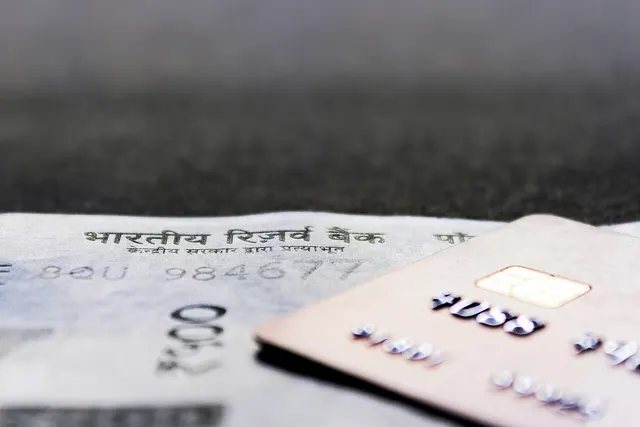
Photo: Pixabay
On this page 8 sections
- Informal Transfers Carry the Real Legal Risk
- Money Transmitter License vs. Authorized Agent: Who Carries What
- The Agent Exemption Has a Catch: Check Cashing on the Side
- Your Federal Duties as a Remittance Agent
- State Money Transmission Laws Sit on Top of FinCEN
- Keep Transfer Money off Your Card Terminal
- Does the Agent Role Pay? A Worked Example
- How to Vet a Remittance Provider Before You Sign
Key takeaways
- Sending customers' money through your personal account or wallet as a favor can be a federal crime under 18 U.S.C. § 1960, even if you didn't know your state required a license.
- If your store acts only as a licensed provider's agent, it doesn't have to register with FinCEN. Cashing checks from your own drawer for more than $1,000 per person per day can change that.
- Agents still keep records on transfers of $3,000 or more. Suspicious-activity reporting starts at $2,000, and several smaller transfers can add up to that amount.
- Before you sign, work out your break-even commission per transfer: minutes per transfer × hourly staff cost ÷ 60.
Most stores don't need a money transmitter license to offer remittances. If you offer transfers through a licensed company such as a national remittance brand, your store acts as that company's authorized agent, and the provider holds the state licenses and the federal registration. You would need your own license only if your business took in customers' money and moved it itself. That setup is also where small shop owners get into the most trouble.
Being an agent still comes with duties, because federal recordkeeping and suspicious-activity rules name agents directly. One exemption also trips up grocery stores that offer more than transfers. This is general information, not legal advice. Confirm your obligations with a qualified attorney and your state's financial regulator before you offer any transfer service.
Informal Transfers Carry the Real Legal Risk
When a customer pays for groceries, the money pays for your goods. That's a sale. You cross the line when you accept a customer's money so it can reach someone else. A common version starts as a favor: the owner collects cash from regulars and sends it to their relatives through a personal bank account or a Philippine wallet.
Federal law treats that seriously. Under 18 U.S.C. § 1960, anyone who knowingly runs or owns part of an unlicensed money transmitting business faces fines and up to five years in prison. The statute treats a business as unlicensed in three situations. Operating without a license in a state that makes unlicensed transmission a misdemeanor or felony is one, whether or not the owner knew a license was required. Skipping FinCEN's federal registration requirement is another. A third covers moving funds the owner knows came from a crime or are meant to support unlawful activity.
Well-meaning shop owners get caught by the first two. Not knowing the rule is no defense, and neither is doing it for family. If customers keep asking you to "just send it for them," an agent program is the legitimate answer. Our comparison of remittance options for sending money to the Philippines shows what customers weigh when they pick a service.
Money Transmitter License vs. Authorized Agent: Who Carries What
A licensed money transmitter (the "principal") holds the state licenses and registers with the Financial Crimes Enforcement Network (FinCEN). It runs the compliance program and sets prices and exchange rates. An authorized agent signs a contract with that principal and uses its system at the counter in exchange for a commission.
| Factor | Your Own Money Transmitter License | Agent of a Licensed Provider |
|---|---|---|
| State licenses | You get one in each state where it's required | Provider's existing licenses |
| FinCEN registration | Required; renewed every 24 months | Not required if you act only as an agent |
| Agent list | You keep a list of your agents | Provider lists your store |
| Compliance program | You build and run it | You follow the provider's program and handle your own counter duties |
| Pricing and FX rates | You set them | Provider sets them |
| Liability | Mostly yours | Shared; your contract sets your share |
Those registration rows come straight from FinCEN's regulation, 31 CFR § 1022.380. MSB, short for money services business, is FinCEN's term for companies that move money or offer related financial services. A business that is an MSB only because it acts as another MSB's agent doesn't have to register. Its principal does, and it must keep a list of its agents that it updates every January 1. FinCEN's registration page sets the principal's timeline: register within 180 days of starting the business, then renew every 24 months.
A dedicated remittance company might take on the licensing and compliance staff in the left column. For a store that mostly sells pandesal and frozen goods, there is little reason to.
The Agent Exemption Has a Catch: Check Cashing on the Side
Some owners assume that signing with one provider covers everything financial they do at the counter. It doesn't. Your exemption holds only while you act as someone else's agent. Under § 1022.380, a business that offers MSB services both as an agent and on its own behalf has to register with FinCEN.
FinCEN's regulation uses a supermarket as its own example. A supermarket that acts only as an agent for a money order issuer doesn't register, and that stays true if it also serves as a money transmitter's agent. It would need to register if it cashed checks or exchanged currency for its own account in amounts over $1,000 for any person on any day.
That example describes a lot of neighborhood grocery stores. Suppose you're a remittance agent and you also cash payroll checks from your own drawer as a courtesy. Check cashing on your own account can make you a registrable MSB yourself. Before you add any money service, write down which provider each one runs through. Anything that runs through no provider goes to your attorney first.
Your Federal Duties as a Remittance Agent
Skipping FinCEN registration doesn't mean skipping FinCEN's rules. Your store is still an MSB under FinCEN's definitions, and two rules apply to the transactions you handle.
Recordkeeping at $3,000. 31 CFR § 1010.410(e) applies to "each agent" of a nonbank financial institution for transfers of $3,000 or more. According to the IRS summary for money transmitters, the core records include the sender's name and address, the amount and date, any payment instructions and the recipient's financial institution. When the sender isn't an established customer, you also record the type and number of the ID you checked, along with a taxpayer ID number or a substitute such as a passport number. Provider software usually captures these fields. Your job is to enter them exactly as they appear on the ID.
Suspicious activity at $2,000. Under 31 CFR § 1022.320, an MSB must report a suspicious transaction of at least $2,000. The rule covers transactions the business knows about, suspects or has reason to suspect. Several transfers can add up to that amount. When more than one MSB handles a transaction, a single report can cover it. Get in writing which reports your provider files and how it wants you to escalate the rest.
A Counter Scenario Worth Training On
This scenario is illustrative. A customer sends $1,900 to a recipient in Cebu at 10 a.m. At 4 p.m. the same customer comes back to send another $1,900 to the same person, adding that they'd rather not show ID again.
Neither transfer reaches $3,000 on its own. Together they total $3,800, which clears the $2,000 suspicious-activity floor because that rule lets transfers add up. Splitting it this way also looks like an attempt to stay under the $3,000 recordkeeping line. Breaking up amounts on purpose to avoid reporting is called structuring, and FinCEN's MSB rules cross-reference a separate prohibition on it. Your cashier should go only as far as the provider's procedure allows, then escalate quietly to your designated compliance person without telling the customer the activity may be reported.
Other patterns deserve training time. Watch for one person sending on behalf of several others, or a bystander coaching the sender. Many unrelated senders paying the same recipient is another warning sign, as are ID details that don't match what the customer says. However friendly the request, never help a customer split a transfer.
The IRS cites a five-year federal retention period for currency transaction reports, and five years is the usual period for Bank Secrecy Act records. Keep your records at least that long, or longer if your provider requires it.
State Money Transmission Laws Sit on Top of FinCEN
FinCEN's regulation requires MSBs to register federally whether or not a state licenses them, so the two layers run separately. State money transmission laws differ widely, and a principal may need a license in each state where it operates. Many states let agents work under the principal's license. Some add requirements of their own, so confirm the agent rules with your state financial regulator.
Your provider should know those rules, but check the regulator's website yourself. Look up the provider's license there and confirm it is current and covers money transmission.
Keep Transfer Money off Your Card Terminal
Running transfer money through your merchant account is the fastest way for a remittance program to damage your main business. When a customer pays for a transfer by debit card, use the payment method the provider supplies. Ringing it up as "grocery" or "general merchandise" on your own terminal misdescribes the transaction and breaks your merchant agreement and card network rules. It can also get your merchant account closed.
Cash needs the same separation. Give remittance cash its own drawer or bag and reconcile it every day against the provider's report; you can adapt our steps to balance a cash drawer at the end of each shift. Providers pull collected funds from your bank account on a set schedule, so that money has to be in the account on time. Talk to your bank before you sign, because some banks look closely at accounts tied to transfer activity. Holding more cash also raises your exposure, so review your controls against employee theft in a retail store.
Does the Agent Role Pay? A Worked Example
Commission terms vary by provider, so the numbers below are illustrative only, not market rates. Assume 40 transfers a week at a $2.50 commission each. Each transfer takes 6 minutes of counter time including the ID check, and staff cost $18 an hour fully loaded.
Commission income comes to 40 × $2.50 = $100 a week, or $5,200 a year. Staff time runs 40 × 6 minutes = 4 hours a week, which costs $72 a week, or $3,744 a year. On their own, the transfers net $1,456 a year before equipment fees and cash-handling losses.
Extra purchases change the picture. Suppose one sender in four (10 a week) buys $12 of goods during the visit at a 35% gross margin. That adds 10 × $12 × 0.35 = $42 a week, or $2,184 a year. Counting both, the program contributes about $3,640 a year under these assumptions.
Turn this into a decision rule. Your break-even commission per transfer is minutes per transfer × hourly staff cost ÷ 60; here that's 6 × $18 ÷ 60 = $1.80. When a provider's offer falls below that figure, the program pays only if senders really do buy while they're in the store, so check your own sales records before counting on it. Volume also follows the calendar. Transfers to the Philippines tend to pick up around paydays and in the "ber months" before Christmas, with more bumps during school enrollment and after typhoons. Staff for those weeks.
How to Vet a Remittance Provider Before You Sign
- List your corridors. Note where customers send money and how recipients want it: bank deposit, cash pickup, wallet or door-to-door delivery.
- Verify the provider yourself. Check its MSB registration in FinCEN's registrant search and its license on your state regulator's site.
- Run your break-even number against each written commission offer, using your real counter times.
- Ask your bank whether your business account can handle the provider's settlement pulls.
- Have an attorney read the contract. Focus on liability for fraud and errors, settlement timing, equipment fees, minimum volumes, exclusivity and termination.
- Train staff and name a compliance person before the first transfer, using the $1,900-twice scenario above.
For setup details, see our guide to adding remittance services to your store.
Remittances run on the provider's licensed system, while everything else your customers buy runs through your own checkout. MannyPay sets up merchant accounts and POS systems for grocery markets and other retail stores, and Filipino-American businesses are among the industries it serves. If you're planning a remittance counter, request a free quote and review your card processing at the same time. A MannyPay specialist responds within one business day.
Sources
- FinCEN: Money Services Business (MSB) Registration
- FinCEN: Registration of Money Services Business Electronic Filing Instructions
- eCFR: 31 CFR § 1022.380, Registration of Money Services Businesses
- 31 CFR § 1022.380, Registration of Money Services Businesses (Cornell LII)
- 31 CFR § 1022.320, Reports by Money Services Businesses of Suspicious Transactions (Cornell LII)
- 31 CFR § 1010.410, Records to Be Made and Retained by Financial Institutions (Cornell LII)
- IRS: ITG FAQ #3, Recordkeeping Requirements for Money Transmitters
- 18 U.S.C. § 1960, Prohibition of Unlicensed Money Transmitting Businesses (GovInfo)
- 18 U.S.C. § 1960 (2021), Justia
This article is for general educational purposes and is not legal, tax or financial advice. Card network rules and state laws change; confirm current requirements for your business.