Gas Station Payment Processing: Pay-at-Pump EMV and Fuel Fees
Gas station payment processing explained: why pump pre-auth holds happen, who pays for skimmed cards, fleet card rules and how to cut card fees on fuel.
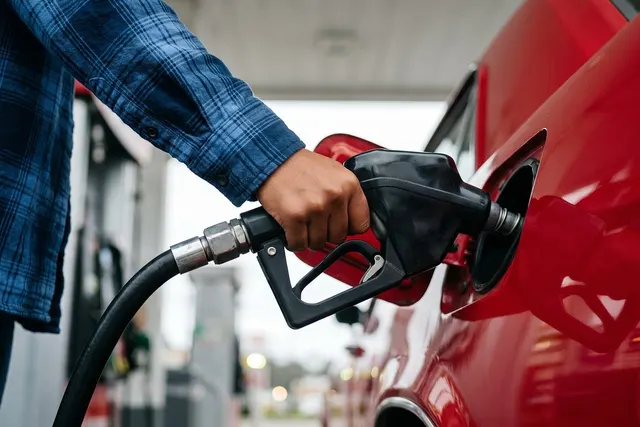
Photo: Pixabay
On this page 6 sections
Gas station payment processing differs from ordinary retail processing in three ways. First, the pump approves a card before anyone knows the sale amount. Second, the outdoor card reader carries its own fraud liability. Third, fuel margins are measured in cents per gallon, so card fees take a far bigger share of profit on fuel than they do inside the store. A station that clears pump holds quickly, keeps its dispensers chip-ready and tracks its card cost per gallon avoids most of the complaints and losses in this business.
Each of those problems starts at the dispenser, so that's where to begin.
Gas Station Payment Processing Starts With a Two-Step Pump Sale
A counter sale is one message. The terminal asks the card issuer to approve the exact total, the issuer answers, and that amount settles. A pump can't work that way, because when the card goes in, nobody knows whether the driver wants a few gallons or a full tank.
So pay-at-the-pump runs in two messages. In the authorization step, the dispenser's card reader passes the card to the forecourt controller, the system that runs the pumps and talks to your processor. The controller asks the issuer to approve an estimated amount. If the issuer says yes, the controller turns the dispenser on and the driver can start fueling. In the completion step, the driver hangs up the nozzle and the controller sends the real dollar amount. The completion is what settles and what the customer pays.
No cashier checks the card, so the networks treat the sale as unattended. That's why many pumps ask for a billing ZIP code. The prompt is a cheap fraud check on a sale with nobody watching.
Nearly every fuel payment complaint traces back to the gap between those two messages.
Fuel Pre-Auth Amounts and Customer Hold Complaints
The first authorization places a hold on the cardholder's available credit or bank balance. Visa and Mastercard each set a ceiling on the pre-authorization amount for fuel dispensers, and they have revised it over the years. Your processor and controller settings decide what your pumps actually request under that ceiling. Ask your processor for the exact amount your pumps request and check it against the current network rules.
Customers see the hold as missing money. A debit cardholder with a thin balance sees a pending charge much larger than the fill-up and assumes the station overcharged. An hour later, the same customer gets declined at the grocery store because the hold is still there. When the hold and the final charge appear side by side, the customer may file a dispute that looks like one of the duplicate charge chargebacks merchants already know, even though only one charge settles.
The issuer decides when a hold drops off. You control the things that make holds linger:
- Send completions promptly. A late or missing completion leaves the hold on the account until it expires. Confirm that your batch closes on schedule and that no completions are stuck in the controller.
- Request no more than your rules and tickets call for. A bigger pre-auth means bigger holds and more debit declines.
- Accept partial approvals. When an issuer approves less than the requested amount, a pump set up for partial approval sells fuel up to that limit instead of turning the driver away.
- Explain holds at the pump and the counter. Post a short sign on the dispenser and give cashiers a line to repeat: "The bank holds an amount while you pump, then charges only what you bought." Pair it with a script for declined cards at checkout.
- Offer prepay inside. Customers who don't want a hold can pay a set amount at the register.
Pay-at-the-Pump EMV Liability and Skimming
When Visa and Mastercard moved counterfeit-fraud liability to merchants without chip readers, fuel dispensers got a later deadline than indoor terminals because retrofitting pumps is expensive. That later deadline has now passed. A counterfeit copy of a chip card used at a pump that reads only the magnetic stripe is the station's loss, not the issuer's. A chip-enabled fuel pump payment terminal moves counterfeit liability back to the issuer.
The shift covers counterfeit fraud. Lost and stolen card fraud falls under separate rules that differ between networks, so ask your processor how each one applies to your dispensers. Our explainer on who pays for counterfeit card fraud under the EMV liability shift walks through the rule for card-present sales.
Chip readers stop cloned cards, but skimmers are a separate threat. A pump skimmer sits inside the dispenser cabinet, wired to the card reader, invisible from outside. Thieves pick the pumps farthest from the store windows and the cabinets that open with generic keys.
Your defenses:
- Replace factory-standard cabinet locks with unique keys.
- Put serialized tamper-evident seals on cabinet doors, check them every shift and log each check.
- Inspect the card reader and keypad for anything loose, misaligned or added.
- Watch the pumps with the worst sight lines from inside.
- Turn on contactless acceptance at the pump if your dispensers support it. A tap doesn't send magnetic stripe data to a stripe skimmer.
Several states have passed pump-skimming laws, so check whether yours requires specific security devices or inspection reporting. For a full routine, see how to inspect terminals and kiosks for card skimmers.
Fleet Cards and Fuel-Specific Interchange
Fleet cards are the most specialized part of gas station credit card processing. At the pump, a fleet card prompts the driver for extra data such as a driver ID, vehicle number or odometer reading. The transaction then carries product detail like fuel grade, gallons and price per gallon. The fleet's card program uses that data to control spending, so your dispenser and POS must support the prompts for every fleet card you accept.
Fleet cards come in two kinds. Some run on Visa or Mastercard and settle with your other card sales. Others run on proprietary fleet networks, which require their own acceptance agreements and settle separately. Before you post a "fleet cards accepted" sign, confirm which ones your forecourt system and processor support.
Interchange, the fee the card issuer receives on each sale, also works differently for fuel. Visa and Mastercard publish separate interchange categories for fuel sales at the dispenser and for service stations, and commercial and fleet cards have categories of their own, generally priced above consumer cards. Check the networks' current rate tables for the categories and any fee caps that apply to your sales. These are network rules, not a processor's pricing. Your processor's markup sits on top. Ask your processor to break out fuel sales on your statement so you can see which categories they qualify for. Our guide to card brand fees and processor markups shows how to separate network costs from what your provider adds.
Separating Fuel and Inside-Store Processing
A station runs two businesses on one lot: large fuel sales at the pumps and small convenience sales inside. Processing them under separate merchant accounts, each coded for what it sells, shows you exactly what each side costs.
How much freedom you have depends on your fuel supply. Branded dealers process fuel through the network their supply agreement designates, and some agreements reach inside the store too. Read your dealer agreement before you shop for processing. Unbranded stations have more choice. Even so, the forecourt controller and POS must be certified to work together, which narrows the list of compatible processors.
Inside, the store looks like a convenience or grocery market: drinks, snacks, tobacco and cigarette sales with their own age-verification rules, and a steady stream of small tickets. Fast tap-and-go checkout and PIN entry for debit matter most. A countertop smart terminal or a dedicated PIN pad for debit customers fits most counters.
One rule doesn't bend. Each merchant account must be coded for the sales running through it. Routing fuel through the store account, or the reverse, to chase a better rate is miscoding. It breaks network rules and puts your merchant account at risk.
Gas Station Credit Card Fees on Thin Fuel Margins
Fuel tickets are large and the profit on them is small, so a percentage-based card fee takes a much bigger share of fuel profit than of most store items. The clearest way to see it is to measure card cost the same way you already measure fuel margin: per gallon.
Pull three numbers from a single month of records:
| Input | Where to find it |
|---|---|
| Total card fees on fuel | Your fuel merchant account statement, all fee lines combined |
| Gallons sold on cards | Your forecourt controller or back-office fuel report |
| Gross margin per gallon | Your pricing or fuel reconciliation reports |
Divide total card fees by gallons sold on cards to get your card cost per gallon. Then divide that by your margin per gallon to see what share of fuel profit goes to card acceptance. Run it for several months, including a month when pump prices jumped.
That comparison exposes a point many station owners miss. The percentage part of a card fee applies to the full pump price, including the fuel taxes built into it, but your margin is a fixed amount of cents per gallon. When wholesale prices rise and you pass them through, your card cost per gallon goes up even if your margin doesn't. Inside the store the math flips: on a drink or candy bar, the fixed per-transaction fee is the larger share of the sale. Each side needs a different fix.
Post separate cash and card prices. Fuel stations have posted cash and card prices for decades. A dual pricing program for posted cash and card prices applies the same approach across the pumps and the store. States regulate how fuel prices appear on street signs and dispensers, and some require both prices to be displayed. Check your state's weights and measures rules before you change signage.
Know the limits on surcharging. Adding a fee to card sales is governed by network rules on disclosure and on which cards qualify, and certain states restrict the practice. Confirm current network rules and your state's law with your processor and a qualified advisor before you start.
Steer customers toward debit. Debit generally costs less to accept than credit, and PIN debit routing can lower it further. Our comparison of debit vs. credit card processing fees explains why. Set your pumps and PIN pads to prompt for a PIN whenever the card allows it.
Settle on time. Fuel sales that settle late or without proper completion data can fall out of the fuel interchange categories and into more expensive ones. Daily batch discipline costs nothing and protects your rate.
Audit the per-transaction fee inside. On small tickets, the fixed fee matters more than the percentage. Ask what your inside-store account pays per transaction and whether a different pricing structure fits your ticket size.
Start with your last three processing statements. Split fuel volume from inside-store volume, then work out your card cost per gallon from the table above. Next, check your dealer agreement to see which side you're free to change. If you have room to move on inside-store processing or want to model a cash-and-card pricing program, request a free processing quote. Bring your statements and your dispenser controller model, and a MannyPay specialist will respond within one business day.
This article is for general educational purposes and is not legal, tax or financial advice. Card network rules and state laws change; confirm current requirements for your business.