7-OH Website Compliance: The Pages and Claims Underwriters Flag
7-OH website compliance before the DEA's November order: the SKUs, claims and policy gaps underwriters flag, and how to fix each one on your site.

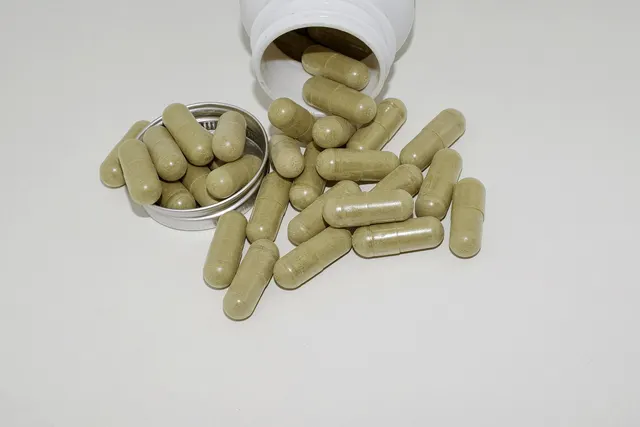
Photo: Pixabay
On this page 8 sections
- Check Every SKU Against the DEA's November Order First
- Your COA Now Decides What Stays Listed
- How Underwriters Read a 7-OH Site
- 7-OH Claims That End a Review: Pain, Opioid Comparisons, Withdrawal and Dosing
- Rewriting One Product Page
- Policy Pages and Checkout Have to Match How You Operate
- Reviews, Social Feeds and Affiliates Speak for You
- The Order to Fix Things Before You Apply
Key takeaways
- MGPI, MGM-15 and MGM-16 have been in Schedule I since August 26, 2026. The DEA's order for 7-OH itself can publish on or after November 13.
- The proposed federal line has two tests, one for concentration and one for the ratio to mitragynine. A low-strength product can still be over the line because of the ratio.
- A COA that leaves out unit weight, mitragynine or MGPI can't show which side of the line a product is on. Fix your lab paperwork before you fix your copy.
- Renaming 7-OH products or hiding them from reviewers is misrepresentation. It can end in termination and a MATCH listing.
A 7-OH site clears underwriting when two things hold. Every product on it has to be legal in each state you ship to, and every page has to describe those products by their label and lab results rather than by what they supposedly do for the body. 7-OH website compliance got harder to judge on October 14, 2026, when the DEA published a new proposal to put 7-OH above a set concentration in Schedule I. The order can take effect as soon as November 13.
Underwriters read your site before they approve you, and monitoring vendors keep crawling it afterward. Wording can't rescue a controlled product, and a clean site guarantees nothing. What careful wording does is stop a two-year-old blog post about "pain relief" from sinking an application that otherwise had a path.
This is general information, not legal advice. 7-OH law is moving at the federal and state level at the same time, so confirm your obligations with an attorney who follows it.
Check Every SKU Against the DEA's November Order First
The FDA moved first. In July 2025 it issued seven warning letters to companies marketing 7-OH products. Its stated view leaves little room: 7-OH "is not lawful in dietary supplements and cannot be lawfully added to conventional foods."
Scheduling followed a year later, in two rounds. The DEA's first notices, published July 6, 2026, proposed a 0.05% line for 7-OH. That proposal never became an order, but its companion did. Mitragynine pseudoindoxyl (MGPI, sold as "pseudo"), MGM-15 and MGM-16 have been in Schedule I since August 26, 2026, under a temporary order that runs until August 26, 2028.
Then HHS changed its advice. The Assistant Secretary for Health sent the DEA a letter dated October 8, 2026, recommending thresholds for 7-OH and MGPI, according to the DEA's October 14 notice of intent. HHS announced the recommendation on October 9 and framed it as a way to target enhanced kratom products. The October 14 notice replaced the July 7-OH proposal. It covers 7-OH and MGPI, either alone or combined.
The new line has two tests. The first is concentration: a product is over the line if it holds more than 1 milligram of 7-OH per gram (or per milliliter for liquids), according to a summary of the notice, and MGPI counts toward that total. The second is a ratio. Divide the mass of mitragynine, the main kratom alkaloid, by the mass of 7-OH and MGPI. If the result is below 100, the product is over the line. Failing either test is enough. The Federal Register text says the temporary order will publish on or after November 13, 2026.
Until then, nothing about MGPI gets looser. The Justice Department says the August controls stay in effect during the new 30-day notice period. MGM-15 and MGM-16 are being reissued without change.
Florida put the same numbers into a state rule months earlier. Attorney General James Uthmeier signed an emergency rule on June 22, 2026, and it took effect immediately. It capped these compounds at 1 milligram per gram or per milliliter and required at least 100 times as much mitragynine by mass. Uthmeier warned that violators could face felony charges. Other states have their own restrictions, and our guide to blocking 7-OH restricted states at checkout tracks them.
So sort the catalog before you touch the copy. No product description can make a Schedule I listing compliant.
| What the SKU Contains | Federal Status in Late October 2026 | What to Do on the Site |
|---|---|---|
| MGM-15 or MGM-16 | Schedule I since August 26, 2026, with no threshold | Pull the listing, stop sales and ask counsel about inventory |
| MGPI ("pseudo") | Schedule I since August 26; moves to the combined threshold once the new order takes effect | Pull it now; it stays controlled until the new order publishes |
| Concentrated 7-OH tablets, shots or extracts | Covered by the October 14 notice; order expected on or after November 13 | Run both tests against each batch COA and plan a wind-down for anything over the line |
| Kratom leaf and powder | The thresholds target enhanced products, but leaf products aren't exempt by name | List separately, disclose on your application, and keep COAs that report mitragynine |
Two explainers go deeper: what DEA scheduling means for 7-OH card processing and why processors underwrite 7-OH and kratom leaf differently. If an order covers part of your catalog, read about handling refunds, open orders and pulled stock.
Your COA Now Decides What Stays Listed
Most sellers read the new line as a strength cap. They miss the ratio test, and it can catch a product that sits well under 1 milligram per gram.
Illustrative only. These lab figures are made up to show the arithmetic. They are not typical values for any real product.
Tablet. Assume each tablet weighs 400 mg (0.4 g) and its certificate of analysis (COA) reports 10 mg of 7-OH, 1 mg of mitragynine and no MGPI. Concentration: 10 ÷ 0.4 = 25 mg per gram, which is 25 times the line. Ratio: 1 ÷ 10 = 0.1, nowhere near 100. It fails both tests.
Powder that passes. Assume one gram contains 0.1 mg of 7-OH, 15 mg of mitragynine and no MGPI. Concentration is 0.1 mg per gram, under the line. Ratio: 15 ÷ 0.1 = 150, above 100. It passes both.
Powder that fails on ratio alone. Now assume a gram holds 0.1 mg of 7-OH, 0.05 mg of MGPI and 12 mg of mitragynine. Together, 7-OH and MGPI come to 0.15 mg per gram, still under the concentration line. But the ratio is 12 ÷ 0.15 = 80, which is below 100, so the product is over the threshold anyway.
These examples expose a paperwork problem. A COA that reports milligrams of 7-OH per tablet without the tablet's weight can't answer the concentration test. One that skips mitragynine or MGPI can't answer the ratio test at all. Before November 13, ask your lab or supplier for batch COAs that report all three alkaloids plus a per-gram figure. Then link the matching COA on each product page. An underwriter can check that link in seconds.
How Underwriters Read a 7-OH Site
At application, a human underwriter compares your site with what you told them. The products listed should match the ones on your application, and so should your legal name, address and phone number. A store that sells subscriptions needs policies written for subscriptions. Placeholder text or a broken checkout tells the reviewer the business isn't live yet.
After approval, acquiring banks and their vendors commonly crawl merchant sites for new keywords, products and domains. Some place test orders to see whether what ships matches what's listed. A claim you add six months in can trigger a review as easily as one that was there on day one.
Crawlers also read what shoppers never see: meta titles, descriptions and image alt text. Old blog posts and FAQ answers count as long as they're live or indexed, and that's often where the worst language sits.
7-OH Claims That End a Review: Pain, Opioid Comparisons, Withdrawal and Dosing
Any statement that a product treats, relieves, cures or prevents a condition is a medical claim. "Pain relief" is the obvious version. "For your toughest days" next to a photo of someone holding their back says the same thing more quietly. A tablet named for sleep or recovery makes the claim before anyone reads a word.
Opioid comparisons carry the most risk, because opioid-like effects are the reason regulators are acting at all. "Stronger than" or "works like" any medication reads as opioid marketing. So does a photo of an amber pill bottle, even when the seller meant it as a warning. Language about quitting or tapering ("get off pills," "recovery support") is an addiction-treatment claim. Dosing charts with beginner and experienced servings read as drug instructions.
Many sellers think the "not evaluated by the FDA" footer covers them. It doesn't cover any of this. That wording comes from dietary supplement labeling, and the FDA says 7-OH can't lawfully be a supplement in the first place. Placed under a pain claim, the footer only shows the reviewer you knew the claim was a problem. Code words fail for the same reason. Reviewers judge the overall impression, so "comfort" or "for when you need it most" reads as the original claim.
| Flagged Wording | Why It's Flagged | Accurate Replacement |
|---|---|---|
| "Fast-acting pain relief" | Medical treatment claim | Format, count and contents as printed on the label |
| "Like [medication], but natural" | Opioid comparison | No comparison to any drug |
| "Helps with withdrawal" | Addiction treatment claim | Delete it |
| "Take 1–2 for best results" | Dosing instruction | Label serving information and warnings, plus the batch COA link |
| "Extra strength formula" | Implies drug-like potency | Alkaloid content per gram from a third-party COA |
| "Customers say it changed their life" | Implied outcome claim | Reviews limited to shipping, packaging and service |
Don't hide what you sell. Deleting "7-OH" from your site or listing products under generic names is misrepresentation. It can lead to termination and a MATCH listing. See the miscoding risk of ringing 7-OH as herbal supplements.
Rewriting One Product Page
Illustrative only; the product is made up. A 10-count tablet is listed as "Relief Max," with the headline "Our strongest formula for tough days." Below that is a chart suggesting one tablet for new users and two for experienced ones. A pinned review says it "replaced my prescription," and the main photo shows the tablets beside an amber pill bottle.
Every element fails a different test. The name and headline make medical and potency claims. The chart is dosing. Pinning the review makes its outcome claim the seller's own. The bottle is an opioid comparison in picture form.
The fix starts with the label. Rename the listing to match it exactly, and replace the headline with the format and count. Copy the label's ingredient list, warnings and minimum age word for word, and link the COA for the batch now shipping. Delete the chart and the pinned review. Photograph the actual package on a plain background. Then run the two federal tests on that COA, because a perfectly worded page for a product over the line is still a listing for a controlled substance.
Policy Pages and Checkout Have to Match How You Operate
Boilerplate policies stall reviews. Your terms should include your legal business name, minimum age and any resale and shipping restrictions. A refund policy needs a time window and a way to request a refund. "All sales final" with no process signals chargeback risk. Your shipping policy should name carriers and every state and locality you won't ship to, and checkout has to enforce that list, not just print it.
Verify age at checkout, and again at delivery where state law requires it. Your privacy policy should cover the data that age verification collects. Publish a physical address, phone number and email that match your application, since a contact form alone usually isn't enough. Show customers the business name that will appear on their card statement, because a name they don't recognize turns into an "unrecognized charge" dispute.
Every SKU on the site must appear in your application. Unlisted or password-protected product pages look like transaction laundering to a reviewer.
Reviews, Social Feeds and Affiliates Speak for You
A review you display is treated as your own statement. Moderate reviews before they publish, post a review policy that excludes health outcomes, and go back through the old ones. Federal rules on endorsements and testimonials may also apply, so have counsel look at your practices.
Remove embedded Instagram, TikTok or X feeds you can't control. Put written content rules in affiliate and influencer agreements too, since a monitoring tool can follow an affiliate's link straight back to your store.
The Order to Fix Things Before You Apply
- Check every SKU against federal and state scheduling, and pull MGPI, MGM-15 and MGM-16 now.
- Get batch COAs that report 7-OH, MGPI and mitragynine per gram, and run both federal tests on each one.
- Search the whole site, including meta tags and alt text, for pain, withdrawal, opioid and dosing language. Rewrite or delete it.
- Make each product's name, photos, label and COA match each other and your application.
- Publish policies that describe how you actually operate, and set checkout to verify age and block restricted states.
- Clean up reviews and affiliate content, then have an attorney who knows 7-OH regulation review the site.
Even a clean site comes with high-risk terms. Before you sign, read about 7-OH processing rates, reserves and holds and what 7-OH merchant account approval takes.
Starting November 13, watch the Federal Register for the final temporary order. Compare its text with the two tests above before you relist anything. MannyPay reviews 7-OH merchant accounts and other high-risk merchant accounts, subject to underwriting and each product's legal status. Once your catalog and site are in order, request a free quote. A MannyPay specialist will respond within one business day.
Sources
- FDA Sends Warning Letters to Companies Selling Illegal Opioid Compound (Drugs.com MedNews)
- FDA Issues 7 Warning Letters Over 7-OH Products (SupplySide Supplement Journal)
- DEA Proposes a Threshold for 7-OH: What the July 2026 Scheduling Notices Actually Cover (Deemed Consulting)
- Federal Register: Temporary Placement of Mitragynine Pseudoindoxyl, MGM-15, and MGM-16 in Schedule I (August 26, 2026)
- DEA Places Three Kratom-Related Substances in Schedule I as 7-OH Scheduling Remains Pending (Vicente LLP)
- HHS Recommends Science-Based Thresholds to Target Dangerous Enhanced Kratom Products (HHS press release, October 9, 2026)
- HHS Recommends Thresholds to Separate Natural Kratom From Enhanced Products (Becker's Behavioral Health)
- Federal Register: Temporary Placement of 7-Hydroxymitragynine and Mitragynine Pseudoindoxyl Above a Specified Threshold in Schedule I (October 14, 2026)
- DEA Notice of Intent: Temporary Placement of MGM-15 and MGM-16 in Schedule I (Federal Register public inspection, 2026-20942)
- Department of Justice Announces Updates to Emergency Scheduling Actions for 7-OH and Related Opioid Substances (DOJ Office of Public Affairs)
- The 7-OH Ban Just Got Rewritten (Arise Recovery Centers summary of DEA notice 2026-20943)
- Florida AG Signs Emergency Rule to Curb Concentrated 7-OH Products Being Sold Across State (News4JAX)
- More 7-OH Related Products Made Illegal in Florida by a New Emergency Rule (Florida Phoenix)
This article is for general educational purposes and is not legal, tax or financial advice. Card network rules and state laws change; confirm current requirements for your business.