Does Square, Stripe, or Shopify Allow 7-OH? What Happens If You Try
Does Square allow 7-OH? Learn how Square, Stripe, Shopify and PayPal policies treat 7-OH products and what happens to your funds if you get flagged.

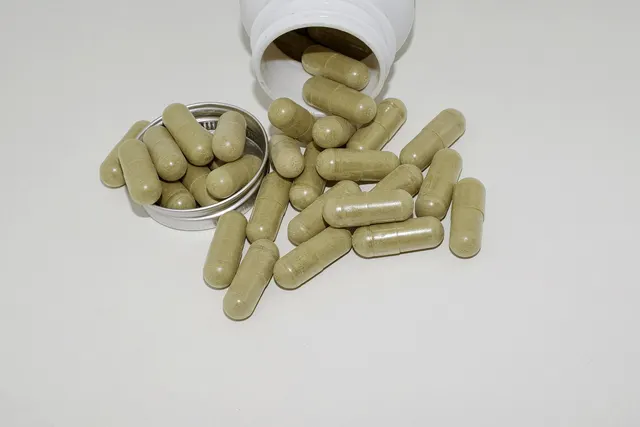
Photo: Pixabay
On this page 8 sections
- Why Aggregators Treat 7-OH Differently From Kratom Leaf
- Does Square Allow 7-OH? Square's Rules and How Sellers Get Flagged
- Stripe and Shopify Payments: Restricted Business Policies for 7-OH
- PayPal and Venmo for 7-OH Tablets: Account Limits and Fund Holds
- What a Shutdown Looks Like: Freezes, Long Holds, Lost Payouts
- Workarounds That Make Things Worse
- Moving to a High-Risk Merchant Account Before You Get Caught
- Next Steps
Key takeaways
- Payment aggregators accept merchants with light review at signup and then monitor them. 7-OH products fall into categories their acceptable-use policies commonly prohibit or restrict.
- Platforms usually detect 7-OH sales through product names, website reviews, business category mismatches, and chargeback or volume patterns, often after you've built up sales.
- A shutdown can mean a frozen balance, an extended hold on remaining funds and a termination record that makes your next account harder to open.
- The lasting fix is a high-risk merchant account opened with full disclosure of your 7-OH sales. Miscoding products or spreading sales across accounts makes things worse.
Does Square allow 7-OH? Smoke shops, convenience stores and online sellers adding 7-OH tablets and shots ask this often. The short answer is that you should not plan on it, and the same caution applies to Stripe, Shopify Payments and PayPal.
This guide covers four things:
- How these platforms' acceptable-use policies apply to 7-OH products
- How sellers typically get flagged
- What a shutdown does to your cash flow
- How to move your 7-OH sales to a merchant account built for this category
Policies change. Before relying on any platform, read its current acceptable-use or restricted-business policy yourself. Confirm your product's legal status with a qualified attorney. This article is general information, not legal advice.
Why Aggregators Treat 7-OH Differently From Kratom Leaf
Square, Stripe, Shopify Payments and PayPal are payment aggregators, also called payment facilitators. They don't underwrite each business in depth before approval. Instead, they board many small merchants under their own master account. Signup is fast, and most review happens afterward through automated monitoring.
That model works for low-risk businesses. It works poorly for categories where the aggregator carries regulatory, reputational or chargeback exposure. 7-OH falls squarely in that zone for three reasons.
- It's a concentrated alkaloid product, not a raw botanical. 7-hydroxymitragynine (7-OH) is a kratom alkaloid. 7-OH products, though, are sold as concentrated tablets, shots and similar formats. Regulators and payment risk teams increasingly treat them as a separate category from traditional kratom leaf powder.
- Regulatory status is changing. Some states restrict or ban 7-OH products, and federal scheduling has been under discussion. Our explainer on what DEA scheduling of 7-OH means for card processing covers why this matters to acquirers. Confirm current status before you rely on any summary.
- Aggregator policies are written broadly. Restricted-business lists commonly cover drugs and drug-like substances, products marketed for psychoactive or mood-altering use, and items under regulatory scrutiny. They don't need to name "7-OH" to cover it.
To a platform, 7-OH is effectively a 7-OH prohibited business category, or at best a restricted one, even though some kratom leaf sellers have operated on these platforms. Assuming that what worked for kratom will work for 7-OH is a common and costly mistake. If you sell both, see how we handle kratom payment processing separately from 7-OH.
Does Square Allow 7-OH? Square's Rules and How Sellers Get Flagged
Square publishes a list of prohibited and restricted activities that sellers agree to when they open an account. Its categories covering drugs, drug paraphernalia and regulated substances are broad. Assume your 7-OH products fall inside them unless Square's current written terms clearly say otherwise.
Square is popular with the businesses most likely to carry 7-OH at the counter: smoke shops, vape shops, convenience stores, gas stations, and kava or kratom bars. That creates a specific risk. If 7-OH shares an account with your glass, vape products, snacks and drinks, the whole account is exposed, not only the 7-OH line.
Common Ways Square Sellers Get Flagged
| Signal | How It Shows Up |
|---|---|
| Item library names | Your POS catalog includes SKUs labeled with 7-OH product or brand names |
| Online store or linked website | Automated tools review product pages, descriptions or images |
| Business category mismatch | You signed up as "convenience store" or "retail," but your sales patterns or listings suggest otherwise |
| Volume changes | Ticket count or average sale jumps after you add a new product line |
| Disputes and refunds | Chargebacks or refund requests mention specific products |
| Customer or third-party reports | Complaints or tips trigger a manual review |
Detection rarely happens on day one. Sellers often run for weeks or months, build a balance and grow comfortable before a review catches up. That delay is what makes the eventual shutdown so painful.
Stripe and Shopify Payments: Restricted Business Policies for 7-OH
Online 7-OH sellers usually run into Stripe or Shopify Payments first, because many e-commerce setups offer them by default.
Does Stripe Allow 7-OH?
Stripe publishes a list of restricted and prohibited businesses. Like Square's list, it covers broad categories such as drugs and products in legal gray areas. For online sellers, your storefront is also public. A site built around 7-OH tablets and shots is far easier for any risk team to review than an in-person sale.
Aggregator terms generally let the platform pause payouts, request more information or close accounts it decides are out of policy. If you're asking whether Stripe allows 7-OH, read the current restricted-business list. Assume the answer is no unless the list explicitly says otherwise.
Shopify Payments and 7-OH Stores
Shopify is a store platform. Shopify Payments is its built-in payment option. Different policies govern each, so consider them separately:
- Your storefront is subject to Shopify's acceptable-use policy.
- Your payment processing through Shopify Payments is subject to its own list of prohibited businesses.
So a store may be allowed on the platform and still be ineligible for Shopify Payments. Running 7-OH sales through Shopify Payments carries the same freeze-and-hold risk as any other aggregator.
Many high-risk merchants keep Shopify as their storefront and connect a third-party gateway backed by an approved merchant account. MannyPay supports Shopify integration with a high-risk merchant account, along with WooCommerce and other carts.
Supplement sellers face a similar pattern, covered in our guide to selling supplements with Stripe, PayPal or Shopify Payments. 7-OH, however, draws more scrutiny.
PayPal and Venmo for 7-OH Tablets: Account Limits and Fund Holds
PayPal's acceptable-use policy restricts transactions involving drugs and other higher-risk goods. The wording is broad enough that sellers of 7-OH tablets should treat PayPal as off-limits. Venmo business profiles have their own terms. Read them rather than assuming they treat 7-OH any differently.
PayPal enforcement often looks different from a clean closure:
- Account limitations. You may still be able to log in, but you can't withdraw, send or receive funds until you respond to a review.
- Rolling or extended holds. Incoming payments may be held for a period before they become available.
- Information requests. You may be asked for invoices, supplier details or product descriptions. Answer accurately. Misrepresenting your products can turn a policy closure into a fraud-related termination.
Some sellers try to route 7-OH payments through personal Venmo or PayPal accounts, or through "friends and family" transfers. That violates the platforms' terms and strips away protections customers expect. It can also lead to limitations on your personal accounts.
What a Shutdown Looks Like: Freezes, Long Holds, Lost Payouts
Each platform's terms differ, so read your own agreement. For merchants caught selling out-of-policy products, the general sequence looks like this:
- Review or pause. Payouts stop, sometimes with little notice. You may receive a request for information.
- Deactivation. The platform closes the account for a policy violation. You can't accept payments, so your counter or checkout stops working that day.
- Fund hold. The platform keeps your remaining balance to cover refunds and chargebacks that may arrive after closure. Terms may allow extended holds, so check your agreement for the period it permits.
- Deductions. The platform subtracts chargebacks, refunds and any fees from the held balance.
- Release or partial release. Whatever remains is paid out when the hold ends, subject to your agreement's terms.
The Costs That Don't Show up on a Statement
- Inventory you can't sell. Without card acceptance, product sits on the shelf.
- Lost customers. Regulars who can't pay by card at your register may shop elsewhere.
- A termination record. Acquirers check an industry database of terminated merchants during underwriting, and some terminations can lead to a listing. A listing can make your next account significantly harder to open.
If this has already happened to you, our guide to getting held funds back after a 7-OH processor shutdown walks through documentation and next steps.
Workarounds That Make Things Worse
When an account is at risk, shortcuts can look tempting. Don't take them. The approaches below violate card network rules and platform terms, and they usually end worse than an honest shutdown:
- Miscoding products as "herbal supplements," "botanicals" or "wellness" items in your catalog or business category
- Splitting sales across multiple aggregator accounts or entities to stay under review triggers
- Using someone else's account to process your 7-OH sales, which is transaction laundering
- Hiding product pages from your public site while still selling the items
Any of these can turn a policy closure into a fraud-related termination. That means longer holds and a greater chance of a lasting termination record.
Moving to a High-Risk Merchant Account Before You Get Caught
The stable way to accept cards for 7-OH is a high-risk merchant account. An acquiring bank underwrites it, knows exactly what you sell and has agreed to support it. You disclose 7-OH up front, and the account is priced and structured for that risk.
Aggregator vs. High-Risk Merchant Account
| Factor | Aggregator (Square, Stripe, etc.) | High-Risk Merchant Account |
|---|---|---|
| Underwriting | Light at signup, monitoring later | Full review before approval |
| 7-OH disclosure | Typically out of policy | Disclosed and evaluated |
| Pricing | Flat and simple | Higher rates, often with a reserve |
| Shutdown risk for disclosed products | High | Lower when you stay within agreed terms |
| State restrictions | Limited support | Addressed during underwriting |
Expect higher rates and possibly a rolling reserve. Our breakdown of 7-OH processing rates, reserves and holds explains how these are typically structured.
What to Prepare
- Product documentation: certificates of analysis or lab reports, plus labels and packaging
- Website compliance: clear product descriptions with no health claims, age verification, terms of service, and refund and shipping policies
- State controls: a plan for blocking restricted states at checkout and for not shipping where 7-OH is banned
- In-store controls: ID checks at the counter and staff trained on age rules
- Processing history: recent statements, including any from a closed aggregator account (disclose closures honestly)
- Fraud and dispute tools: for online sales, authentication such as 3-D Secure for card-not-present orders can help reduce fraud-related disputes
For a step-by-step look at the application, see how to get approved for a 7-OH merchant account.
Where MannyPay Fits
MannyPay is a U.S. merchant services provider that offers merchant accounts for high-risk businesses, including 7-OH payment processing for in-person and online sellers. That covers countertop and mobile terminals for shops and gateway integrations for e-commerce carts. Approval depends on underwriting, and no provider can promise it. Applying with full disclosure, though, gives you a real answer instead of a delayed shutdown.
Next Steps
If you sell 7-OH through Square, Stripe, Shopify Payments or PayPal today, those sales are likely out of policy. The compliant path is to stop processing them there and move them to an account underwritten for them.
- Read your current platform's acceptable-use policy, and review its hold and payout terms so you know what to expect.
- Stop running 7-OH sales through the aggregator. Don't keep processing products you know are out of policy while you look for alternatives.
- Gather the documentation listed above.
- Apply for a dedicated merchant account and disclose your full product line, including any past account closures.
You can request a free quote from MannyPay. A specialist will respond within one business day to review your products, sales channels and options.
This article is for general educational purposes and is not legal, tax or financial advice. Card network rules and state laws change; confirm current requirements for your business.