Which Stops Make Money? Tracking Food Truck Sales by Location
Track food truck sales by location with POS tags, then rank stops by profit per crew hour after host fees, food cost, fuel and card processing.

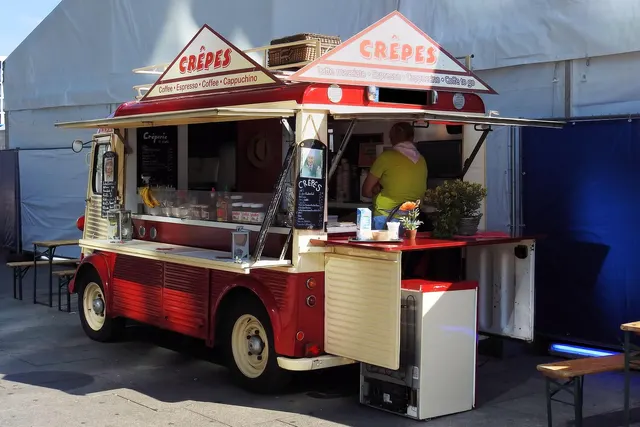
Photo: Pixabay
On this page 6 sections
Key takeaways
- Rank stops by the money left per crew hour, and count drive and setup time. In the illustrative example, the festival brings in the most sales but earns the least per hour.
- Interchange includes a fixed per-transaction fee, so small tickets pay a higher percentage. On regulated Visa debit (CPS/Restaurant), a $9 tap costs 2.38% in interchange and a $30 tap costs 0.75%.
- On October 26, 2026, the Eighth Circuit upheld the ruling that struck down the Regulation II debit cap. The cap stays in force until the court issues its mandate, so check debit rates again before you budget.
Track food truck sales by location by giving every POS shift a fixed stop name. Then rank stops by the money each one leaves you per crew hour once its costs come out. Gross sales are the wrong yardstick because they reward long days and big events. Twelve weeks of tagged shifts gives a weekly stop a dozen visits, which is enough to tell a real pattern from one rainy Tuesday.
Tag Every Shift Before You Compare Anything
Most trucks dump every shift into one pile, so the reports can't separate a Tuesday office-park lunch from a Saturday brewery night. The cleanest setup is a separate location or profile for each regular stop. Then every report filters by stop with no cleanup. Ask your provider whether extra locations carry a monthly fee. If they do, use order tags or a custom field instead, and tag every shift without exception. A tag that shows up on half your shifts produces averages that look precise and mean nothing. If your POS can't tag at all, export the day's sales and add the stop name in a spreadsheet that evening, while you still remember where you parked.
Four naming rules keep the data usable:
- One fixed name per stop: "Riverside Office Park," never "RS Park" one week and "the park" the next.
- Stop type goes first, as in "Lunch: Riverside Office Park" or "Brewery: Hop Yard," so you can sort by type later.
- Private events and catering get their own tag. A catered wedding will wreck your public-stop averages if it lands in the same bucket.
- A short shift log records what the POS can't see. Note when you left the commissary, your first and last sale, your return time, the weather, and anything odd such as a road closure or a competing truck.
If you're still picking hardware, our guide to the best food truck POS system for a moving kitchen covers reporting and offline mode. The stop tag pays off at tax time as well, because rates differ between cities and counties. Our piece on collecting the right sales tax rate at every stop explains why.
Measure Food Truck Sales by Location per Hour, Not per Day
A festival will out-sell an office park nearly every time. That tells you nothing about which one pays you better for your hours. These measures make the comparison fair:
| Metric | How to Calculate | What It Tells You |
|---|---|---|
| Sales per service hour | Gross sales ÷ hours the window was open | How hard demand runs while you're serving |
| Sales per total hour | Gross sales ÷ hours from leaving the commissary to returning | What the stop costs you in time |
| Average ticket | Gross sales ÷ number of transactions | Whether customers add a drink or a second item |
| Transaction count | Number of orders | Crowd size and how hard the line works your crew |
| Item mix | Sales by menu item at that stop | What to prep more or less of |
| Effective processing rate | Processing fees ÷ card sales | What payments really cost at that stop |
Item mix is the measure owners skip. If a stop orders mostly your cheapest item, load less premium protein that day and put a combo on the board. A stop that sells out also hides its ceiling, so write down the sell-out time. Selling out at 12:40 on a lunch stop means the stop had more demand than you brought food for.
Keep tips in their own column, out of stop revenue. That's a bookkeeping habit, and a useful one. Tip rate says something about the crowd's mood, but tips aren't money the stop earned for the business. Folding them in makes a generous brewery crowd look more profitable than it is.
A separate legal point applies once you have staff. Under the Fair Labor Standards Act and the Labor Department's rule at 29 CFR 531.52, an employer may not keep tips received by its employees for any purpose, whether or not it takes a tip credit. The federal rule protects employees' tips, and state law can add its own requirements. Confirm your setup with an employment attorney or a payroll professional.
What Each Stop Costs Before You Get Paid
Profit by stop comes down to what's left after the stop takes its share. For each regular location, add up four costs:
- The host fee, whether it's a flat site fee or a cut of sales
- Permits and vendor applications tied to that stop
- Fuel plus generator run time
- Crew hours, including driving and teardown
Then add card processing, which changes with location more than most owners expect.
Why Small-Ticket Stops Pay More in Card Fees
A common assumption is that your processing rate is the same wherever you park. It isn't. Interchange is the fee set by the card network and paid to the cardholder's bank, and most categories include a fixed charge on every transaction. So a smaller ticket pays a larger percentage before your processor adds anything.
Here is how that works on Visa debit cards tapped at the window. The example assumes two things. First, the sale qualifies for Visa's CPS/Restaurant category. Second, the rates come from Visa's published U.S. interchange table, effective October 24, 2026. That table lists 1.19% + $0.10 for card-present debit from issuers that are exempt from the federal debit cap, and 0.05% + $0.21 for regulated debit.
| Visa debit, card present | $9 ticket (coffee and pastry) | $30 ticket (brewery group order) |
|---|---|---|
| Exempt issuer (1.19% + $0.10) | $0.21, or 2.30% | $0.46, or 1.52% |
| Regulated issuer (0.05% + $0.21) | $0.21, or 2.38% | $0.23, or 0.75% |
Those figures are interchange only, which is a network rate. Issuers that meet the Fed's fraud-prevention standards can add one more cent to a regulated transaction. Network assessment fees and your processor's markup sit on top. The markup is your processor's own pricing, set in your contract. If your plan adds its own per-transaction fee, the gap between small and large tickets grows. Visa's table also lists a CPS/Small Ticket debit category with a lower fixed fee ($0.04 on exempt cards). Ask your processor which category your coffee-sized sales actually fall into. Your statement will show it.
Visa doesn't set the regulated-debit number. It comes from the Federal Reserve's Regulation II, which carries out the Durbin Amendment, and that cap is now uncertain. In April 2021, two North Dakota trade groups, the North Dakota Retail Association and the North Dakota Petroleum Marketers Association, sued over the rule. After the Fed moved to dismiss the case as filed too late, the groups amended the complaint to add Corner Post, a North Dakota truck stop that first opened in 2018.
In 2024 the Supreme Court ruled that a merchant's six-year window to sue starts when the rule first harms that business. That let the case go forward. In August 2025 the federal district court in North Dakota vacated the rule and put its own ruling on hold pending appeal. On October 26, 2026, the Eighth Circuit upheld that decision. The current cap stays in place until the appeals court issues its formal mandate, and the Fed now has to rewrite how much large banks can collect.
Check the current Visa table before you budget around regulated-debit rates.
Card mix matters too. Rewards and business credit cards carry higher interchange than basic debit. A card number typed in by hand also drops out of the card-present categories into a more expensive one. Our breakdown of why small tickets cost food trucks more goes deeper, and you can calculate credit card processing fees on any sale from your own statement. If a weak signal pushes you into offline mode, set limits using our guide to offline card payments on a food truck instead of typing in card numbers later.
An Illustrative Three-Stop Comparison
Every number below is made up to show the method, and none is a benchmark. Processing is a flat 3% and food cost is 30% to keep it simple. Plug in your own figures.
| Office Park Lunch | Brewery Night | Weekend Festival | |
|---|---|---|---|
| Gross sales | $1,100 | $1,400 | $3,600 |
| Host or vendor fee | $0 | $140 (10% share) | $600 flat |
| Processing (3%) | $33 | $42 | $108 |
| Food cost (30%) | $330 | $420 | $1,080 |
| Fuel and generator | $25 | $30 | $60 |
| Left before labor | $712 | $768 | $1,752 |
| Total hours (incl. drive, setup) | 4.5 | 6 | 11 |
| Crew size | 2 | 2 | 3 |
| Crew hours | 9 | 12 | 33 |
| Left per crew hour | $79 | $64 | $53 |
The festival brings in more sales than the other two stops combined, yet it earns the least per crew hour. The quiet office park earns the most. You don't have to drop the festival, because it builds your name. Just book it knowing it pays $26 less per crew hour than Tuesday lunch.
Judge Lunch, Brewery and Festival Stops Against Their Own Kind
Rank stops within their type first, then across types. Each type fails in a different way.
Weekday lunch lives or dies in a short rush. Watch your transaction count in the busiest 30 minutes. A slow payment window caps what the stop can earn, no matter how long the line gets. Our tips on speeding up a food truck line at the payment window help here. So do preorders that follow your changing location, once regulars know your schedule.
Brewery nights run longer and steadier, and groups sharing food push tickets up. Revenue-share terms differ from one brewery to the next, so compare these stops after the host's cut. Our guide to handling brewery revenue share and host fees shows how to set up those deals.
Festivals bring the most volume and the biggest fees. When an organizer runs its own cashless system, part of your sales never touches your POS and the payout arrives later. Log those sales against the event anyway, then reconcile them when the money lands. Our article on festival wristbands, fees and payouts lists what to check.
Repeat Customers Show Which Stops Will Last
Keep a stop where returning customers make up a growing share of sales, even if its totals are modest. That demand doesn't depend on whoever happens to walk by. A stop that shows all new faces every visit is riding foot traffic you don't control.
Your POS can show repeat visits through customer profiles, digital receipts and loyalty sign-ups. Use those built-in reports, and never write down card numbers yourself. PCI DSS is the card industry's data security standard. It requires you to keep stored account data to a minimum, and it bans storing sensitive authentication data, such as the security code, after authorization, even in encrypted form. You don't need any of that data to count regulars. If you collect contact details for marketing, follow the consent rules that apply to you and confirm them with a qualified professional. For program ideas built around a moving address, read food truck loyalty programs that work without a fixed address.
Turn 12 Weeks of Data Into Next Quarter's Route
- Pull the data. Export sales by stop tag and line it up with your shift log.
- Flag the outliers. Mark rainouts and sell-outs instead of averaging them in.
- Average each stop on sales per total hour, average ticket, effective processing rate and money left per crew hour.
- Rank stops within each type, then sort every stop into one of four groups. Keep the stops with strong per-hour results and steady repeat business. Fix the ones with a good crowd but weak tickets or high costs, using a menu change or new host terms. Test any stop with too few visits by committing to a set number of visits, then deciding. Drop the stops that stay at the bottom after fair tries.
- Fill the open slots with test stops or private bookings. Our guide to pricing private food truck events helps you set a minimum that beats your weakest public stop.
- Repeat every quarter, because lunch crowds and event calendars change with the season.
Keep one exploratory slot in your weekly route. A route built only on last quarter's winners stops finding new ones.
Start on your next shift: settle the stop names tonight and tag every sale tomorrow. If your current setup makes tagging hard, MannyPay handles payment processing for food trucks and sells mobile terminals built for trucks and pop-ups, plus full POS systems that include Clover devices. Request a free quote and a MannyPay specialist will respond within one business day.
Sources
- Visa USA Interchange Reimbursement Fees (rates effective October 24, 2026)
- Federal Register, Tip Regulations Under the Fair Labor Standards Act (Dec. 30, 2020), including 29 CFR 531.52
- PCI Security Standards Council, PCI Data Storage Do's and Don'ts
- PCI DSS Requirement 3: Protect Stored Account Data (Basis Theory)
- Corner Post, Inc. v. Board of Governors, 603 U.S. ___ (2024), Supreme Court opinion (Justia)
- Corner Post, Inc. v. Board of Governors of the Federal Reserve System, case background (Cornell LII)
- North Dakota Retail Ass'n v. Board of Governors, No. 22-1639 (8th Cir. 2022) (Justia)
- District Court Vacates Regulation II's Debit Card Interchange Fee Standard (Cooley)
- Federal Appeals Court Strikes Down 21-Cent Debit Card Swipe Fee Cap (Law Commentary)
- Court Rules Fed Must Re-Write Debit Interchange Fee Cap (America's Credit Unions)
- Why Corner Post's Merchant Victory May Not Ring Up Savings (Truth on the Market)
This article is for general educational purposes and is not legal, tax or financial advice. Card network rules and state laws change; confirm current requirements for your business.